DbcultAccessing Vault...
6.8/10
Senior Film Conservator
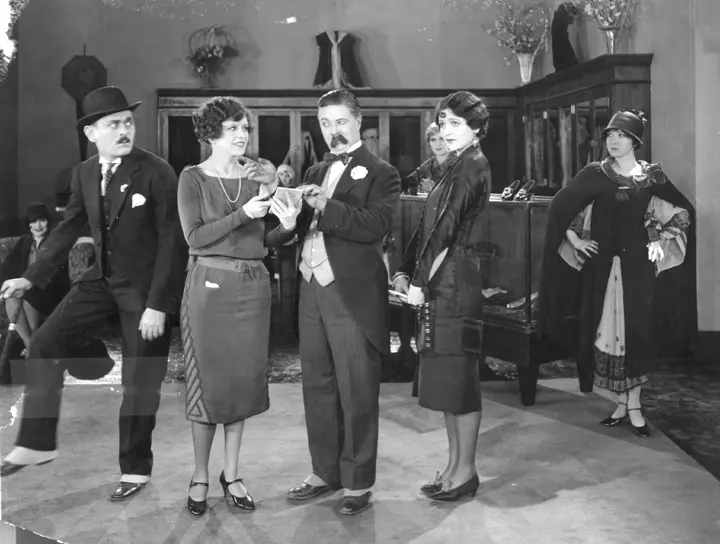
A definitive 6.8/10 rating for a film that redefined the boundaries of cult cinema. Fight Night remains a cornerstone of transgressive art.
Is Fight Night a hidden gem of the silent era? Short answer: No, it is a functional, mid-tier slapstick short that serves as a time capsule for 1920s domestic anxieties rather than a comedic revolution. It is for the silent film completist who finds joy in the specific rhythms of Mack Sennett-adjacent comedy, but it is certainly not for the modern viewer seeking a high-stakes narrative or sophisticated wit.
This film works because of Billy Bevan's impeccable timing and the inherent chaos of the 'jealous wife' trope. It fails because the script relies on a series of increasingly improbable coincidences that even for 1926 feel a bit tired. You should watch it if you want to see a masterclass in physical reaction shots and the evolution of the 'wandering eye' archetype in early American cinema.
Fight Night operates on a very simple, very human premise: the inability to stay focused. Billy Bevan plays Walter Moore with a sort of frantic, low-level guilt that is immediately relatable. He isn't a villain; he's just a man who is biologically incapable of ignoring a pretty face. The film establishes this early on with a series of sight gags that utilize the depth of the frame. While his wife is occupied in the foreground, Walter’s eyes are constantly drifting to the background, tracking Tessie McNab like a heat-seeking missile.
The comedy here isn't derived from the act of infidelity—there is none—but from the effort required to hide the impulse. Bevan’s mustache is practically a character itself, twitching with every nervous glance. It’s a performance of micro-movements. In one specific scene, Walter attempts to read a newspaper while Tessie walks by, and the way his eyes move independently of his head is a testament to the physical control Bevan possessed. It’s simple. It’s effective. It’s dated.
The direction by the team of writers and uncredited directors follows the classic Mack Sennett school of 'more is more.' The pacing is relentless. Once the wife’s suspicion is triggered, the film moves from a character study into a full-blown farce. The use of the 'damsel-in-distress' as a catalyst for the climax is a trope we see in other films of the period, such as A Milk Fed Hero, but here it feels more grounded in domestic claustrophobia.
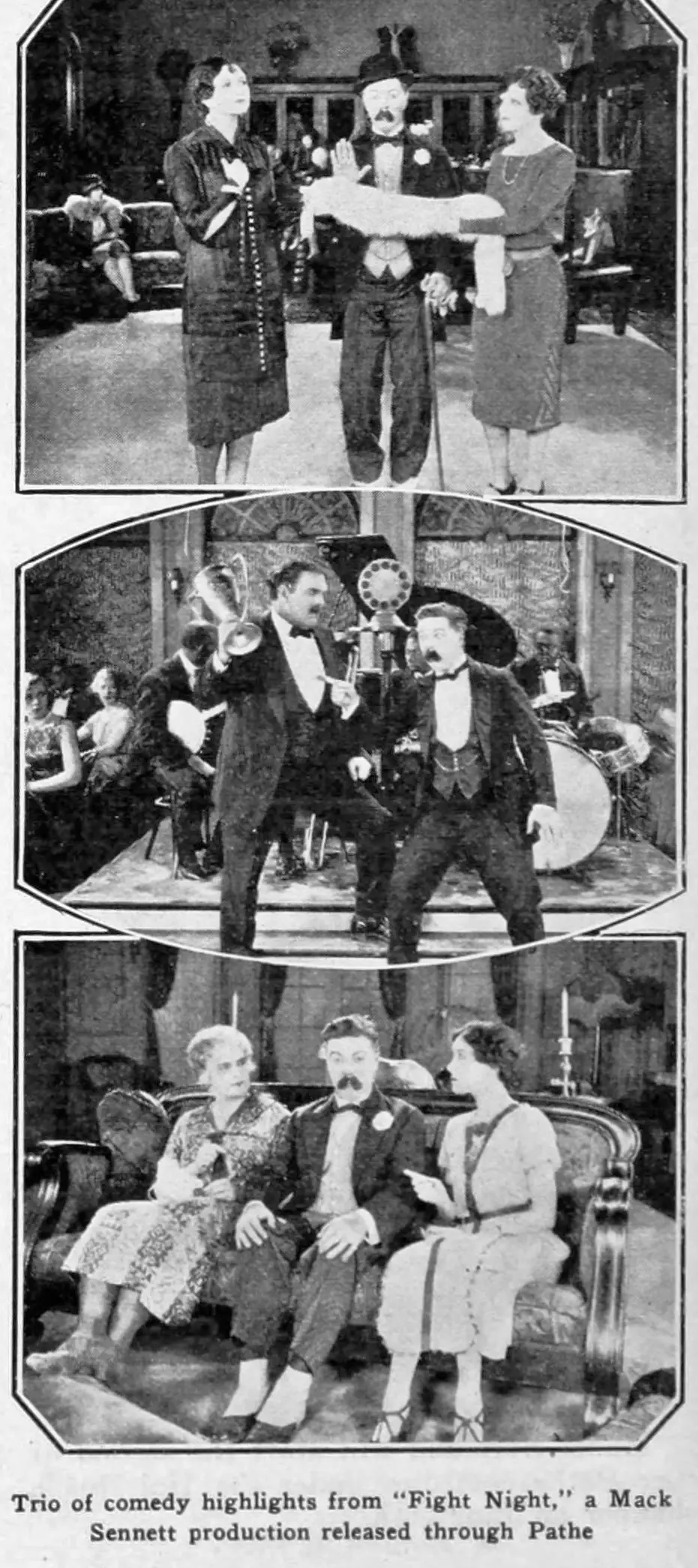
The cinematography is standard for the mid-20s—static wide shots that allow the actors to use the entire 'stage.' However, the editing during the final 'fight' sequence is surprisingly crisp. The cuts between the wife’s growing rage and Walter’s oblivious attempts to be helpful create a genuine sense of impending doom. It’s a slow-motion car crash made of misunderstandings.
Does Fight Night offer anything to a modern audience?
Yes, but only as a historical artifact. If you are looking for the laugh-out-loud brilliance of Buster Keaton or the pathos of Chaplin, you will be disappointed. Fight Night is a 'bread and butter' comedy. It was designed to be watched in a crowded theater, accompanied by a live organist, and forgotten by the time the feature presentation started. It is a professional piece of craft, but it lacks the soul of the era's true masterpieces.
Natalie Kingston and Molly O'Day provide the necessary friction to keep the plot moving. Kingston, in particular, plays the 'jealous wife' not as a shrew, but as a woman who is rightfully exhausted by her husband's antics. There is a moment where she catches Walter mid-stare, and the look of weary disappointment on her face is more effective than any of the physical gags. It adds a layer of reality to a film that otherwise risks floating away on its own absurdity.
Andy Clyde also makes an appearance, bringing his signature brand of secondary comedic support. Comparing this to his work in The Duck Hunter, you can see how the ensemble cast of the Sennett era functioned as a well-oiled machine. They knew each other's timing perfectly. They didn't need a complex script; they needed a situation and a set of props.
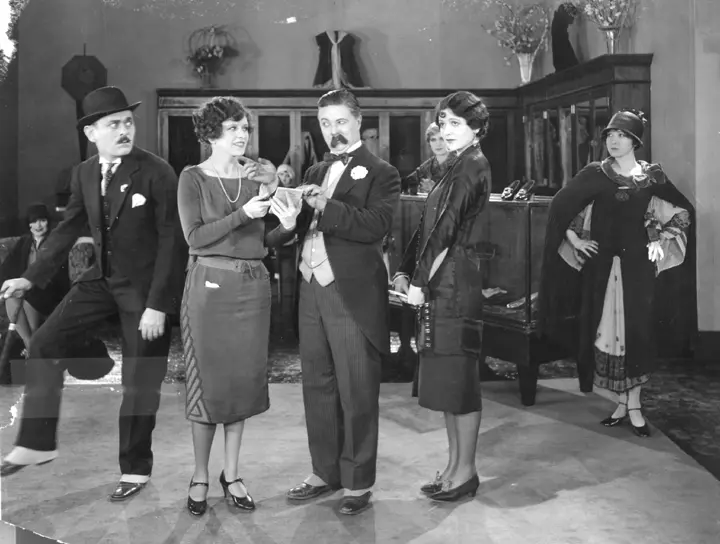
The biggest issue with Fight Night is the tonal shift in the second act. It starts as a clever domestic comedy and ends as a chaotic scramble. While this was the standard 'climax' for shorts of this era—similar to the structure of Too Much Married—it feels a bit unearned here. The transition from Walter’s wandering eye to a full-blown physical 'fight night' is jarring.
"The film is a reminder that in 1926, a man’s biggest threat wasn't a villain, but his own inability to look straight ahead."
The tone becomes almost mean-spirited toward the end. The 'helpfulness' Walter provides is genuinely innocent, making the wife’s violent reaction feel a bit disproportionate. It’s a common trope, but here it lacks the 'wink' to the camera that makes other farces palatable. It’s a bit grim. But it’s also undeniably funny in its execution.
Pros:
Cons:
Technically, Fight Night is a product of its time. The lighting is flat, designed to ensure every gag is visible, which robs the film of any atmospheric tension. However, the use of props is inspired. From the way Walter fumbles with his hat to the strategic placement of furniture that he eventually trips over, every object in the frame is a potential weapon. This is the 'Prop-as-Antagonist' philosophy that dominated the era.
When compared to the more dramatic lighting of a film like Black Friday, Fight Night feels almost like a cartoon. It doesn't want to be art; it wants to be a distraction. And in that, it succeeds. It is a blue-collar comedy for a blue-collar audience. It’s honest in its simplicity.
Fight Night is a serviceable piece of silent comedy that highlights the strengths and weaknesses of the Sennett factory style. It’s not a masterpiece. It’s a workhorse. Billy Bevan is charming, the gags are familiar, and the conflict is as old as time. It’s worth a 20-minute investment if you’re already a fan of the genre, but it won’t convert any skeptics. It works. But it’s flawed. It’s a minor note in a loud decade of cinema, but even minor notes have their place in the symphony.
IMDb 5.2
1909
Community
Log in to comment.