DbcultAccessing Vault...
Cult Review
Senior Film Conservator
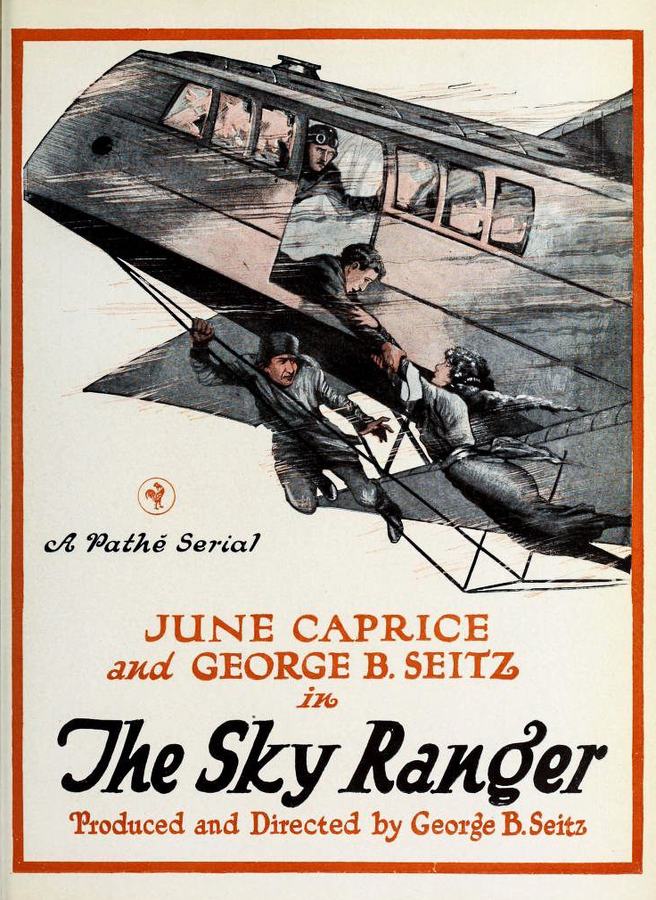
Imagine, if you can, a nickelodeon cathedral lit only by the projector’s carbon arc: dust spirals like galaxies, the pianist hammers out a galloping tarantella, and on the flickering sheet a boy with Clark Gable ears swears he’ll lasso the moon for a girl whose lipstick predates Technicolor. That boy is George Rockwell—half carnival barker, half Icarus— and the moon he covets is June Elliott, an heiress whose gaze already contains the storms of exile. Their courtship is a pocket-war: slammed doors, loaded revolvers, bouquets of oily blueprints. Frank Leon Smith’s script treats melodrama like a switchblade: every twist is a snap of steel you feel in your molars.
The Man Who Stole the Moon arrived in 1924, that liminal instant when the cosmos of cinema tilted from barnstorming cliffhangers toward the psychological chiaroscuro of Greed or Sunrise. Director George B. Seitz, a human calliope who would later pump out pulp serials faster than popcorn, here brandishes a budget just large enough to rent a real biplane, torch a wheat field, and commission a Tibetan monastery out of plaster lath. The result feels like someone shoved a Jules Verne paperback into a meat-grinder with a Western, a travelogue, and a fever dream.
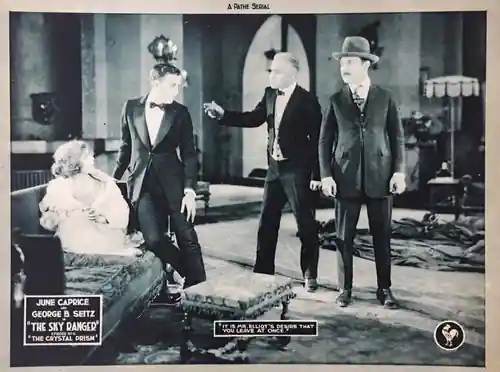
Even in grayscale the film drips chromatic suggestion: the viridian tint of the airplane’s oxygen tank becomes a promise of vertigo; the amber halo around June’s hair—achieved by bathing the negative in saffron dye—foreshadows the combustive sunset of the fire-ray. You swear you see vermilion blood when George claws his way out of the Tibetan box, though the print is monochromatic. That is the sleight-of-hand only silent cinema dares: hallucinate the hue and you become co-author.
Frank Redman’s George swaggers with the elastic physicality of Fairbanks minus the self-mockery; every hands-on-hips stance is a semaphore that screams “I was born in a circus trailer.” June Caprice, saddled with a name that sounds like a burlesque of innocence, plays Elliott’s daughter like a pocket-watch wrapped in silk: delicate, tick-tocked, but capable of shattering glass if dropped. Their chemistry is less slow burn than nitroglycerin jostled by a freight train—improbable, irresponsible, and irresistible.
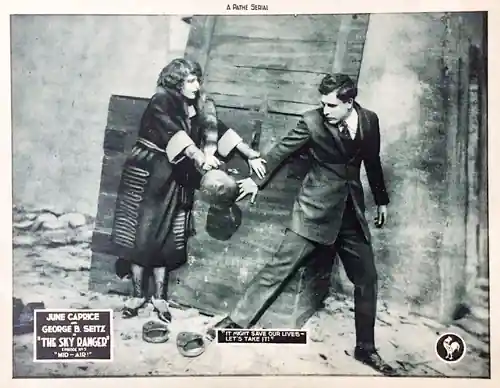
Dr. Santro—gaunt, goateed, always polishing his pince-nez with the same flourish a mortician applies to a corpse’s collar—embodies the era’s distrust of technocrats. Murdock, bullish and velvet-suited, is the capitalist gargoyle who discovers ethics only after the fuse is lit. Tharen, Santro’s wife, glides through scenes like a panther in a beaded gown; her sidelong glance could auction your soul and hand you back the change in counterfeit coins. Together they triple the stakes, ensuring the film never succumbs to the moral simplicity of contemporaries such as Bonnie Annie Laurie.
Take the Tibetan confinement: a claustrophobe’s panic rendered in plywood. The camera never cuts away for twelve minutes; instead it dollies forward until the aperture itself seems to dilate like a pupil overdosed with belladonna. When George wedges his rock into the shrinking crack, splinters bloom outward like a chrysanthemum of terror. Later, the mid-air torpedo sequence prefigures every modern blockbuster you’ve binge-eaten popcorn through, yet it achieves the kinesthetic punch without CGI, just wind shear and a model plane wired to a fishing line dipped in kerosene.
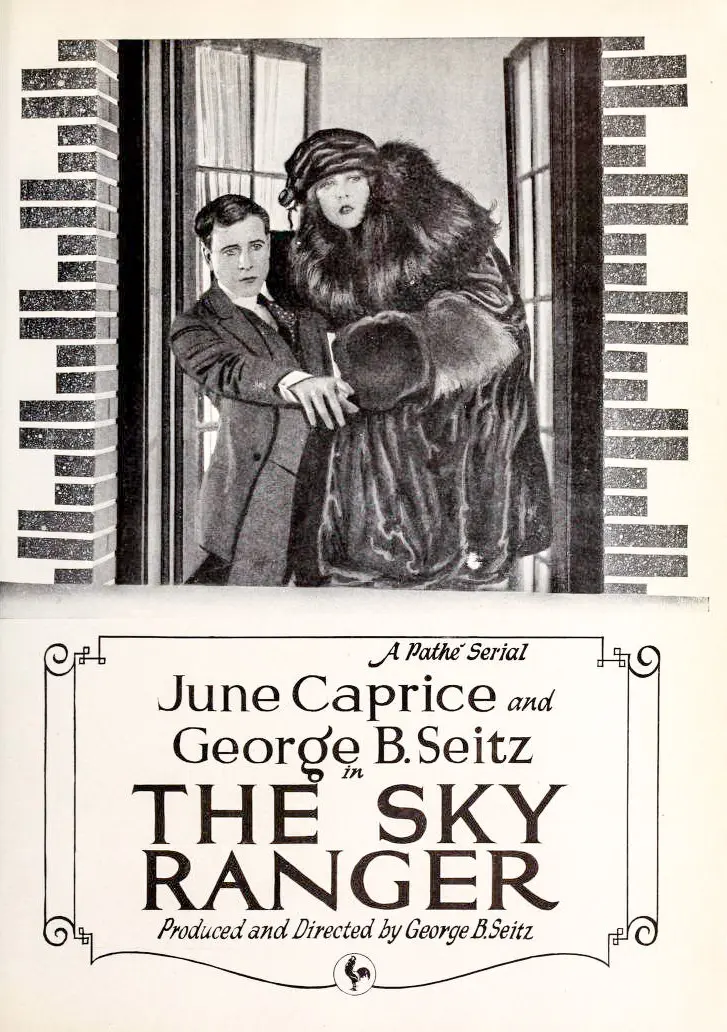
Contemporary exhibitors were encouraged to hire a ten-piece ensemble and a Foley artist who could snap celery for neck-breaks and grate coconuts for avalanches. If you’re screening the 2023 restoration (available on Mubi in 4K), crank the new score—a riot of prepared piano, bowed electric guitar, and Tibetan longhorn—until your floorboards vibrate. The dissonance bridges a century, turning intertitles into incantations.
June spends chunks of the narrative trussed up like gift-wrapped contraband, yet Caprice injects micro-rebellions: a cocked eyebrow here, a deliberate sabotage of Santro’s altimeter there. The film is too rambunctious to be overtly feminist, but it allows its heroine the climactic agency—she, not George, rips the blueprints from the getaway plane and hurls them into the void. That single gesture ricochets louder than any sermon on suffrage.
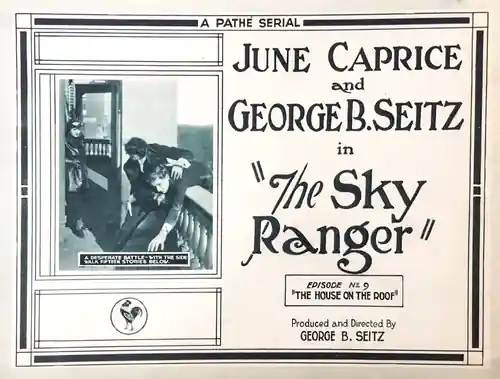
Yes, the Tibetans are nameless, glowering Others; yes, the landscape is a convenient abyss. Yet Seitz undercuts orientalism by making the white scientists the true savages—pyromaniacs who’d raze Shangri-La for a patent. The film anticipates the post-colonial shrug of Whom the Gods Destroy, even if it lacks the linguistic toolkit to confess its guilt.
The 2023 4K scan from a 35mm Dutch print reveals textures previously smothered in mildew: the herringbone weave of George’s waistcoat, the arterial map of cracks in Santro’s aviator goggles. More startling are two previously lost intertitles—one a lurid confession from Murdock about patricide, another a quasi-scientific rant from the Professor comparing the fire-ray to “the ejaculate of Prometheus.” These shards tilt the film toward the Grand-Guignol ecstasies found in The No-Good Guy.
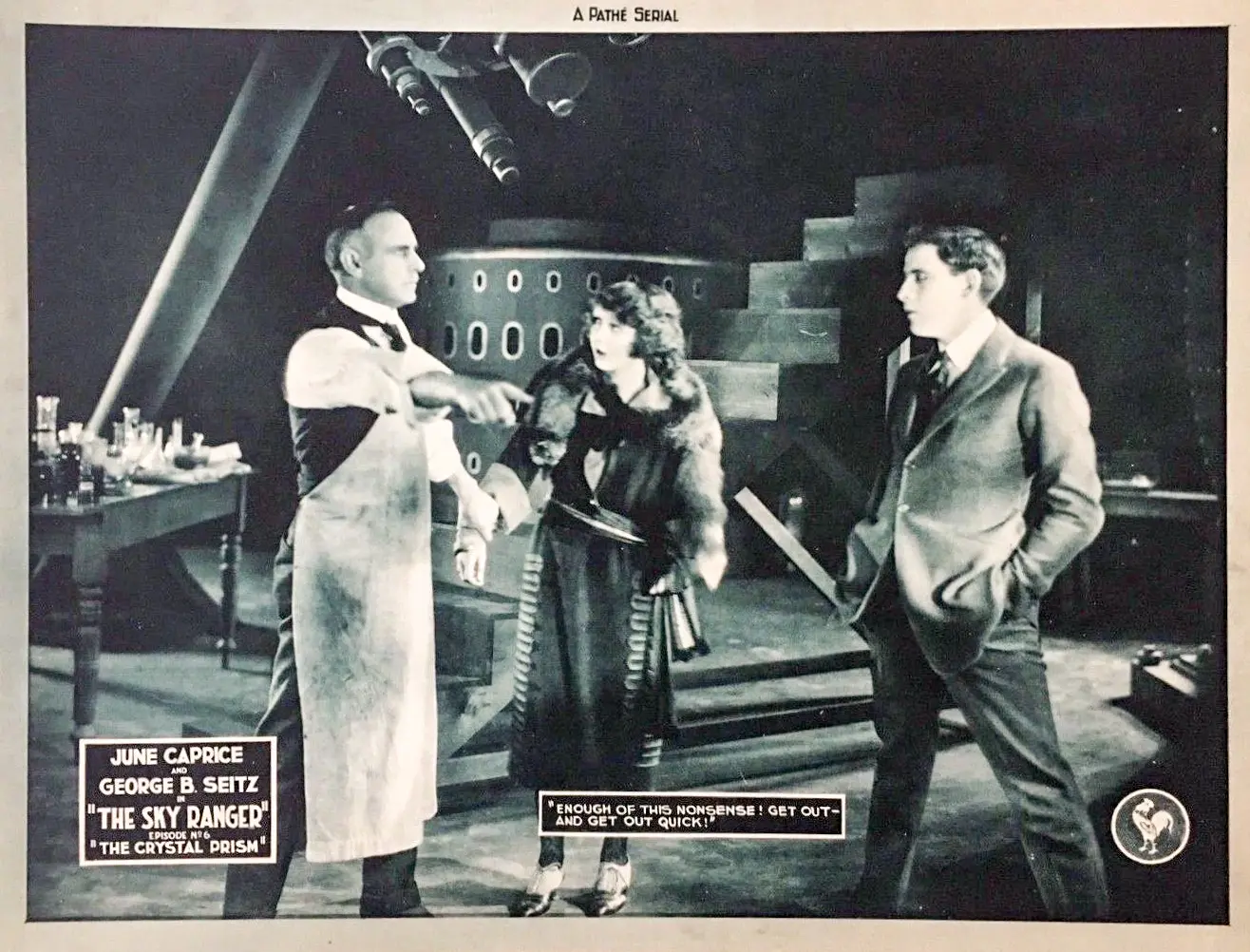
If I’m Glad My Boy Grew Up to Be a Soldier hymns patriotic sacrifice, and Something Different flirts with urbane ennui, then The Man Who Stole the Moon is the hyperactive step-cousin who arrives at the funeral with fireworks in his pockets. It shares DNA with The Game of Three in its circular obsessions—every alliance is a feint, every rescue a prelude to betrayal. Yet the film’s true sibling is the cosmos itself: vast, indifferent, prone to explosions that birth new stars.
Some silents age into museum pieces—revered, embalmed, visited on rainy Sundays. Others, like this lunar outlaw, refuse to behave. They howl across the century, scorch your earbuds, and remind you that cinema was always meant to be a contact sport. Seek it on the biggest screen you can hijack; let the acetate perfume of nitrate mingle with your popcorn steam. When June’s veil flutters against the night sky like a white flag stitched from starlight, you’ll understand why George never bothered to ask the moon for permission—he just stole the damn thing, and for ninety breathless minutes so will you.
(© 2024 Nitrate Nosferatu Blog – all screenshots under fair use for critique; buy the restoration here.)
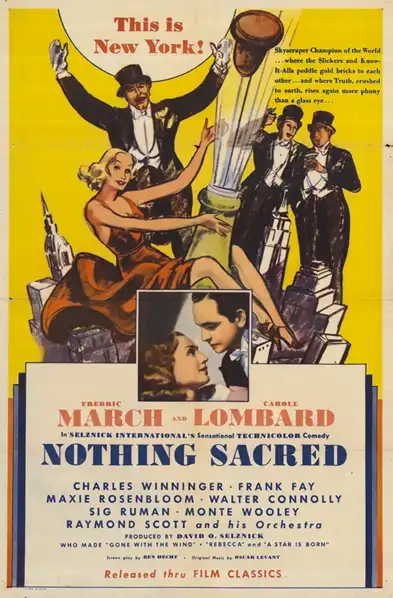
IMDb 6.8
1937
Community
Log in to comment.