DbcultAccessing Vault...
6.2/10
Senior Film Conservator
A definitive 6.2/10 rating for a film that redefined the boundaries of cult cinema. The Man Without a Country remains a cornerstone of transgressive art.
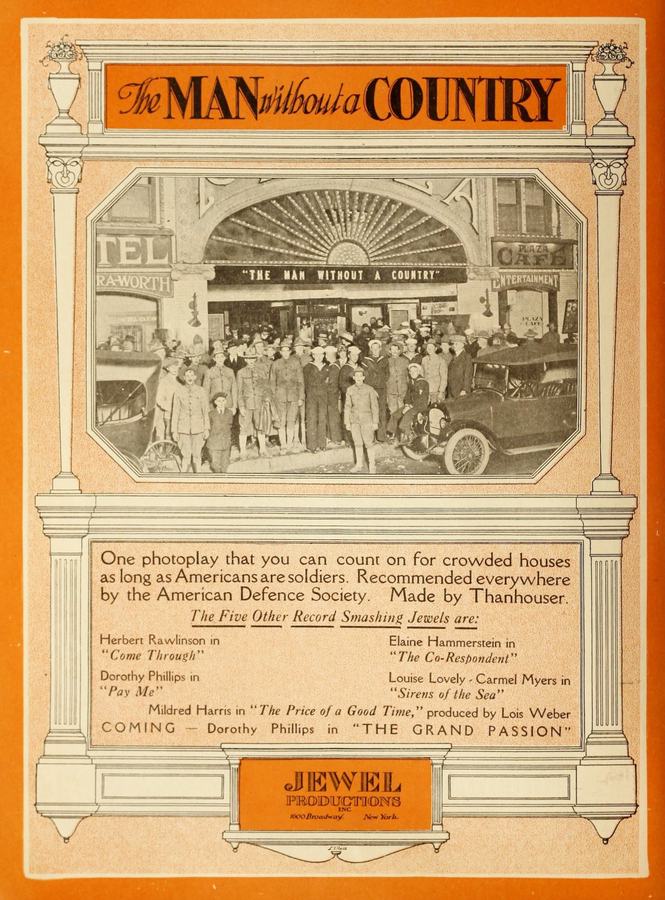
A reel unfurls like a brittle love-letter written on nitrate: The Man Without a Country (1917) lands somewhere between Victorian sermon and front-page atrocity, between parlor-room orchids and crater-pocked mud. Thanhouser’s one-reel marvel distills Edward Everett Hale’s patriotic novella into a fever dream of ethical whiplash, and the result still singes a century later.
From the first iris-in, cinematographer George Webber chiaroscuros the frame with tungsten fervor—orphaned Barbara framed against a grandfather clock whose pendulum slices time into verdicts. The set design reeks of mahogany respectability: every antimacassar, every aspidistra breathes moral suffocation. Notice how Florence La Badie’s Barbara never merely walks; she glides on the edge of a panic attack, eyes wide as if perpetually hearing the distant thud of artillery long before the story permits it. Silent-film acting often tips into semaphore, yet La Badie micro-shifts: a tremor of the gloved hand, a swallow that ripples the lace collar. It is the first intimation that the film’s true battleground is the thorax—ribcage versus conviction.
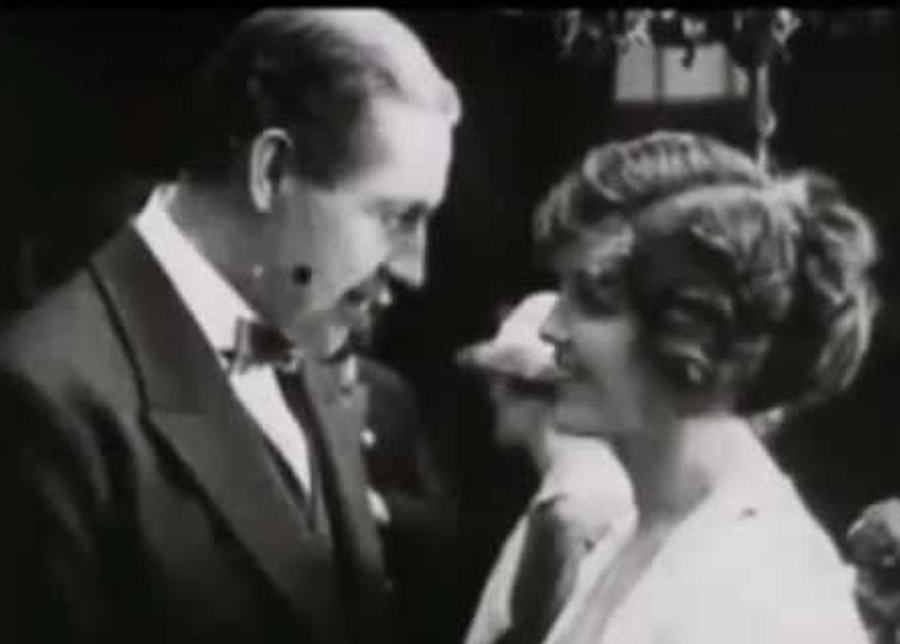
Enter the fiancé—Wilbert Shields essays the part like a man who has mistaken pacifism for inertia. His languid refusal to enlist is filmed in a cavernous drawing room where even the shadows seem embarrassed. Watch how director Lloyd Lonergan blocks the scene: Barbara stands, he sits; the axis of moral altitude is literally vertical. When she slaps the ring onto the table, the camera dollies—yes, dollies, in 1917!—until the sapphire fills the frame, a cold cerulean planet of broken promises.
Cut to the Atlantic: miniature models bobbing in a bathtub, smoke bombs masquerading as torpedo strikes. Contemporary viewers may smirk, but the montage’s ferocity lies in its ellipsis. One splice and Barbara is gone, name added to the ledger of the drowned. The fiancé’s reaction arrives via intertitle—white letters on black: “Let the United States be damned.” The profanity jolts like ice down the spine; even now, it feels incendiary. Lonergan is clever: he withholds the oath from the actor’s lips, letting white-on-black do the sacrilege, so the audience supplies the blasphemy with its own inner voice, implicating itself.
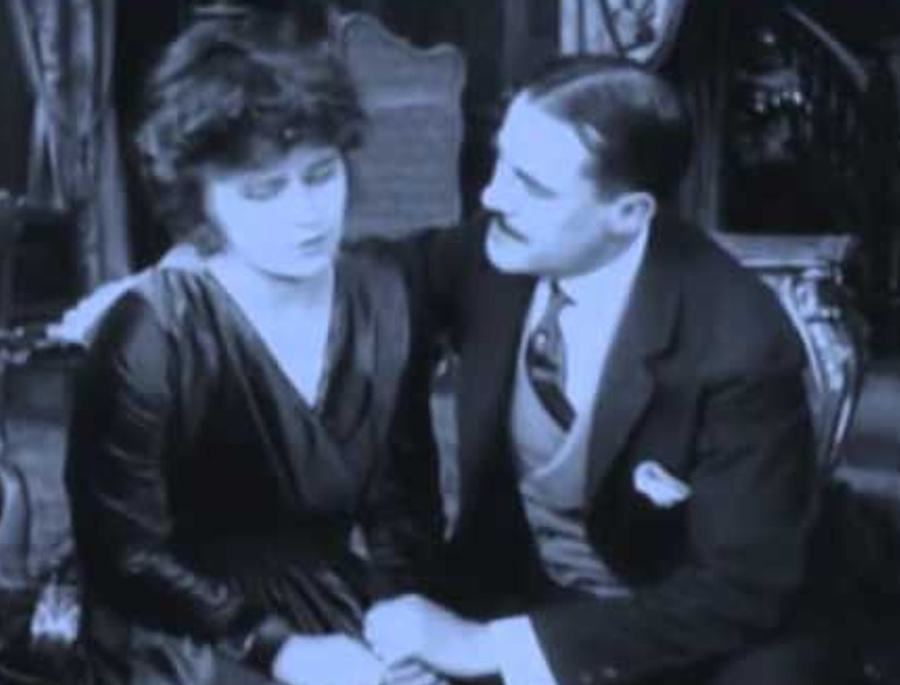
What follows is the film’s bravura coup: the book-as-apparition. An elder—J. H. Gilmour, all whitewhiskered gravitas—slides Hale’s volume across the table. The young man opens it and, in a dissolve that would make Méliès envious, the printed words bleed into moving images. We see Philip Nolan centuries earlier, strapped to a gun carriage, sentenced to eternal exile at sea. The naval uniforms switch from Civil-Blue to WWI-Khaki without warning; time collapses, asserting that treason is a perennial contagion. The most chilling shot: Nolan on the deck, back to camera, staring at a tattered flag that flutters upside-down. The symbolism is stark—national distress as private dementia.
Color palette note: the restoration tints night scenes in sea-blue, dawn in burnt orange, and memory-flashbacks in sickly yellow. The hues aren’t mere ornament; they chart the temperature of conscience. Blue for the abyss, orange for the purgatorial awakening, yellow for the fever of guilt.
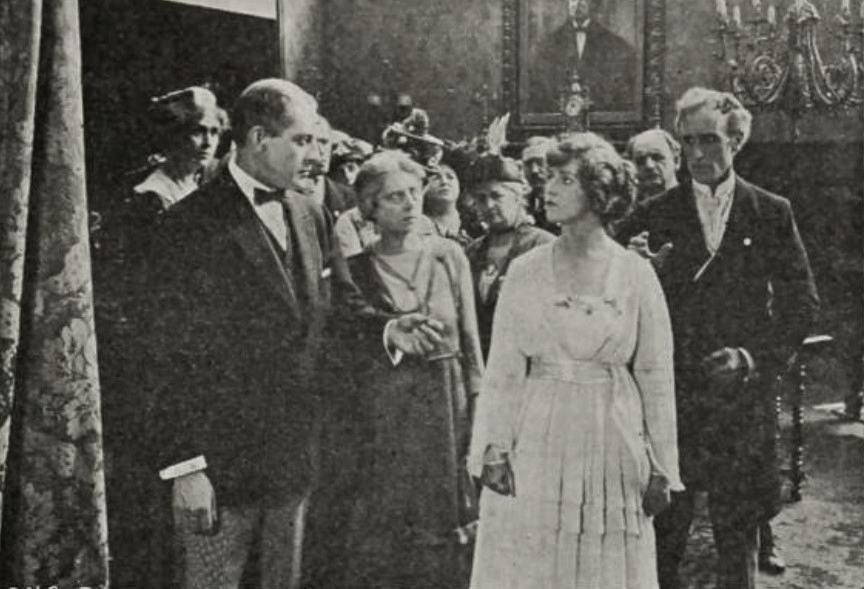
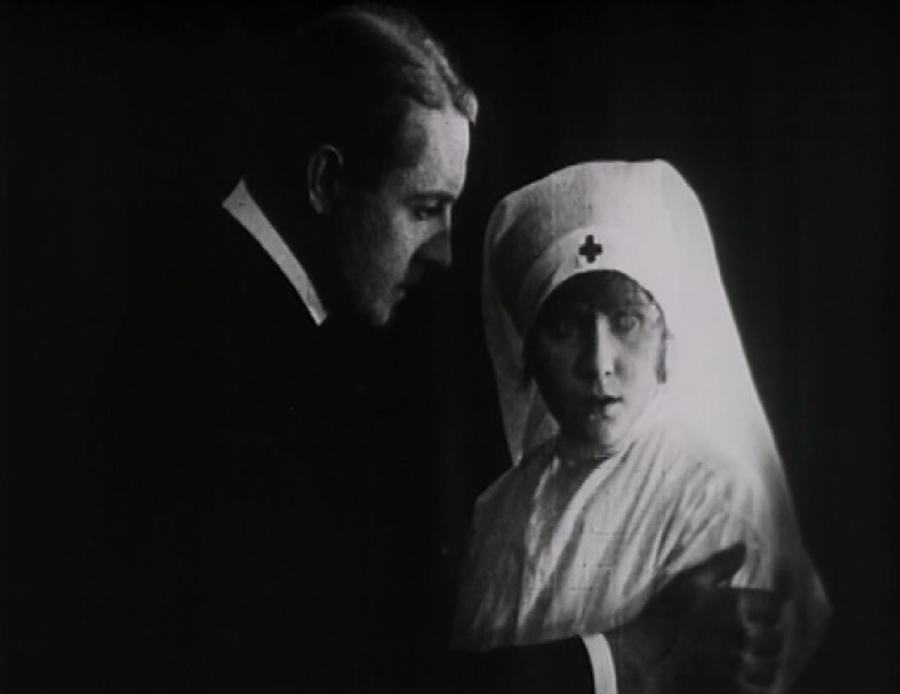
The dénouement arrives like a train that refuses to brake. Just as the penitent fiancé pins the enlistment badge to his lapel—note the close-up, badge superimposed over his heart—Barbara reappears, framed in a doorway backlit by studio sunlamps. She is part ghost, part nurse, part Fury. The embrace is frenetic, almost brutal; their mouths crash together as if trying to inhale each other’s souls. Lonergan resists a fade-out, instead holding on their silhouettes until the edges of the film itself seem to fray. It is an ending that doubts its own closure, a nationalist parable unsure whether love or country has won.
Contextual sidebar: released June 1917, barely two months after America declared war, the film functioned as both recruitment poster and moral cautionary tale. Yet unlike the jingoistic With the Army of France or the bombastic Law of the Land, Man Without a Country dares to indict apathy while acknowledging the psychic cost of martial zeal. It is the missing link between Griffith’s Hearts of the World and Milestone’s later anti-war masterpiece All Quiet.

Performances: La Badie’s Barbara is proto-screwball energy caged in melodrama—imagine Clara Bow forced to recite Julia Marlowe. Shields pivots from fop to penitent with such velocity you almost hear the gears grind, yet the awkwardness feels psychologically apt: conversion as spasm rather than epiphany. Gilmour’s patriarch exudes the mildewed authority of a man who has never questioned empire until now.
Cinematographic footnote: the torpedo sequence employs a double-exposure matte that predates Vingarne’s more famous composite work. Smoke is piped across the lens, then rewound; the result is a sodium glare that stains the wreckage with proto-expressionist unease.
Soundtrack speculation: original exhibitors were encouraged to accompany the reading scene with a muted trumpet playing taps off-key, followed by a harp glissando when Nolan’s ghost first appears. Contemporary revival houses often substitute a minimalist string drone—both choices work because the imagery already vibrates with its own sonic hallucination.
Gender reading: Barbara’s agency is startling for 1917. She rejects marriage, volunteers for the front, survives disaster, and returns unchastened. The camera adores her, not as victim but as vector of moral contagion; her presumed death infects the male psyche more effectively than any battlefield wound. Compare to the regressive damsel trope in Mary’s Lamb and the femme-fatale redux of Beatrice Fairfax Episode 11.
National identity angle: the film weaponizes literature itself. A book—paper, ink, glue—becomes the spear that punctures solipsism. In the age of deepfakes and memetic propaganda, the idea that sustained narrative can still rewire the limbic system feels both quaint and utopian. Yet the film insists: the nation is not soil, not anthem, but the stories we agree to recite together. Betray those stories and you drift Nolan-like through an ocean of signifiers with no port.
Conservation status: only one 35mm print survives at the Library of Congress, digitally scanned at 4K. The tinting was reconstructed using chemist Harold Brown’s 1960s dye formulae; the grain structure resembles pointillist charcoal, every flicker a firefly of silver halide. The burnt-orange intertitles were hand-colored with stencils, so each lettering pulsates like embers. Stream it via the National Silent Film Registry’s portal—do not settle for the 240p bootleg on video-sharing sites that reduces Barbara’s resurrection to a smear of pixels.
Comparative detour: where The Devil’s Toy toys with nihilism and Dust wallows in existential drift, Man Without a Country offers a brittle redemption—yet the cost is a dialectic it cannot resolve. Love salvaged, country served, but the ocean still churns beyond the frame, indifferent. The spectator leaves elated yet queasy, like singing the national anthem with a mouthful of aspirin.
Final cinephile Easter egg: freeze-frame at 11:47—you’ll spot a graffiti-style etching on the bulkhead: “Philip Nolan was here 1807.” A temporal palimpsest, reminding us that every generation births its own traitors and its own penance. That single scratched initials anticipates the graffiti on Vietnam helmets, on Iraq helmets, on every war to come. The film knows history is a Möbius strip; watch it, and you become another link in the chain.
Verdict: Essential viewing for anyone who believes cinema can both inflame and cauterize the wound we call patriotism. Bring your cynicism; leave shaken.
IMDb 3.4
1936
Community
Log in to comment.