DbcultAccessing Vault...
5.2/10
Senior Film Conservator
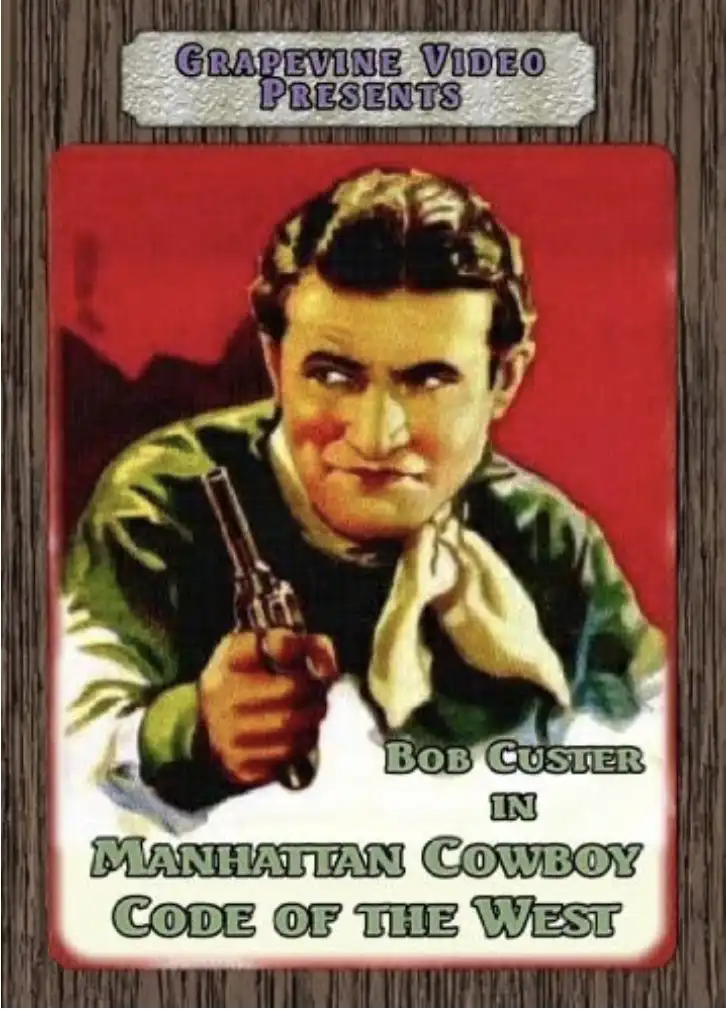
A definitive 5.2/10 rating for a film that redefined the boundaries of cult cinema. The Manhattan Cowboy remains a cornerstone of transgressive art.
For dedicated fans of early Westerns, particularly those with a soft spot for Bob Custer's particular brand of laconic heroism, The Manhattan Cowboy offers enough dusty charm to warrant a viewing. For anyone else, especially those accustomed to more nuanced storytelling or faster pacing, this 1930s oater will likely feel like a long, slow ride through familiar territory. It’s a film that demands a certain patience, revealing its modest pleasures only to those willing to meet it halfway.
Bob Custer, as the titular Jack Steel, maintains a consistent, if somewhat one-note, stoicism throughout. His expressions rarely shift beyond a determined squint or a slight frown, even when delivering lines meant to convey urgency. This isn't necessarily a flaw for the era; it's a type of performance, a granite-jawed ideal. We see it most clearly during the initial scenes in the East, where his 'trouble with the law' is conveyed more by his posture and the exasperation of others than any genuine dramatic outburst from Custer himself.
Arden Ellis, playing Alice Duncan, is mostly relegated to the 'damsel in distress' role. She brings a certain wide-eyed earnestness, but the script gives her little to do beyond reacting to the men around her. Her most memorable moment might be a brief, almost defiant glance towards Slim Whitaker after her kidnapping, hinting at a strength the film ultimately doesn't explore.
Slim Whitaker, as the villainous cowhand, Slim, leans heavily into the sneering antagonist archetype. He’s effective in a broad sense, his imposing frame and gravelly voice making him a credible threat, even if his motivations are never truly explored beyond simple possessiveness. The film doesn't waste time on psychological depth, which, in a way, is a strength for its genre.
Lynn Sanderson, as Slim's jilted girlfriend, provides a necessary plot device. Her betrayal of Slim is quick and unceremonious, driven more by narrative necessity than genuine emotional complexity. There's a moment when she delivers the crucial information to Jack, her eyes darting between him and the distant ranch, a small flicker of regret or fear that adds a fleeting touch of humanity to an otherwise functional role.
The film’s pacing is, charitably, deliberate. The initial setup of Jack's arrival at the ranch and his budding romance with Alice takes its time, punctuated by long shots of horses galloping across open plains that, while visually appealing, don't always advance the plot. The transition from light romance to urgent kidnapping feels a bit abrupt, almost as if the filmmakers remembered they had a limited runtime for action. The final act, with Jack riding to the rescue, picks up considerably, offering a more consistent rhythm of pursuit and confrontation.
Tonal shifts are subtle but present. There's an almost domestic charm to the ranch life scenes, which then gives way to the more conventional thrills of a chase and rescue. The film never quite achieves a sense of genuine dread, even during Alice's captivity; the stakes feel more like a foregone conclusion than a real peril.
Cinematically, The Manhattan Cowboy is a product of its time. The outdoor photography is competent, showcasing the vastness of the Western landscape, though often in a functional rather than artful way. There are few truly dynamic compositions, with many shots framed quite plainly to capture the action. Close-ups are sparse, generally reserved for key emotional reactions, which are often held a beat too long, perhaps to compensate for the era's less subtle acting styles. The interiors, particularly the ranch house, feel a little underlit, lending a slightly muted quality to scenes that might have benefited from more contrast.
The editing is mostly straightforward, favoring continuity over stylistic flourishes. One particular sequence involving a long shot of Custer riding across a ridge, then cutting abruptly to a close-up of him dismounting, feels a little jarring, a small hiccup in an otherwise predictable rhythm. It almost feels like two different takes stitched together without much thought for flow.
Where the film succeeds is in its unpretentious delivery of classic Western tropes. The horse riding sequences are generally well-executed, with Cliff Lyons likely contributing to some of the more impressive stunts. The final confrontation, while not groundbreaking, provides a satisfying resolution, leaning into the simple heroism expected of the genre. It's a film that knows what it is and doesn't try to be anything more.
Its primary weaknesses lie in its predictability and occasional narrative flatness. Characters are archetypes rather than individuals, and dialogue often serves purely to advance the plot rather than reveal personality. The romance between Jack and Alice, while central, feels underdeveloped, relying more on implied connection than truly earned chemistry. The motivations of the supporting villains, beyond Slim, are barely sketched in, making them feel like mere obstacles.
Ultimately, The Manhattan Cowboy serves as a competent, if unremarkable, example of its genre and era. It’s a historical artifact that offers a glimpse into the straightforward storytelling prevalent in early B-Westerns. For those seeking a deep narrative or complex character study, it will disappoint. But for viewers who appreciate the simple pleasure of a good guy on a horse rescuing the girl, and are willing to overlook its rough edges, there’s a certain nostalgic charm to be found. It’s not essential viewing, but it’s not entirely without its dusty pleasures either. Approach it with the right expectations, and you might just enjoy the ride.
IMDb 5.8
1935
Community
Log in to comment.