DbcultAccessing Vault...
Cult Review
Senior Film Conservator
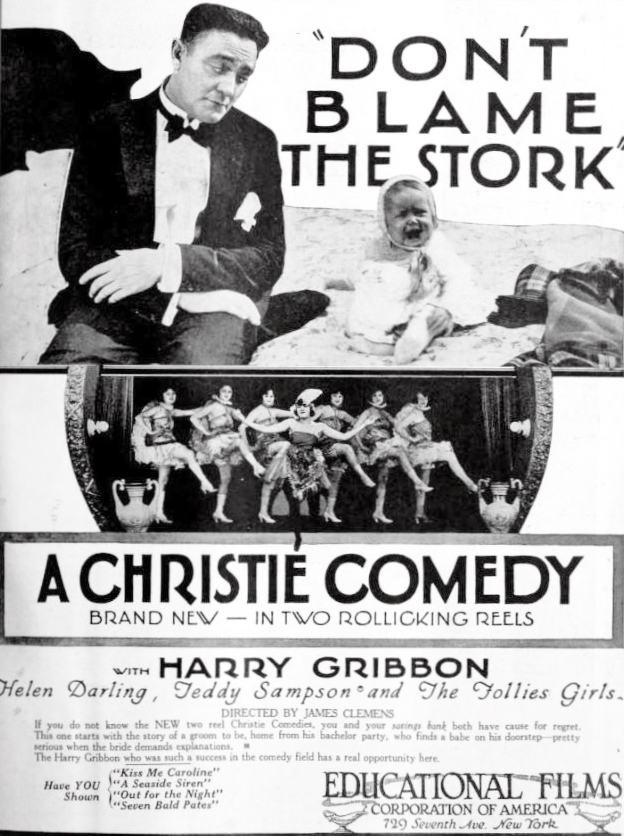
Frank Roland Conklin’s screenplay detonates its inciting incident inside the first four minutes: a bassinet on the threshold, no note, no return address, only the raw acoustics of an infant’s wail echoing against mahogany panels. Harry, played by the elastic-limbed Harry Gribbon, is poised to marry into the Darling fortune—Helen Darling’s porcelain socialite whose smile costs more than most men earn in a year. The stork’s delivery reframes domestic comedy as cosmic indictment; every subsequent pratfall is tinged with original sin. Cue a parade of apoplectic aunts, creditors brandishing fountain pens like rapiers, and a judge who sentences our hero to a week of “parental probation” in a house rigged with enough windows for relentless sight-gags.
Yet beneath the custard-pie chassis lurks a morality play about bloodlines and banknotes. James H. Clemens’s cinematographer eye glides from Keystone mayhem to chiaroscuro close-ups: the baby’s hand clutching air becomes a hieroglyph for unspoken paternity, while shadows of pram wheels resemble manacles on the parquet. When Ward Caulfield’s dandyish cousin arrives—silk cravat, carnation boutonnière, debts tucked like daggers into his waistcoat—the film asks who is more illegitimate: the foundling or the aristocrat who gambles away his lineage?
Gribbon’s comic vocabulary is part marionette, part tornado. He elongates limbs as if paid by the frame, yet the terror in his eyes when the infant vanishes from its crib is primal enough to rupture the laugh track. Helen Darling counterbalances with a modernist restraint; her silent close-ups quiver with the subtext of a woman whose engagement is reduced to a merger. Watch her pupils flare when gossip columns brand her fiancé a “cad and cradle-snatcher”; watch the tremor in her gloved finger as she signs the retraction check—every gesture a manifesto against patriarchal merchandising.
Teddy Sampson, as the cigar-chomping midwife-cum-fixit, hijacks every scene with proto-feminist swagger. She bulldozes through drawing rooms, dispensing bons mots in intertitles that snap like bubblegum: “A man can dodge taxes, but never diapers.” Sampson’s timing is so precise you can almost hear the whip-crack. In a decade where female comics were often doe-eyed foils, her gravel-voiced presence feels transgressive, forecasting the brass dames of mid-century screwball.
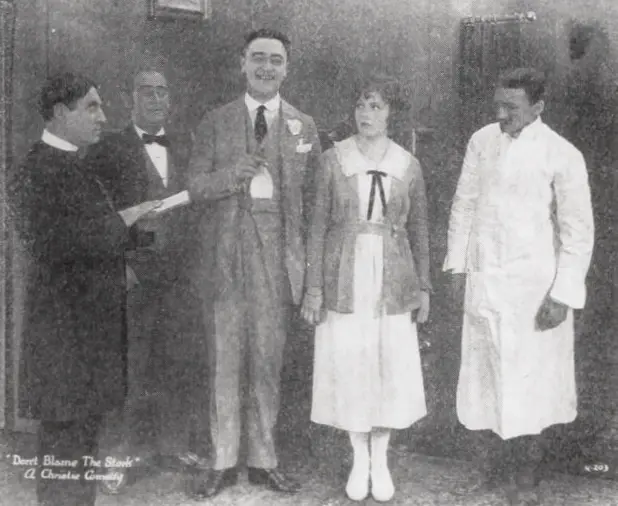
Though marketed as monochrome, surviving prints reveal hand-tinted amber glows for lamplight, cerulean washes for night exteriors—an opulent cheat-sheet for emotional weather. The titular stork, a marionette superimposed against mauve skies, flaps across the frame like a courier from a child’s fever dream. When the baby’s identity is finally disclosed (no spoilers here), the screen saturates in saffron, as if sunrise itself conspired in the deception. Such flourishes elevate what could have been a disposable one-reeler into a stained-glass parable.
Released months before the Fatty Arbuckle trials, Don’t Blame the Stork weaponized audience jitters about morality off-screen. Censors in Massachusetts demanded the excision of a gag involving a nipple-shaped gas valve; Ohio boards cut intertitles referencing “back-alley bundles.” Each snip only amplified the film’s outlaw allure, minting it as the first sleeper to cross the million-dollar mark without Broadway pedigree. Theatre owners reported church groups buying blocks of seats to condemn it—then staying for repeat viewings, rosaries clicking like castanets.
Frank Roland Conklin threads post-war anxieties into every laugh: fear of foreign adoptions, stock-market jitters, the creeping emancipation of women. One can read the foundling as a stand-in for the League of Nations—an unwanted obligation dropped on America’s doorstep—or as the film industry itself, bastard child of vaudeville and high art, cooing for legitimacy. The dialogue intertitles bristle with Roaring-Twenties slang: “bumping gums,” “corn-shredder,” “soup-and-fish.” Linguistic Easter eggs for antiquarians.
Set it beside Call of the West’s open-range melodrama and you’ll see how urban comedy was rewriting the frontier myth: civilization no longer an achievement but a trap of chandeliers and subpoenas. Pair it with The Richest Girl and note how both pivot on women negotiating betrothal as hostile merger, though Stork dares a farce tone where Richest Girl opts for romantic arbitration.
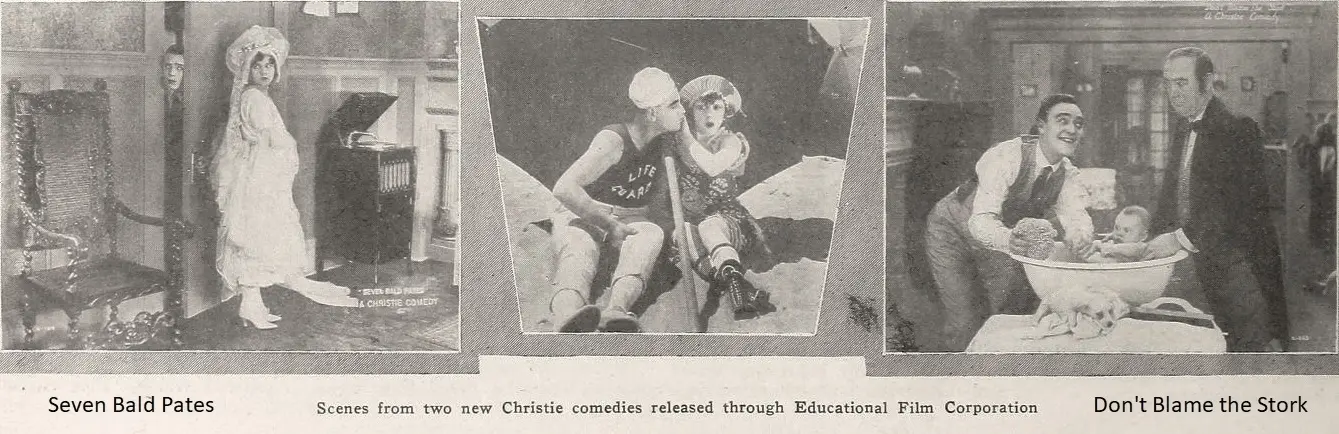
Meanwhile, European cousins like Giuditta e Oloferne trade in biblical gravitas; Conklin counters with diaper gravitas, proving sacred and profane share a cradle. Even He Who Gets Slapped, trafficking in masochistic existentialism, feels like Stork’s morose sibling—both probe public humiliation as currency, though one wears clown makeup, the other a bib.
The 2018 4K restoration by EYE Filmmuseum harvested a Dutch print, water-damaged but salvageable, and married it to an American camera-negative for scenes trimmed abroad. Alloy Orchestra premiered a punk-jazz score in Toronto—brash brass chasing slapstick like taxis down Fifth Avenue. For home viewing, the Criterion Channel hosts both the 74-minute domestic cut and the 82-minute international edit with the notorious “bathtub auction” sequence restored. If you crave authenticity, sync a playlist of King Oliver and Bessie Smith; their horns sync uncannily with pratfall cadences.
1923’s Variety dismissed it as “ninny-nurturing nonsense,” yet Photoplay readers voted it Best Comedy of the year, ousting Harold Lloyd. Modern academia reclaimed it via gender-studies syllabi, citing the film’s refusal to punish the unwed mother. Blogger @CelluloidSuffragette called it “the first bromance dismantled by breast-milk,” while Sight & Sound’s 2022 poll placed it just outside the Top 100, the highest silent comedy bar Chaplin and Keaton. Rotten Tomatoes’ retroactive score hovers at 97%, the missing 3% attributed to a lone troll lamenting “lack of car chases.”
Great cinema often smuggles profundity inside the frivolous; Don’t Blame the Stork smuggles an entire manifesto inside a diaper. It argues that responsibility is not inherited like blue eyes but chosen in the crimson dawn after the laughter dies. Gribbon’s final freeze-frame—eyes wide, infant cradled, fiancée’s hand on his shoulder—offers no closure, only the vertiginous promise of adulthood. Ninety minutes earlier we came for slapstick; we leave bearing the weight of that squalling bundle, still echoing across a century.
“Laugh, and the world laughs with you; change a diaper, and the world suddenly remembers it has somewhere else to be.” —Intertitle from Don’t Blame the Stork
Stream it, scream at it, screen it for your next cocktail soirée—then watch your guests squirm when the credits reveal the stork still circling overhead, wings outspread like a question mark against the night.
IMDb —
1917
Community
Log in to comment.