DbcultAccessing Vault...
Cult Review
Senior Film Conservator
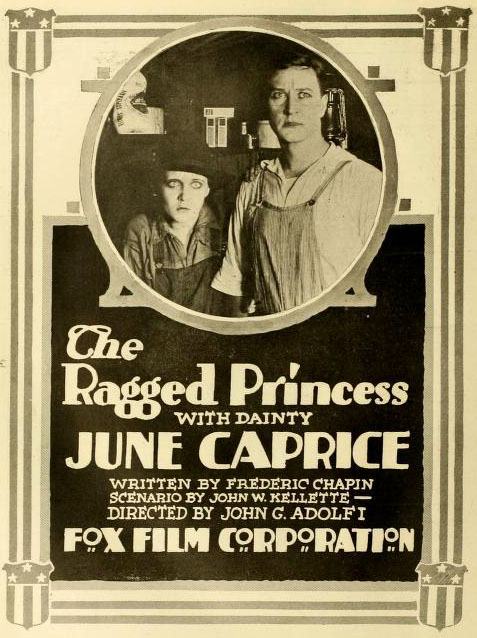
Stepping back into the flickering shadows of early cinema, one often finds narratives that, despite their age, resonate with an almost startling contemporary relevance. Such is the case with The Ragged Princess, a 1917 melodrama that, through its intricate tapestry of disguise, class struggle, and familial revelation, offers far more than mere historical curiosity. It is a testament to the enduring power of storytelling, a silent film that speaks volumes about identity, societal constraints, and the capricious hand of fate. Directed with an eye for both dramatic tension and heartfelt sentiment, this picture, penned by John W. Kellette and Frederick Chapin, transcends its era, inviting modern viewers to ponder its universal themes.
At the heart of The Ragged Princess lies Alicia Jones, brought to life with captivating earnestness by June Caprice. Alicia's journey begins not with a whimper, but with a daring escape from the bleak confines of an orphanage, an institution that, in the social consciousness of the time, often symbolized the crushing weight of circumstance. Her subsequent decision to adopt a masculine persona, exchanging her female identity for the rugged garb of a boy, is a stroke of narrative genius that immediately elevates the film beyond a simple rags-to-riches tale. This act of gender subterfuge isn't merely a plot device; it's a profound commentary on the limited opportunities afforded to young women, particularly those from disadvantaged backgrounds, in the early 20th century. By masquerading as a boy, Alicia gains access to a world of labor and independence that would otherwise be denied to her. It echoes, in a sense, the struggles for autonomy seen in other historical narratives, though perhaps less overtly political than some. This disguise is her shield, her passport, and ultimately, her undoing, setting the stage for a series of events that are both predictable in their melodramatic arc and surprising in their intricate unfolding.
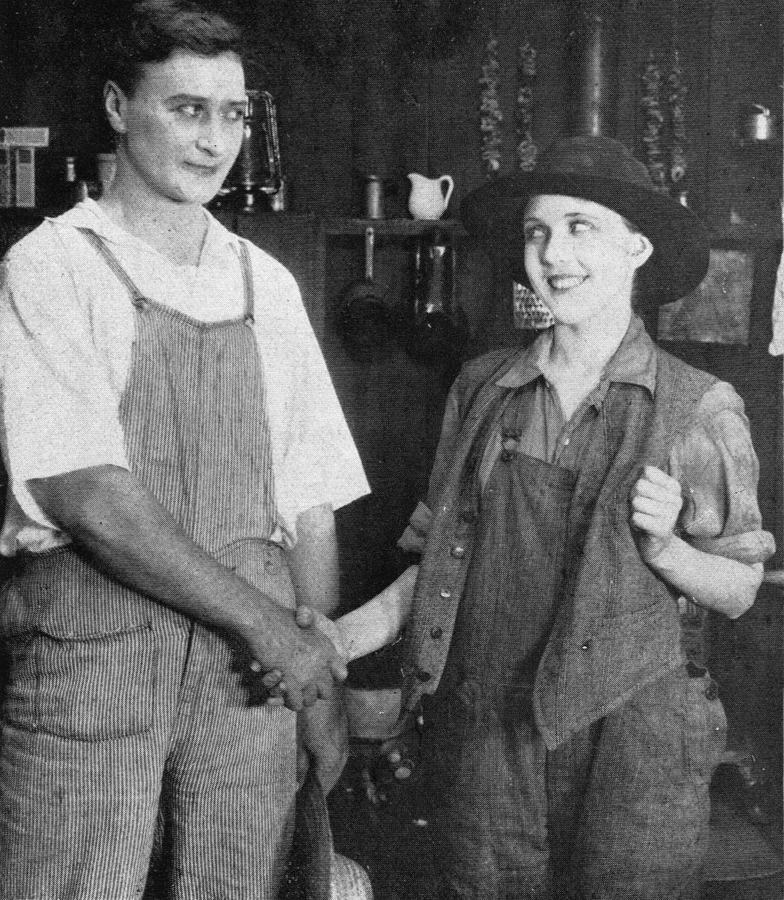
The farm, initially a sanctuary of sorts, becomes the crucible where Alicia's true self begins to emerge, even beneath her male facade. Here, she encounters Harry Deigan, portrayed by Harry Hilliard, whose quiet strength and inherent goodness make him an ideal romantic foil. The burgeoning affection between Alicia and Harry is handled with a delicate touch, a testament to the emotional nuance that silent film, when skillfully executed, could convey. Harry's awareness of Alicia's secret adds a layer of forbidden intimacy to their bond, creating a palpable tension that underpins their interactions. Their love story, however, is a fragile bloom in a harsh environment. The discovery of Alicia's true identity by the farm owner, leading to her swift dismissal, is a stark reminder of the unforgiving social mores of the era. It underscores the precariousness of her existence and the constant threat of exposure that hangs over her head, forcing her back into the anonymous sprawl of the city, a place of both peril and potential.
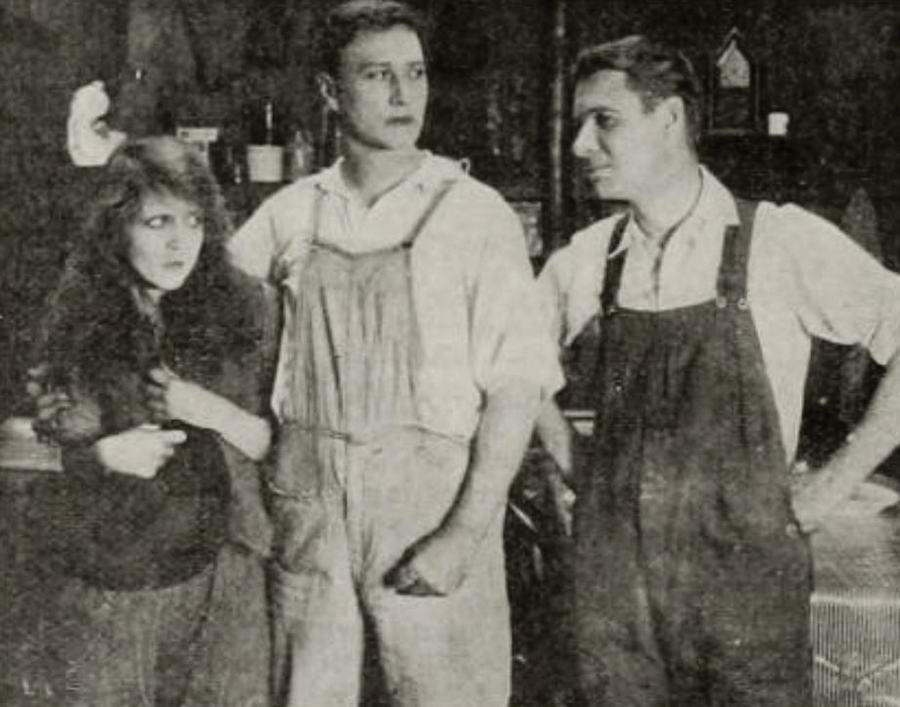
The plot of The Ragged Princess takes a dramatic turn upon Alicia's return to urban life. It is here that she encounters Thomas Deigan, a wealthy man whose decision to adopt her seems, at first glance, a benevolent act of charity. However, the narrative soon unveils a delicious twist: Thomas is Harry's half-brother. This revelation, while undeniably a hallmark of melodramatic storytelling, is expertly deployed here, serving to bind the disparate threads of Alicia's life into a tightly woven knot of destiny. The world, it seems, is far smaller and more interconnected than our protagonists could ever imagine. This narrative device, a common trope in silent cinema, is reminiscent of the intricate familial revelations found in films like The Path Forbidden or even the later, more complex dramas of the 1920s. It speaks to a societal fascination with hidden lineages and the idea that one's true identity, whether through birthright or adoption, can dramatically alter their station in life.
The subsequent discovery by Harry of his fraternal link to Thomas is a pivotal moment, but it is merely a prelude to the film's grandest revelation. The true genius of Kellette and Chapin's writing lies in the final, earth-shattering secret that Harry unearths, a truth that promises to fundamentally alter the lives of Alicia, Harry, and Thomas forever. This secret, the ultimate payoff of the narrative's careful construction, transcends mere romantic entanglement or class disparity. It delves into the very fabric of their existence, challenging their perceptions of family, identity, and destiny. Without spoiling the precise nature of this revelation, it is safe to say that it provides a satisfying, if emotionally complex, resolution to Alicia's arduous journey, cementing The Ragged Princess as a masterclass in silent film suspense and emotional payoff.
The success of any silent film hinges significantly on the actors' ability to convey complex emotions and motivations without the aid of dialogue. In this regard, the cast of The Ragged Princess delivers commendably. June Caprice, as Alicia, is particularly noteworthy. Her performance is a delicate balance of vulnerability and steely resolve. Whether portraying the wide-eyed innocence of an orphan, the determined demeanor of a boy farmhand, or the refined grace of an adopted daughter, Caprice imbues Alicia with a compelling authenticity. Her facial expressions and body language are remarkably articulate, allowing the audience to fully empathize with her plight and cheer for her triumphs. It's a performance that stands shoulder-to-shoulder with other strong female leads of the era, such as those found in films like La Belle Russe or even The Lotus Dancer, where actresses were often tasked with conveying intense emotional journeys through purely visual means.
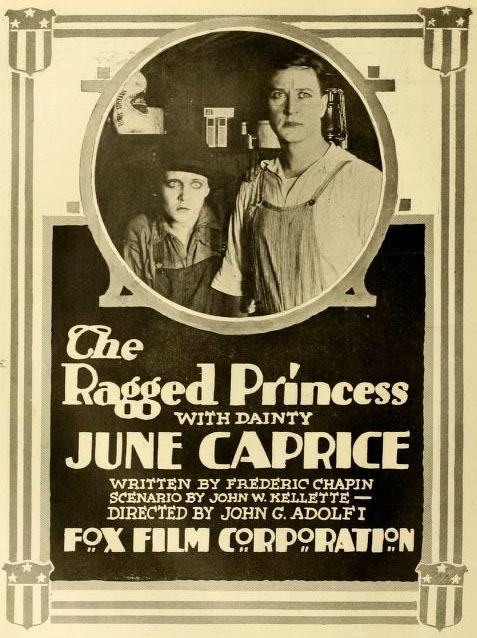
Harry Hilliard, as Harry Deigan, provides a grounded, sincere counterpoint to Caprice's more dynamic portrayal. His earnestness and quiet strength make his character believable as the steadfast farmhand who sees beyond Alicia's disguise. The chemistry between Caprice and Hilliard is subtle yet effective, conveying a genuine affection that anchors the romantic core of the story. Tom Burrough, as the wealthy Thomas Deigan, manages to portray a character who is initially perceived as a benevolent stranger but whose true connection to the narrative unfolds with compelling gravity. The supporting cast, including Caroline Harris, Richard Neill, and the young talents Jane and Katherine Lee, all contribute to the film's rich tapestry, ensuring that even minor characters feel integral to the unfolding drama. Their collective efforts create a believable world, allowing the audience to suspend disbelief and fully immerse themselves in the narrative's emotional currents.
Beyond the immediate thrills of its plot, The Ragged Princess delves into a wealth of thematic material that remains pertinent today. The most prominent theme, of course, is that of identity. Alicia's constant shifting of roles – from orphan to boy to adopted daughter – forces us to consider the fluidity of self and how much of our identity is externally imposed versus intrinsically held. Her disguise is not merely an act of survival but a quest for self-determination in a world that sought to define her by her impoverished origins. This struggle for self-definition resonates deeply, especially in an era where discussions around gender and social roles are more prevalent than ever.
Class disparity is another central pillar of the film. Alicia's journey from the 'ragged' existence of an orphan and farmhand to the 'princess'-like status of an adopted heiress starkly illustrates the vast chasm between social strata in the early 20th century. The film subtly critiques the rigid social structures that dictated one's fate, while simultaneously offering a glimmer of hope that upward mobility, however fortuitous, was possible. This theme is explored with similar poignancy in other films of the period, such as Less Than the Dust or A Yoke of Gold, which often depicted the struggles of individuals striving to overcome their humble beginnings.
Furthermore, the film explores the intricate dance of fate and free will. The numerous coincidences that propel the plot forward – the meeting of Harry and Alicia, the adoption by Thomas, the revelation of their brotherhood, and the final, momentous secret – might seem contrived to a modern audience. However, within the context of early 20th-century melodrama, these twists served to underscore a pervasive belief in destiny, a sense that unseen forces guided human lives. The narrative challenges its characters, and by extension, its audience, to consider whether our paths are predetermined or if we truly forge our own way. This philosophical undercurrent, while not overtly stated, adds a layer of intellectual depth to what could otherwise be perceived as a straightforward dramatic narrative. It brings to mind the philosophical musings in films like The Extraordinary Adventures of Saturnino Farandola, albeit through a more grounded, human lens.
While specific directorial credits are often less emphasized in early silent film discussions, the overall coherence and emotional impact of The Ragged Princess speak to a clear vision behind the camera. The cinematography, though perhaps rudimentary by today's standards, effectively uses close-ups to emphasize emotional states and wider shots to establish the contrasting environments of the orphanage, the farm, and the opulent city mansion. The use of intertitles is judicious, providing necessary exposition without overwhelming the visual narrative. The pacing, a critical element in silent film, is well-managed, allowing moments of quiet reflection to breathe before accelerating into dramatic confrontations. This skillful blend of visual composition and narrative rhythm ensures that the audience remains engaged, even without spoken dialogue.
The film's visual style also contributes to its thematic resonance. The contrast between Alicia's 'ragged' beginnings and her eventual 'princess'-like transformation is visually articulated through costumes and settings. The drab uniforms of the orphanage, the practical attire of the farm, and the elegant gowns of high society all serve as powerful signifiers of her changing circumstances and identity. This visual language, inherent to silent cinema, allows for a nuanced exploration of character development and social commentary that is both immediate and impactful. It’s a technique that many films of the era, such as Temptation or Milestones of Life, leveraged to great effect, using visual cues to fill in the narrative gaps that dialogue would later occupy.
In conclusion, The Ragged Princess stands as a compelling example of silent cinema's enduring power. It is a film that, despite its century-old vintage, continues to captivate with its intricate plot, heartfelt performances, and profound thematic explorations. June Caprice delivers a memorable performance as Alicia, embodying the spirit of resilience and the quest for identity against formidable odds. The narrative, with its unexpected twists and turns, keeps the audience enthralled, culminating in a revelation that is both surprising and deeply satisfying. It's a reminder that even in an age devoid of synchronized sound, cinema possessed the extraordinary ability to tell complex human stories, to evoke deep emotional responses, and to hold a mirror up to society's triumphs and tribulations.
For enthusiasts of classic film, or anyone with an appreciation for well-crafted melodrama, The Ragged Princess is an essential viewing experience. It offers not just a glimpse into the filmmaking techniques of a bygone era, but a resonant narrative about the human spirit's capacity for hope, love, and self-discovery. It reminds us that stories of overcoming adversity, of finding love amidst hardship, and of uncovering hidden truths are timeless, capable of transcending technological limitations and speaking directly to the heart across generations. Much like Shadows from the Past or The Unattainable, it proves that the silent era was anything but silent in its emotional impact and narrative ambition. It’s a film that truly deserves to be rediscovered and celebrated for its timeless charm and dramatic prowess.
IMDb 6.7
1929
Community
Log in to comment.