DbcultAccessing Vault...
Cult Review
Senior Film Conservator
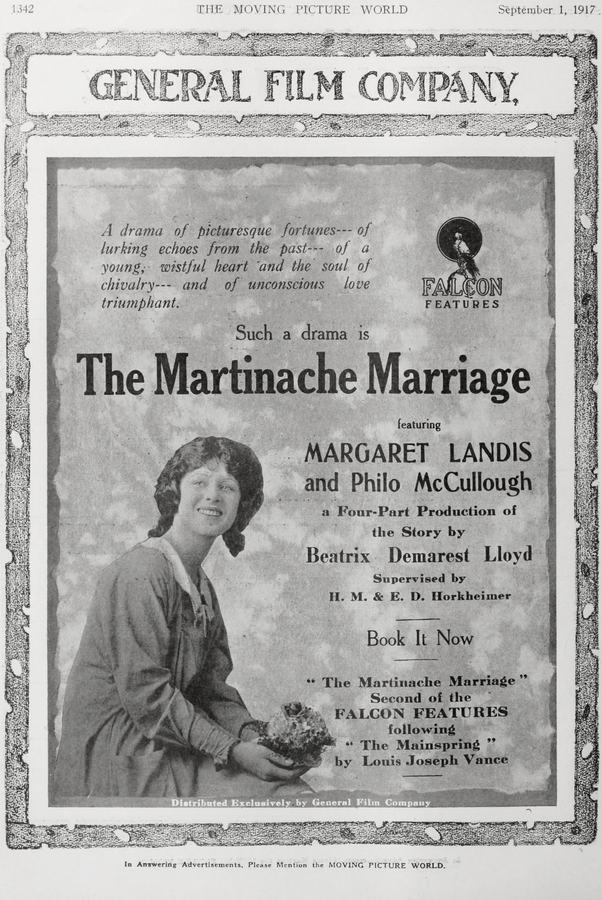
Step back into the nascent days of cinema, a period often dismissed by casual viewers as merely primitive, but which, upon closer inspection, reveals a tapestry of storytelling as rich and complex as any modern narrative. Among the silent era's often-overlooked treasures lies The Martinache Marriage, a film that, even a century after its premiere, resonates with surprising depth and emotional intelligence. It's a testament to the enduring power of classic narratives, proving that the absence of spoken dialogue in no way diminishes the profound impact of well-crafted character arcs and intricate plotting. This isn't just a relic; it's a vibrant piece of cinematic history deserving of a renewed spotlight, a film that deftly navigates themes of fate, class, and the often-unseen threads that bind human lives together.
The narrative unfurls with an incident that could easily be dismissed as a mere plot device, yet it forms the very bedrock of the entire story: a seemingly random accident in the bustling streets of Paris. Horace Martinache, a scion of American aristocracy, finds himself entangled in a pedestrian mishap, his automobile striking a young, vulnerable flower girl. This moment, however, transcends simple misfortune. It becomes a pivotal point, not just for the immediate physical injury, but for the trajectory of two distinct lives. Horace’s response is not one of mere obligation, but of genuine, if perhaps paternalistic, benevolence. He ensures her medical care, then, with a quiet generosity, entrusts funds with friends to secure her future education. This act, performed with an almost detached anonymity, is the film's most potent symbol, a stone cast into a pond whose ripples will eventually return to its source with unexpected force. It speaks volumes about the character of Horace, painting him as a man of underlying decency, despite his privileged background, setting him apart from the more superficial archetypes often populating silent dramas of the era. It’s a nuanced introduction to a character who will undergo significant transformation.
Years later, the narrative shifts, revealing the complex web of social expectations and familial machinations that often defined the upper echelons of society. Horace, now an unmarried colonel, is drawn into a classic familial dilemma. His nephew, Eric, a character whose naiveté and perhaps lack of conviction will become increasingly apparent, announces his intention to marry a young actress he encountered in Europe. This revelation sends Horace's mother and sister into a predictable flurry of aristocratic panic. The idea of an actress, a woman from a profession often viewed with suspicion and deemed unsuitable for their esteemed lineage, marrying into the Martinache family is, for them, an unmitigated disaster. Their solution? A cynical, yet delightfully dramatic, scheme: Horace, the eligible and presumably charming bachelor, must court the actress himself, thereby dissuading her from Eric’s affections. It's a trope that could easily devolve into farce, but Beatrix Demarest Lloyd’s screenplay elevates it, imbuing it with layers of dramatic irony and genuine emotional stakes. This setup immediately draws comparisons to other narratives of social climbing and romantic deception, though The Martinache Marriage manages to carve its own distinct path.
Enter Sara St. Ypriex, portrayed with captivating grace by Margaret Landis. Sara is no mere ingenue; she embodies a quiet strength and keen intellect that sets her apart. Crucially, she is not oblivious to the past. She recognizes Horace as her benefactor, the man whose unwitting act of kindness fundamentally reshaped her life. This recognition is the true genius of the narrative. Instead of revealing her identity immediately, she plays a subtle, intricate game, encouraging Horace's reluctant courtship. Her motives are complex: is it a desire for retribution, a test of his character, or a genuine attraction to the man who once offered her a lifeline? The film allows for this ambiguity, enriching Sara's character and making her far more compelling than a simple damsel in distress. Her actions imbue the developing romance with an undercurrent of dramatic tension, as the audience is privy to a secret that Horace himself remains blissfully unaware of. This dynamic echoes the rich psychological depth found in films like The Prince and the Pauper, where identity plays a crucial, transformative role, albeit with a romantic twist here.
As Horace, unaware of the profound connection they share, succumbs to Sara's charm and his own burgeoning feelings, the initial cynical premise of his courtship dissolves into genuine affection. Philo McCullough, as Horace, delivers a performance that subtly conveys this transition, moving from a duty-bound bachelor to a man genuinely captivated. Their romance blossoms, but no compelling drama is complete without an antagonist. This comes in the form of Roscoe Vandercourt, a character whose sinister intentions provide the necessary external conflict. When Vandercourt, one of Sara's other suitors, attempts to assault her, Eric's true colors are revealed. His failure to respond to Sara's cries of alarm underscores his inherent weakness and highlights the stark contrast between him and his uncle. Horace, true to his character, steps in, protecting Sara with a decisive bravery that further solidifies their bond. This moment is not merely a plot point; it's a character crucible, cementing Horace's heroism and Eric's inadequacy. Vandercourt's escape, however, ensures that the threat lingers, promising a climactic confrontation. This narrative device, where a villain's initial escape merely postpones the inevitable, is a classic of the genre, seen in countless thrillers and melodramas, from Through the Wall to more overt crime dramas.
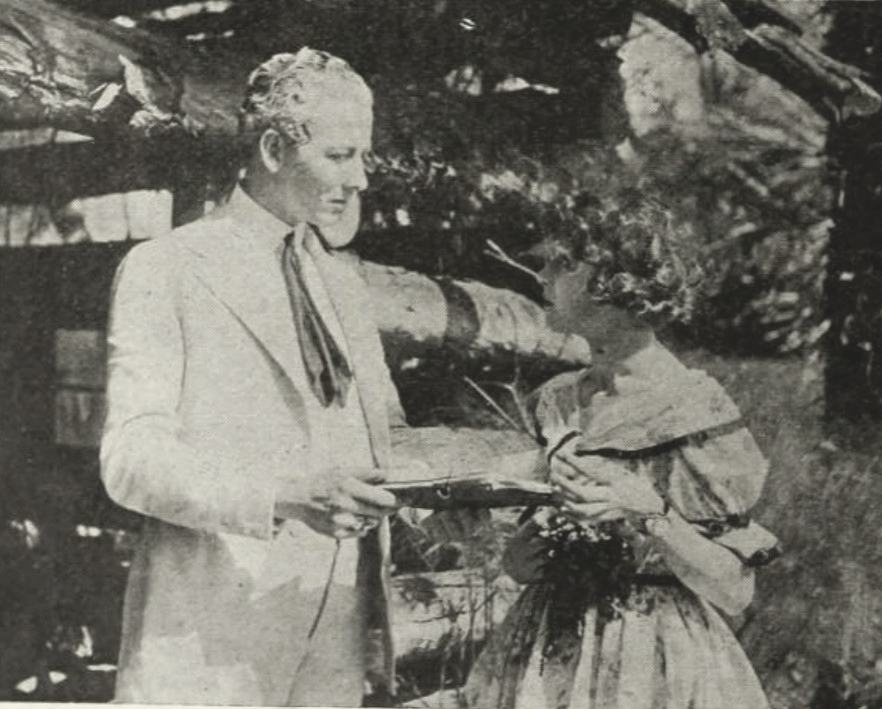
The film hurtles towards its resolution with satisfying dramatic intensity. Sara, having witnessed Horace's unwavering protection and recognizing the depth of his character, accepts his marriage proposal, bringing their destined union to fruition. But the story isn't content with a simple romantic conclusion. The lingering threat of Vandercourt must be addressed, and it is here that the film delivers its final, potent twist. Vandercourt is unmasked not merely as a disgruntled suitor, but as an international crook, a revelation that provides a satisfyingly grand scale to his villainy. In a moment of poetic justice, he is finally trounced by Sara’s father, a character whose earlier, mysterious prison term is now revealed to be a direct consequence of Vandercourt’s treachery. This intricate layering of past injustices and present retribution elevates the plot beyond a simple romance, adding a dimension of justice and redemption that enriches the overall narrative. It speaks to a common theme in silent films, where morality plays a significant role, often with clear delineations between good and evil, much like in A Question of Right or The Shrine of Happiness.
The brilliance of The Martinache Marriage owes much to its writer, Beatrix Demarest Lloyd. In an era where screenwriting was still finding its voice, Lloyd demonstrates a remarkable command of narrative structure, character development, and thematic resonance. Her ability to weave together threads of chance, class distinction, mistaken identity, and genuine affection into a cohesive and compelling whole is truly commendable. The screenplay avoids the simplistic morality plays that sometimes characterized early cinema, instead opting for a more nuanced portrayal of human motivations and societal pressures. The use of dramatic irony, particularly in Sara's recognition of Horace, is expertly handled, allowing the audience to feel a sense of privileged insight. Lloyd understands that silent film thrives on visual storytelling and clear emotional beats, and she crafts a script that provides ample opportunity for both. Her work stands as a testament to the sophisticated storytelling capabilities present in the silent era, often overlooked by modern audiences. One can see echoes of her intricate plotting in other contemporary works like Idle Wives, showcasing a growing sophistication in film narrative.
The cast of The Martinache Marriage brings Lloyd's script to life with compelling performances. Margaret Landis, as Sara St. Ypriex, is particularly noteworthy. Her portrayal is subtle yet powerful, conveying a spectrum of emotions—resilience, intelligence, vulnerability, and a quiet determination—through facial expression and body language alone. She embodies the classic silent film heroine, capable of both grace and strength. Philo McCullough, as Horace, portrays a character arc that moves from a somewhat detached gentleman to a genuinely passionate and protective lover. His transformation is believable, driven by the unfolding events and Sara's influence. Leota Lorraine and Mollie McConnell, as Horace's mother and sister, respectively, provide excellent support, embodying the aristocratic anxieties and comedic relief inherent in their roles. Their exaggerated expressions and gestures, typical of the era, are perfectly pitched to convey their characters' social pretensions. The nuanced acting required in silent film, relying heavily on pantomime and expressive physicality, is evident throughout, creating characters that, despite the lack of dialogue, feel remarkably real and relatable. This kind of expressive acting can be seen across the spectrum of silent films, from the dramatic intensity of Salvation Nell to the more nuanced comedic timing in Manhattan Madness.
Beyond the plot and performances, The Martinache Marriage excels in its visual storytelling. The mise-en-scène, though perhaps lacking the elaborate sets of later blockbusters, effectively conveys the contrasting worlds of Parisian street life and American high society. The use of intertitles is judicious, providing essential dialogue and exposition without interrupting the visual flow. The cinematography, while constrained by the technology of the time, effectively captures the emotional weight of key scenes, from the bustling street accident to the intimate moments between Horace and Sara. The film's thematic core—the idea that a single act of kindness can set in motion a chain of events leading to profound personal connections and justice—is powerfully conveyed. It’s a story about hidden identities and the revelation of truth, themes that resonate deeply and universally. The film suggests that fate, or perhaps simply the interconnectedness of human actions, plays a far greater role in our lives than we often perceive. This exploration of fate and societal expectations can be observed in various forms across silent cinema, from the grand historical narratives like Kitchener's Great Army in the Battle of the Somme (though a documentary, it reflects the era's grand scale) to the intricate personal dramas like Madame de Thebes.
In an age dominated by CGI spectacles and rapid-fire dialogue, returning to a film like The Martinache Marriage is a refreshing reminder of the foundational principles of cinematic art. It demonstrates that compelling stories, well-drawn characters, and potent themes transcend technological limitations. The film’s ability to build suspense, evoke genuine emotion, and deliver a satisfying resolution without a single spoken word is a testament to the artistry of its creators. It’s a narrative that, despite its period setting, speaks to timeless human experiences: love, betrayal, redemption, and the unexpected ways in which our past actions shape our future. For enthusiasts of early cinema, and indeed for anyone interested in the evolution of storytelling, this film offers a rich and rewarding experience. It serves as a vital piece in the puzzle of cinematic history, showcasing the sophisticated narrative capabilities that existed even in the medium's infancy. Its intricate plot and strong characterizations stand as a beacon for the enduring power of classic Hollywood storytelling. The themes of class disparity and hidden identities are also powerfully explored in Little Women and Beverly of Graustark, demonstrating their universal appeal across different narrative forms. The journey of Sara, from a vulnerable flower girl to a woman who finds love and sees justice served, is a narrative arc that continues to inspire and captivate. It's a film that deserves to be rediscovered, studied, and celebrated for its quiet brilliance and its profound contribution to the legacy of silent cinema.
Ultimately, The Martinache Marriage is more than just a historical artifact; it is a vibrant narrative that continues to resonate. Its exploration of chance encounters leading to fated unions, the subtle dance of recognition and deception, and the eventual triumph of love and justice creates a cinematic experience that is both intellectually stimulating and emotionally satisfying. Beatrix Demarest Lloyd's masterful script, brought to life by a talented cast including Margaret Landis and Philo McCullough, ensures that this silent film speaks volumes. It reminds us that the fundamental elements of compelling storytelling—character, conflict, and resolution—remain constant, regardless of the technological advancements of the medium. This film is a compelling argument for revisiting the silent era, not as a historical obligation, but as an opportunity to discover timeless narratives that continue to enchant and inform. It is a testament to the fact that some stories, told with grace and ingenuity, can echo across generations, their silent voices speaking to the universal human experience. Much like the profound human drama in Called Back or the poignant social commentary in During the Plague, The Martinache Marriage offers a window into the human condition that remains relevant and affecting. It’s a beautiful, intricate piece of cinema history that truly deserves its place in the pantheon of great romantic dramas. The film’s quiet power lies in its ability to craft a story of grand scale from an intimate beginning, demonstrating the profound impact of individual actions on the tapestry of life.
IMDb —
1922
Community
Log in to comment.