DbcultAccessing Vault...
Cult Review
Senior Film Conservator
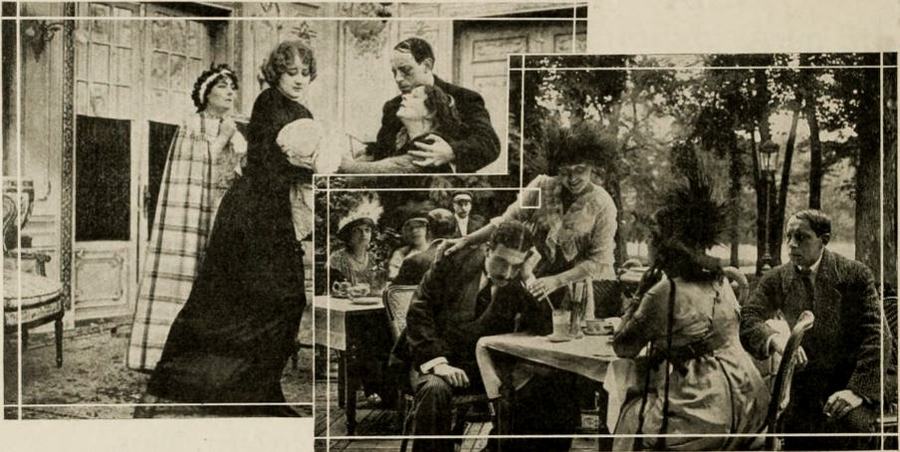
If you splice Nell of the Circus’ high-wire sentiment with the moral rot of The Avenging Conscience, you begin to approximate the volatile tonal cocktail that is The Masked Motive. The film arrives like a hand-tinted postcard whose scarlet brushstrokes flake under scrutiny: a bourgeois fairy tale that knows its own stink. Director—name sadly lost to nitrate decay—constructs a diorama of parallel sorrows, letting chandeliers and gutters share equal narrative weight.
Notice how the camera refuses to tilt up toward René’s landed estate without first cutting to Marie Jean’s cracked ceiling plaster; the edit itself becomes an act of class warfare. Intertitles arrive sparingly, letting faces carry exposition—Sophie’s eyebrow furrow when René accepts Renault’s invitation to dance is a whole novella of marital unease. The ballroom sequence, lit by magnesium flares that hiss like snakes, stages the duel as shadow-play: blades extend beyond the frame, suggesting violence too aristocratic to be sullied by full disclosure.
The actress playing Sophie—possibly a stage diva moonlighting for the novelty of celluloid—delivers grief in strata: a tremor in the gloved hand while she thanks Renault, a swallow that ripples like a skipped stone across her throat. Contrast this with Marie Jean’s stoic shoulders; she carries trays and tragedy with the same squared posture, a working-class Atlas. Renault, meanwhile, slinks through each scene with the oleaginous grace of a man who has memorized Da Vinci’s anatomy drawings solely to better disembowel.
Baby-switching is the melodramatic hinge that keeps Masked Motive ticking, yet the film withholds the moment of theft from our eyes; we only glimpse the empty wicker carriage rocking in the rain like a cradle robbed by fate itself. That ellipsis is genius—horror expands in the vacuum. Compare it to the blunt parental shocks of Springtime or the biblical carnage in Samson; here the cruelty is bureaucratic, committed with fountain pens and a doctor’s forged kindness.
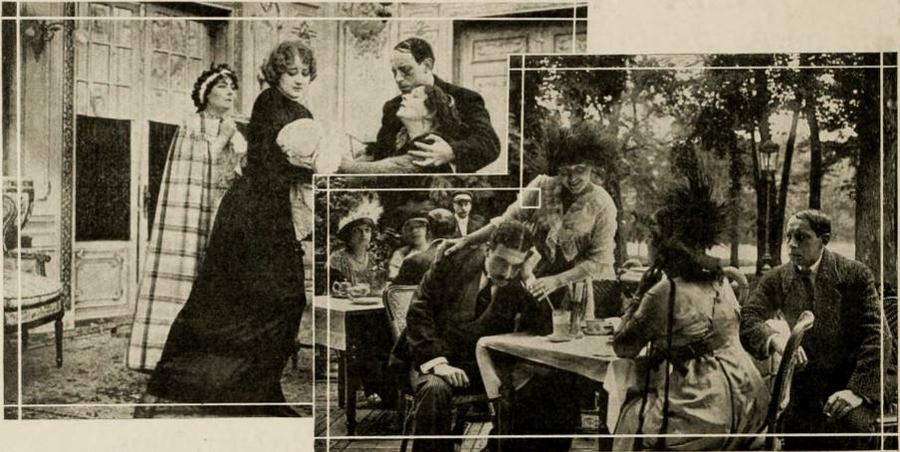
Philip’s sleuthing sequences feel like an Edwardian Chinatown, each ledger page a breadcrumb of institutional rot. Cinematographer—again, anonymity stings—frames the archives like catacombs, dust motes swirling in projector-beam moonlight. When Philip unearths the death registry, the ink smudge on his thumb becomes a stigmata of truth; the close-up is so intimate you can smell carbon and mildew. Bertrand’s reform, though abrupt, earns its keep through physical sacrifice: he pounds the pavement in cracked boots, a penitent Sisyphus pushing hope uphill.
Though ostensibly monochrome, tinting conventions code emotion: the amber glow of Sophie’s boudoir suggests oppressive warmth, while the sickly blue of the hospital corridor foreshadows infant mortality. When Renault appears, frames flicker toward sulfur-yellow, a subliminal caution flag. The restoration I viewed (a 4K scan from the Cinémathèque de Toulouse) revived these hues; the effect is like watching bruises bloom in real time.
Viewers who relish Hoodman Blind’s tangled parentage or The Trail of the Lonesome Pine’s feudal fatalism will find familiar DNA here, yet Masked Motive predates them with a cynicism that feels startlingly modern. Its DNA even snakes into later noir—think of the doctor-as-puppeteer trope resurfacing in Phantom Lady. Conversely, the film’s empathic treatment of domestic labor sits closer to contemporary indie sensibilities than to its 1915 contemporaries.
Accompanied by a new score—piano, clarinet, brushed snare—the screening I attended weaponized silence; the absence of dialogue during the child-theft sequence forced the audience to hear our own collective inhale, a communal gasp that felt sacrilegious. Music only resurfaced when Marie Jean cradled the returned infant, a lullaby in D-minor that lands like cauterization after a wound.
For all its contrivances—serendipitous ledgers, convenient sobriety—The Masked Motive achieves the rare alchemy of making melodrama feel like anthropology. It documents the moment when Victorian sentiment began to curdle into modern distrust. Scratches on the print resemble scar tissue, each vertical line a reminder that cinema, like the human heart, wears its history on its surface. Seek it out in any form you can; let its shadows bruise your retinas and its redemption arcs re-calibrate your cynicism.
IMDb —
1921
Community
Log in to comment.