DbcultAccessing Vault...
Cult Review
Senior Film Conservator
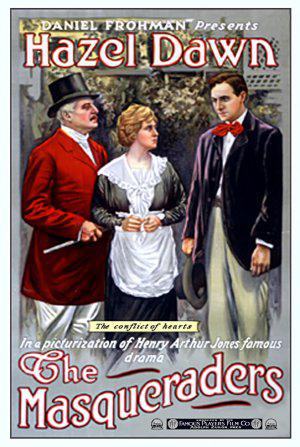
Stepping back into the nascent years of cinema, one occasionally unearths a gem that, despite its silent nature and vintage, resonates with a surprising potency. "The Masqueraders" from 1915 is precisely such a film, a melodrama that, beneath its often grand theatrical gestures, explores timeless themes of love, sacrifice, societal constraint, and the perilous allure of material security. Directed by Frank Losee and based on Henry Arthur Jones's play, this cinematic endeavor, starring the luminous Hazel Dawn, transcends its era to deliver a narrative rich in human frailty and unwavering devotion.
The film plunges us into a world where personal desires frequently collide with harsh economic realities and rigid social expectations. At its heart lies Dulcie, a spirited barmaid whose independent streak initially chafes against the conventional path David Remon, a man deeply in love with her, proposes. David, portrayed with earnest conviction by Charles Bryant, sees marriage as Dulcie's escape from a life of drudgery, a life he desperately wishes to spare her. Yet, Dulcie, possessing a fierce pride and a desire to forge her own way, initially resists, preferring the autonomy of earning her own living, however arduous. This initial resistance sets a compelling dynamic, immediately establishing Dulcie not as a passive damsel, but as a woman with agency, albeit one whose choices are heavily influenced by the limited options afforded to women of her station in that era. Her journey mirrors, in some ways, the struggles for self-determination seen in characters from other early films exploring female resilience, though perhaps less overtly rebellious than a figure in Queen of the Forty Thieves, her struggle is no less profound.
However, the relentless monotony and sheer exhaustion of life at the inn eventually wear down Dulcie's formidable resolve. The daily grind, the constant demands, and the stark absence of upward mobility begin to make the prospect of a wealthy marriage, once scorned, seem increasingly appealing. This shift in her perspective is not born of greed, but of a deep-seated weariness, a yearning for respite from incessant labor. It's a poignant commentary on the pressures faced by working-class women of the period, where marriage often represented the only viable path to economic security, even if it meant sacrificing emotional fulfillment. This internal conflict is conveyed with remarkable subtlety by Hazel Dawn, whose expressions and body language communicate a nuanced emotional landscape that belies the absence of spoken dialogue.
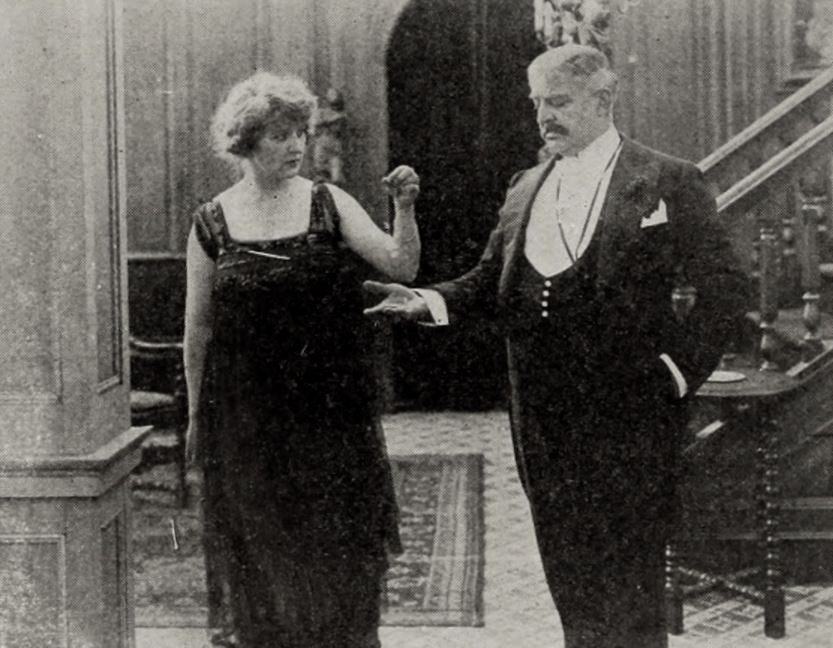
The narrative's turning point arrives with a charity auction, a seemingly innocuous event that morphs into a fateful crucible. Dulcie, in a moment of perhaps both desperation and audacious self-assertion, auctions off a kiss. This act, laden with symbolic weight, becomes the battleground for the film's central romantic conflict. David, consumed by a fierce protectiveness and an unyielding love, bids every penny he possesses, driven by a desperate desire to claim the kiss himself and prevent any other man from publicly laying claim to Dulcie. His bid is a testament to his profound devotion, a tangible manifestation of his willingness to sacrifice everything for her honor and affection. It’s a moment of pure, unadulterated passion, a raw display of a love that defies logic and material possession. Similar themes of desperate romantic gestures, though perhaps with different outcomes, might be glimpsed in the intense emotional landscapes of films like Pauline or even the dramatic stakes of Drama v kabare futuristov No. 13, where personal stakes are incredibly high.
But fate, or perhaps the machinations of a more cynical world, intervenes in the form of Sir Brice, a bon vivant whose affluence and disregard for convention make him a formidable, and ultimately destructive, force. Sir Brice, portrayed by Frank Losee with a chilling blend of charm and underlying menace, doubles David's offering. More shockingly, he adds his hand in marriage to the bargain, turning a public spectacle into a life-altering proposition. Dulcie, exhausted and enticed by the promise of an end to her struggles, accepts. This decision, driven by a desire for security rather than love, sets the stage for her subsequent disillusionment. The film masterfully uses this moment to highlight the societal pressures on women to marry for status and wealth, often at the expense of genuine affection or personal happiness.
The years that follow are a slow, agonizing descent into despair for Dulcie. Sir Brice, once a charming suitor, reveals his true, monstrous nature when under the influence of liquor. He becomes increasingly ugly-tempered, abusive, and utterly intolerable. The gilded cage of her marriage quickly tarnishes, exposing the harsh reality that material wealth cannot compensate for emotional cruelty and personal degradation. Hazel Dawn's portrayal of Dulcie's suffering is heart-wrenching, her once vibrant spirit slowly eroded by her husband's escalating brutality. This part of the narrative offers a stark critique of the superficiality of wealth and the dangers of marrying for convenience, echoing the somber warnings found in other early social dramas, even if their specific themes differ, such as the moral quandaries explored in Schuldig.
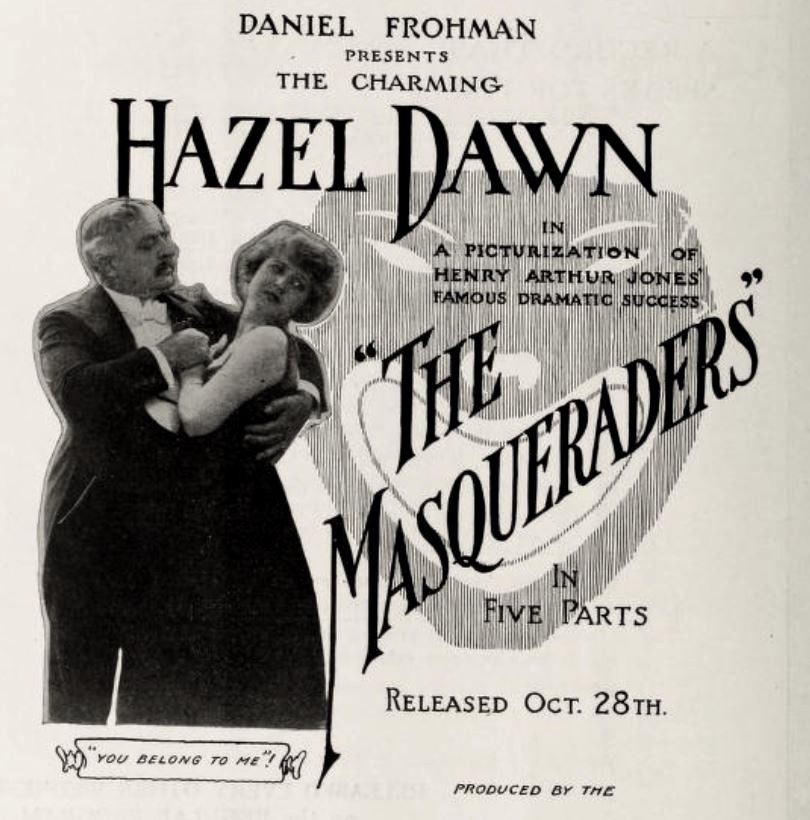
The climax of Sir Brice's depravity arrives at a reception, where he openly humiliates Dulcie and insults her guests. His demands for gambling, met with refusal, incite a furious, abusive outburst that exposes him as a man utterly devoid of decency or self-control. It's a public unraveling, a testament to the destructive power of unchecked vice and the ultimate emptiness of a life built on superficiality. Throughout these years of torment, David Remon remains a constant, unwavering presence. His love for Dulcie, far from diminishing, deepens into a steadfast devotion, a silent testament to true affection that endures through separation and suffering. His patience and enduring fidelity are the moral anchor of the film, a stark contrast to Sir Brice's rapid moral decay.
In a moment of desperate, climactic confrontation, David, seizing an opportunity to reclaim the woman he loves, challenges a now penniless Sir Brice to a high-stakes game. Having squandered his entire fortune, Sir Brice, utterly devoid of any moral compass or attachment to his wife, gladly offers Dulcie as the prize. This scene is a masterclass in silent film tension, a nerve-wracking battle of wits where the stakes are quite literally life-altering. The emotional weight of this gamble is immense, as Dulcie's fate hangs precariously in the balance, a pawn in a game between two men, one driven by love, the other by desperation and callous disregard. The tension of such a high-stakes, life-altering game is palpable, and while the context is different, the sheer desperation and moral bankruptcy it reveals might find parallels in the stark emotional landscapes of films like Blodets röst, where human decisions are driven by extreme circumstances.
David, through sheer determination and perhaps a touch of poetic justice, wins. The victory is not just a triumph in a game of chance, but a symbolic reclamation of Dulcie's dignity and freedom. Dulcie, utterly disillusioned by her marriage and the harsh lessons it has taught her, accepts the verdict of this god of chance. Her acceptance is not one of resignation, but of profound relief and a newfound clarity. She finds a new happiness, not in the fleeting promise of wealth, but in the enduring, steadfast love of the man whose devotion had remained constant through all her trials. It's a powerful narrative of redemption, not just for Dulcie, but for the very idea of love triumphing over adversity.
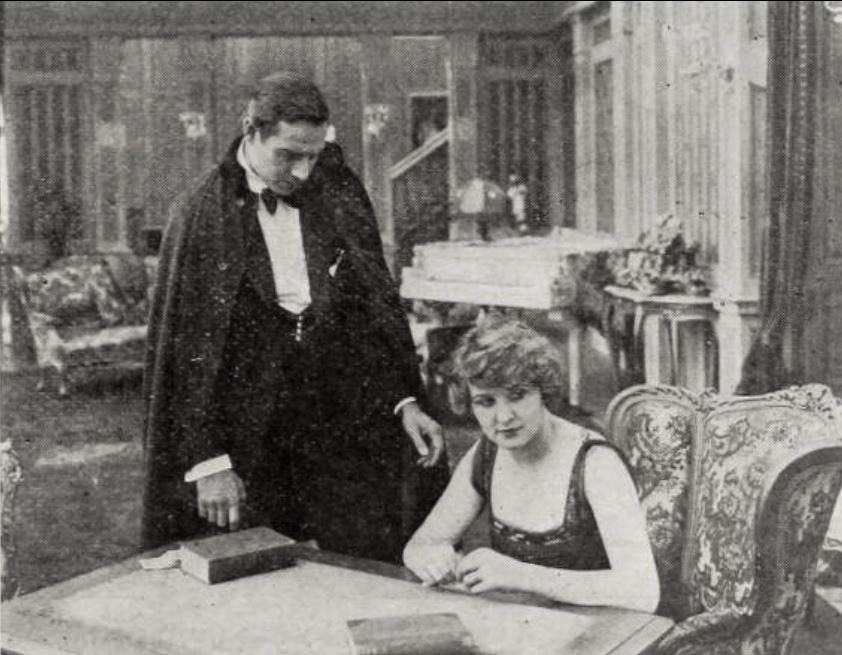
The performances in "The Masqueraders" are a testament to the power of silent acting. Hazel Dawn, as Dulcie, carries the emotional weight of the film with grace and intensity. Her expressive eyes and nuanced gestures convey a wide range of emotions, from spirited independence to profound despair, and ultimately, to a quiet joy. Charles Bryant's David is the embodiment of unwavering loyalty and quiet strength, his presence a constant source of hope. Frank Losee, in a dual role as director and the villainous Sir Brice, delivers a performance that is both charming and chilling, effectively portraying the character's descent into depravity. The supporting cast, including Ida Darling and Norman Tharp, contributes to the rich tapestry of the film's world, creating a believable social milieu against which the drama unfolds.
From a technical perspective, the film, while clearly a product of its time, demonstrates a solid understanding of visual storytelling. The staging is often theatrical, reflecting its stage origins, but the camera work effectively captures the emotional nuances of the actors. Intertitles are used judiciously, providing necessary exposition without overwhelming the visual narrative. The pacing, though slower than modern cinema, allows for a deliberate unfolding of the plot, building tension and emotional resonance. The film's black and white cinematography, with its stark contrasts, effectively emphasizes the moral dichotomies at play: the darkness of Sir Brice's character against the light of David's enduring love, the grim reality of Dulcie's early life against the fleeting allure of luxury.
The enduring appeal of "The Masqueraders" lies in its exploration of universal human experiences. It delves into the complexities of choice, the allure of status, and the profound power of genuine affection. It reminds us that true wealth lies not in material possessions, but in integrity, loyalty, and unwavering love. Dulcie's journey is a powerful testament to resilience and the possibility of finding happiness even after profound disillusionment. David's unwavering devotion offers a timeless ideal of selfless love. And Sir Brice's downfall serves as a cautionary tale against unchecked indulgence and moral bankruptcy. While it may lack the grand historical sweep of a film like A Vida do Barão do Rio Branco or the stylistic experimentation of Das Geheimschloss, its intimate human drama is no less compelling.
The film, penned by Henry Arthur Jones, maintains a thematic integrity from its stage origins, translating the emotional beats effectively to the screen. It is a significant piece for understanding the transition of dramatic narratives from theatre to cinema, showcasing how early filmmakers adapted existing works for the new medium. Its exploration of class distinctions and the limited opportunities for women also provides a valuable socio-historical lens into early 20th-century society. In an age where spectacle often dominated, "The Masqueraders" chose to focus on the intricate dance of human emotions and moral choices, making it a quietly powerful work that continues to resonate with audiences who appreciate the depth and artistry of early silent cinema. It stands as a compelling example of how a well-crafted narrative, coupled with strong performances, can transcend the limitations of its format and era to deliver a timeless story of love, loss, and ultimate redemption.
IMDb —
1929
Community
Log in to comment.