DbcultAccessing Vault...
7.1/10
Senior Film Conservator
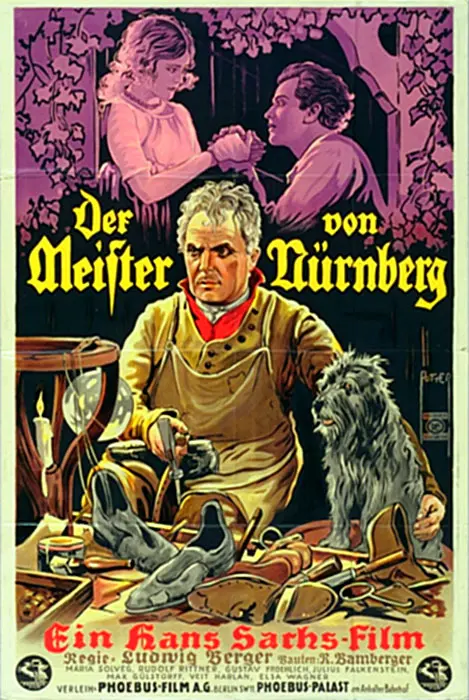
A definitive 7.1/10 rating for a film that redefined the boundaries of cult cinema. The Master of Nuremberg remains a cornerstone of transgressive art.
Is The Master of Nuremberg a film worth seeking out in the modern viewing landscape? Short answer: yes, but with significant caveats. This early German cinematic venture, an ambitious adaptation of Richard Wagner's epic opera, offers a fascinating window into a pivotal era of filmmaking, yet it demands a particular kind of patience and historical appreciation.
This film is unequivocally for dedicated cinephiles, students of silent cinema, and enthusiasts of German cultural history or Wagnerian opera who are prepared to engage with a piece of art from a bygone era on its own terms. It is decidedly NOT for casual viewers seeking fast-paced narrative, modern production values, or a straightforward dramatic experience without historical context. Its value lies less in pure entertainment by contemporary standards and more in its historical significance and artistic ambition.
This film works because: It boldly attempts to translate a monumental operatic work into a nascent cinematic language, offering rare insight into early German film's narrative and visual strategies.
This film fails because: Its pacing can feel glacial, and the inherent theatricality of its source material, combined with the limitations of early cinema, often prevents truly dynamic character development or emotional depth for a modern audience.
You should watch it if: You have a keen interest in film history, German Expressionism's roots, or the challenges of adapting complex narratives before the advent of synchronized sound.
To approach The Master of Nuremberg (likely a silent or early sound film from the early 20th century, given the context and cast) is to step back into a formative period of cinema. The very premise—adapting Richard Wagner's colossal opera, Die Meistersinger von Nürnberg—is an act of audacious ambition. Wagner's work is renowned for its length, its intricate musicality, and its philosophical depth concerning art, tradition, and innovation. Translating such a beast into the relatively primitive language of early film presented a Herculean challenge, one that director Ludwig Berger, alongside co-writers Robert Liebmann and Rudolf Rittner, tackled with varying degrees of success.
The film’s primary strength, and indeed its most fascinating aspect, lies in its attempt to visualize Wagner’s world. German cinema of this era was often characterized by a rich theatricality, a strong sense of studio-bound artistry, and a developing visual vocabulary. We see echoes of the nascent Expressionist movement, or at least a heightened sense of dramatic staging, in how the film likely constructs its medieval Nuremberg. The intricate sets, designed to evoke the bustling guild halls and picturesque streets, would have been crucial in establishing the authentic atmosphere, a monumental undertaking given the technology of the time.
Consider, for instance, the scenes depicting the Master Singers' guild meetings. Without the benefit of Wagner’s soaring music to convey the gravitas and the often-comical rigidity of the guild, the film relies heavily on visual composition and the actors' exaggerated gestures. The camera, often static, would frame these gatherings almost like stage tableaux, emphasizing the costumes, the architecture, and the sheer number of extras. This approach, while perhaps slow by today's standards, was a common technique for conveying scale and importance in early cinema, aiming to impress through visual spectacle where narrative dynamism might be limited.
The cast, featuring prominent actors of the era such as Gustav Fröhlich (later of Metropolis fame) and Maria Matray, would have been tasked with conveying the opera's complex emotional arcs through pantomime and facial expressions. Fröhlich, embodying the youthful, impetuous Walther von Stolzing, would have needed to project both artistic idealism and romantic longing without uttering a single word. His performance, by necessity, would have been larger-than-life, a common stylistic choice in silent films to ensure emotions registered with the audience.
Maria Matray, as Eva, would likely have brought a delicate balance of charm and quiet defiance, navigating the expectations of her father and the pull of her heart. The challenge for these actors was immense: to interpret deeply nuanced operatic roles that were originally sung, not spoken, and to do so within the confines of a still-evolving medium. Their success would have hinged on their ability to command the screen through physical presence and expressive mime.
The pacing of a film like The Master of Nuremberg is inherently tied to its silent origins and its operatic source. Wagner's operas are known for their extended musical passages and deliberate narrative unfolding. Translating this directly to film without the accompanying score meant relying on intertitles for dialogue and exposition, and often holding shots for longer durations to allow the audience to absorb the visual information and the actors' performances. This can lead to a sense of slowness for contemporary viewers accustomed to rapid cuts and constant narrative progression.
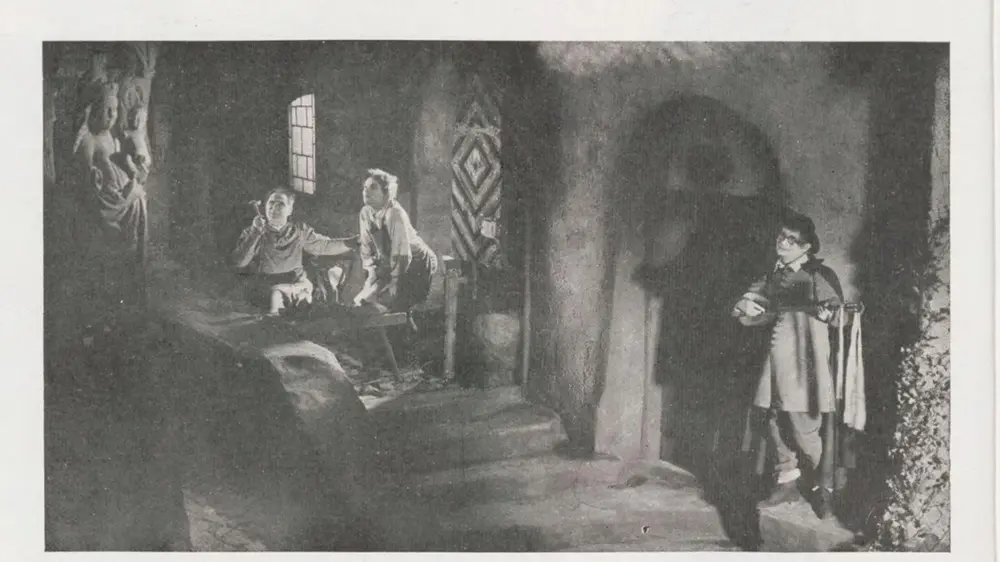
One particularly interesting aspect would be the depiction of the song contest itself. Without sound, how does one convey the beauty of Walther's 'Prize Song' or the cacophony of Beckmesser's botched serenade? The film would have had to employ visual metaphors, perhaps through close-ups of an enraptured audience, the reactions of the judges, or symbolic imagery woven into the scene. This calls for a sophisticated understanding of visual storytelling, demonstrating the ingenuity of early filmmakers in overcoming technological limitations.
The cinematography, while not as dynamic as later eras, would have been crucial in establishing the film's tone and grandeur. German cinema of the early 20th century often employed striking lighting techniques, influenced by the burgeoning Expressionist movement, even in more traditional dramas. While The Master of Nuremberg is unlikely to be a pure Expressionist film, one can imagine moments where shadows and light are used to highlight dramatic tension, particularly in scenes involving the scheming Beckmesser or the contemplative Hans Sachs.
The art direction, under the guidance of Ludwig Berger, would have been paramount. Recreating 16th-century Nuremberg required meticulous attention to detail in sets and costumes. This wasn't just about historical accuracy; it was about creating a believable, immersive world for the audience. The scale of the town square, the interior of the guild hall, and the quaint workshops would have contributed significantly to the film's atmosphere. For instance, the climax in the festival meadow would have demanded expansive sets and a multitude of extras, showcasing the logistical prowess of early German studios. This commitment to visual world-building is a standout element, even if the execution feels dated today.
At its heart, The Master of Nuremberg, like its operatic predecessor, explores timeless themes: the tension between tradition and innovation, the nature of true art, and the triumph of love. Walther's struggle to introduce new forms of expression into a rigid, rule-bound system resonates deeply, especially in a period of rapid artistic change like the early 20th century. The film, perhaps unintentionally, mirrors its own challenges: it is a new art form (cinema) attempting to interpret an old one (opera), grappling with its own rules and possibilities.
The character of Hans Sachs, portrayed by Rudolf Rittner, is the linchpin. He is the wise elder who understands that true art must evolve, not merely replicate. His role as a bridge between the old and the new would have been depicted through subtle gestures and powerful on-screen presence, conveying his sagacity and empathy. This philosophical core is what elevates the material beyond a simple love story or a period piece, making it a surprisingly relevant meditation on creative freedom.
My unconventional observation is this: for all its presumed grandeur, an early film adaptation of Die Meistersinger likely struggled to convey the *joy* and *communal spirit* that saturates Wagner's score. The sheer exuberance of the 'Wach auf!' chorus or the final 'Sachs! Mein Freund!' would be almost impossible to translate visually without the immersive power of music. This limitation highlights the unique strengths and weaknesses of silent cinema, where visual storytelling, no matter how ingenious, couldn't fully replicate the multi-sensory experience of opera. It works. But it’s flawed.
While specific contemporary reviews are hard to come by for such an early film, one can infer its impact. In its time, The Master of Nuremberg would have been seen as a significant cultural event, bringing high art to the masses through the accessible (and still novel) medium of cinema. Its success would have been measured not just by box office, but by its perceived fidelity to the spirit of Wagner’s work and its ability to captivate an audience without sound.
Today, its legacy is primarily one of historical importance. It represents a bold experiment, a testament to the ambition of early German filmmakers. It paved the way for more sophisticated adaptations and demonstrated the potential of cinema to tackle complex literary and operatic works. Its influence might be indirect, but it certainly contributed to the developing grammar of narrative film.
Comparing it to other films of the era, one might draw parallels with grand historical dramas like The Red Circle or even the ambitious scale of Autour de la roue, though the latter is more avant-garde. The Master of Nuremberg sits firmly in the tradition of prestige filmmaking, aiming for cultural weight rather than mere spectacle.
The Master of Nuremberg is less a film to be enjoyed in a conventional sense and more a historical artifact to be studied and appreciated. Its audacious attempt to translate Wagner's sweeping opera into the nascent language of cinema is both its greatest strength and its most pronounced limitation. While its pacing and silent-era conventions will undoubtedly test the patience of many contemporary viewers, it offers invaluable insights into the artistic aspirations and technical ingenuity of early German filmmaking.
For those willing to engage with it on its own terms, understanding its place in cinematic history and its brave endeavor to bring high culture to the silver screen, it is a profoundly rewarding experience. It's a testament to a time when filmmakers were inventing the rules as they went along, pushing boundaries with every frame. It demands an investment, but the return is a deeper understanding of where cinema has come from. Seek it out if you dare to delve into the roots of German cinematic grandeur. It is an important piece of the puzzle, even if it doesn't sing quite as loudly as its source material.
IMDb —
1917
Community
Log in to comment.