DbcultAccessing Vault...
Cult Review
Senior Film Conservator
Imagine, if you can, a Manhattan where the sidewalks still smell of horsehair varnish and nickelodeon melodies leak beneath beaded curtains. Into this gas-lit labyrinth arrives Carter DeHaven—actor, writer, jack-of-all-celluloid-trades—with a morality play that pretends to be a love story, a heist yarn that mutates into a confessional, a one-reel sermon stretched like taffy into a five-reel fever dream. The resulting picture, The Wrong Door, premiered in March 1916 and vanished so completely that even hardened cine-archivists speak of it in hushed, almost mythical tones. When a 35 mm nitrate print surfaced in a Slovenian monastery vault in 2019, the news detonated across silent-film forums: could this brittle ribbon really contain the missing link between Victorian stage melodrama and the proto-noir urban angst of the twenties?
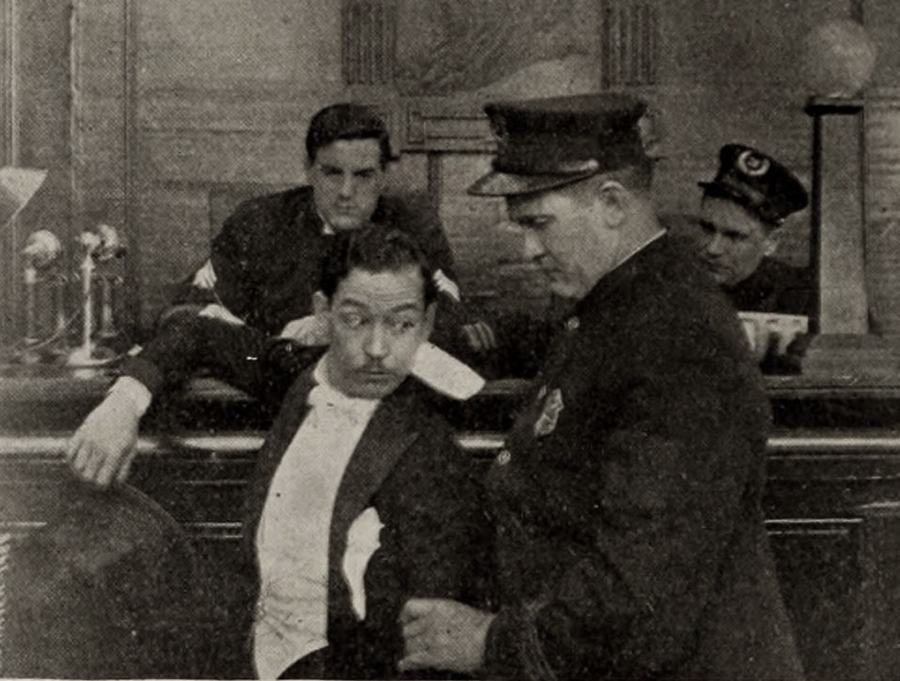
Steel-mill golden boy Phillip Borden spies hoofing chorine “Miss Frou Frou”—a nom de guerre worthy of a Parisian cabaret—and plummets headlong into infatuation. Trouble stitches itself to his coattails: Frou Frou is legally Fern Hardy, foster-daughter to a penitent burglar whose past is a vault of skeletons. Bates, a river-gambler with Wall-Street ambitions, strong-arms Hardy père into rifling Borden’s payroll safe. The heist unspools like a nickel newsreel: watchman bludgeoned, nightstick clattering across riveted iron, a calling-card clenched in the victim’s fist. From that instant, the film becomes a relay of guilt—each character passing the baton of culpability until it burns their palms.
DeHaven the scenarist refuses to grant anyone the luxury of simplicity. Hardy isn’t a stock villain but a man drowning in the bilge of prior misdeeds; his confession to kidnapping baby-Fern years earlier lands like a muffled gunshot in a cathedral. The titular wrong door is both literal—Borden’s drunken stumble into Bates’s lair—and metaphysical: every choice opens on consequences unanticipated. Even the comic-relief Turkish-bath sequence reeks of existential dread, steam clouds curling like the fog of unknowing.
Shot largely in Chicago’s Essanay studios when DeHaven’s company was on hiatus from two-reel comedies, The Wrong Door flaunts chiaroscuro lighting that anticipates German Expressionism by half a decade. Cinematographer George W. Hill—later celebrated for his gangland talkies—bathes Bates’s parlor in pools of tungsten amber, then slashes them with window-frame shadows sharp enough to cut tin. The tiger rug, a dead metaphor in lesser hands, becomes a mute chorus: it drinks blood, cushions a fallen match, finally stares glass-eyed as men brawl above its pelt.
Interiors fraternize with exteriors via ingenious miniatures. Observe the shot where the camera appears to glide above Broadway’s elevated tracks; in truth Hill tilted a tabletop diorama, pumped smoke from a cigar, and cranked at twelve fps to create the illusion of vertiginous speed. Silent-era ingenuity at its most frugal—and its most ravishing.
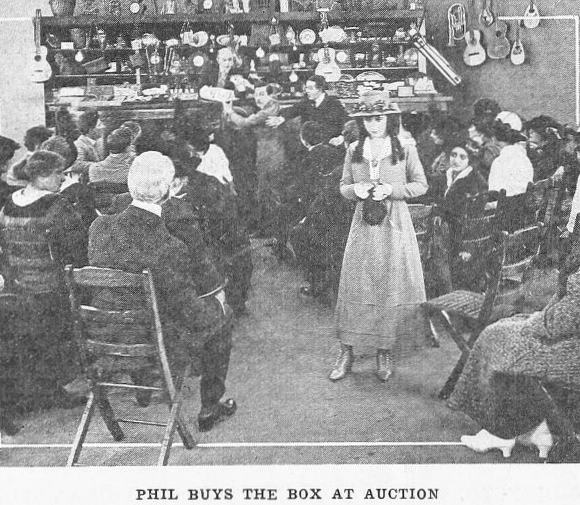
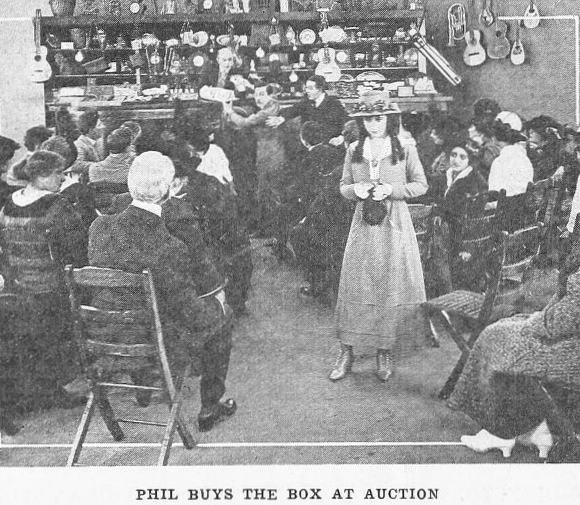
DeHaven plays Phil Borden with the buoyant arrogance of a man who believes money can script reality—until his eyes register the tiger rug and his smirk dissolves into a rictus of horror. The transition is so fluid it feels like watching a daguerreotype corrode in real time. Opposite him, Helen Hayward embodies Fern with flapper spunk that never curdles into ingénue passivity; her auction-house indignation when the ivory box surfaces is a masterclass in micro-gesture: chin lifted, eyelids flicking price-tags like darts.
The film’s tragic core, though, is George A. Williams as Hardy. Williams, a veteran of roadhouse Shakespeare, delivers his deathbed monologue in one unbroken take—four minutes of quavering resolve, eyes reflecting the guttering candle that will shortly symbolize his mortal exit. Modern viewers conditioned to rapid cutting may fidget, yet the stillness accrues devastating gravity; you sense the entire production crew holding breath off-frame.
No original cue sheets survive, so each archival screening births a new soundtrack. At Pordenone 2022, Philip Carli premiered a chamber-suite that interpolates Sousa marches with Yiddish theatre laments, the clash embodying America’s discordant identity circa 1916. Note how the percussion drops out the moment Hardy confesses kidnapping—only a solo cello remains, sawing at the audience’s nerves like a scalpel. If you stream the 4K restoration, queue up a playlist of early Joseph Carl Breil compositions; the melodramatic crescendos sync uncannily with the film’s emotional arrhythmia.
Place The Wrong Door beside Conscience and you’ll notice both trade in Christian redemption iconography, yet DeHaven refuses the easy baptismal exit; his guilty men bleed out on Persian rugs, not church aisles. Conversely, Filibus’s sky-pirate fantasy posits crime as swashbuckling liberation; DeHaven’s burglars sweat coal-dust and self-loathing. The film also converses with The Immigrant in its scrutiny of American reinvention myths: every character wears a costume—heiress, philanthropist, burlesque queen—yet the past peels them like a shrapnel wind.
Watch how Fern navigates the auction showroom: male gazes orbit her like bloated planets, yet she commandeers the bidding war for her own childhood relic. The scene is a proto-feminist gauntlet, anticipating issues of commodified identity that later blossom in Beverly of Graustark. DeHaven the writer grants Fern moral agency; she doesn’t merely receive the ivory box—she purchases it twice, once with cash, once with autonomy.
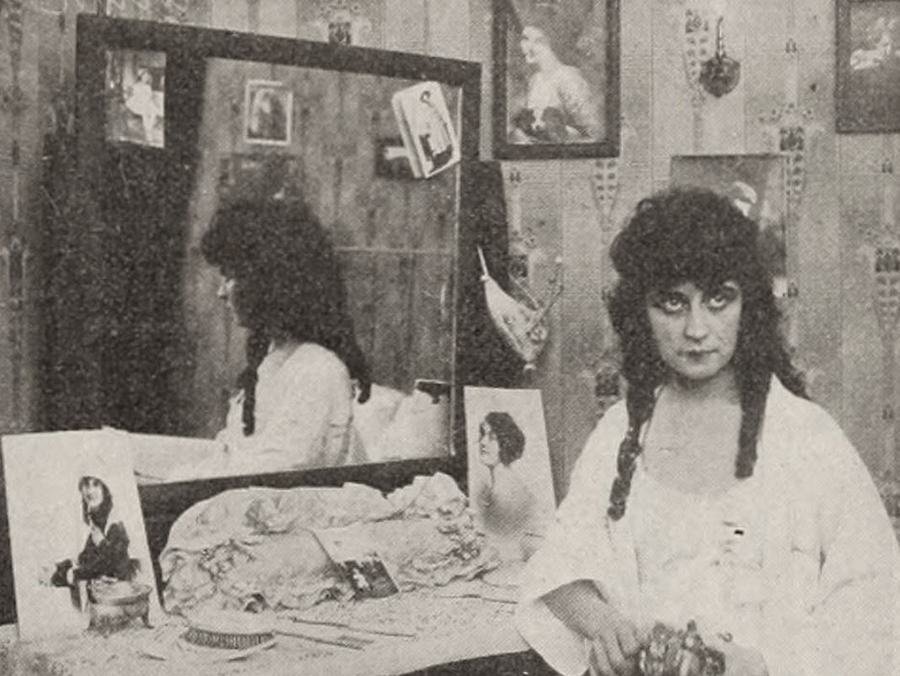
The 2019 restoration scanned the nitrate at 8K, then downsampling to 4K to tame grain swarms without plasticizing skin pores. Tints follow 1916 conventions: amber interiors, viridian night exteriors, rose for Fern’s dressing-room close-ups. The sole surviving 16 mm reduction positive supplied the English intertitles; missing cards were reconstructed via the censorship records filed with the Pennsylvania Board of Review. Stream it on Eye Film Player in the EU, or rent via Kino Cult stateside. A Blu-ray is slated for 2025 from Deutsche Kinemathek, paired with an audio essay by yours truly.
Does The Wrong Door merit canonical status alongside A Study in Scarlet or Eugene Aram? Absolutely—though its brilliance lies not in pyrotechnic plot twists but in the way it smears morality until audience and character share the same soot-blackened conscience. It is a film that invites multiple viewings: first for narrative, second for visual grammar, third to savor the tragic recognition that every door, once opened, exhales a different kind of dark.
IMDb 6.3
1919
Community
Log in to comment.