DbcultAccessing Vault...
Cult Review
Senior Film Conservator
Is The Merry Cavalier worth watching today? Short answer: yes, but only if you view it as an ancestor to modern parkour cinema rather than a narrative masterpiece. This film is for those who appreciate the raw, unedited physicality of the 1920s and silent-era stunt work; it is definitely not for viewers who require complex character arcs or dialogue-driven tension.
The Merry Cavalier is a functional piece of entertainment that prioritizes kinetic energy over emotional resonance. If you are looking for a film that explores the human condition, you should look toward The Firing Line. However, if you want to see the blueprint for the modern action hero, Talmadge is your man. The film is a relic, but a vibrant one.
1) This film works because Richard Talmadge possesses a screen presence that transcends the limitations of silent film acting.
2) This film fails because the script by Grover Jones is essentially a series of excuses to get the hero from one rooftop to another.
3) You should watch it if you want to see the direct lineage of Jackie Chan and Tom Cruise.
Richard Talmadge was never the greatest actor of his generation, but he was arguably its greatest athlete. In The Merry Cavalier, he moves with a fluidity that makes contemporary action stars look leaden. While Douglas Fairbanks was known for his swashbuckling grace, Talmadge brought a scrappy, urban energy to his roles. The plot is a ghost. It exists only to facilitate movement.
Consider the sequence where Talmadge’s character is cornered in a courtyard. Instead of a standard fistfight, he uses the environment—walls, gates, and even a decorative fountain—to evade his captors. This isn't just choreography; it’s a dialogue of motion. It reminds me of the frantic energy found in Monkeying Around, yet with a much higher level of technical sophistication.
The supporting cast, including Broderick O'Farrell and Charlotte Stevens, do their best with the thin material. Stevens, in particular, provides a necessary grounding for the film’s more absurd moments. However, they are ultimately set dressing for the main event. When Talmadge isn't on screen jumping over something, the film’s pulse slows to a crawl.
Grover Jones was a prolific writer, but here he seems to be writing a map rather than a screenplay. The pacing is erratic. We spend twenty minutes on a setup that could have been handled in five, only to rush through the climax. It lacks the atmospheric dread of a film like Tiger Rose, opting instead for a bright, almost clinical presentation of its action.
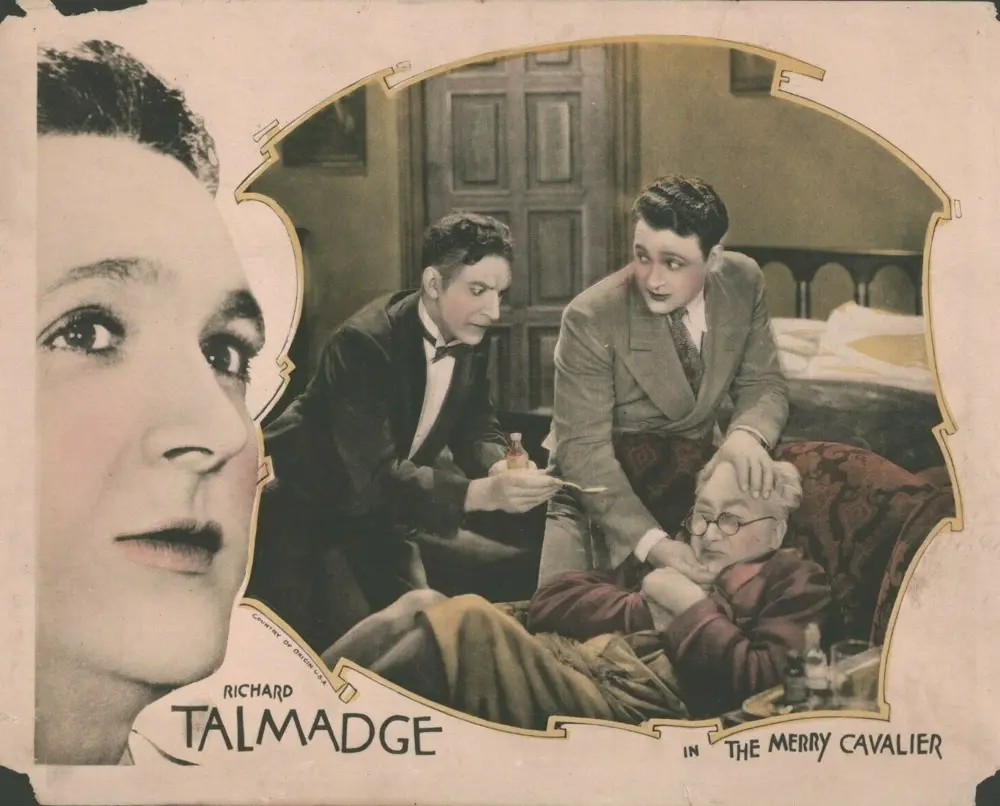
The cinematography is surprisingly static given the subject matter. Most of the stunts are captured in wide, long takes. This was common for the era—proving to the audience that there were no trick wires or camera cuts—but it can feel distant to modern eyes. There is a brutal simplicity to it. It works. But it’s flawed.
One specific moment that stands out is a leap across a narrow alleyway. The camera doesn't flinch. There is no dramatic music to swell the tension; there is only the sight of a human body defying gravity. It’s a moment of pure cinema that doesn't need words. It’s far more effective than the heavy-handed symbolism often found in The Ragamuffin.
Pros:
The stunt work remains genuinely impressive even by modern standards. The film’s runtime is lean, avoiding the bloat that plagued many of its contemporaries. Richard Talmadge’s charisma is infectious; he clearly enjoys the danger.
Cons:
The narrative is paper-thin and serves only as a bridge between action beats. The lighting is often flat, lacking the artistic shadows seen in European imports of the same year. The ending feels abrupt, as if the production simply ran out of film.
While most critics point to Fairbanks as the father of action, I would argue that The Merry Cavalier shows Talmadge was the true father of "environmental combat." He doesn't just fight people; he fights the architecture. He uses a bannister as a slide, a curtain as a rope, and a table as a shield. This is a level of spatial awareness that was rarely seen in 1926. It is a more modern style than the theatrical fencing of his peers.
This film is a fascinating bridge. It sits between the slapstick of the early 1920s and the more polished adventure films of the 1930s. It lacks the polish of Josselyn's Wife, but it makes up for it in sheer audacity. The camera might be still, but the world within it is in constant, violent motion.
The Merry Cavalier is not a great film, but it is a great performance. Richard Talmadge carries the entire production on his back—literally and figuratively. While the story is forgettable and the direction is merely serviceable, the physical feats on display are a testament to a lost art form. In an age of CGI, seeing a man actually jump between buildings is a refreshing jolt to the system. It’s a minor classic for the dedicated cinephile, but a skip for the casual viewer.
“Talmadge doesn't act with his face; he acts with his entire skeleton. The result is something more akin to a circus performance than a traditional movie, and that is exactly why it still breathes.”
IMDb 6
1936
Community
Log in to comment.