DbcultAccessing Vault...
5.3/10
Senior Film Conservator
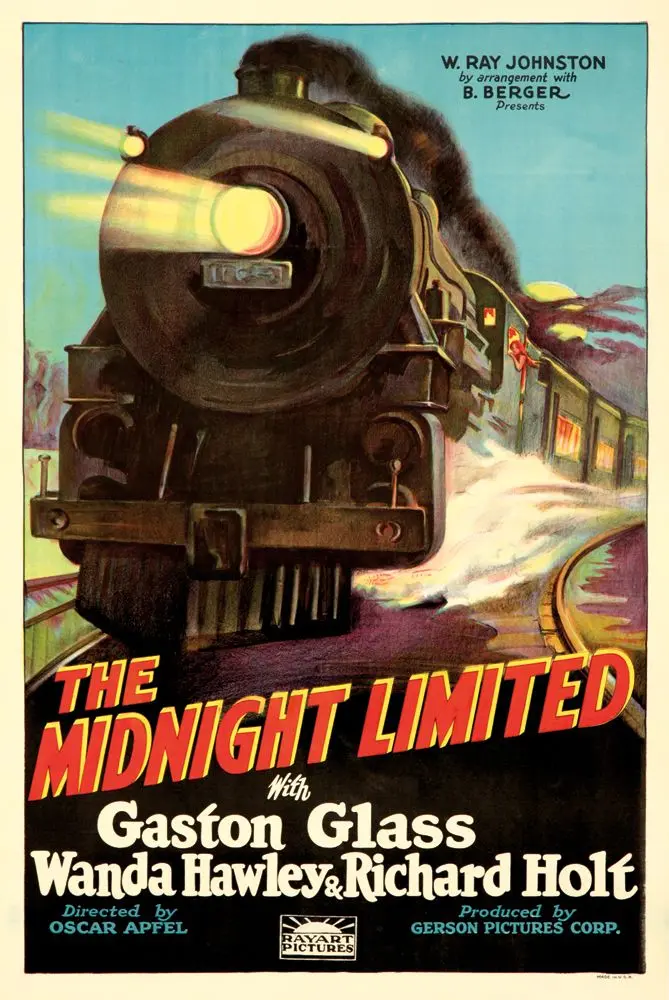
A definitive 5.3/10 rating for a film that redefined the boundaries of cult cinema. The Midnight Limited remains a cornerstone of transgressive art.
Is The Midnight Limited worth watching today? Short answer: yes, but with significant caveats. This silent-era thriller, while a fascinating artifact of its time, demands a certain patience and appreciation for early cinematic conventions, making it a compelling watch for cinephiles and historians, but potentially a challenging one for casual viewers.
This film is unequivocally for those who appreciate the foundational mechanics of suspense in early cinema, the raw, unfiltered performances of the silent era, and the sheer ingenuity required to tell a gripping story without spoken dialogue. It is decidedly NOT for viewers seeking modern pacing, sophisticated visual effects, or nuanced character development often found in contemporary thrillers.
At its core, The Midnight Limited is a testament to the enduring power of a simple, high-stakes premise. A dispatcher, a runaway train, and two passenger trains on a collision course – it's a narrative engine built for maximum suspense. The film works because it taps into a primal fear: the loss of control and the terrifying consequences of mechanical failure. The tension, though often broad by today's standards, is palpable.
However, the film fails because its execution, while ambitious for its time, often leans too heavily on melodramatic acting and a somewhat simplistic resolution. The sheer urgency of the plot is occasionally undercut by the theatrical flourishes common in silent cinema, which can pull modern viewers out of the moment. You should watch it if you're prepared to engage with film history, to look beyond surface-level anachronisms, and to appreciate the nascent art of cinematic suspense.
The narrative of The Midnight Limited is a masterclass in escalating peril, even if its delivery occasionally wavers. The central conceit—a single dispatcher (Hayford Hobbs) caught in a web of converging railway disasters—is inherently dramatic. We are immediately presented with a situation that feels insurmountable: a runaway freight train, a scheduled night mail-train, and the titular Midnight Limited, all hurtling towards a single point on parallel tracks. To compound his agony, his sweetheart is a passenger on The Midnight Limited, adding a deeply personal stakes to an already monumental crisis.
This setup, penned by Jack Natteford, is remarkably effective in establishing immediate empathy for our protagonist. We see him, isolated in his office, the sole arbiter of life and death, armed only with a telegraph key and his wits. The film capitalizes on this isolation, framing Hobbs often in tight shots that emphasize his burden. It’s a compelling blueprint for countless thrillers that would follow, proving that a strong concept can often overcome technical limitations.
The direction in The Midnight Limited, while not groundbreaking, is competent in building a sense of urgency. The cross-cutting between the frantic dispatcher, the oblivious passengers, and the relentless trains is a standard but effective technique for generating suspense. There are moments where the film truly shines in its visual storytelling, particularly in its depiction of the trains themselves, which become characters of pure, unthinking force.
However, the pacing can be uneven. While the core idea is a race against time, certain sequences feel drawn out, relying on extended reaction shots or repetitive actions that could have been tightened. This is not uncommon for films of the era, but it does mean that modern viewers accustomed to rapid-fire editing might find themselves occasionally disengaged. For instance, a particular scene involving the dispatcher’s frantic attempts to relay messages, while crucial, lingers slightly longer than necessary, diluting some of its immediate impact. It works. But it’s flawed.
Hayford Hobbs, as the beleaguered dispatcher, carries the emotional weight of the film. His performance, characterized by the broad gestures and exaggerated facial expressions typical of silent cinema, effectively conveys desperation and resolve. While some might find it theatrical, it’s a necessary language for the medium, translating internal turmoil into visible action.
Mathilde Brundage and Wanda Hawley, as the dispatcher's sweetheart, contribute to the human element, though their roles are largely reactive. Their performances are less about individual character arcs and more about embodying the vulnerable passengers, the stakes for our hero. Monte Collins and William Humphrey, among others, fill out the supporting cast, each contributing to the tableau of impending disaster.
I'd argue that the film's reliance on theatrical over-emoting, while characteristic of the era, actually detracts from the raw peril of the situation. A more restrained performance from Hobbs, even within the silent film lexicon, could have lent greater realism to the dispatcher's agonizing burden.
Yet, there's an undeniable charm to these performances, a raw earnestness that speaks to a time when acting for the camera was still an evolving art form. The true genius of The Midnight Limited isn't in its grand set pieces, but in its quiet moments of human struggle against an indifferent, mechanical world, often conveyed through the subtle shifts in Hobbs’s posture or the frantic energy of his movements.
The cinematography, while basic by today's standards, effectively captures the scale of the impending disaster. Shots of the trains thundering down the tracks, often using miniatures or forced perspective, convey a sense of unstoppable momentum. The film manages to make the trains feel like living, breathing threats, which is crucial for a story so dependent on their destructive power.
What's particularly interesting is how the film utilizes light and shadow to enhance the night-time setting, adding to the inherent tension of the 'midnight' limited. The flickering lights in the dispatcher's office, contrasted with the stark darkness outside, effectively isolate our hero and amplify his predicament. It’s fascinating how the absence of sound forces the viewer to invent their own cacophony of screeching wheels and blaring whistles, making the experience surprisingly immersive for those willing to engage.
Absolutely, but with a discerning eye. The Midnight Limited serves as an excellent case study in early cinematic suspense. It demonstrates how filmmakers, even with rudimentary technology, understood the power of a ticking clock and a desperate hero. For students of film, it's invaluable. For those simply looking for a thrilling night in, it might test your patience.
It’s a film that requires an active viewer, one willing to meet it halfway, to fill in the auditory gaps, and to appreciate the historical context of its production. Much like other silent films such as The Salvation Hunters or The Whip, its value lies not just in its entertainment, but in its contribution to the evolution of storytelling.
The Midnight Limited is more than just a relic; it's a foundational text in the canon of suspense cinema. It’s a film that, despite its age and the inherent stylistic quirks of the silent era, manages to convey genuine peril and human desperation. While it won't resonate with everyone, particularly those unfamiliar with the conventions of early film, it offers a valuable and surprisingly engaging experience for the discerning viewer.
Its strengths lie in its potent premise and Hayford Hobbs's committed performance, which together forge a compelling, if occasionally melodramatic, journey into a dispatcher’s worst nightmare. It's a film that demands empathy and historical context, rewarding those who offer it with a glimpse into the raw power of early cinematic storytelling. Don't expect a modern blockbuster, but do expect a fascinating piece of film history that still has the capacity to thrill.
IMDb —
1930
Community
Log in to comment.