DbcultAccessing Vault...
Cult Review
Senior Film Conservator
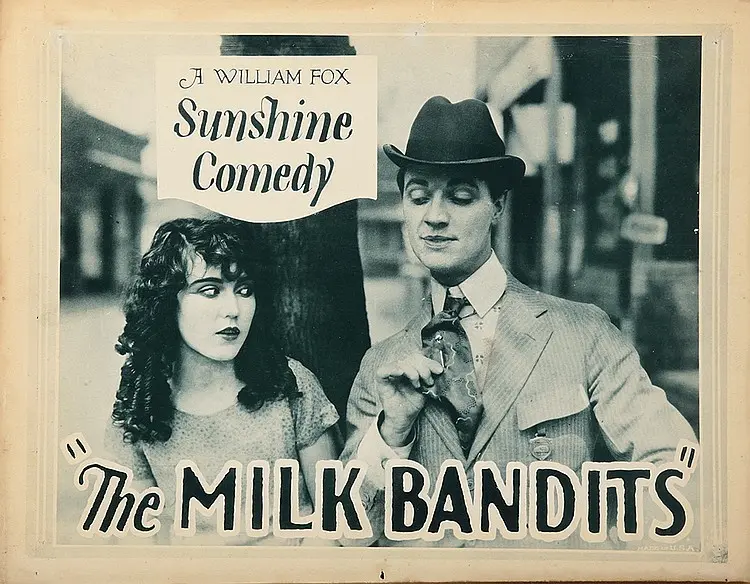
There is a peculiar, almost feral energy that permeates the silent comedies of the 1920s, a period where the grammar of cinema was being written in real-time with the ink of slapstick and the sweat of physical performers. Among these relics, The Milk Bandits stands as a fascinating specimen of social commentary disguised as low-brow farce. Directed by and starring the often-underappreciated Harry Sweet, the film manages to bridge the gap between the domestic intimacy of Polly Put the Kettle On and the more sprawling, cynical explorations of human nature found in later works. It is not merely a collection of gags; it is a biopsy of the American psyche during an era of rapid urbanization and shifting moral goalposts.
The film opens with a sequence that feels remarkably modern in its depiction of suburban anxiety. The milk bottle, that quintessential symbol of 1920s morning routine, becomes a vanishing totem. When the residents find their porches empty, the reaction isn't merely one of hunger, but of profound betrayal. Sweet captures the immediate descent into tribalism. Every neighbor becomes a suspect; every twitch of a curtain is a sign of guilt. This is where the film’s lexical diversity of movement shines. The actors don't just walk; they prowl, they lurk, and they oscillate between the roles of victim and predator with a fluid grace that recalls the physical comedy of A Champion Loser.
The brilliance of the first act lies in its revelation that the 'theft' is a closed system. There are no outside bandits. Instead, we see a community engaged in a Sisyphean struggle of mutual larceny. Mrs. Jones steals from Mr. Smith because her milk was stolen by Mr. Brown, who in turn was reacting to a theft by Mrs. Jones. It’s a perfect visual metaphor for the economic anxieties of the time—a zero-sum game played out with glass bottles. Sweet’s direction here is tight, using the confined spaces of backyards and alleyways to create a sense of claustrophobia that mirrors the characters' narrowing perspectives.
Just as the milk mystery threatens to become repetitive, Sweet throws a narrative curveball that elevates the film into the realm of high satire. A child enters the frame with a nugget of 'gold,' and the shift in the town's collective consciousness is instantaneous. The milk bottles are forgotten. The petty grievances of the porch are discarded for the grander, more destructive delusion of the gold rush. This transition is handled with a frantic, almost manic energy that contrasts sharply with the slow-burn paranoia of the opening scenes. If The Man Who Saw Tomorrow dealt with the weight of destiny, *The Milk Bandits* deals with the crushing weight of immediate, unearned wealth.
The scenes in the hills are a masterclass in ensemble choreography. We see the townspeople, still dressed in their Sunday best or their morning robes, hacking away at the earth with a desperation that borders on the grotesque. There is no camaraderie in this labor; it is a fragmented, every-man-for-himself scramble that exposes the thin veneer of their supposed community. The sea blue tinting often used in silent night scenes (though here we imagine the dusty ochre of the hills) serves to alienate the characters from their environment. They are no longer neighbors; they are prospectors, stripped of their humanity by the promise of the shiny stone.
The resolution of *The Milk Bandits* provides one of the most cynical and satisfying endings in silent cinema. The reveal that the gold is merely gilded stones planted by the town's 'half-wit' is a stroke of narrative genius. In many films of this era, such as Ragged Robin, the eccentric character is a source of simple pathos or comic relief. Here, however, the character is the ultimate architect of deception. He has identified the town's fundamental flaw—their greed—and weaponized it to achieve a pragmatic goal: the excavation of his cellar.
This twist recontextualizes everything we’ve seen. The townspeople, who thought they were outsmarting nature and each other, have been reduced to beasts of burden for a man they likely looked down upon. It’s a sophisticated critique of labor and exploitation. The 'half-wit' didn't need to hire workers; he only needed to provide a sufficiently shiny lie. The image of the exhausted townspeople looking at the gilded stones while the 'half-wit' stands over his perfectly dug cellar is an indictment of the American Dream that feels as sharp today as it did a century ago. It echoes the themes of social climbing and the cost of vanity seen in Vanity's Price, but with a much more grounded, earthy cynicism.
Beyond the thematic depth, the technical execution of the film deserves significant praise. Harry Sweet, who both wrote and directed, displays a keen understanding of visual pacing. Silent comedy relies on the rhythm of the edit and the clarity of the gesture. In the milk-stealing sequences, the timing is rhythmic, almost musical. The way a hand reaches out from behind a pillar or the precise moment a character turns their head to see a neighbor fleeing—these are the beats of a director who understands the physics of humor.
The cinematography, while limited by the technology of the time, uses natural light to great effect during the hill sequences. The harshness of the sun reflects the harshness of the characters' ambitions. There is a grit to these scenes that you don't always find in the more polished studio productions like Fridericus Rex - 1. Teil: Sturm und Drang. Sweet isn't interested in the grand historical sweep; he's interested in the dirt under the fingernails and the sweat on the brow. His performance as the lead 'detective' is equally nuanced, avoiding the over-the-top mugging that plagued many of his contemporaries. He plays the role with a straight-faced earnestness that makes the eventual realization of his own foolishness all the more poignant.
When placing *The Milk Bandits* in the broader context of silent film history, it occupies a unique space. It lacks the sentimentalism of At Piney Ridge or the melodrama of Maddalena Ferat. Instead, it feels like a precursor to the dark satires of the mid-20th century. There is an DNA link between this film and the works of Preston Sturges or even the Coen Brothers. It understands that human beings are essentially ridiculous, driven by appetites they don't fully understand and easily manipulated by the promise of a shortcut.
The film also touches on themes of perceived morality vs. actual behavior, much like Moral Suicide, though it does so through the lens of a milk bottle rather than a tragic romance. Even the more action-oriented sequences, which might remind some of the rugged landscapes in Channing of the Northwest, are subverted here. In a typical adventure film, the digging would lead to a genuine discovery; here, it leads only to a hole in the ground and a bruised ego. This subversion of genre expectations is what makes Sweet’s work so enduringly relevant.
In the final analysis, *The Milk Bandits* is a film about the architecture of lies. Whether it's the lie of the 'bandit' (who is actually just the man next door) or the lie of the 'gold' (which is actually just painted stone), the film suggests that our social structures are built on a foundation of mutual deception. The fact that it manages to convey this heavy philosophical load while still being genuinely funny is a testament to Harry Sweet’s talent. It is a lean, efficient piece of filmmaking that doesn't waste a single frame.
For those used to the grandiosity of Famous Battles of Napoleon or the exoticism of A Sister to Salome, *The Milk Bandits* might seem small at first. But like the 'gold' nuggets at the center of its plot, its value is in the eye of the beholder. It is a sharp, witty, and surprisingly dark look at the human condition, wrapped in the sheep's clothing of a two-reel comedy. It reminds us that while civilizations may rise and fall, the impulse to steal a neighbor's milk—or to dig a hole for a fake fortune—remains eternally, hilariously human. It is a vital chapter in the history of screen comedy, proving that sometimes the best way to see the truth is through the bottom of an empty milk bottle.
IMDb 4.8
1922
Community
Log in to comment.