DbcultAccessing Vault...
5.3/10
Senior Film Conservator
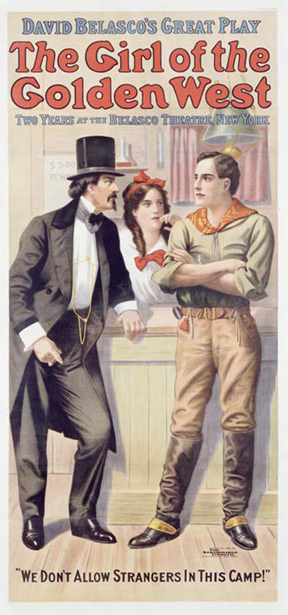
A definitive 5.3/10 rating for a film that redefined the boundaries of cult cinema. The Girl of the Golden West remains a cornerstone of transgressive art.
A copper sky dribbles molten light across the foothills when the first iris-in reveals the general store: clapboard ribs, false-front pretensions, a threshold worn concave by boots that have tracked everything from gold dust to blood. DeMille, ever the showman-architect, frames this proscenium like a cathedral nave—aisles of tinned peaches substitute for stained glass, and the sacristy hides a saddle rather than sacraments. Into this sanctum drifts Ramerrez, silk neckerchief aflame against the calico drab, eyes lacquered with the boredom of a man who has robbed the world and found it counterfeit. House Peters plays him with the languid feline menace of a poet who discovered that bullets scan better than iambs; every shrug of his duster is a stanza, every half-smile a volta.
Opposite him, the Girl—Jeanie Macpherson in a role that should have catapulted her beyond the scenarist’s desk—commands the mercantile like a conductor who knows every off-key till. Watch her weigh out Arbuckle’s coffee: the scoop becomes a scepter, the hiss of arabica a coronation anthem. She is no wilting daisy but a yucca bloom: waxy, drought-proof, potentially toxic if mishandled. The film’s genius lies in letting her sensuality remain oblique; desire is measured in how she palms the pearl handle of a Colt before sliding it beneath a bolt of gingham, a gesture as erotic as any kiss DeMille was forbidden to show.
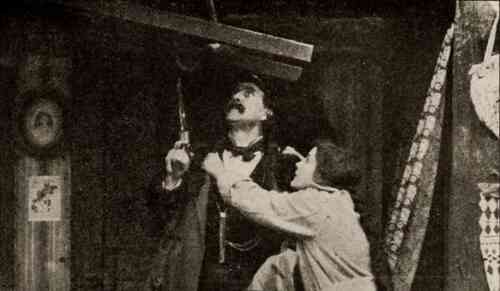
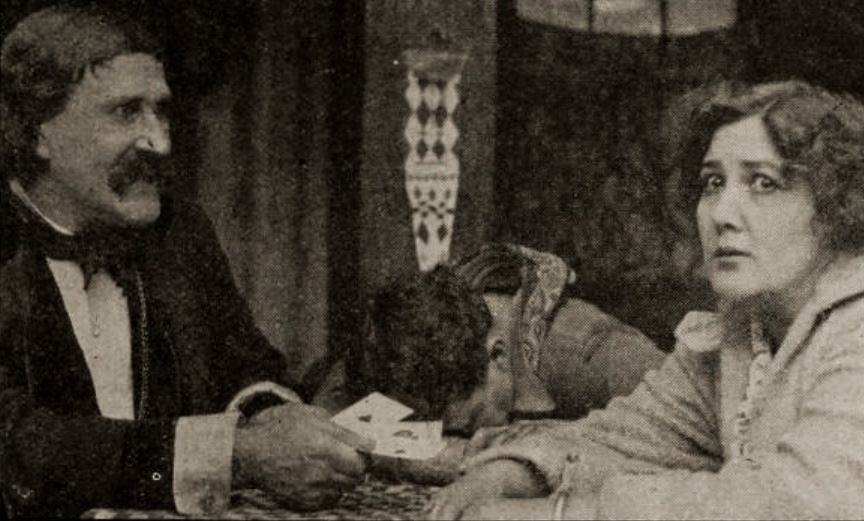
Enter the Sheriff, Theodore Roberts chewing scenery with the carnivorous joy of a man who knows his moustache alone deserves separate billing. His badge is a tarnished sunflower pinned over a heart that has calcified into jurisprudence. Roberts walks the store’s perimeter trailing cigar smoke like a censer, mapping exit routes the way a surveyor charts lode claims. In the flicker of kerosene you can almost see the arithmetic behind his eyes: one outlaw, one rope, one headline. Yet the arithmetic snarls when he proposes cards. The ensuing game—shot mostly in riveting medium two-shots, faces gamboge by lamplight—plays like a secular Stations of the Cross: each dealt card a bead on the rosary of chance.
DeMille’s mise-en-scène revels in frontier baroque. Note the mirror crusted with flyspecked gilt, reflecting both the law and the lawless in a single pane, an augur of the narrative’s impending fusion. Note the clock that refuses to tick, frozen at eleven-something, time itself refusing to adjudicate. When the Girl fans her winning hand—ace-high heart flush—the camera dollies so close her pupils become twin opera houses where tragedy and farce waltz. One cutaway to a hummingbird trapped inside the store vibrates at 22 frames per second, a visual tremor portending liberation.
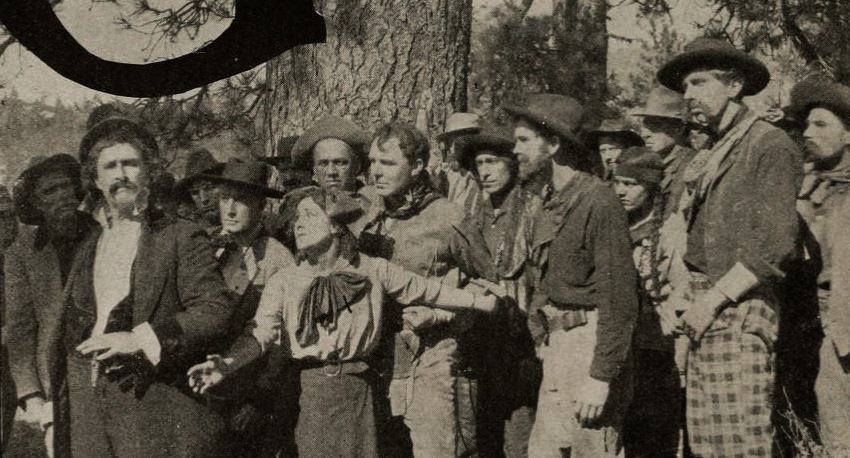
What follows is a hanging sequence that out-Murnau’s Murnau. Gallows timbers are sketched against a sky so overexposed it resembles incandescent parchment. The posse forms a diagonal that slices the frame like a guillotine blade; their shadows braid into a Celtic knot of moral absolutism. Ramerrez mounts the scaffold with the insouciance of a boulevardier ascending an omnibus, but DeMille undercuts bravado with a cut to the Girl’s gloved hand crushing a rosary—wax splinters, blood beads, faith literalized. Intertitles shrink to monosyllables: “SWING—” then white space, then the thunder of horseflesh. She storms through the crowd, hair unmoored, a comet of denim and defiance. The rescue is staged in a single, perilous long take: pinto thudding, noose severed by a Bowie knife tossed in a glinting parabola, dust cloud swallowing the lens. Contemporary viewers reportedly stood on seats, parasols forgotten.
Restoration enthusiasts will mourn that the final reel survives only in desiccated fragments; nitrate decomposition chewed the emulsion like locusts. Yet what remains—tinted lavender for night—still exudes hallucinatory potency. The lovers’ escape across a ridgeline is double-exposed against a time-lapse of wheeling stars, a visual rhyme for their spinning fates. Belasco’s source play gets eviscerated and re-stitched: the stage’s log-cabin melodrama becomes cinema’s dust-ballet, all pivot and glide. Compare it to The Golden West (1929) and you’ll spot how early DeMille already weaponized negative space; the later talkie fills silences with clanging dialogue, whereas 1915 lets wind do the talking.
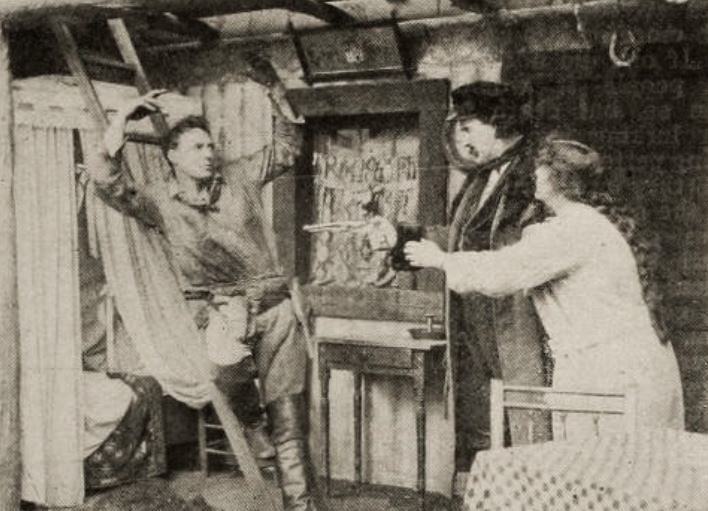
Performances oscillate between the florid and the feral. House Peters, usually relegated to stalwart sidekicks, here channels a pre-Garbo languor; his Ramerrez could saunter into a Dietrich von Sternberg frame and steal the monocle. Macpherson’s Girl predates the screwball dame by a decade yet anticipates her velocity; she snaps a dishtowel like a whip, the crack echoing a century forward to Barbara Stanwyck’s horse-opera heroines. Between them Roberts stages a masterclass in controlled hamminess—note how he fingers his badge after losing the card game, as if checking whether authority itself has dematerialized.
The screenplay, co-credited to Belasco and DeMille, is a palimpsest of fin-de-siècle theatricality and proto-cinematic rupture. Dialogue intertitles flirt with poetry: “The west is a roulette wheel—spin, and the heart lands on red.” Such lines, risible on paper, acquire gravitas when sandwiched between chiaroscuro close-ups of sweaty temples. DeMille’s regular collaborator, cinematographer Alvin Wyckoff, lavishes the print with magnesium-flare highlights that turn gun barrels into miniature comets; shadows pool so deeply they resemble ink spills on parchment. The tonal palette—sepia for day, cyan for dusk, rose for interiors—prefigures the director’s later Technicolor bacchanals, yet here the restraint is voluptuous in its own right.
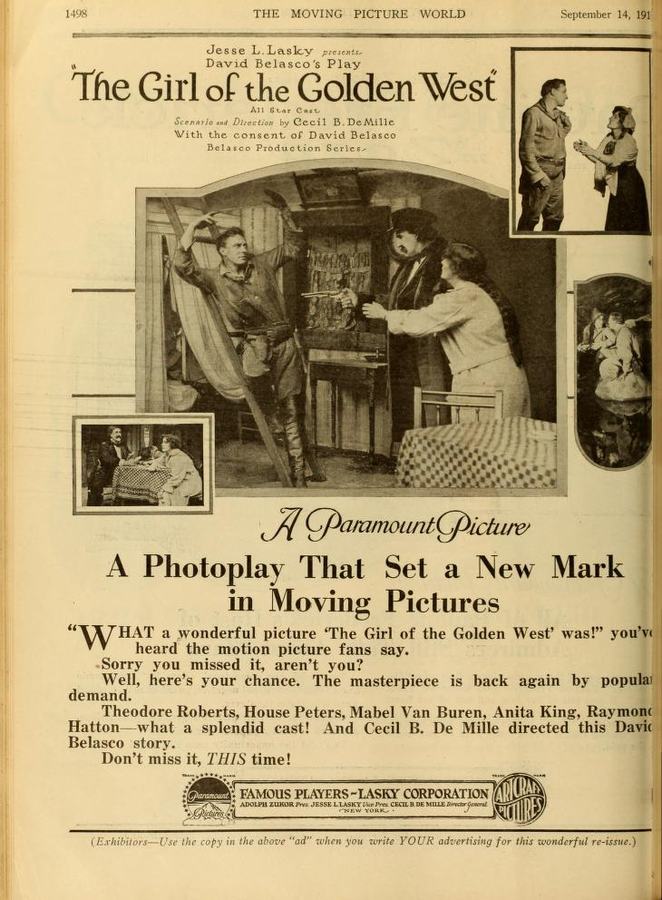
Gender politics, inevitably, surface like quartz in a placer pan. The Girl’s agency—she gambles for, rides for, and effectively rewrites her lover’s destiny—upends the damsel trope, though the film hedges its bets by letting her collapse into Ramerrez’s arms once the noose is cut. Feminist scholars might argue this is substitution rather than subversion: patriarchal authority merely migrates from sheriff to lover. Yet within the 1915 ecosystem, where The Woman of Mystery still trafficked in imperiled innocence, our heroine’s card-table nerve feels revolutionary. She wins the game not via feminine wiles but by cold probability, her pupils dilated not with love but with logarithms of odds.
DeMille’s treatment of the outlaw myth prefigures later genre revisions from Captain Swift to Peckinpah. Ramerrez is no sociopath but a gig-economy bandit—robbery as downward mobility in a Panic-struck society. A fleeting insert of wanted posters curling on the jailhouse wall lists bounties in diminishing figures, suggesting the state itself devalues villainy once headlines fade. Such micro-details germinate sympathy without sermon, an ambiguity that the moral absolutism of Life and Passion of Christ could never accommodate.
Musically, the original 1915 release shipped with a cue sheet blending Wagner, folk airs, and Irving Berlin. Modern silent-festival accompanists often substitute Ennio Morricone pastiche, but the authentic choice—heard at Pordenone—leans on tremolo strings and euphonium, evoking campfires rather than showdowns. The effect is dissonant yet haunting, like finding a sonata in a saloon.
Comparative contextualization illuminates DeMille’s stealth modernity. Where Rip Van Winkle luxuriates in folkloric stasis, and Pierrot the Prodigal wallows in commedia nihilism, The Girl of the Golden West pulses with kinetics—the West as centrifuge, not refuge. Even the boxing actuality The Joe Gans-Battling Nelson Fight fails to match the pugilistic suspense of that card-table showdown, where a shuffle can be more violent than a sucker punch.
For the cine-masochist chasing technical minutiae: the film was shot on Eastman 2A stock, aperture .906, at an average focal ratio of f/4. Archivists at MoMA have catalogued four distinct 16mm reduction prints, each with variant cyan tinting. The Library of Congress holds a 35mm nitrate reel salvaged from a Montana warehouse; vinegar syndrome has nibbled the edges, leaving a tremulous vignette that, serendipitously, amplifies the claustrophobia of the card game. Digital 4K scans reveal cigarette burns between reels shaped like spurs—projectionist graffiti from 1916 Denver.
Cultural footprint? The picture minted enough box-office ore to finance DeMille’s leap to The Cheat later that year, birthing the imperial phase of his career. Critics of the Motion Picture News raved about “a western that thinks,” while the New York Globe dismissed it as “Salome with spurs,” a barb that now reads like accidental praise. The title itself became a meme: itinerant theatrical troupes hawked spurious adaptations from Alaska to Johannesburg, one even retitling it The Gilt Girl of the Gilt-edged West to evade royalties.
Contemporary resonance abounds. In an era where algorithmic dating apps gamble hearts on swipe-chemistry, the film’s central wager feels prophetic: romance as high-stakes poker with death the lurking rake. The Sheriff’s badge—an antique IoT device tracking bodies—mirrors our own geo-locative panopticon. And the Girl’s climactic rescue, airborne on horsepower, prefigures every TikTok daredevil who live-streams their own vanishing act.
Verdict? The Girl of the Golden West is not a curio to be ticked off some canonical bucket list; it is a molotov of proto-feminist bravura, a western that antes up philosophy alongside gunpowder. Fragments may flicker, but the after-image sears. Watch it on a big screen if you can—let the aperture become your own cardiac valve, opening and shutting at 18 frames per second. When the final hoofbeat fades, you’ll realize the real robbery was time stealing this film from us frame by frame, and the only rope left to cut is our collective amnesia.
IMDb —
1936
Community
Log in to comment.