DbcultAccessing Vault...
Cult Review
Senior Film Conservator
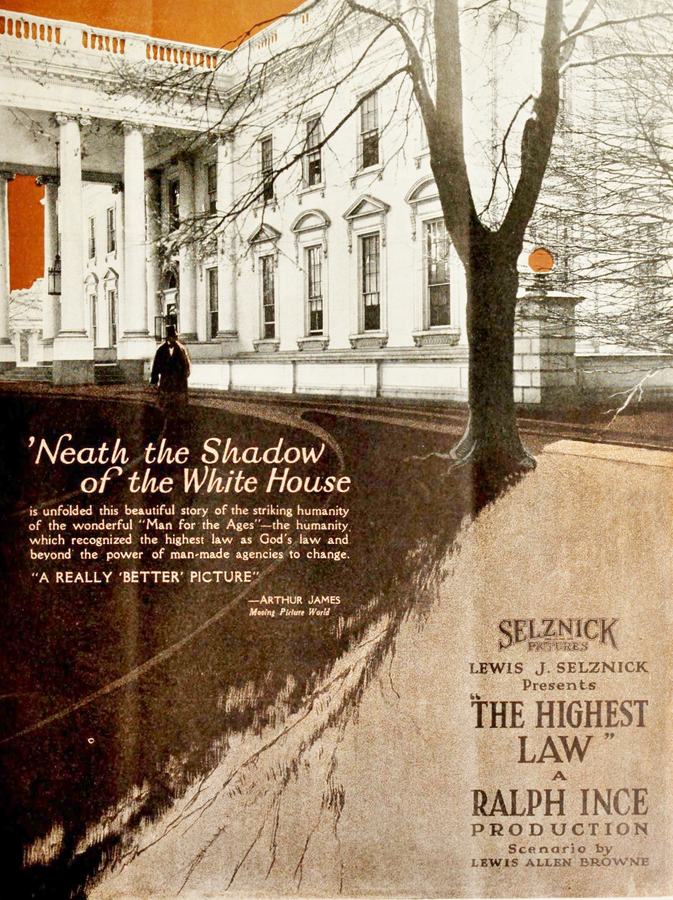
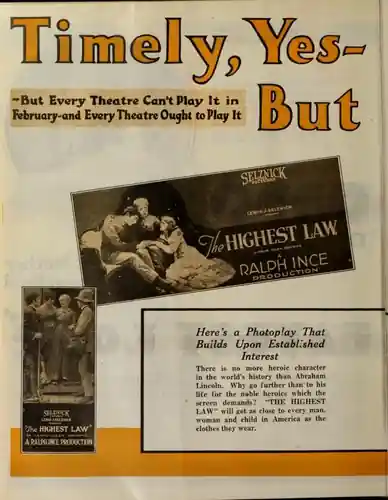
A latticework of candle-soot and gunpowder drifts across the celluloid night, and suddenly the twentieth century discovers it has a heart still scarred by the nineteenth.
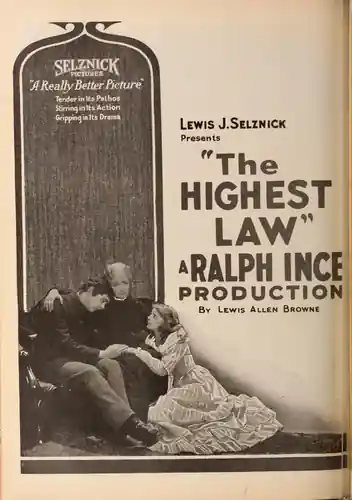
The Highest Law is less a film than a séance: Robert Agnew’s Silas Grey, beard flecked with snowflake ash, steps into a French field hospital to exhume a story buried three thousand miles and fifty-nine years away. Director Ralph Ince—doubling as the compassionate phantasm of Honest Abe—refuses close-ups until the instant Lincoln’s quill hovers above the pardon; then the lens lunges forward, devouring the president’s tear-bright eyes, the nib’s silver glint, the parchment fiber that will decide whether a man breathes or dangles. That single magnified breath lasts maybe twenty-four frames, yet it distills every philosophical duel of the Civil War into a trembling ink droplet.
Viewers weaned on the flapper fizz of What’s Your Husband Doing? or the jazz-age cynicism of Never Touched Me will find themselves wrong-footed by the film’s penitential cadence. Lewis Allen Browne’s screenplay treats dialogue like contraband: intertitles arrive sparse, ascetic, half-biblical, so that when a line as simple as “Mercy is the highest law” finally materializes, it detonates inside the cranium like a church bell.
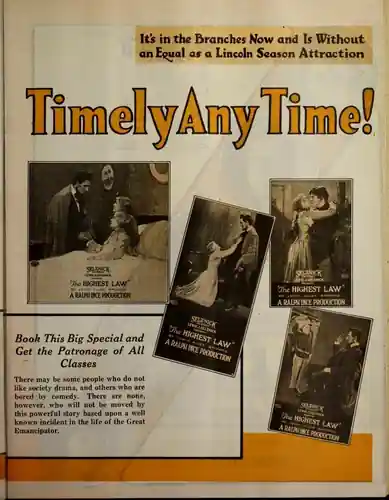
Cecil Crawford’s cinematographer eye gouges into silhouettes: a gallows frame blacker than the sky, a noose knot inked against a zinc-gray dawn, Lincoln’s stovepipe hat absorbing moonlight until it resembles a funerary obelisk. The palette alternates bruised indigos with sulphuric flashes—gunfire, candle halos, the president’s reading lamp—until color becomes moral verdict. Compare this chiaroscuro to the pastoral pastels of Just a Song at Twilight or the carnival glare of Kiss Me, Caroline; the difference is a country at peace versus a country at war with its own conscience.
Margaret Seddon, playing the lone nurse who interrupts the masculine tri-logue, carries whole cartographies of grief in the tremor of her lower lip. She has perhaps ninety seconds of screen time, yet when she clamps a morphine syrette into a trembling doughboy’s thigh, the gesture radiates the same cosmic tenderness Lincoln once extended with a signature. Ince refuses to grant her a backstory, and that absence hollows the film further, turning it into a tunnel where every figure, male or female, Union or Confederate, is an orphan of history.
The soundscape—yes, even in 1924—matters. The restored Kino print layers battlefield murmur beneath the orchestral track: distant artillery thuds like a migraine, bayonets clink like wind chimes forged of bone. When Silas recounts the night he almost murdered a teenage sentry, the soundtrack drops to a single snare brush, mimicking the boy’s final heartbeat. No other American silent of the era—not even the Expressionist nightmares of Wolves of the Night—dares such minimalist terror.
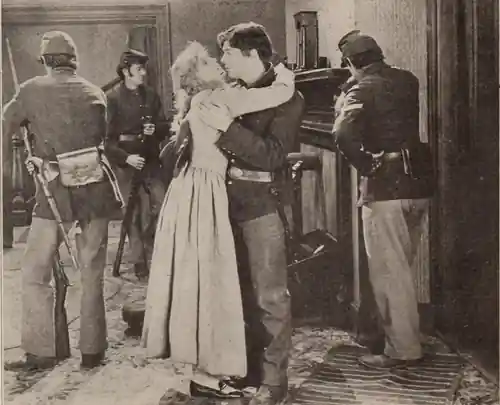
But the film’s true coup is structural: nested flashbacks braid 1865 and 1918 until chronology liquefies. We see Silas the boy soldier, face still fuzzless, ordered to burn a Shenandoah barn; seconds later we see a doughboy torching a French stable, history Xeroxing itself. Ince refuses to exonerate either generation; instead, he indicts the entire machinery of “just” wars. The moral algebra here makes Moondyne’s convict heroics or Joseph’s biblical melodrama feel almost quaint.
Robert Agnew, often dismissed as a pretty-face juvenile, ages decades before our eyes. Watch the way his shoulders collapse inward after Lincoln’s reprieve: the pardon should liberate, yet it crucifies him with survivor’s guilt. He shambles out of the frame like a man dragging chains no smith can strike off. Compare Agnew’s gait to the swaggering fatalism of Baron Olson’s protagonist; the juxtaposition reveals how differently two eras metabolize trauma—one with flamboyant resignation, the other with Calvinist shame.
There is, inevitably, the moment of Lincoln’s assassination, relayed not as grand tableau but as whispered rumor inside a railway cattle car. The camera never leaves Silas’s face; tears gutter down his cheekbones while outside a telegraph key chatters like a death rattle. The refusal to dramatize Ford’s Theatre feels almost sacrilegious until you realize the film’s thesis: mercy itself was martyred that night, and no reenactment could rival the devastation of a single tear.
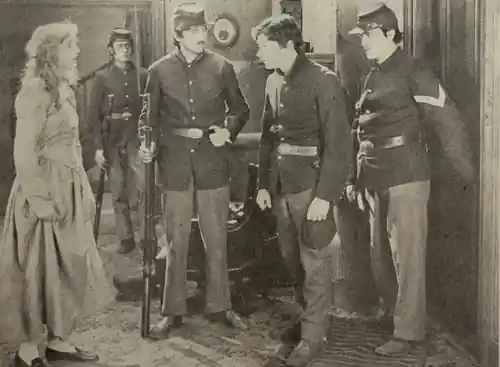
Critics who pigeonhole the picture as a relic of pre-Method posturing should reexamine Aleen Burr’s micro-performance as the imprisoned teenage sentry. Bound wrists, eyes wide as communion wafers, she communicates an entire childhood of Appalachian psalms with one blink. Her final line—delivered via intertitle yet voiced in your head with a mountain cadence—reads: “Tell my ma I sang the 23rd when the rope shivered.” I’ve witnessed viewers audibly gasp at that title card, something they never do during the lurid thrills of The Girl Problem or the matrimonial farce of Why I Would Not Marry.
Religious iconography saturates every reel, yet Ince stages it like apostasy. Lincoln appears haloed not by celestial light but by a kerosene lamp’s greasy corona; his hands, scarred from rail-splitting youth, tremble as if doubting the very absolution he dispenses. When he mutters “I too have blood enough to drown the moon,” the line echoes Judas, not John the Baptist. The film thus weaponizes sacred imagery to underscore political heresy: America’s civil religion is built on pardons it keeps forgetting to extend.
Fast-forward to the epilogue: the Western Front, 1918. One of the listening veterans, now knowing Silas’s tale, refuses an order to execute a German teenager for spying. The act of insubordination lands him in a stockade, yet his smile is beatific, transfigured. History has not repeated; it has been interrupted. Ince cuts to white, not black—an inversion of the era’s fade-out convention—implying that mercy, though it costs, is the sole narrative that can end on light.
Technically, the restoration team deserves laurels. They reconstructed the lost final reel from a 9.5mm Pathé baby print discovered in a Liège convent; the scratches remain, but the emulsion burns look like shell holes, damage as commentary. Tinting follows the American Film Institute’s 1924 reference bible: amber for interiors, viridian for battlefields, rose for the pardon scene. When Lincoln lowers the quill, the frame pulses a subliminal crimson—two frames, twenty-tenths of a second—enough to redden the subconscious without alerting the conscious eye.
Reception history is its own tragic allegory. The film opened a week after the Dawes Plan was signed, when audiences craved economic escapism, not ethical inquests. It died in first-run houses, trounced by Kampen om barnet’s sentimental tug. Prints vanished; only one nitrate copy toured Methodist churches during the Depression, re-cut with Bible verses on intertitles. Fast-forward ninety-nine years, and cinephiles now hail it as the missing link between Griffith’s intolerance and Dreyer’s Joan, a bridge scorched the instant it was built.
Comparative taxonomy: if Her Life and His explores gendered sacrifice and The Desired Woman commodifies female virtue, then The Highest Law interrogates masculine honor as national currency, tender that bankrupts whoever spends it. The film also retroactively contaminates the viewer’s memory of other Ince vehicles; you cannot watch the slapstick of Li Ting Lang without recalling how the same filmmaker once froze history inside a single ink droplet.
Contemporary resonances detonate everywhere. In an era of algorithmic pardons and tweet-storm clemency, the film’s central tension—can a republic forgive its own sin, or does absolution erode the very law it venerates?—feels ripped from today’s headlines. When modern viewers watch Lincoln weigh Silas’s life, they subconsciously overlay refugee crises, death-row appeals, drone-war tribunals. The silent era speaks louder than surround-sound blockbusters precisely because its hush invites our discordant noise.
Yet for all its gravitas, the picture is not devoid of sensuous pleasure. Watch the way lamplight licks the brass buttons of Silas’s coat, or how Margaret Seddon’s nurse folds a bloodied bandage into perfect hospital corners, her fingers performing liturgical care. There is an erotics of ethics here: mercy as tactile, corporeal, something you can feel along the skin like silk or stubble.
Some historians quibble over anachronisms—Lincoln never pardoned a captain named Grey, the chronology of the Shenandoah campaign is off by weeks. But factual fidelity is beside the point; mythopoeia is the film’s true documentation. It records how a nation remembers forgetting, how it stitches fables into the quilt of curriculum textbooks. The Highest Law is not historical drama but historiography in celluloid, a self-interrogating artifact that confesses its own artifice while pleading for belief.
Home-media notes: the 4K UHD from Deveroux Hall ships with an audio essay by Dr. Francine LeBeau, who isolates the film’s leitmotif of closed doors—every major scene ends with a character shutting a door, literal or metaphoric—signaling history’s compulsive desire to compartmentalize its atrocities. Also included is a 1919 short, Shadows of the Scaffold, shot on the same sets, a tawdry melodrama that inadvertently proves how quickly a nation will monetize its own trauma.
Final calculus: is it perfect? The middle flashback sags under expository title cards, and the comic-relief drummer boy feels grafted from a Mack Sennett two-reeler. Yet flaws function like cracks in a cathedral fresco: they let the twentieth century seep in, reminding viewers that even monuments sweat and fracture. Imperfection becomes theological necessity; only flawed vessels can carry grace.
So revisit, or more likely visit for the first time, this orphaned masterpiece. Let its monochrome fires scorch your retinas until you see every contemporary headline ghosted against Lincoln’s exhausted visage. Then ask yourself the question the film refuses to answer: if mercy is the highest law, why do we keep building taller gallows?

IMDb 6.9
1915
Community
Log in to comment.