DbcultAccessing Vault...
Cult Review
Senior Film Conservator
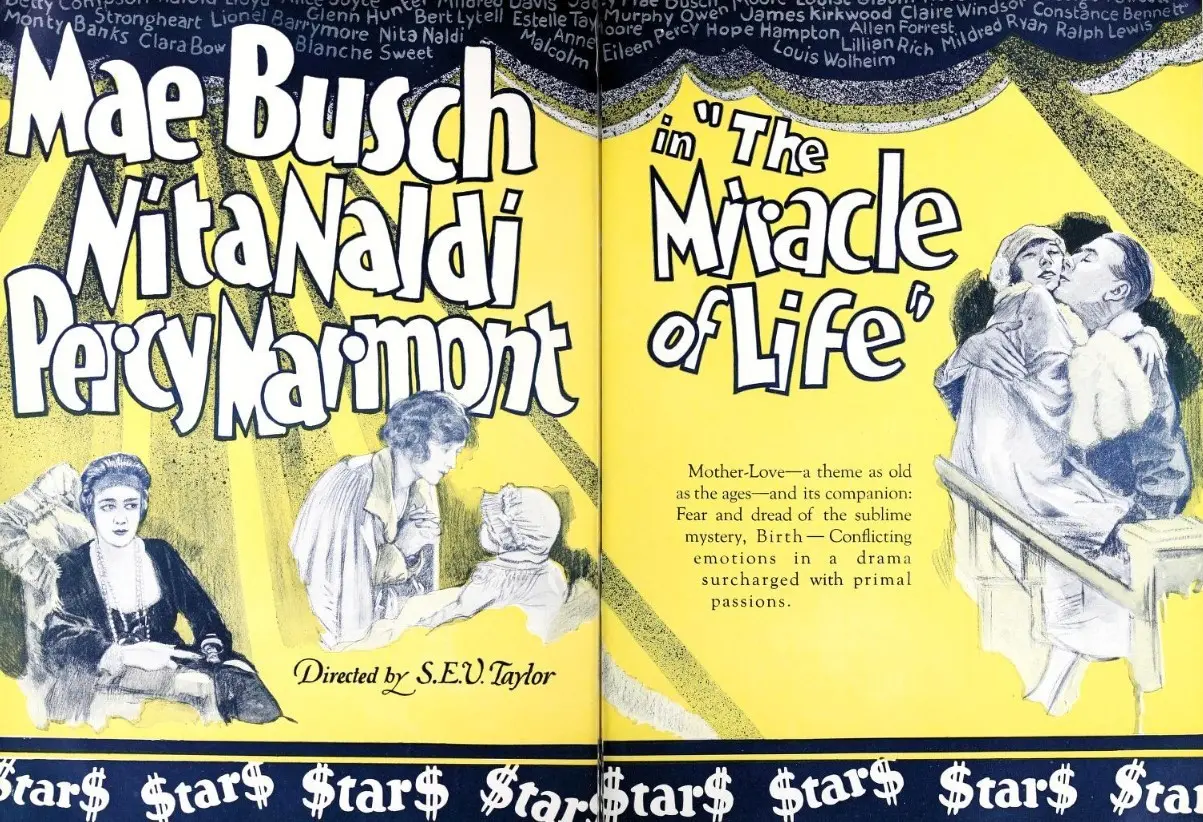
Should you invest your time in a century-old social hygiene film like The Miracle of Life? Short answer: yes, but only if you are willing to look past its heavy-handed moralizing to find the raw human anxiety beneath.
This film is specifically for historians of gender politics and fans of Mae Busch who want to see her range beyond comedy. It is absolutely NOT for those seeking a lighthearted silent-era romp or anyone sensitive to blunt, 1920s-style reproductive propaganda.
Before diving into the technical nuances, let us address the film's success and failure with total clarity.
Mae Busch is often remembered for her sharp-tongued roles in Laurel and Hardy shorts, but in The Miracle of Life, she is required to carry a heavy dramatic burden. The way she handles the news of her pregnancy is not with the joyful glow expected by her husband, but with a visible, creeping dread. It is a bold choice for 1926.
There is a specific scene in the Howell living room where Blair talks about their future children. Busch doesn't look at him; she looks through the wall. Her eyes communicate a sense of impending loss—specifically, the loss of herself. This performance elevates the film from a mere pamphlet to a character study, even if the director, S.E.V. Taylor, tries to steer it back into safer waters.
Percy Marmont, as Blair, provides the necessary foil. He is not a villain, which makes the conflict more interesting. He is simply a man of his time, oblivious to the fact that his 'bliss' is his wife's 'burden.' His performance is steady, though it lacks the electric vulnerability Busch brings to the table.
Nita Naldi, playing the friend Helen, is cast in the stereotypical 'vamp' or 'corrupting influence' role that was common in the era. Helen represents the dangerous modernity that the film's writers, Olga Printzlau and Marion Leonard, want to warn against. Naldi plays the role with a serpentine grace, framing the idea of 'freedom' as something slightly illicit.
In the scene where Helen introduces Janet to the idea of the physician friend, the lighting shifts. The soft, domestic glow of the Howell home is replaced by sharper shadows. It is a visual cue that we are entering a 'moral underworld.' It’s a bit much. It’s effective, but it lacks subtlety. It works. But it’s flawed.
Is The Miracle of Life a masterpiece of silent cinema? No. It is too concerned with its message to achieve true artistic greatness. However, it is a vital watch for anyone interested in the history of how women's bodies have been depicted on screen. It offers a fascinating comparison to more lighthearted 1926 fare like Hands Up! or the whimsical Sally of the Sawdust.
The film provides a stark look at the 'Social Hygiene' genre. These films were essentially educational propaganda wrapped in a narrative skin. While we might find the messaging regressive today, the craftsmanship in the cinematography and the intensity of the acting make it more than just a historical curiosity.
The pacing of The Miracle of Life is deliberate, almost agonizingly so in the middle act. This is likely intentional, meant to reflect Janet's internal state of being trapped. Director S.E.V. Taylor uses close-ups sparingly but effectively, particularly when Janet is at the doctor’s office. The camera lingers on her face, forcing the audience to sit in her discomfort.
Compared to the kinetic energy of something like Nelly Raintseva, this film feels static. But that stasis serves the theme of domestic weight. The cinematography doesn't strive for the avant-garde; it strives for a grounded, middle-class reality that makes the 'scandalous' elements of the plot feel more immediate to its 1926 audience.
Pros:
- Strong lead performance that challenges the script's simplicity.
- High production values for a social drama of the period.
- A fascinating look at 1920s medical and social ethics.
- Nita Naldi’s presence adds a layer of sophisticated tension.
Cons:
- Overtly preachy tone that can alienate modern viewers.
- The male perspective is treated as the 'correct' one without question.
- Pacing drags significantly in the second act.
- The physician character is written as a caricature of moral authority.
One surprising element of the film is how it inadvertently highlights Blair's selfishness. While the film presents him as the hero, a modern reading reveals a man completely unwilling to compromise on his wife's bodily autonomy. The film thinks it is praising the 'miracle of life,' but it is actually documenting the slow erasure of a woman's individual will. This tension makes the film far more interesting to watch today than it probably was in 1926.
"The Miracle of Life is a lecture in a frame, but the frame is beautifully crafted and the lecturer is surprisingly human."
The Miracle of Life (1926) is a difficult film to love, but an easy one to analyze. It represents a specific moment in cinematic history where the medium was used to reinforce traditional values against the rising tide of the 'New Woman.' While the resolution is frustratingly neat, the journey Janet Howell takes—and Mae Busch’s portrayal of that journey—is worth the price of admission. It is a sermon, yes. It is propaganda, certainly. But it is also a window into the soul of 1920s America, with all its fears and contradictions on full display.
Final thought: If you can separate the artistry of the performers from the rigidity of the message, you will find a compelling drama. If you cannot, you will likely find it an insufferable relic. I lean toward the former, if only for the sake of Busch’s haunted eyes.
IMDb —
1936
Community
Log in to comment.