DbcultAccessing Vault...
7.7/10
Senior Film Conservator
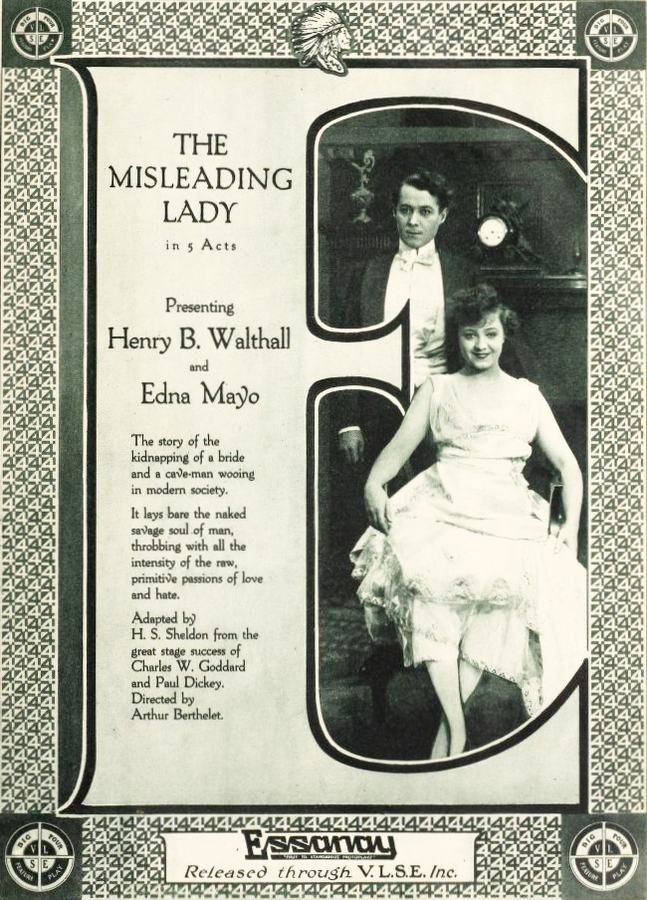
A definitive 7.7/10 rating for a film that redefined the boundaries of cult cinema. The Misleading Lady remains a cornerstone of transgressive art.
Step into the vibrant, often tumultuous world of early 20th-century cinema, where narrative conventions were still being forged and the dramatic possibilities of the moving image were boundless. In this landscape, the 1916 production of The Misleading Lady emerges not merely as a relic, but as a fascinating artifact of its time, a whirlwind of theatrical ambition, bizarre romantic machinations, and a surprisingly dark turn that challenges modern sensibilities while offering a rich tapestry for analysis. Directed by Arthur Ashley and Fred J. Balshofer, this silent film, based on the popular play by Charles W. Goddard and Paul Dickey, plunges its audience into a narrative that oscillates wildly between drawing-room farce and frontier melodrama, all underpinned by a distinctly early Hollywood understanding of gender dynamics and romantic pursuit.
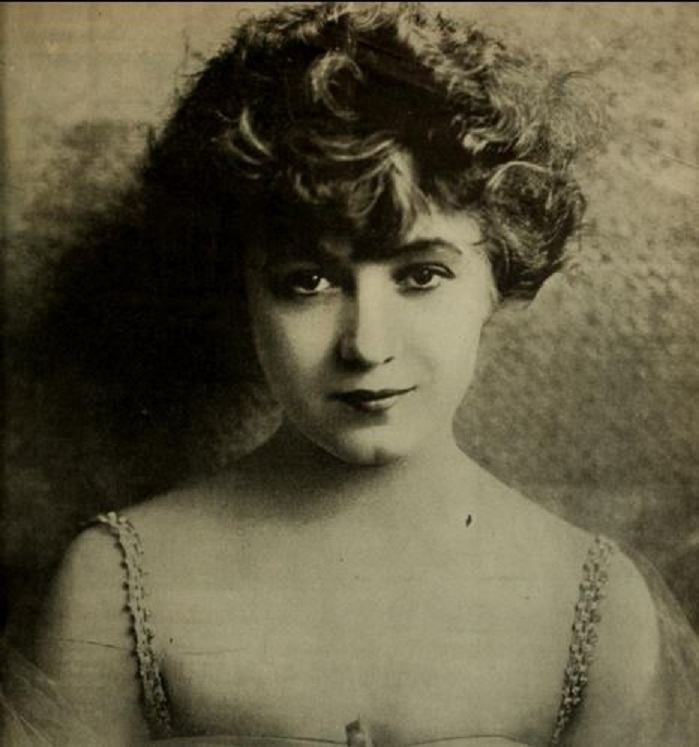
At its core, The Misleading Lady is the story of Helen Steele, portrayed with spirited conviction by Renee Clemmons. Helen is an ingenue, brimming with talent and an unshakeable belief in her own destiny on the stage. Her ambition is palpable, a burning desire to secure the leading role in Sidney Parker’s new production, "The Siren." However, Parker, a seasoned theatrical manager, sees only her lack of experience, a bureaucratic barrier to her dreams. Undeterred, Helen, with the unwitting assistance of her fiancé, Henry Tracey (played by Edward Arnold), orchestrates an elaborate scheme. She arranges for Parker to attend a high-society soirée hosted by John W. Cannell, where she intends to employ her considerable charm and persuasive powers to win him over. This initial setup is classic screwball comedy in its nascent form, a testament to the era's burgeoning interest in sophisticated social maneuvering as a plot device.
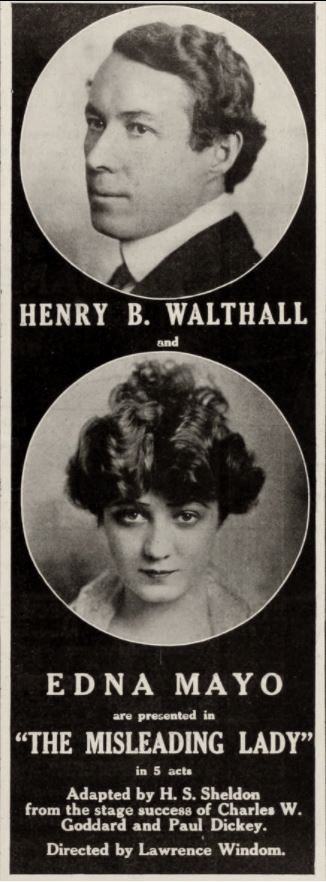
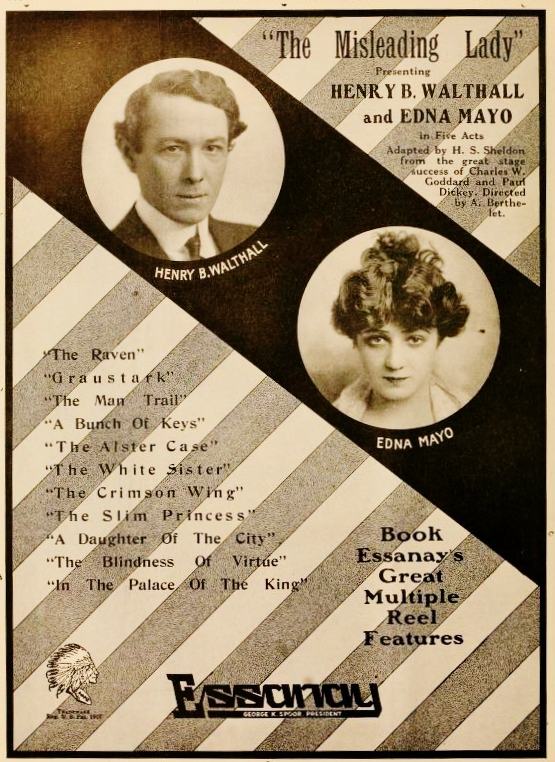
Parker, however, proves to be a man of eccentric tastes and an even more eccentric challenge. He agrees to give Helen a trial, but only if she can accomplish a seemingly impossible feat: coax a marriage proposal from Jack Craigen, a hardened, self-proclaimed misogynist recently returned from a long sojourn in the wilds of Patagonia. Craigen, embodied by Henry B. Walthall with a brooding intensity, is presented as a man utterly impervious to feminine charm, his experiences in the remote wilderness having apparently cemented his disdain for the fairer sex. This is where the film veers sharply into a more complex, and frankly, problematic territory. Helen accepts the challenge, viewing it as yet another performance, a role to conquer. Her subsequent efforts to ensnare Craigen are a masterclass in calculated allure, a delicate dance of feigned innocence and strategic vulnerability. The scene where she finally elicits the proposal is a triumph of silent acting, conveying Helen's exhilaration and Craigen's bewildered surrender through subtle gestures and expressive glances.
The moment of triumph is swiftly followed by a cascade of complications. The party guests, having secretly listened to the entire charade, burst forth with congratulations, exposing the cruel truth to Craigen. His furious reaction is entirely understandable; the humiliation of being the unwitting pawn in a theatrical game transforms him from a gruff recluse into a man burning with righteous indignation. He refuses to accept it as a mere joke, his pride wounded beyond repair, and immediately prepares to retreat to his isolated mountain home. This pivotal turn shifts the film’s tone dramatically, moving from lighthearted social satire to something far more serious, foreshadowing the darker events to come.
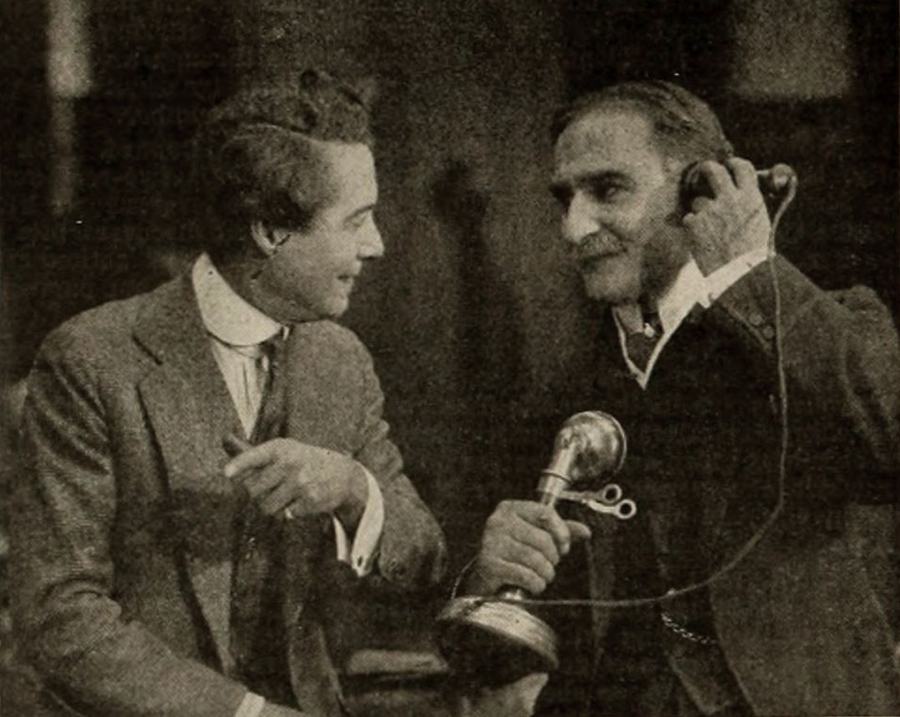
Adding another layer of chaos, Helen’s fiancé, Henry Tracey, returns unexpectedly from a business trip. Upon learning of Helen's audacious wager and its scandalous outcome, he explodes in a jealous rage, a common trope of the era, brilliantly explored in other films like The Grip of Jealousy. Tracey’s fury is a potent force, driving him to confront Craigen, whom he has never met. In a moment of classic comedic misunderstanding, he mistakes Keen Fitzpatrick (played by Charles J. Stine), a reporter awaiting an interview with Craigen about Patagonia, for the man who has wronged him. Tracey's scathing tirade against the innocent journalist is a highlight of the film’s farcical elements, before the guests intervene to correct his error. Meanwhile, Helen, desperate to salvage her ambitions and perhaps sensing a deeper, albeit twisted, connection with Craigen, takes a drastic step. As Craigen departs in his automobile, she throws herself in front of his car, imploring him to adopt the "Patagonian savage method" – to abduct her and take her to his home, where he could truly "study" women. This moment is startling, a testament to Helen’s theatricality bleeding into her real life, and Craigen's equally shocking decision to put her suggestion into effect. He abducts her, whisking her away to his secluded cabin in the woods. The shift in power dynamics is immediate and stark; once there, he treats her brutally, issuing harsh orders and eventually chaining her to the floor in a scene that would undoubtedly raise eyebrows in a contemporary context, yet served to heighten the melodrama for silent film audiences.
Just when the situation seems dire enough, the narrative takes another surreal turn with the entrance of "Boney" (portrayed by Harry Dunkinson), an escaped lunatic who believes himself to be Napoleon Bonaparte. His raving pronouncements and sword-wielding antics inject a bizarre, almost surreal humor into the tense atmosphere. Craigen, surprisingly, handles the situation with a calm diplomacy, managing to coax "Boney" upstairs to review his imaginary armies, locking him away. This brief interlude of containment allows Helen her chance. With Craigen's back turned, she seizes a telephone, knocks him unconscious, takes the keys from his pocket, frees herself, and flees into the dense, ominous woods. This sequence, fraught with tension and sudden violence, showcases Helen’s resourcefulness and primal instinct for survival, transforming her from a manipulative actress into a desperate escapee.
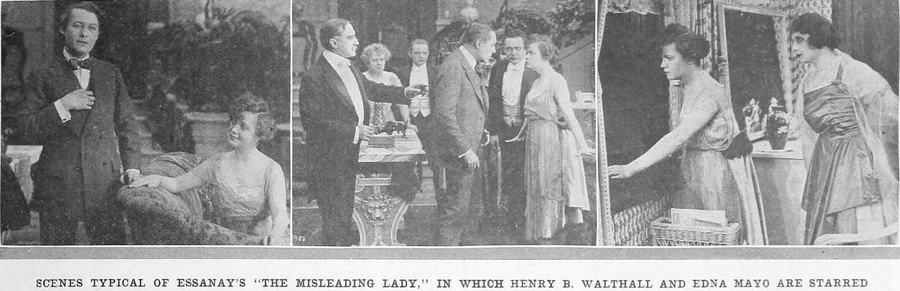
Craigen, upon regaining consciousness, finds Helen's note – a mix of remorse for her actions and a plea for help. A genuine fear for her safety washes over him, a clear sign of his evolving feelings, and he sets out in pursuit. The cabin, meanwhile, becomes a revolving door of characters. Fitzpatrick, still trailing, arrives and, finding "Boney," again mistakes him for Craigen, leading to another comical confrontation. Craigen’s timely return clarifies the identities, and the asylum keepers soon arrive to reclaim their "Napoleon." The drama culminates with Tracey, driven by a possessive jealousy that mirrors the intensity seen in films like A Yellow Streak, arriving at the cabin, revolver in hand, demanding Helen. Craigen, through a heated argument, manages to convince Tracey that Helen has fled into the woods. In a final twist, Helen, having seen Tracey’s car heading towards the cabin and fearing further conflict, makes her way back. Her return coincides with the arrival of the original party guests, ready to rescue her. But Helen, having endured a harrowing ordeal and perhaps discovered a profound, unconventional connection with Craigen, makes a definitive choice: she refuses to leave him. This unexpected resolution speaks volumes about the film's exploration of unconventional romance and the idea that true connection can emerge from the most unlikely, even brutal, circumstances.
The characters in The Misleading Lady, while operating within the broad strokes common to silent cinema, possess surprising depth. Renee Clemmons' Helen is a fascinating study in ambition and adaptation. Initially, she is a creature of artifice, using her theatrical skills to manipulate. Yet, her transformation during the abduction, from a chained prisoner to a resourceful escapee, and ultimately to a woman who chooses her captor, suggests a complex internal journey. She isn't merely a damsel in distress; she is an agent of her own destiny, even when that destiny is fraught with peril and morally ambiguous choices. Henry B. Walthall's Craigen, too, undergoes a significant evolution. His initial misanthropy is a shield, perhaps born of past hurts or simply a preference for solitude. The challenge presented by Parker, and Helen's subsequent actions, force him to confront his preconceived notions. His fear for Helen's safety after her escape is a crucial turning point, revealing a burgeoning humanity beneath his gruff exterior. The film, in its own peculiar way, explores the idea that love, or at least a powerful bond, can blossom in the most unconventional soil, challenging the prescribed societal norms of courtship.
Arthur Ashley and Fred J. Balshofer’s direction, while occasionally uneven, effectively navigates the film's wildly shifting tones. The early party scenes are handled with a light, comedic touch, relying on exaggerated gestures and frantic pacing to convey the social chaos. The transition to the isolated cabin and the abduction sequence introduces a starker, more dramatic visual language, emphasizing Helen's vulnerability and Craigen's raw power. The use of intertitles is masterful, providing not just dialogue but also crucial insights into characters' thoughts and motivations, guiding the audience through the narrative's twists and turns. Cinematography, though basic by modern standards, effectively utilizes close-ups to capture emotional intensity and wider shots to establish the desolate beauty of Craigen's wilderness retreat. The frantic chase sequences and the comedic relief provided by "Boney" are paced well, ensuring that the audience remains engaged despite the film's lengthy runtime for its era. The film's ability to maintain a compelling narrative across such disparate emotional registers is a testament to the skill of its creators and the robust foundation of the original play.
The ensemble cast brings considerable talent to this intricate narrative. Renee Clemmons, as Helen Steele, carries the film with her expressive acting, conveying a range of emotions from cunning determination to raw fear and, ultimately, a quiet resolve. Her performance is central to making Helen's improbable choices believable. Henry B. Walthall, a veteran of the screen, delivers a powerful portrayal of Jack Craigen, navigating the character's journey from hardened misanthrope to a man capable of genuine concern. Edward Arnold, in an early role, is convincingly volatile as the jealous fiancé, Henry Tracey, adding a layer of dramatic tension. The supporting cast, including Charles J. Stine as the perpetually confused reporter Keen Fitzpatrick, and Harry Dunkinson as the memorable "Boney," contribute significantly to the film's rich texture of comedy and drama. The collaborative efforts of writers Charles W. Goddard, Paul Dickey, and H.S. Sheldon are evident in the intricate plotting and the distinct character arcs, even if certain elements feel dated by contemporary standards.
The Misleading Lady is a product of its time, a fascinating glimpse into the nascent stages of American cinema. It reflects the era's fascination with theatricality, social games, and adventure. While its portrayal of abduction and the ultimate choice of Helen to stay with Craigen might seem deeply problematic through a modern lens, it's crucial to view it within the historical context of early 20th-century melodrama, where such sensational plots were often used to explore themes of passion, power, and unconventional romance. The film's willingness to push boundaries, even into morally ambiguous territory, makes it a valuable subject for film historians and enthusiasts alike. It demonstrates how early filmmakers grappled with complex narratives, using the limited tools at their disposal to create compelling, if sometimes unsettling, stories. Its legacy lies not just in its entertainment value, but in its ability to spark discussion about evolving ethical standards in storytelling and the enduring power of human connection, however bizarre its genesis.
In conclusion, The Misleading Lady is far more than a simple silent film. It is a convoluted, often surprising, and ultimately compelling journey that fuses elements of romantic comedy, psychological drama, and even a dash of surrealism. While some aspects of its narrative may challenge contemporary viewers, its audacious plot, spirited performances, and unique blend of genres make it a standout among its contemporaries. It’s a film that demands to be viewed not just as a piece of entertainment, but as a cultural artifact, offering a window into the narrative daring and evolving sensibilities of early cinema. For those willing to suspend modern judgments and immerse themselves in its peculiar charm, The Misleading Lady offers a rewarding and thought-provoking experience, cementing its place as a curious, compelling silent gem worthy of rediscovery.
IMDb 5.9
1935
Community
Log in to comment.