DbcultAccessing Vault...
Cult Review
Senior Film Conservator
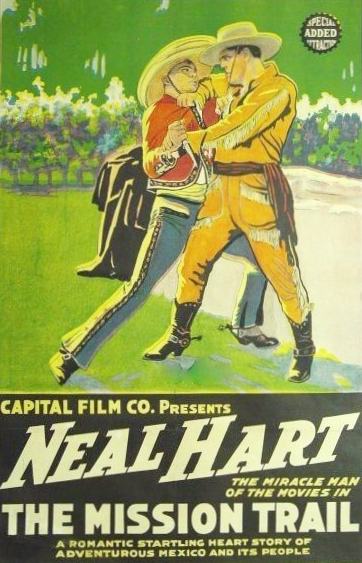
Stepping back into the dusty, sun-baked annals of early cinema, one encounters a peculiar charm in films like The Mission Trail. This silent Western, featuring the laconic yet compelling presence of Neal Hart, offers more than just a glimpse into a bygone era of filmmaking; it provides a window into the foundational myths and moral compass of the burgeoning American West as portrayed on screen. It’s a narrative steeped in the classic tropes of justice, redemption, and the enduring struggle against avarice, all set against a landscape that is as much a character as any of its human inhabitants. The film, while perhaps not reaching the epic scale of later Westerns, nevertheless carves out a significant, albeit modest, niche through its earnest storytelling and Hart’s magnetic, understated performance.
At its core, The Mission Trail is a tale of a man wrestling with his past and finding purpose in the defense of the innocent. Neal Hart embodies 'Silent Jack,' a figure whose very moniker speaks volumes about his character. He is a man of few words, his backstory hinted at through his weary eyes and the almost palpable weight he carries. This deliberate taciturnity, a hallmark of many early Western heroes, allows the audience to project their own understanding onto his motivations, creating a more intimate connection. Jack seeks solace, or perhaps oblivion, in the austere beauty of a remote mission, a place that, ironically, draws him back into the very conflict he sought to escape. The mission itself, a fragile outpost of faith and community, becomes a microcosm for the larger battle between good and evil, progress and predation, that frequently defined the frontier narrative.
The introduction of Padre Miguel and Elena grounds the abstract struggle in deeply human terms. Padre Miguel represents unwavering faith and a commitment to his flock, embodying the spiritual fortitude necessary to survive in such unforgiving climes. Elena, on the other hand, is the embodiment of fierce independence and a profound connection to the land and her heritage. Her determination to protect her family's ancestral lands, which are intertwined with the mission's very existence, provides a tangible, relatable stakes for the audience. She is not merely a damsel in distress, but a proactive force, a harbinger of the stronger female characters that would eventually populate the Western genre. Her spirit, even in the face of overwhelming odds, is a crucial catalyst for Jack's transformation, slowly chipping away at his self-imposed emotional isolation.
The antagonist, Silas Croft, is a familiar archetype: the land-hungry baron, whose rapacious greed threatens to dismantle the delicate balance of the community. Croft is not merely a villain; he is a force of nature, an embodiment of unchecked ambition that often accompanied the 'development' of the West. His henchmen, a motley crew of ruffians, serve as extensions of his will, their actions designed to instill fear and break the spirit of the mission's inhabitants. The conflict between Croft's materialistic drive and the mission's spiritual and communal values forms the central tension of the film, a stark contrast between exploitation and preservation. This thematic resonance is not unlike what one might find in later, more nuanced Westerns, proving that even in the silent era, filmmakers were grappling with complex societal issues.
The visual storytelling, a paramount element in silent cinema, is particularly effective in establishing the stark beauty and inherent dangers of the setting. The camera often lingers on wide shots of the desert, emphasizing the isolation of the mission and the vastness of the challenges faced by its inhabitants. The 'Mission Trail' itself, while perhaps a literal path, also functions metaphorically as a journey of the soul, a winding route through hardship towards enlightenment. The use of dramatic lighting, even in its rudimentary form, contributes significantly to the mood, casting long shadows that heighten suspense during confrontations and bathing scenes of quiet reflection in a soft, almost ethereal glow. One can infer a deliberate choice in framing, designed to maximize the emotional impact without relying on spoken dialogue.
Neal Hart's portrayal of Silent Jack is a masterclass in economy of expression. Every subtle shift in his gaze, every tightening of his jaw, conveys a wealth of unspoken emotion. He doesn't need dialogue to communicate his internal struggle, his simmering anger, or his burgeoning sense of responsibility. His physicality, though not overtly demonstrative, speaks volumes, portraying a man capable of both immense stoicism and decisive action. This restrained performance is arguably more powerful than an overtly theatrical one, inviting the audience to lean in, to interpret, and to connect with the character on a deeper, more intuitive level. It’s a performance that holds its own when compared to other silent era leading men, showcasing a nuanced understanding of the medium's unique demands.
The narrative arc, from Jack's initial reluctance to his eventual heroic intervention, is meticulously paced. The gradual erosion of his emotional barriers, spurred by Elena's resilience and Padre Miguel's moral authority, feels earned. The escalating acts of villainy perpetrated by Croft's men serve to steadily raise the stakes, building tension towards the inevitable climax. The kidnapping of Elena is the turning point, the catalyst that transforms Jack from a passive observer into an active participant. It is a classic narrative device, but executed with an earnestness that transcends its conventionality. This sequence, in particular, showcases the raw energy and dynamism that silent Westerns could achieve, relying on visual cues and the audience's emotional investment rather than elaborate special effects.
The chase sequence through the rugged terrain along the Mission Trail is a highlight, demonstrating the nascent capabilities of cinematic action. Even without synchronized sound, the urgency and peril are palpable, conveyed through rapid cuts, dynamic camera movements (where possible for the era), and the sheer physicality of the actors. One can almost feel the dust, hear the thundering hooves, and sense the desperation of the pursuit. This is where the film truly embodies the spirit of the Western, a genre built on movement, open spaces, and the visceral thrill of the chase. It’s a moment that might draw parallels to the brisk pacing and focused action found in films like Follow the Girl, where the pursuit of a loved one drives much of the narrative tension, albeit with different thematic underpinnings.
The film culminates in a dramatic confrontation, a showdown that is both physical and symbolic. Jack's ultimate stand against Croft and his men is not merely a fight for survival, but a battle for the soul of the community and, indeed, for his own redemption. In defending the mission, he not only secures its future but also sheds the burden of his past, finding a renewed sense of purpose and belonging. This resolution, while perhaps predictable to modern audiences, would have resonated deeply with contemporary viewers, offering a reaffirmation of moral order and the triumph of good over evil. The ending is satisfyingly conclusive, providing a sense of justice served and a future, however uncertain, that is built on integrity.
The thematic richness of The Mission Trail extends beyond simple good versus evil. It touches upon themes of land ownership, community resilience, and the redemptive power of selfless action. The mission itself represents a fragile civilization attempting to flourish in a harsh environment, constantly threatened by external forces. This struggle for survival against overwhelming odds is a recurring motif in early Westerns, reflecting the challenges faced by pioneers and settlers. One could even draw a comparison to the existential struggles depicted in films like The Clutch of Circumstance, where characters find themselves entangled in situations beyond their immediate control, forced to make difficult choices that define their destiny. Here, Jack's choice to engage is a conscious act of reclaiming agency.
Furthermore, the film subtly explores the idea of sanctuary and its vulnerability. The mission is a place of peace, but it is not impenetrable. Its very existence is a testament to faith and perseverance, yet it requires constant vigilance and, ultimately, the intervention of a protector like Jack. This dynamic highlights the precariousness of civilization on the frontier, where institutions, however well-intentioned, often relied on the strength and moral rectitude of individuals to endure. The film, in its quiet way, celebrates this individual heroism, presenting Jack as an archetypal figure who, despite his flaws, rises to meet the demands of a desperate situation.
While The Mission Trail might not possess the grandiosity of some of the more celebrated silent epics, its significance lies in its honest portrayal of the Western genre's nascent form. It’s a foundational text, demonstrating how filmmakers, even with limited technological means, could craft compelling narratives that resonated with contemporary audiences. The film's enduring appeal comes from its universal themes: the search for belonging, the fight for justice, and the transformative power of compassion. It's a reminder that compelling storytelling doesn't always require lavish budgets or complex special effects; sometimes, a strong narrative, a charismatic lead, and a well-defined conflict are more than enough.
The aesthetic choices, particularly the use of landscape, are crucial to the film's identity. The vast, open spaces not only provide a backdrop for the action but also symbolize the freedom and the inherent dangers of the frontier. The harsh sunlight, the dusty trails, and the rugged mountains are not merely scenery; they are active participants in the drama, shaping the characters' journeys and testing their resolve. This emphasis on environment is a defining characteristic of the Western, and The Mission Trail utilizes it effectively to enhance its narrative depth. Comparing this to the more urban or contained settings of films like The District Attorney, the stark contrast in atmosphere immediately highlights the genre's distinct visual language.
In retrospect, The Mission Trail stands as a testament to Neal Hart's enduring presence in early Western cinema. His ability to convey complex emotions with minimal overt expression was perfectly suited to the silent medium, establishing him as a compelling figure. The film, while a product of its time, offers insights into the enduring power of archetypal storytelling and the timeless appeal of a hero who, despite his own burdens, chooses to stand up for what is right. It’s a quiet triumph, a film that, like its protagonist, speaks volumes through its actions rather than its words, leaving a lasting impression on those willing to delve into its dusty, yet profoundly resonant, narrative. Its legacy, though perhaps overshadowed by more famous contemporaries, is solid, contributing significantly to the evolving lexicon of the Western genre.
The film's impact on early audiences cannot be overstated. In an era where cinema was still finding its voice, films like The Mission Trail offered escapism, moral clarity, and a romanticized vision of a uniquely American landscape. It provided a sense of order in a rapidly changing world, reassuring viewers that justice, however hard-won, would ultimately prevail. This aspirational quality is a significant part of its charm and historical value. The simple yet potent narrative structure, focusing on individual heroism against corporate greed, remains remarkably relevant, echoing contemporary concerns about power and exploitation. It is a film that, despite its age, continues to resonate, reminding us of the foundational stories that shaped our cinematic understanding of the frontier.
Finally, considering the craft involved, the direction, even if uncredited or attributed to Hart himself, demonstrates a clear understanding of visual pacing and dramatic tension. The use of intertitles, while a necessity of the era, is judicious, providing just enough information to advance the plot without bogging down the visual flow. The cinematography, though limited by early technology, manages to capture the grandeur and desolation of the Western landscape, effectively conveying the isolation and the stakes involved. Every element, from the costume design that defines character to the simple props that ground the story in reality, works in concert to create a believable and engaging world. It is a film that, even a century later, still manages to evoke a sense of adventure and a profound appreciation for the silent artistry that laid the groundwork for all that followed.
The narrative's focus on the 'mission' aspect also adds a layer of spiritual depth often found in these early tales. It's not just about land or water; it's about a way of life, a community built on shared values and faith, which is under existential threat. This elevates the conflict beyond mere property dispute into a moral crusade, with Jack becoming the unlikely defender of these spiritual principles. This blend of action, character development, and underlying moral commentary makes The Mission Trail a compelling watch for enthusiasts of early cinema and Westerns alike. It's a journey worth taking, a silent echo from a time when stories were told with bold gestures and the raw power of the moving image.
In conclusion, The Mission Trail is a sterling example of early Western filmmaking, a genre that, through its simplicity, often achieved profound emotional resonance. Neal Hart's stoic yet deeply felt performance anchors the film, making 'Silent Jack' a memorable figure in the pantheon of Western heroes. The film’s exploration of redemption, justice, and the enduring human spirit against the backdrop of a challenging frontier remains as potent today as it was upon its initial release. It is a significant contribution to the cinematic tapestry of the American West, a quiet masterpiece that deserves reappraisal and appreciation for its enduring power and understated artistry. Its legacy is etched not in grand pronouncements, but in the subtle nuances of its visual narrative and the timeless appeal of its heroic journey.
IMDb 6.8
1920
Community
Log in to comment.