DbcultAccessing Vault...
Cult Review
Senior Film Conservator
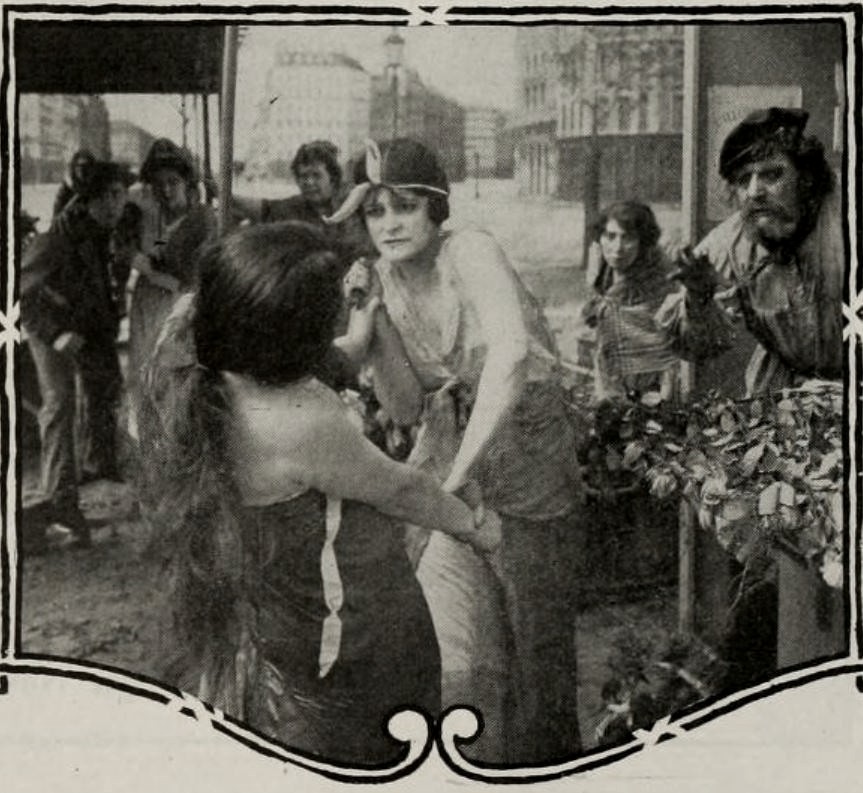
Stepping back into the nascent days of cinematic storytelling, 1915's 'The Model' emerges not merely as a relic of early filmmaking but as a surprisingly robust moral drama, a cautionary tale etched onto celluloid with an earnestness that transcends its silent origins. This particular vintage of melodrama, penned by the collaborative efforts of Ben Landeck, E. Magnus Ingleton, and Arthur Shirley, captures a societal preoccupation with the perils of urban temptation and the redemptive power of unwavering loyalty. It’s a narrative that, while perhaps simplistic by today's sophisticated standards, resonated deeply with audiences of its time, offering both a thrilling descent into vice and a comforting ascent to virtue. As we peel back the layers of this silent classic, we discover a film that, despite its age, still speaks volumes about human frailty and the enduring quest for a meaningful life, free from the snares of corruption.
Our protagonist, Dick Seymour, portrayed with a compelling blend of youthful naiveté and burgeoning susceptibility by William Elliott, begins his journey from an enviable position. Blessed with the unwavering support of a benevolent father and the pure affection of a devoted sweetheart, his future appears paved with promise. An inheritance awaits him, a financial bedrock upon which he could build a life of quiet contentment and domestic bliss. This initial state of grace is crucial, establishing a baseline of innocence and potential that makes his subsequent fall all the more poignant. It highlights the film's central thesis: that even the most fortunate among us are not immune to the insidious whispers of temptation, especially when the allure of the unknown, the forbidden, begins to beckon from beyond the confines of a sheltered existence. Elliott, even without spoken dialogue, conveys a sense of youthful exuberance tinged with a restless spirit, subtly hinting at the vulnerabilities that will soon be exploited.
The true catalyst for Dick Seymour's dramatic transformation is his fateful encounter with New York's legendary 'Great White Way'—a dazzling, yet treacherous, crucible of metropolitan excess. This iconic thoroughfare, a beacon of modernity and burgeoning nightlife, becomes a character in itself, embodying the intoxicating blend of glamour and moral decay that defined the era's burgeoning urban landscape. Here, amid the flickering gaslights and the bustling throngs, Seymour succumbs to the siren call of indulgence. Wine flows freely, blurring the lines of prudence, and the captivating presence of a mysterious woman (or women, as the plot implies) proves an irresistible distraction from his dutiful life. This isn't merely a lapse in judgment; it's a profound abandonment of his principles, a headlong dive into a lifestyle antithetical to the values instilled by his father and cherished by his sweetheart. The film deftly portrays this descent, using visual cues and Elliott's increasingly dissipated demeanor to illustrate the rapid erosion of his character and fortune. His once-bright prospects dim under the shadow of mounting debts and reckless abandon, turning his inheritance into a phantom promise rather than a tangible asset. It’s a classic narrative arc of the country boy corrupted by the city, a theme explored in countless works, but here imbued with the raw, visceral energy of early cinema. The 'Great White Way' serves as a stark contrast to the quiet, virtuous life he left behind, a vibrant, dangerous playground for those who dare to stray from the path of righteousness, much like the moral complexities explored in Sin, another film of the era that delved deep into the consequences of moral transgression and societal judgment.
With his resources squandered and his reputation tarnished in New York, Seymour's desperate flight takes him across the Atlantic to Paris. This city, often romanticized as a haven of art and culture, becomes for Dick a further descent into the abyss. Stripped of his remaining financial stability, his moral compass completely shattered, he finds himself ensnared in an even more perilous predicament. The bohemian allure and sophisticated vices of the Parisian underworld offer no solace, only deeper entanglements. It is here that his downward spiral culminates in the most dire of accusations: murder. The film plunges him into a Kafkaesque nightmare, where he is apprehended and imprisoned, facing the grim prospect of a trial and execution. The sense of hopelessness is palpable; from the confines of his jail cell, escape appears impossible, and his fate seems sealed. This dramatic turn elevates the stakes considerably, transforming a tale of moral decay into a gripping thriller. The sudden shift in genre, from a cautionary drama of temptation to a desperate fight for survival, keeps the audience on edge, wondering if redemption, or even mere survival, is truly within his grasp. The desperation and injustice he faces might draw parallels to the plight of characters in At Bay, where individuals find themselves trapped and fighting against overwhelming odds and false accusations.
Just as Dick Seymour teeters on the brink of absolute despair, the narrative introduces its most powerful counterpoint to his self-inflicted ruin: the unwavering loyalty of his father, portrayed with quiet dignity by Alec B. Francis, and the steadfast devotion of his sweetheart, whose enduring faith is a beacon in his darkest hour. These two figures embody the virtues of unconditional love and perseverance, refusing to abandon Dick even when all evidence points to his culpability. Their belief in his fundamental goodness, despite his egregious errors, drives them to extraordinary lengths. They tirelessly pursue justice, gather evidence, and ultimately succeed in proving his innocence. It is through their relentless efforts, rather than any ingenuity on Dick's part, that he is snatched from the jaws of conviction and imminent death. This highlights a crucial theme: redemption is not always a solitary journey. Sometimes, it is the steadfast love and belief of others that provide the lifeline back to sanity and salvation. Their loyalty serves as a powerful testament to the enduring bonds of family and true love, providing a stark, beautiful contrast to the fleeting, destructive pleasures that initially led Dick astray.
In the silent era, the burden of conveying complex emotions and narrative nuances fell squarely on the shoulders of the actors' physicality and facial expressions. William Elliott, as Dick Seymour, carries this responsibility with commendable skill. His transformation from an eager, somewhat callow youth to a dissolute wastrel, and then to a broken but ultimately repentant man, is visually articulate. He uses his body language and expressive eyes to trace the arc of moral degradation and subsequent spiritual awakening. Alec B. Francis, as the father, provides a grounding presence, his expressions conveying both profound disappointment and unwavering paternal love, often through subtle gestures that speak volumes. Sonia Massell, Cynthia Day, and Dorothy Green, though perhaps in less prominent roles, contribute to the tapestry of temptation and loyalty, their portrayals of the women in Dick's life ranging from alluring to virtuous. Henry Leone and Miss Moussel, in their respective roles, round out a cast that collectively paints a vivid picture of the human condition, from the depths of depravity to the heights of selfless devotion. The effectiveness of their performances, without the aid of spoken dialogue, underscores the inherent power of visual storytelling and the raw talent required of silent film stars to captivate an audience.
The collaborative writing team of Ben Landeck, E. Magnus Ingleton, and Arthur Shirley crafted a narrative that, while adhering to the conventions of early 20th-century melodrama, possesses a compelling internal logic and a clear moral compass. Their plot, though perhaps predictable to modern eyes, was designed to resonate with the societal anxieties of its time—the fear of urban corruption, the importance of family values, and the ultimate triumph of good over evil. They skillfully build the tension, particularly during Dick's Parisian ordeal, and orchestrate the dramatic rescue with satisfying precision. The progression of Dick's character, from privileged innocence to debauched despair, and finally to enlightened redemption, is carefully plotted. The writers understand the power of contrast, juxtaposing the glittering superficiality of the 'Great White Way' with the profound, quiet strength of enduring love and loyalty. Their script, conveyed through intertitles, manages to convey not just the plot points but also the underlying moral message with clarity and conviction, ensuring that the audience grasped both the unfolding drama and its timeless ethical implications.
Though a product of early cinema, 'The Model' utilizes the nascent cinematic language of its time to great effect. The depiction of New York's 'Great White Way' likely employed innovative lighting techniques and bustling crowd scenes to convey its intoxicating energy and danger. The shift to Paris would have offered opportunities for contrasting visual styles, perhaps emphasizing the city's shadowed alleys and opulent, yet morally ambiguous, salons. The direction, while not explicitly credited in the provided details, would have focused on clear visual storytelling, utilizing close-ups to emphasize emotional states and wider shots to establish the settings. The overarching thematic resonance of the film is undeniably powerful. It's a classic parable of the Prodigal Son, stripped of his fortune and dignity, but ultimately saved by the enduring love of his family. The film champions the virtues of temperance, fidelity, and the rejection of superficial pleasures in favor of genuine human connection and moral rectitude. This message, delivered without a single spoken word, underscores the universal appeal of stories about personal transformation and the enduring hope for redemption, a narrative thread beautifully woven into the fabric of human experience.
In the fertile ground of early 20th-century cinema, 'The Model' finds itself amidst a rich tapestry of moral dramas, cautionary tales, and explorations of human vice and virtue. Its narrative arc, charting a young man's descent into temptation and subsequent redemption, echoes themes found in other significant works of the era. For instance, the film's stark portrayal of urban allure and its corrupting influence bears a striking resemblance to the intense moral quandaries presented in Sin, where characters grapple with the profound consequences of their transgressions. Both films serve as powerful societal critiques, reflecting a widespread anxiety about the erosion of traditional values in the face of burgeoning modernity and metropolitan freedoms.
The central theme of a character falling from grace and seeking atonement also resonates deeply with the allegorical journey depicted in Pilgrim's Progress. While Bunyan's work is overtly religious, the cinematic adaptation, like 'The Model', navigates a path fraught with temptation and moral choices, ultimately leading to a form of spiritual or personal salvation. Dick Seymour's journey, though secular, is no less a 'pilgrimage' through the wilderness of his own poor choices.
Furthermore, the element of false accusation and the desperate fight for innocence, particularly during Dick's imprisonment in Paris, draws parallels to the tense situations found in films like At Bay. In both narratives, protagonists find themselves ensnared by circumstances beyond their immediate control, relying on external forces or their own resilience to clear their name against overwhelming odds. This adds a layer of suspense and urgency to 'The Model' beyond its initial moralizing.
The role of women in Dick's downfall and eventual salvation also invites comparison. While not directly a story about a 'fallen woman' in the vein of Camille, the seductive female figures on the 'Great White Way' are instrumental in his initial corruption, contrasting sharply with the unwavering purity and loyalty of his sweetheart. This duality reflects the era's complex and often contradictory views on female agency and morality, portraying women as both temptresses and saviors.
Finally, the narrative of youthful indiscretion and the choices that define one's path in early life connects 'The Model' to films such as The Glory of Youth. Both explore the formative period where decisions can lead to either triumph or tragedy, underscoring the profound impact of youthful experiences on one's ultimate destiny. Through these comparisons, 'The Model' solidifies its position not as an isolated narrative, but as a significant thread in the rich fabric of early cinematic explorations of morality, human nature, and the ever-present struggle between vice and virtue.
Ultimately, 'The Model' concludes with Dick Seymour's hard-won enlightenment. Having faced the depths of his own depravity and the very real threat of execution, he emerges a changed man. His salvation, forged in the crucible of despair and delivered by the unwavering loyalty of his loved ones, leads him to a profound realization: true happiness lies not in fleeting pleasures or material wealth, but in shunning bad company and destructive habits. He finds contentment in a life of virtue, a testament to the transformative power of repentance and the enduring strength of familial bonds. This timeless narrative of redemption, while presented through the lens of a specific historical period and cinematic style, remains remarkably potent. It serves as a perennial reminder that even after the most grievous errors, a path back to integrity and peace is possible, often illuminated by the steadfast love of those who refuse to give up on us. 'The Model', therefore, is more than just a silent film; it is a resonant human story, a mirror reflecting our own struggles with temptation and our inherent capacity for renewal.
IMDb —
1916
Community
Log in to comment.