DbcultAccessing Vault...
Cult Review
Senior Film Conservator
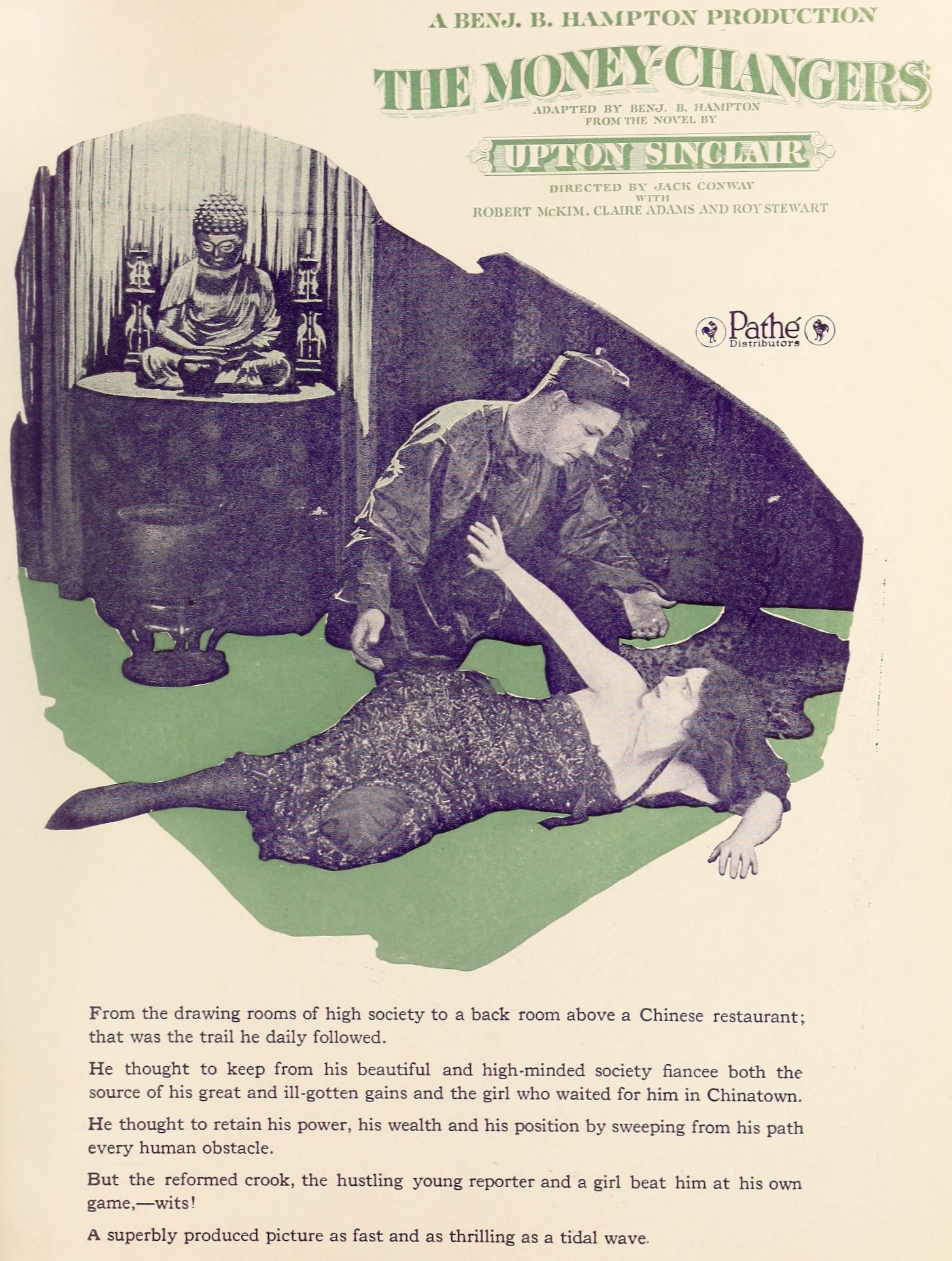
A celluloid fever dream dredged from the cellar of 1920, The Money Changers arrives like a potassium flash in a darkroom, exposing the grinning skull beneath the banker’s derby. Director Benjamin B. Hampton, armed with Upton Sinclair’s scalpel-sharp scenario, does not merely chronicle the narcotics trade—he inhales it, letting the acrid smoke stain every frame until even the intertitles reek of laudanum.
A tale of two cities, two currencies, two veils
On the surface we inherit the grammar of melodrama: penniless immigrants, a virtuous settlement-house matron, a crusading reporter who could have tumbled out of a Beckoning Roads subplot. Yet beneath that varnished skin, the film traffics in a harsher exchange rate—where women are weighed against silver dollars and conscience is clipped like a bad coin. Sinclair’s adaptation of his own muckraking novel converts journalism into chiaroscuro, letting corridors of candle-light carve cathedrals out of tenement basements.
Lucy Hegan, incandescent paradox
Audrey Chapman’s Lucy glides through squalor in immaculate white, a walking sacrament who believes poverty is merely an unclosed ledger. Chapman plays her with a tremor of steel, the way a saint might if she secretly suspects heaven keeps double books. When she accepts Hugh Gordon’s diamond, she thinks she is betrothing a philanthropist; what she really betroths is a multinational whose dividends drip from the marrow of Chinese labor and American addiction.
Robert McKim’s Gordon is urbane evil incarnate, a man whose smile could secure a bank loan and whose handshake feels like a contract signed in morphine. Watch him in the boardroom scene where he dictates annual reports while a telegraph clicks off fresh coordinates for a slave ship—Hampton overlays the two soundless rhythms until profit and perdition share the same pulse.
Enter the ink-stained Galahad
Roy Stewart’s Allan Martin first appears haloed by the magnesium flare of a press camera, a visual pun suggesting truth itself is a flash that blinds. His investigation into the city’s opium plague threads through Chinatown alleys aglow with crimson paper lanterns, a palette that later bleeds into the scarlet ledgers Gordon keeps hidden behind ancestral portraits. Stewart has the profile of a romantic lead but carries the weary slump of a man who has smelled too many back-room autopsies.
Monk Mullen, the ex-thief who pickpockets redemption
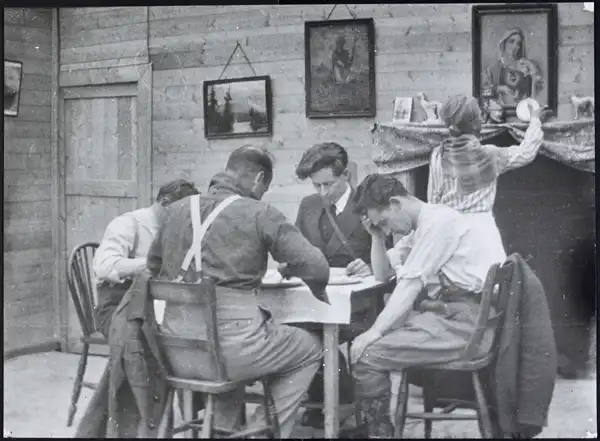
Harvey Clark essays this archetype with gutter-poet panache, shuffling like a man whose shoes still remember the stakeout, yet whose eyes hold the soft gratitude of someone spared a final bullet. The scenes inside his mother’s candle-crowded tenement—walls sagging with rosaries and wanted posters—feel borrowed from The Crucible of Life, another slab of social realism from the same year, though Hampton’s camera lingers longer on faces, letting pores and scars audition for sainthood.
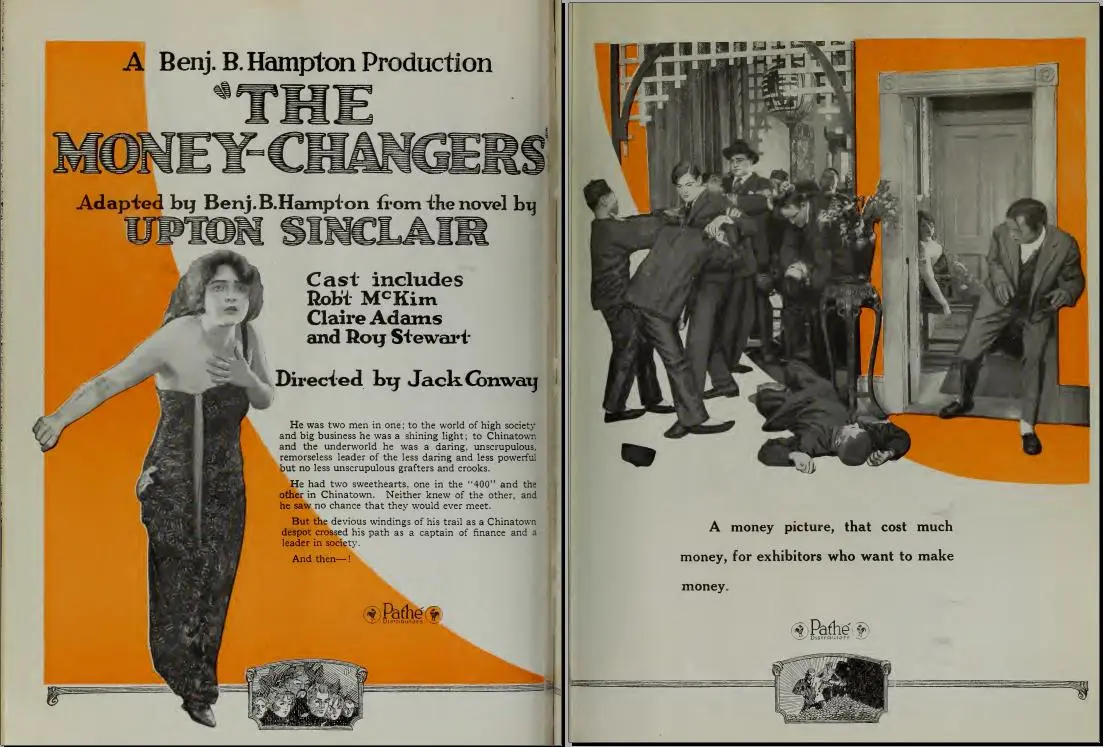
The film’s visual grammar is one of substitution: every act of charity Lucy performs becomes a promissory note cashed by Gordon’s racket. When she rescues a trembling addict, Hampton smash-cuts to a warehouse where that same addict’s sister is being auctioned. The splice is so abrupt it feels like a moral paper-cut.
Nocturne in yellow and sea-blue
Cinematographer William H. Clifford limns Chinatown in sulphuric yellow, a nod to the hue of crude opium, then drowns the villain’s ballroom in anaesthetic sea-blue, as though underwater languor were the natural habitat of the damned. The contrast scalds: benevolence is daylight, exploitation is moonlight, and twilight belongs to whoever can afford the bigger torch.
Betrayal, the only honest currency
When Monk passes Allan the incriminating ledgers, the hand-off occurs inside a mission chapel whose stained glass depicts the expulsion of the money-changers from the temple—an irony Sinclair could not resist. The ledgers—inked in Gordon’s own copperplate—contain receipts for “Chinese labor” and “medical tinctures,” phrases that metastasize into traffic routes and auction blocks once decoded.
The raid itself is Eisenstein before Eisenstein
Hampton cross-cuts between Allan’s newsroom—where presses thunder like cavalry—and Gordon’s subterranean salon where roulette wheels spin beneath paper dragons. The montage accelerates until image and intertitle collapse: CLOSE-UP on a revolver cylinder, INSERT of a telegraph key, MEDIUM shot of Lucy’s horrified eyes, all orchestrated to a tempo that anticipates the Odessa Steps sequence by five years.
Ling Choo Fang’s dagger, the final auditor
Edward Peil Sr. plays Gordon’s lieutenant with reptilian stillness; his ultimate revolt feels less moral than mathematical—an employee divesting a CEO who has endangered the brand. The stabbing happens inside a mise-en-abyme of mirrors, each pane reflecting a different opium pipe, so the death multiplies into infinity, a visual promise that the trade will sprout new heads.
Love, or the art of balancing books
With Gordon’s body slumped among the silks, Lucy’s veil is transferred to Allan’s consoling hand. Hampton ends not on a kiss but on a dolly-in to Lucy’s face—eyes swollen with the knowledge that every alm she dispenses henceforth is minted in the furnace she thought she had closed. It is a proposal scene shot like a funeral, and it lingers longer than any embrace.
Soundless voices, deafening echoes
Surviving prints lack the original Syd Kamp sound disc, yet the silence amplifies the claustrophobia: you hear the flicker of the projector as the lash of a whip, the shuffle of feet across packed earth as the rustle of banknotes. In this absence, the film becomes a palimpsest onto which a modern audience projects the crackle of twenty-four-hour news cycles, the hum of offshore accounts, the algorithmic auction of attention—proof that the money-changers merely migrated from temple steps to server farms.
Where An Adventuress luxuriates in the moral bounce of its femme outlaw, The Money Changers refuses such elastic ethics; its sinners stay sin-welded to their choices. Compared to Lombardi, Ltd. with its frothy retail satire, Hampton’s film is a sulphur match in a gunpowder store. Even Whispering Smith, another silent-era probe into criminal logistics, pales beside Sinclair’s civic outrage.
Performances calibrated to the nickelodeon rafters
Chapman’s Lucy never tilts into plaster sainthood; watch the micro-shudder when she first spies an opium vial in her fiancé’s study—a flicker that forecasts the fracture. Stewart’s reporter carries the ink-stained fatalism of a man who knows tomorrow’s headline may be tomorrow’s fishwrap. McKim, blessed with cheekbones sharp enough to slice bonds, makes Gordon’s politeness more terrifying than snarls; his villainy is tailored, manicured, and therefore immortal in every boardroom still standing.
Sinclair injects whole paragraphs of muckraking into intertitles that unfurl like sidewalk handbills: “The law catches the alley rat, but the velvet rat becomes Senator.” The lines read as graffiti on the fourth wall, reminding viewers that the film’s true antagonist is not a single magnate but the silent complicity of every stockholder who never asks for itemized innocence.
Heritage, loss, and the celluloid afterlife
Archivists long presumed the last reel torched in the 1931 Fox vault fire until a 35mm nitrate composite surfaced in a Butte, Montana, parish attic in 1987, tucked beside temperance pamphlets. The rediscovery occasioned a restoration that still bears scorch marks along the left margin—fitting stigmata for a film about branded bodies. Today you can stream a 2K scan, yet the blemishes persist, ghosts refusing exorcism.
The Money Changers is less entertainment than an overdue audit, a ledger whose columns refuse to balance because they are written in human blood that keeps seeping through the page. To watch it is to realize that every modern bailout, every private prison ledger, every algorithmic ad auction is merely a talkie remake of this silent scream. The film ends with a marriage, but the real proposal is aimed at the viewer: will we continue to trade in the same currency, or finally flip the table where rates of exploitation are set? One hundred years on, the question clinks like counterfeit coin in our collective pocket—light, shiny, and hollow at the core.

IMDb 7.5
1932
Community
Log in to comment.