DbcultAccessing Vault...
Cult Review
Senior Film Conservator
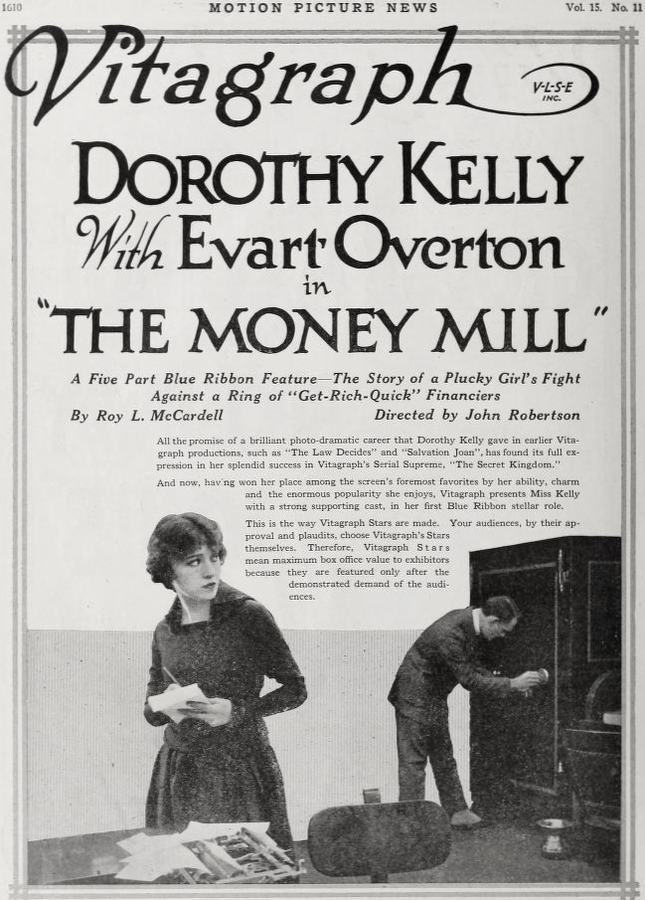
Imagine, if you can stand the glare, a strip of nitrate flickering through the sprockets of 1917: frames bruised by mildew, emulsion feathering off like ash from a cigarette. Yet what survives is a morality play that feels less like antique curio than like somebody peeled yesterday’s stock-exchange headlines and pasted them onto silver halide. The Money Mill, directed by that indefatigable workhorse Charles Kent and scripted by the pulp duo A. Van Buren Powell and Roy L. McCardell, ought to have crumbled into history’s compost. Instead—whether by accident or by the same sleight-of-hand its villains deploy—it still crackles, a cautionary fuse spliced between the Gilded Age and our own algorithmic casino.
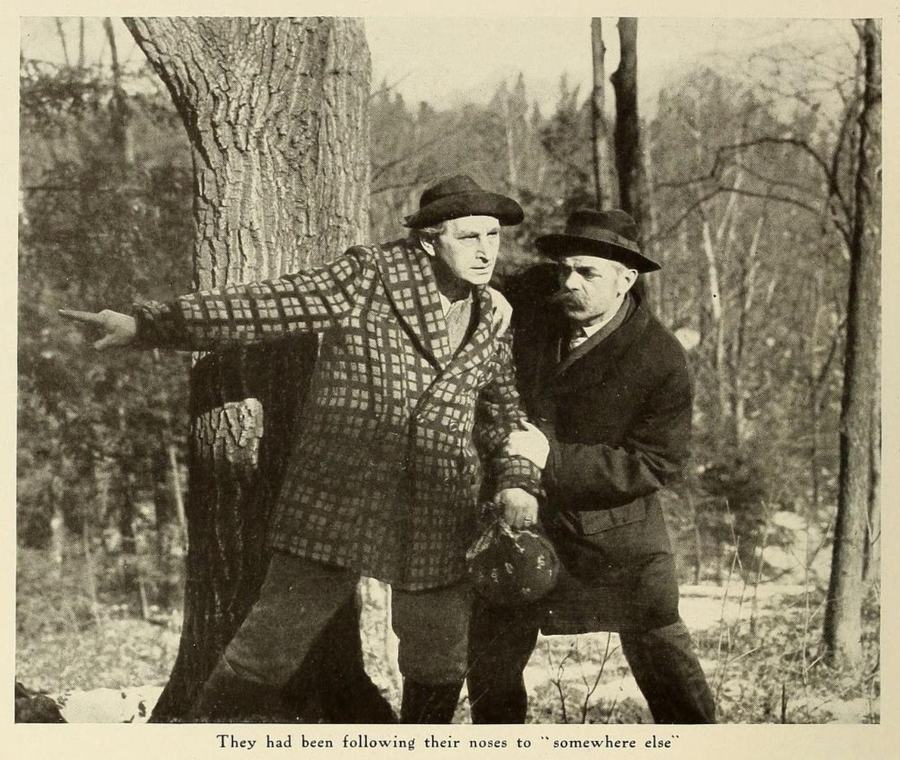
Begin underground: pickaxes ring against quartz, carbide lamps jitter across glistening seams. Gregory Drake—played by Edward Elkas with the compressed fury of a man who forever hears the world laughing at him—sells his mine shares for cash to fund a life of bespoke suits and rotgut respectability. Word arrives that the supposedly barren claim has coughed up a subterranean cathedral of copper and gold. Drake’s reaction is not mere disappointment; it is Promethean revenge. He dynamites the shaft, vaporizing time, sweat, and one collateral father (Helen’s) in a single thunderclap. Then, like a mythic trickster swallowed by his own smoke, he vanishes.
Cut to Manhattan, skyscraper girders latticing the clouds. Helen Ogden (Dorothy Kelly, equal parts porcelain and flint) arrives with a retinue of parasitic suitors orbiting the gravitational pull of her portfolio. Enter Dr. Granger—Evart Overton channels a secular saint, coat pockets perpetually sagging with prescription pads and moral homework. He shepherds Helen into the Lower East Side’s intestinal folds: pushcarts, pickle barrels, the sour reek of coal stoves. She buys a dime-store pin from Jack Burton (Gordon Gray), a man whose cheekbones could slice newsprint and whose shoes are holier than a cathedral on Monday. One close-up—eyes locking over the transaction—skips across the intervening title cards like a stone across a pond.
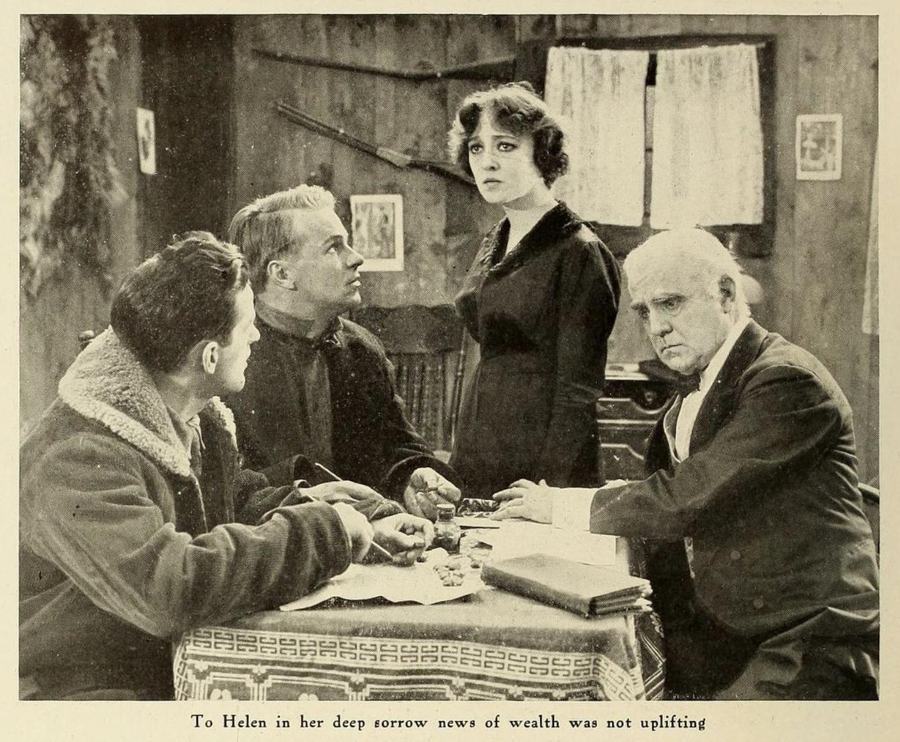
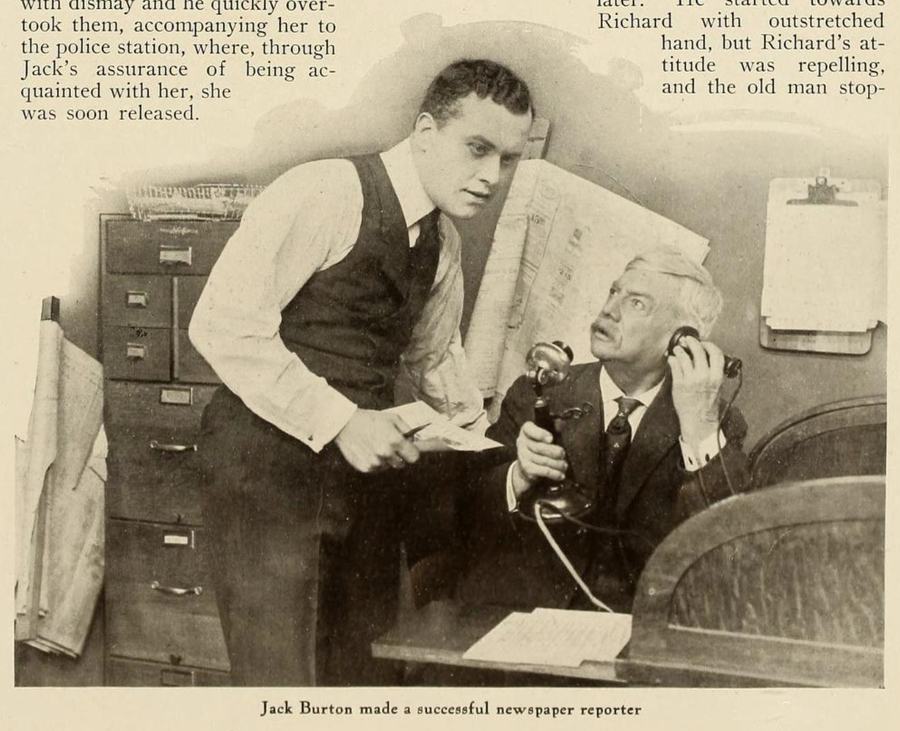
Jack’s re-entry into professional life (courtesy of Granger’s string-pulling) lands him in the newsroom of The Mercury, where rewrite men bark over the staccato of typewriter bells. His beats: corruption, charity galas, the city’s arterial pulse. Every scoop inches him closer to Helen’s parlor, yet each visit sharpens the class barb wedged between them. Powell and McCardell lace their intertitles with aphoristic arsenic: “Love laughs at bank vaults—until the vault door clangs shut.”
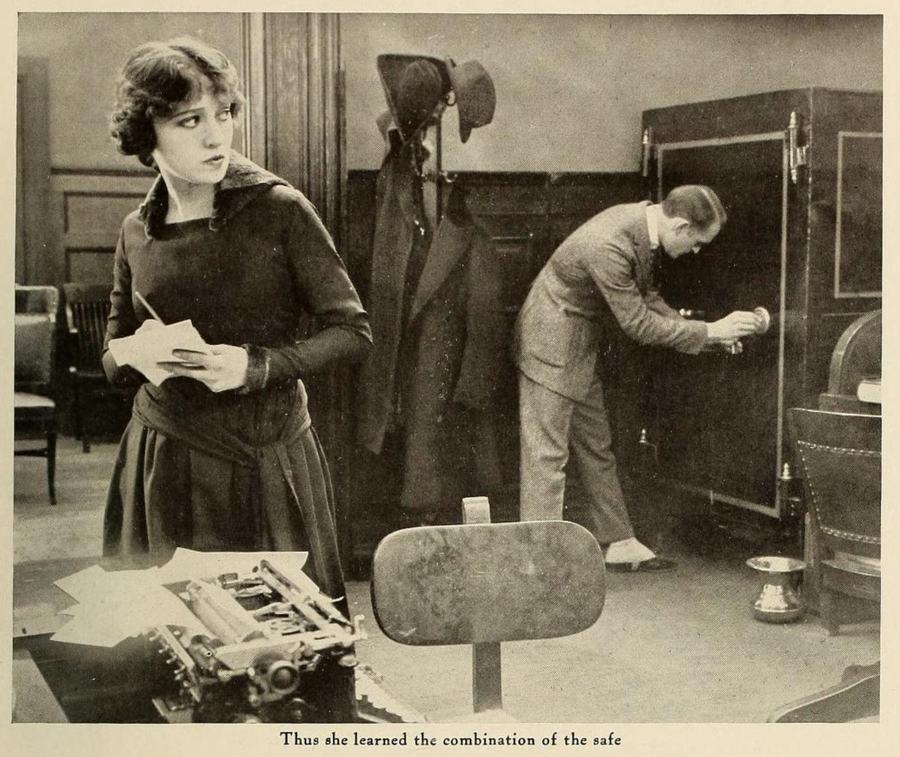
Meanwhile Richard Drake (Logan Paul, channeling a boulevardier cobra) slithers through mahogany boardrooms promising 40-cents-on-the-dollar monthly returns. His pyramid gleams until paternal revenant Gregory slinks back from the tropics, brandishing a doctored deed. Overnight Helen’s mine becomes a mirage; her stocks, tissue. The film’s axis tilts from romance to restitution. She refuses to moonwalk into Jack’s proletarian arms—no, she will infiltrate the Money Mill, the Drakes’ microcosmic sweatshop of clerks and ticker tape, masquerading as a stenographer. Cue combustible montage: pneumatic tubes vomiting scrolls, sleeves rolled to elbows, the brittle percussion of telegraph keys. Helen’s fingers, once gloved in kid leather, now slug out dictation at 80 words per minute, hunting evidence amid carbon copies and cigar smoke.
Kent and cinematographer Mr. McCormack (only surname survives) wring chiaroscuro from limited arc lights. When Helen first descends into the tenement, the camera dollies through a corridor so narrow it feels like threading a needle; children burst from doorways, their faces half-lit, half-eclipsed, as if childhood itself were a part-time occupation. Later, in the Money Mill’s open-plan chaos, the frame bustles with overlapping motion—a proto-Wyler choreography that anticipates the jam-packed newsroom in Reporter Jimmie Intervenes. The eye ricochets from ledgers to clocks to a cutaway of Helen’s trembling hand poised above a dictaphone tube: mise-en-scène as class warfare.
Tinting amplifies the moral temperature. Night exteriors drip in nocturnal blue, like the city has been submerged. Explosion sequences flare blood-red—hand-painted crimson streaks sizzling across the frame, a tactile jolt no digital grade can emulate. Compare this chromatic bravado to the desaturated melancholy of Die Tragödie auf Schloss Rottersheim; where that European gothic festers in slate and charcoal, The Money Mill opts for American sweat and neon.
Dorothy Kelly shoulders the narrative’s tonal whiplash. In early reels she is a confection in lace, eyes flicking sideways to audit the price tag on every admirer. Post-bankruptcy, her shoulders square, chin tilts, and suddenly the camera adores the geometry of her clavicles above a shirtwaist collar. Watch her in medium close-up as she rips a fraudulent contract in half: the tear travels slower than sound, the filmic equivalent of a gauntlet thrown.
Gordon Gray plays Jack with rangy charm—part tramp, part poet, part caffeine. His physical vocabulary borrows from Chaplin’s waddle when he struts out of the breadline, yet pivots to granite resolve in the newsroom. Their chemistry lacks the swooning metaphysics of, say, Fides, but compensates with a proto-screwball crackle: you sense these two could trade barbs across a breakfast table for decades.
As patriarch-villain Gregory, Edward Elfas refuses mustache-twirling caricature. Instead he radiates the bilious entitlement of someone who believes the universe breached contract by outsmarting him. When he reappears in New York, Panama hat tipped just enough to shade serpent eyes, the film exhales a chill.
The Money Mill is less a love story than a treatise on liquidity. Every relationship—filial, romantic, philanthropic—transacts through promissory notes. Helen’s purse strings are reins; Jack’s ink-stained fingers are leverage. Even Dr. Granger’s charity functions as moral brokerage, accruing heavenly dividends. Powell and McCardell anticipate the 1929 crash by a dozen years: their script presents capital as ectoplasm, capable of dematerializing overnight, of rendering barons into panhandlers and vice versa.
Gender politics, though corseted by 1917 mores, wink at subversion. Helen’s stint as a stenographer reframes the secretary not as office ornament but as intelligence operative. She navigates a predatory workspace where male dictation equals diktat, yet she transcribes, timestamps, and ultimately weaponizes their words. Compare her to the eponymous cub in The Cub: both youngsters learn the jungle’s laws, but Helen writes a few of her own.
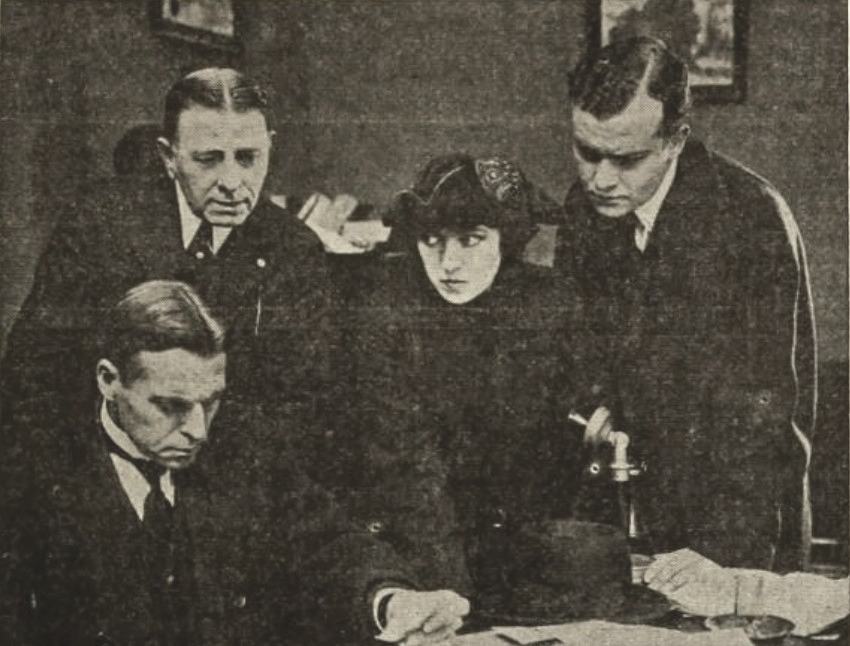
Some scholars fault the film for its whiplash reversal—Helen’s sudden pauperization and subsequent infiltration arrive at reel five, leaving scant real estate for catharsis. Yet this compression mirrors the vertigo of financial ruin itself: yesterday’s banquet, today’s bread crust. The Money Mill doesn’t grant its heroine a deus-ex-machina inheritance; restitution is excavated letter by letter on a Remington Standard. The courtroom climax (off-screen, conveyed by telegram) feels neither rushed nor anti-climactic but rather consonant with a universe where verdicts arrive on paper, not thunder.
History’s ledger records The Money Mill as “lost” for decades until a 63-minute 16 mm condensation surfaced in a Slovenian monastery vault in 1998. The print bears Slovene and Serbo-Croatian intertitles, suggesting distribution circuits that once spider-webbed from Trieste to Tulsa. Fragments of Powell’s script reside in the Library of Congress copyright deposits, but the full continuity remains speculative. What survives, though, is sufficient to place the film in dialogue with its contemporaries. Its DNA coils through Stolen Goods (1920) in the motif of restitution through employment, and whispers within the journalistic muckraking of Reporter Jimmie Intervenes.
Conversely, its anxiety about investment bubbles feels like a Victorian prequel to the crypto carnivals of the 21st century. Drake père’s forged deed is the paper ancestor of today’s rug-pull smart contracts; the Money Mill’s boiler room presages the spammy glitter of influencer pump-and-dumps. Cinephiles who swoon over the speculative nightmares in Zelyonyy pauk will recognize a kindred distrust of quick riches.
Kent’s film arrived during the waning days of one-reel parables and the dawn of feature-length psychology. Its DNA therefore splits: part Griffith-like providence, part Lubitsch-like sophistication. Notice how the camera lingers on Helen’s hand as she signs her first paycheck—an insert pregnant with autonomy. That’s not 1911 shorthand; it’s the cusp of 1920s subjectivity. Likewise, the movie’s spatial dichotomy—cavernous mine vs. vertical metropolis—anticipates the pastoral/urban dialectic that drives Where the Trail Divides.
Yet for all its foresight, The Money Mill is tethered to melodramatic coincidence: the same document that annihilates Helen’s fortune happens to resurface in a New York brokerage within walking distance of her charity galas. Modern viewers may scoff, but the contrivance serves a thematic purpose—capital circulates with malignant intimacy, a family curse encoded in parchment.
If you measure silent cinema solely through auteurist milestones—Intolerance, Sunrise, Metropolis—The Money Mill may appear a footnote. But if you crave the frisson of excavating a buried conversation about money, merit, and mercy, this film rewards the effort. Its print defects—scratches blooming like ivy—only accentuate its archaeology. You aren’t merely watching; you are piecing together a culture’s nightmare about the paper that rules it.
Stream it if you can find it (currently cycling through Europe’s archival festivals). Pair it with a double bill: Martyrs of the Alamo for historical spectacle, then cleanse your palate with the working-class lyricism of Overalls. Bring a skeptical eye, a romantic nerve, and maybe a calculator—because after the credits, you’ll count your own blessings in coin and in carbon copies.
Final arithmetic: 4 out of 5 ingots—one deducted for the too-tidy restoration of fortune, yet even that caveat glints with the film’s own logic: every ledger, after all, demands a balancing act.
IMDb —
1921
Community
Log in to comment.