DbcultAccessing Vault...
Cult Review
Senior Film Conservator
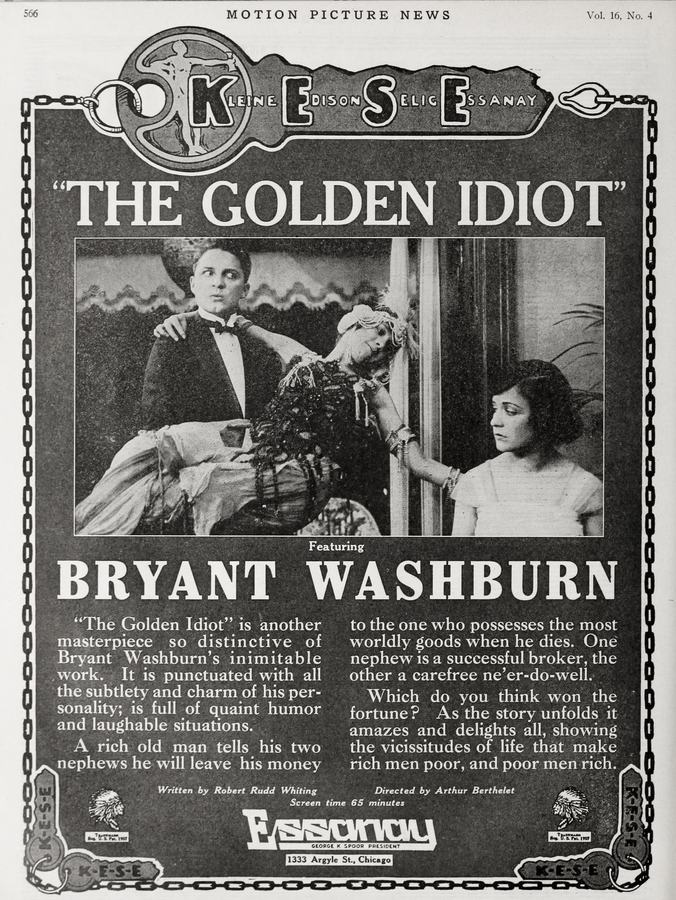
Step back into the flickering enchantment of 1917, a year when the silver screen was still finding its voice, yet spoke volumes through gesture, expression, and the evocative power of narrative. The Golden Idiot emerges from this nascent era as a delightful testament to the enduring appeal of a well-spun yarn, where the whimsical hand of fate orchestrates a grand, ironic dance between wealth, love, and virtue. This isn't merely a silent film; it's a vibrant tableau vivante, painted with broad strokes of humor, romance, and a surprisingly incisive commentary on the capricious nature of fortune. It invites us to ponder the true measure of wealth, not in ledgers and assets, but in character and connection, all wrapped in a package of charming, often poignant, visual storytelling.
At the heart of The Golden Idiot lies a premise so deliciously absurd, it could only spring from the mind of an eccentric millionaire: Uncle Woolwich. His last will and testament, a masterpiece of peculiar philanthropy, dictates that his considerable estate be divided between his two nephews, Barry Owen and Walter Woolwich, in direct proportion to the money each has managed to save by the time of his passing. This isn't about their earning potential, their investments, or their entrepreneurial spirit; it's about sheer, unadulterated parsimony. For Walter, a shrewd and prosperous broker, this seems an almost guaranteed victory, a mere formality to solidify his already robust financial standing. But for Barry, a plucky, if perpetually penniless, reporter, this clause represents an almost insurmountable hurdle. He embodies the very antithesis of frugality, his pockets often as empty as his aspirations are grand. The brilliance of this setup, penned by Richard Rudd Whiting and H. Tipton Steck, lies in its immediate establishment of an underdog narrative, compelling us to root for the less fortunate, yet more spirited, protagonist. It’s a classic comedic device, turning societal expectations on their head and setting the stage for a series of delightful reversals. One might draw a thematic parallel to films like According to the Code, where rigid rules, whether legal or familial, dictate the course of human destiny, often leading to unforeseen consequences and moral quandaries. Here, the code of the will becomes the engine of the entire plot, a seemingly arbitrary decree that ultimately reveals deeper truths about character and fortune.
With the weight of his uncle's will pressing, and his rival Walter seemingly destined for victory, Barry Owen, portrayed with an endearing blend of earnestness and resilience by Bryant Washburn, doesn't wallow in despair. Instead, he embarks on a journey, not just for money, but for self-discovery, accompanied by his utterly charming three-legged dog, Pod. Pod, a silent but steadfast companion, is more than a mere prop; he's a symbol of loyalty, an anchor of simple affection in a world increasingly driven by material pursuits. Barry's quest is not about accumulating wealth through conventional means, but about navigating the unpredictable currents of life itself. His journey is a series of encounters, each one a brushstroke on the canvas of his evolving character. Washburn's performance, typical of the silent era's reliance on exaggerated yet heartfelt gestures, perfectly captures Barry's inherent goodness and his unwavering optimism, even in the face of stark poverty. He's the everyman hero, relatable in his struggles, admirable in his spirit. This narrative arc, a protagonist setting out to make his fortune against long odds, resonates with timeless tales of perseverance, offering a stark contrast to any notion of The Wasted Years, as Barry actively seeks to build something meaningful, rather than squandering opportunities.
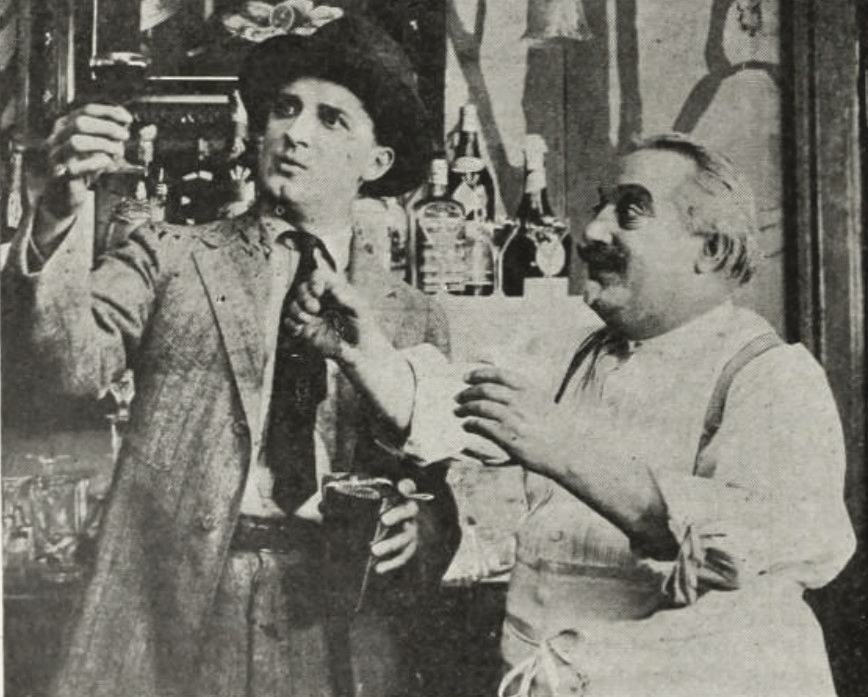
Barry's path, rather than leading directly to riches, first leads him to romance and camaraderie. His initial meeting with Faith Fanshawe, played with luminous grace by Helen Ferguson (or perhaps Virginia Valli, as the cast list suggests a delightful duo of leading ladies, a common practice for alternate prints or regional releases of the era), is a scene of delightful happenstance. Her car, predictably, has broken down, and Barry, ever the gentleman, offers his assistance. The fifty cents she gives him in return, rather than being spent, becomes a treasured memento, a tangible symbol of their budding connection. This small act of kindness, and the humble coin, holds more value to Barry than any grand sum, highlighting his intrinsic character. The silent film excels in these moments of visual poetry, where a glance, a gesture, or a simple prop conveys profound emotion. Shortly thereafter, Barry encounters Jeffery Jarvis, a writer who, intrigued by Barry's story and perhaps by his sheer good nature, offers him shelter and, crucially, an introduction to a more refined social circle. Jarvis becomes not just a benefactor, but a mentor, a bridge between Barry's current penury and the world he is destined to inhabit. This sequence of fortuitous meetings underscores a central theme: that true wealth often comes in the form of human connection, not just monetary gain. The screenplay, while adhering to silent film conventions, masterfully uses these interactions to propel both plot and character development forward, demonstrating the power of a well-crafted narrative to elevate simple events into significant milestones.
The country club, a bastion of leisure and privilege, becomes the stage for Barry and Faith's reunion, a moment that solidifies their burgeoning affection. Here, Barry once again proves his mettle, rescuing Faith from a perilous situation, likely a dramatic near-drowning, a classic trope of silent melodrama designed to showcase the hero's bravery and the heroine's vulnerability. This act of heroism cements their bond, transforming nascent friendship into undeniable love. The chemistry between Washburn and Ferguson/Valli, conveyed through longing glances and expressive body language, is palpable, a testament to the power of silent acting to communicate deep emotion without a single spoken word. However, the shadow of Barry's financial plight looms large. Despite their profound connection, his penniless state presents a formidable barrier to proposing marriage. The societal expectations of the era, where a man was expected to provide for his wife, are subtly but powerfully conveyed. This creates a poignant tension, a classic romantic dilemma that audiences of the time would have instantly recognized and sympathized with. It’s a testament to the writers, Richard Rudd Whiting and H. Tipton Steck, that they manage to build such emotional stakes around a seemingly simple premise, ensuring that the audience is fully invested in Barry's romantic and financial future. The film masterfully uses these emotional peaks and valleys to keep the viewer engaged, demonstrating that even without dialogue, a compelling love story can be told with elegance and depth.
Just when Barry's romantic aspirations seem irrevocably thwarted by his poverty, the cosmic scales of justice, or perhaps just sheer narrative convenience, tip dramatically in his favor. Uncle Woolwich, the architect of this elaborate financial game, finally shuffles off this mortal coil. And in a stroke of exquisite, karmic irony, his death coincides precisely with Walter's catastrophic financial undoing. The shrewd broker, who had seemingly held all the cards, finds himself swamped by the market, half a million dollars in debt. This sudden, spectacular downfall of the antagonist is a moment of pure cinematic catharsis, a satisfying comeuppance that rewards the audience's patience and belief in Barry's inherent goodness. By the terms of the eccentric will, which rewards savings not just wealth, Walter's immense debt means his 'savings' are negative, effectively disqualifying him. Barry, despite his meager initial holdings, now stands to inherit a fortune, not because he out-saved Walter, but because Walter's reckless speculation led to ruin. This twist is the film's crowning glory, a brilliant subversion of expectations that elevates it beyond a simple romantic comedy. It subtly critiques the dangers of unchecked avarice and celebrates the unassuming virtues of the 'golden idiot' who, through no grand financial scheme, ultimately triumphs. The narrative here echoes themes found in Gold and the Woman, where the pursuit and influence of wealth often lead to complex moral outcomes, though The Golden Idiot offers a more uplifting resolution to its financial machinations.
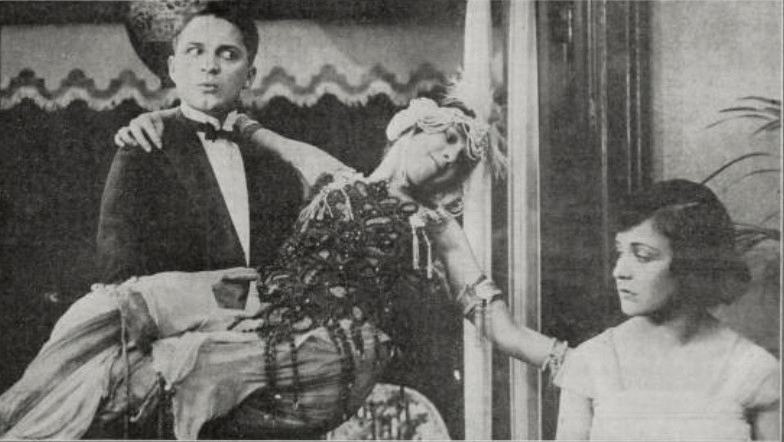
The performances in The Golden Idiot are a wonderful showcase of silent era acting, where the absence of spoken dialogue necessitated a heightened reliance on physical expression, facial gestures, and emotive body language. Bryant Washburn, as Barry Owen, embodies the earnest, slightly naive, yet ultimately virtuous hero with admirable conviction. His broad smiles, worried brows, and triumphant stances effectively communicate Barry's inner world, making him instantly sympathetic. Helen Ferguson and Virginia Valli, sharing the role of Faith Fanshawe (or perhaps alternating for different cuts), project an ethereal beauty combined with a quiet strength, their gazes conveying both affection and apprehension. Robert Bolder, as the eccentric Uncle Woolwich, likely delivers a memorable turn, his character's unusual will providing the entire narrative impetus. The supporting cast, including Julien Barton, Arthur Metcalfe, and William Brotherhood, undoubtedly contribute to the film's texture, filling out the world with their distinct portrayals. The direction, while uncredited in the provided details, deftly navigates the story's comedic and dramatic beats. The pacing, crucial in silent cinema, feels well-judged, allowing moments of romantic tenderness to breathe alongside the more frantic sequences of Barry's quest or Walter's downfall. The use of intertitles, while a necessity, is deployed with economy and impact, providing crucial plot points and character insights without bogging down the visual flow. The cinematography, even in its early forms, would have focused on clear compositions and effective lighting to draw the audience's eye to the key emotional beats, making the most of the visual medium. This meticulous attention to visual storytelling, a hallmark of the era, ensures that even without dialogue, the narrative remains coherent and emotionally resonant.
The Golden Idiot is more than just a charming romance; it’s a thoughtful exploration of wealth, class, and the unpredictable nature of destiny. The film posits that true value isn't found in accumulated riches, but in integrity, kindness, and genuine human connection. Barry, the 'idiot' in the golden sense, initially appears foolish for his lack of savings, yet his inherent good nature and his capacity for love ultimately prove to be his greatest assets. Walter, the 'wise' broker, exemplifies the dangers of a life solely dedicated to material gain, his eventual ruin serving as a cautionary tale. The film subtly critiques the capitalist ethos, suggesting that while financial acumen might bring temporary prosperity, it is susceptible to the whims of the market and the moral bankruptcy of unchecked ambition. In contrast, Barry's journey, though circuitous, leads him to both financial security and profound personal fulfillment. The role of fate is also a significant theme; the opportune timing of Uncle Woolwich's death and Walter's market collapse feels divinely orchestrated, a convenient plot device that nevertheless reinforces the idea that sometimes, the universe conspires to reward the deserving. This optimistic worldview, where virtue is ultimately rewarded, was a comforting and popular narrative in early cinema, offering a hopeful escape from the complexities of real life. It's a film that reminds us that while money can open doors, it's character that truly defines a person and ultimately dictates their happiness. The story, despite its comedic elements, carries a profound message about what truly matters in life, making it a surprisingly resonant piece of early cinematic art.
The Golden Idiot stands as a gleaming example of early 20th-century filmmaking, a testament to the power of simple yet compelling storytelling. It's a film that, despite its age and the technical limitations of its era, manages to charm, entertain, and even impart a gentle moral lesson. The ingenious plot, the endearing characters, and the satisfying resolution combine to create a cinematic experience that transcends its silent nature. It’s a reminder that truly great stories, told with heart and wit, possess an timeless quality. For anyone interested in the evolution of cinema, or simply in search of a heartwarming tale of love and fortune, this film is a delightful discovery. It offers a window into a bygone era of moviemaking, where the magic was conjured not with special effects or booming soundtracks, but with expressive faces, dramatic gestures, and the universal language of human emotion. Richard Rudd Whiting and H. Tipton Steck crafted a narrative that is both lighthearted and insightful, a true gem that continues to shine. The film's enduring appeal lies in its optimistic portrayal of virtue triumphant, a narrative that, in any age, offers a welcome dose of hope and happiness. If you ever have the chance to witness this charming piece of cinematic history, do so; you’ll find that its silence speaks volumes, delivering a story that is, in every sense, golden.
IMDb —
1932
Community
Log in to comment.