DbcultAccessing Vault...
6/10
Senior Film Conservator
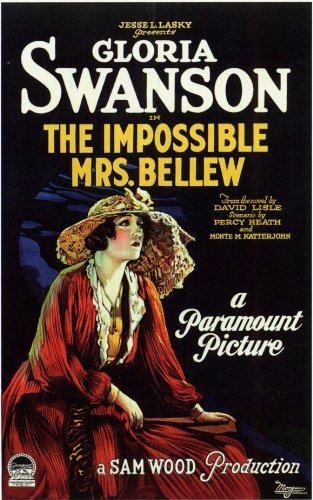
A definitive 6/10 rating for a film that redefined the boundaries of cult cinema. The Impossible Mrs. Bellew remains a cornerstone of transgressive art.
The year 1922 was a watershed moment for the cinematic medium, a period when the visual language of silent film was reaching its zenith of expressive power. At the heart of this evolution stood Gloria Swanson, an actress whose mere presence could command the focus of an entire theater. In The Impossible Mrs. Bellew, we witness more than just a melodrama; we observe a surgical dissection of the double standards that governed the early 20th-century social elite. The film, directed with a keen eye for both opulent detail and psychological nuance, presents a narrative that feels startlingly modern in its critique of male fragility and the systemic silencing of women.
The narrative engine is fueled by the grotesque hypocrisy of Lance Bellew, played with a chilling sense of entitlement by Frank Elliott. Lance is a man who inhabits a world where his own transgressions—specifically his liaison with Naomi Templeton—are treated as minor eccentricities, while his wife’s perceived infidelity is viewed as a capital offense against the social order. This dynamic is not unlike the thematic tensions explored in L'orgoglio, where pride and public perception collide with disastrous results. When Lance shoots Jerry Woodruff, the film shifts from a domestic drama into a harrowing legal and moral nightmare. The courtroom scenes are particularly striking, utilizing lighting and composition to isolate Betty Bellew as she makes the unthinkable choice to remain silent, effectively martyring her own dignity for the sake of her son’s future.
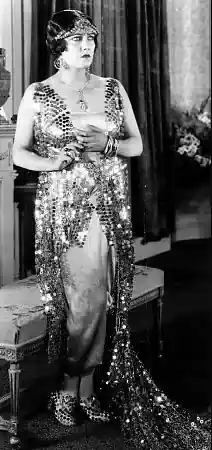
This act of sacrifice is the pivot upon which the entire film turns. It transforms Betty from a victim of circumstance into a tragic heroine of mythic proportions. The 'impossible' nature of her character, as suggested by the title, refers to the impossible position society places her in: to be a good mother, she must be a 'bad' woman in the eyes of the law. This paradox is a recurring motif in silent cinema, often seen in works like The Price of Vanity, yet Swanson imbues the role with a specific, grounded pathos that transcends the era’s penchant for over-the-top histrionics.
To discuss this film without centering on Swanson’s performance would be an exercise in futility. She possessed a unique ability to convey complex internal monologues through the slightest shift in her gaze or the subtle tension in her posture. In the first act, she is the quintessential domestic figure, draped in the heavy, ornate fashions of the American upper class. As the story migrates to France, we see a physical and emotional transformation. Her wardrobe becomes more fluid, her movements more liberated, yet the shadow of her past remains etched in her expressions. This duality is the hallmark of a great actor, and Swanson navigates the transition with a grace that few of her contemporaries could match.
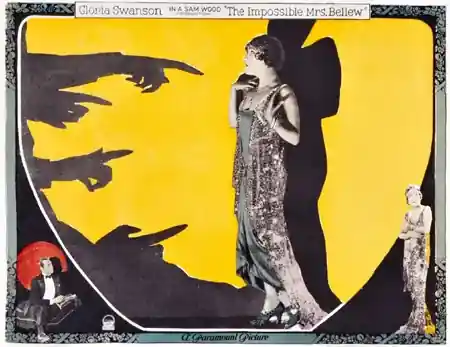
Her chemistry with Conrad Nagel, who portrays John Helstan, provides the film’s romantic core. Helstan is an author, a man of words, yet he is initially unable to read the truth written on Betty’s face. Their relationship is a delicate dance of attraction and hesitation, complicated by the intervention of Helstan’s father. The elder Helstan’s demand that Betty break off the relationship 'for John's own good' is a bitter echo of the sacrifice she made for her son. It suggests a world where a woman’s past is a permanent stain, an inescapable gravity that pulls down everyone she dares to love. This sense of inescapable fate is reminiscent of the dark undercurrents in God, Man and the Devil, where the struggle for moral purity is constantly undermined by human frailty.
The shift in setting from the rigid, judgmental atmosphere of the United States to the more permissive, albeit equally judgmental, milieu of the French Riviera is rendered with stunning visual clarity. The cinematography captures the shimmering light of the Mediterranean, creating a sharp contrast with the dark, claustrophobic interiors of the Bellew estate. This visual dichotomy serves to emphasize Betty’s internal state: she has traded a physical prison for a social one. The party given by Count Radisloff is the film’s aesthetic centerpiece. It is a scene of sybaritic excess, where Betty intentionally performs the role of the 'fallen woman' to alienate John. The use of masks, elaborate costumes, and deep shadows creates a dreamlike, almost nightmarish quality that underscores the performative nature of her life.
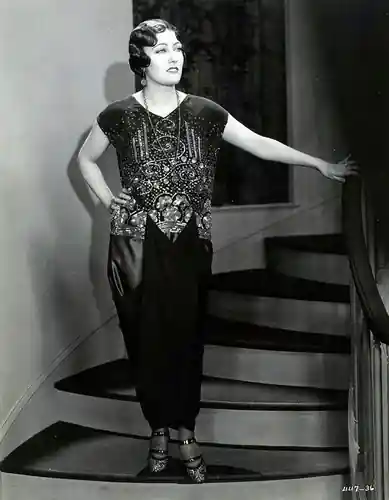
In this sequence, we see echoes of the thematic weight found in The Devil's Wheel, where the protagonist is caught in a cycle of social expectation and personal desire. The way the camera lingers on Betty’s face as she forces a smile while her eyes betray her heartbreak is a masterclass in silent storytelling. It is a moment of pure cinema, where the visual narrative supersedes the need for intertitles. The Count himself is a figure of predatory elegance, representing the dangers of the 'freedom' Betty has found in Europe. He is a reminder that for a woman in her position, there are no truly safe spaces.
When examining The Impossible Mrs. Bellew within the broader context of the 1920s, it stands out for its refusal to offer easy answers. While many films of the era, such as From Now On or Money Mad, focused on the corrupting influence of wealth or the necessity of moral reform, Swanson’s vehicle is more interested in the structural inequality of the social contract. It shares a certain DNA with The Case of Lady Camber in its exploration of domestic tension and the fragility of a woman’s reputation, but it possesses a grander, more operatic scale.
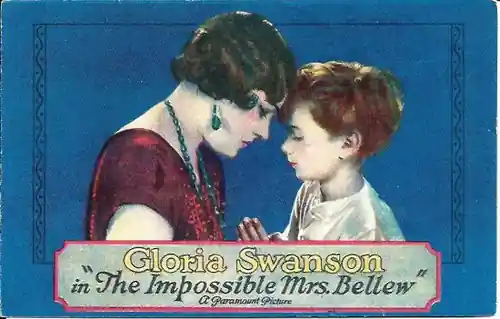
Furthermore, the film’s exploration of a woman forced into a life of crime or deception for the sake of her family can be compared to the narrative beats in Mästertjuven, though Betty’s 'crime' is one of omission rather than commission. Even the more fantastical or historical dramas of the time, like Cardinal Richelieu's Ward or My Lady's Slipper, often dealt with the theme of a woman being used as a pawn in the games of powerful men. The Impossible Mrs. Bellew grounds this theme in a contemporary setting, making the stakes feel more immediate and the injustice more palpable.
The final act of the film is a whirlwind of revelation and reconciliation. The change of heart experienced by Lance and Aunt Agatha might feel somewhat abrupt to modern audiences, but within the logic of the 1920s melodrama, it serves as a necessary restoration of moral equilibrium. The arrival of Aunt Agatha in France with Lance Jr. is the catalyst for the truth finally coming to light. The scene where John Helstan learns the reality of Betty’s sacrifice is played with a poignant intensity. It is not just a rescue from the Count; it is a rescue from the lies that have defined her existence for years. The film concludes not with a simple 'happily ever after,' but with a sense of hard-won peace.
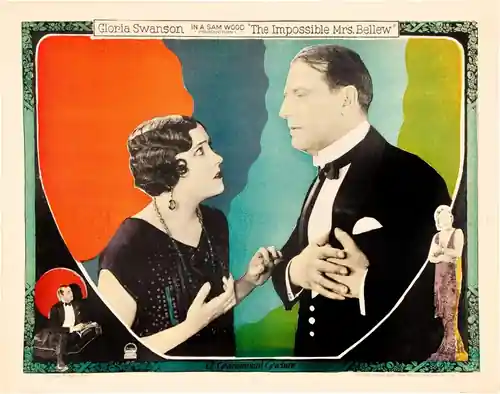
The legacy of The Impossible Mrs. Bellew lies in its sophisticated handling of its subject matter. It avoids the easy moralizing of films like The Devil Dodger or the simplistic gender dynamics of Women Who Win. Instead, it offers a nuanced portrait of a woman who is both a victim of her society and the master of her own moral destiny. The film’s title remains a haunting question: why was it 'impossible' for Betty to be seen as she truly was? The answer, the film suggests, lies not in her character, but in the eyes of a world that was not yet ready to see a woman as a full human being, capable of both deep sacrifice and independent thought.
From a technical standpoint, the film is a triumph of the studio system at its height. The sets are lavish, the costumes are iconic, and the direction by Sam Wood (though often uncredited in favor of the stars) is precise and effective. The writers, including Percy Heath and Monte M. Katterjohn, crafted a screenplay that balances the requirements of a popular entertainment with the depth of a character study. The pacing is deliberate, allowing the emotional weight of each scene to land with full impact. This is particularly evident in the sequences involving Jerry Woodruff and the subsequent courtroom fallout, which are handled with a restraint that heightens the drama.
In comparison to other films like A Voice in the Dark, which utilized suspense and mystery to engage the audience, The Impossible Mrs. Bellew relies on the raw power of human emotion. It is a film that demands empathy from its viewers, asking them to look past the scandals and the 'impossible' labels to find the beating heart of a woman who refused to let the world break her. Even as we look back from a century’s distance, the film’s power remains undimmed. It is a testament to the enduring brilliance of Gloria Swanson and the sophisticated artistry of the silent era. For those who appreciate cinema as an art form that can both reflect and challenge its time, this film is an essential experience. It captures a moment in history when the screen was just beginning to find its voice, and in the silent performance of Swanson, that voice is louder and clearer than ever.
Ultimately, the film serves as a bridge between the Victorian sensibilities of the past and the burgeoning modernity of the 20th century. It explores the 'impossible' choices women have always had to make, and in doing so, it creates a narrative that is both specific to its time and universal in its reach. Whether compared to the intrigue of The Rajah's Diamond Rose or the domestic tragedies of De la coupe aux lèvres, this work stands as a singular achievement, a shining example of the power of visual storytelling to illuminate the darkest corners of the human experience.
IMDb 5.3
1919
Community
Log in to comment.