DbcultAccessing Vault...
7/10
Senior Film Conservator
A definitive 7/10 rating for a film that redefined the boundaries of cult cinema. The New Mission of Judex remains a cornerstone of transgressive art.
Stepping back into the flickering shadows of early 20th-century French cinema, one encounters a figure of singular gravitas and enduring mystique: Judex. In The New Mission of Judex, we are once again drawn into the intricate web spun by the visionary director Louis Feuillade and his co-writer Arthur Bernède. This isn't merely a film; it's an experience, a continuation of a mythos that captured the imagination of a nation and etched itself into the very fabric of popular culture. The allure of the masked avenger, a figure who operates beyond the conventional confines of the law to mete out a highly personal brand of justice, resonates with a primal human desire for order in a chaotic world. Feuillade, with his unparalleled ability to blend the quotidian with the extraordinary, once again invites us to witness the tireless crusade of a hero whose methods are as enigmatic as his motivations.
The world of Judex is one perpetually teetering on the precipice of moral decay, where unseen forces conspire from opulent salons and forgotten alleyways alike. It is a world that desperately needs a champion, and Judex, portrayed with an understated intensity by René Cresté, answers that call. His 'new mission' isn't just a fresh set of challenges; it's an evolution of the very concept of vigilantism, demanding an even greater intellectual agility and a more profound understanding of the human heart, both its capacity for depravity and its potential for redemption. Unlike the overt criminality depicted in Feuillade's earlier masterwork, The Vampires: The Poisoner, where the antagonists reveled in their villainy, Judex often confronts a more insidious, veiled form of corruption, making his interventions all the more complex and satisfying.
Feuillade's directorial genius lies in his ability to ground fantastical elements in a starkly realistic Parisian backdrop. The labyrinthine streets, the grand boulevards, the shadowy interiors – each becomes a character in itself, breathing life into the narrative and lending an almost documentary-like authenticity to Judex's exploits. This blend of realism and high-stakes melodrama is a hallmark of his style, a trait that sets his serials apart from many of his contemporaries. The pacing, though deliberate by modern standards, builds an inexorable tension, drawing the viewer deeper into the unfolding drama with each meticulously crafted tableau. The narrative unfolds not as a series of disconnected events, but as an organic, evolving struggle between light and encroaching darkness.

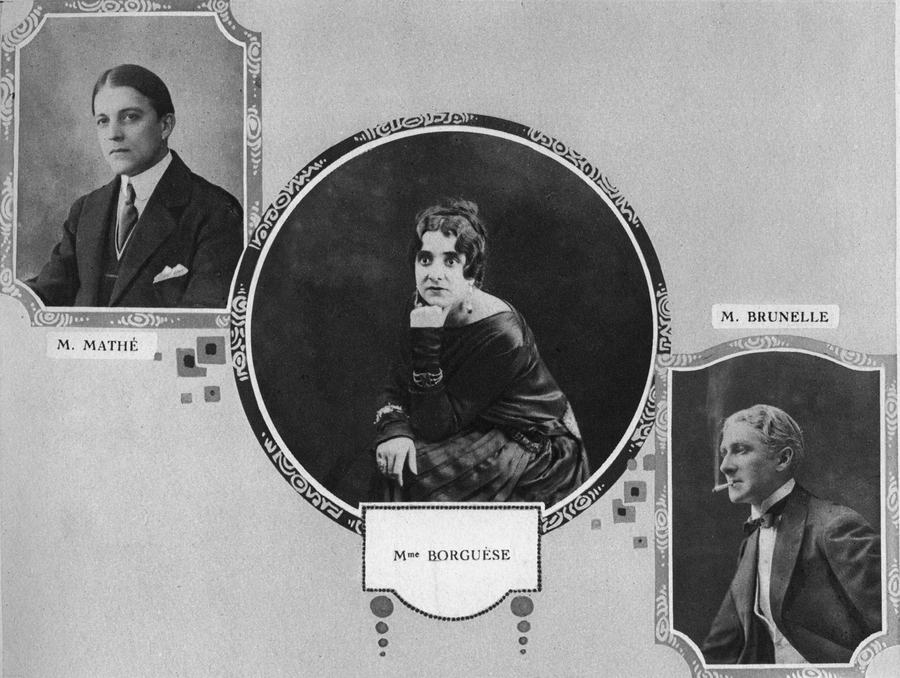
The cast, a familiar ensemble for Feuillade aficionados, delivers performances that are both nuanced and powerfully expressive, a testament to the sophisticated acting required for the silent screen. Marcel Lévesque, often a standout, brings his distinctive presence to the proceedings, while Olinda Mano and Juana Borguese embody the spectrum of vulnerability and resilience. Louis Leubas and Georgette De Nerys, among others, craft memorable antagonists and supporting figures, their exaggerated yet believable portrayals adding significant texture to the moral landscape Judex navigates. René Cresté, as Judex himself, projects an aura of impenetrable resolve, his masked visage conveying more emotion through subtle gesture and posture than many actors achieve with dialogue. His portrayal is less about physical prowess and more about intellectual superiority and unwavering moral conviction.

Thematically, The New Mission of Judex delves deeply into questions of justice and the limitations of the legal system. Judex is not merely a punisher; he is often a redeemer, a protector of the innocent who have been failed by conventional avenues of recourse. His methods, though extra-legal, are always driven by a profound ethical compass, distinguishing him from mere criminals. This exploration of justice, both personal and societal, finds echoes in other films of the era that grappled with social inequities, such as Les Misérables, Part 2: Fantine, which vividly depicted the harsh realities faced by the vulnerable. Judex offers a fantastical counterpoint, a wish-fulfillment fantasy where the scales of justice can, indeed, be rebalanced by an extraordinary individual.

Feuillade's cinematic techniques, while rooted in the early days of filmmaking, reveal a surprising sophistication. His use of deep focus, allowing multiple planes of action to unfold simultaneously, and his mastery of sequential storytelling within the serial format, were groundbreaking. The visual language is rich, relying on symbolism and stark contrasts to convey emotion and narrative progression. While silent films inherently relied on intertitles, Feuillade often minimized their use, preferring to let the actors' expressions, the mise-en-scène, and the kinetic energy of his compositions tell the story. This immersive quality draws the viewer into Judex's world, making them active participants in unraveling the mysteries alongside the hero.
What makes The New Mission of Judex particularly compelling is its commitment to an evolving narrative. A 'new mission' implies not just a different antagonist, but perhaps a shift in Judex's own tactical approach, or an escalation of the threats he faces. The criminal underworld is never static, and Judex must constantly adapt, utilizing his vast network of informants, his mastery of disguise, and his psychological prowess to outmaneuver his foes. This dynamic aspect ensures that the series, even in its continuations, never feels stale or repetitive. It’s a testament to the imaginative prowess of Feuillade and Bernède that they could consistently conjure fresh, intricate plots that kept audiences on the edge of their seats, eagerly awaiting the next installment.
The influence of Judex, and Feuillade's serials in general, cannot be overstated. They laid much of the groundwork for future adventure narratives, vigilante stories, and even the nascent genre of superhero comics. The concept of a masked figure with a secret identity, operating from a hidden lair, and possessing a formidable intellect, became an archetype that continues to inspire creators across various media. One can draw a direct line from Judex to the pulp heroes of the 1930s and beyond, demonstrating the timeless appeal of his character. This film, therefore, is not just a piece of historical cinema; it's a foundational text in the history of heroic fiction.
While the world has moved on from the silent era, the power of these films remains undiminished for those willing to engage with them on their own terms. The New Mission of Judex is a prime example of cinematic storytelling that transcends its technological limitations through sheer artistry and narrative ingenuity. It's a rich tapestry of suspense, intrigue, and moral drama, woven by a master craftsman at the height of his powers. For anyone interested in the origins of popular genre cinema, the evolution of directorial technique, or simply a captivating story of good versus evil, this film is an essential viewing experience. It reminds us that long before CGI and explosive blockbusters, the simple power of a well-told story, a compelling hero, and a shadowy villain was more than enough to hold an audience spellbound.
The meticulous attention to detail, from the period costumes to the intricate set designs, further immerses the viewer in this bygone era. It’s a historical document as much as it is a thrilling adventure, offering a window into the societal anxieties and aspirations of early 20th-century France. The enduring fascination with Judex speaks to a universal human need for justice, for a figure who can rectify wrongs when conventional systems fail. Feuillade didn't just create a character; he created an ideal, a symbol of hope and retribution that continues to resonate. The 'new mission' is ultimately the same timeless mission: to confront injustice wherever it rears its head, and to remind us that even in the darkest corners of human experience, a beacon of resolute morality can shine brightly. This silent masterpiece is a vibrant testament to the enduring power of classic cinema.
IMDb —
1931
Community
Log in to comment.