DbcultAccessing Vault...
Cult Review
Senior Film Conservator
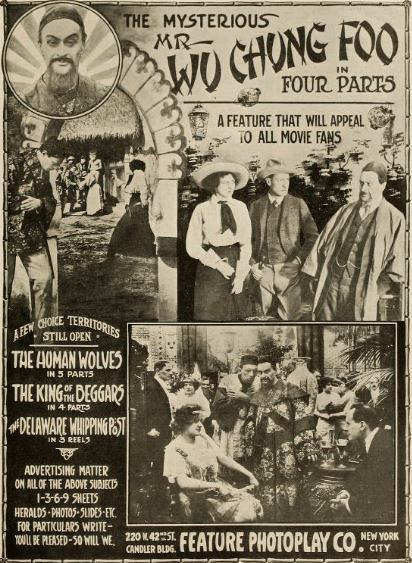
Stepping back into the nascent days of cinematic storytelling, 'The Mysterious Mr. Wu Chung Foo' emerges as a fascinating artifact, a silent thriller that, despite its age, still possesses a certain audacious charm. It’s a narrative steeped in the conventions and curiosities of its era, painting a vivid, if sometimes problematic, tableau of mystery, daring escapades, and the unwavering pursuit of justice. For contemporary audiences, it offers more than just a plot; it's a window into the cultural anxieties, narrative structures, and visual language that captivated viewers in a time before synchronized sound and special effects became the norm. This film, with its intricate web of intrigue and its audacious villain, stands as a testament to the power of visual narrative to enthrall and provoke, even when stripped down to its most fundamental elements. It challenges us to look beyond modern sensibilities and appreciate the raw, unadulterated essence of early filmmaking, where gestures, expressions, and intertitles carried the full weight of emotional and narrative exposition.
To fully appreciate 'The Mysterious Mr. Wu Chung Foo', one must first attune themselves to the unique rhythm and aesthetic of early 20th-century cinema. This isn't a film that relies on explosive set pieces or rapid-fire dialogue; rather, its potency lies in its deliberate pacing, the exaggerated physicality of its performers, and the sparse, yet impactful, intertitles that guide the viewer through its labyrinthine plot. The film belongs to a period where the novelty of moving pictures was still paramount, and filmmakers were experimenting with the very grammar of visual storytelling. It’s a testament to the ingenuity of its creators that, even without the technological advancements we now take for granted, they managed to craft a narrative that, at its heart, remains compelling. The allure isn't just in the story itself, but in witnessing the foundational artistry that shaped an entire medium, where every flicker of expression and every carefully composed shot was a deliberate choice to convey emotion and advance the plot. It evokes a sense of wonder at how much could be communicated with so little, relying heavily on the audience's willingness to engage their imagination and piece together the nuances of the unfolding drama.
The film commences with an almost deceptively benign scene: a convivial gathering at the Astor Club, where Lord Lister, a detective of formidable acumen, finds himself a fortuitous winner at cards. It is here, amidst the pleasantries and the clinking of glasses, that fate intervenes. An inscription on a dollar bill, a silent scream etched into currency, declares: "We are held prisoners by a Chinese gang at Cosia, near Sacramento. Send help." This terse, yet profoundly urgent, message serves as the narrative’s inciting incident, catapulting Lister from the comfortable confines of leisure into a quest fraught with peril. His natural inclination towards observation, honed by years of detective work, compels him to disregard the general skepticism of his companions and embark on a mission of rescue. His friend, Charles Brand, with a loyalty characteristic of classic adventure narratives, readily consents to accompany him, setting the stage for a classic buddy-detective dynamic that would become a staple of cinema for decades to come. The transition from a mundane social event to a high-stakes investigation is swift and effective, immediately establishing the film's genre and the protagonist's unwavering moral compass. This initial setup, while simple, is remarkably efficient in establishing the stakes and the character motivations, drawing the audience into the impending mystery with a sense of urgent curiosity. It’s a masterclass in economical storytelling, leveraging a seemingly innocuous detail to trigger a grand adventure.
The antagonist, Mr. Wu Chung Foo, is a character crafted from the popular, albeit often stereotypical, tropes of early 20th-century 'Yellow Peril' narratives. He is presented as a rich Chinese merchant, residing in opulent isolation on a vast farm in Cosia, his wealth and influence masking a sinister underbelly. His introduction is shrouded in an aura of foreboding; Lord Lister has heard of him through Governor Morton, lending him an air of legitimate, yet unsettling, power. From the moment Lister and Brand arrive, Wu Chung Foo’s demeanor is calculatedly hostile, his attempts to unnerve his guests with tales of disappearances on his grounds betraying a malevolent intent. The narrative emphasizes a "peculiar stare in the eyes of the yellow man," a loaded phrase that, while reflecting the racial biases prevalent at the time, serves to immediately establish him as a suspicious and dangerous figure in the film's universe. His swift decision to abduct Charles Brand, motivated by both the fear of exposure and a disapproval of Brand's burgeoning affection for his adopted daughter Hattie, paints him as a ruthless despot, a man who views human life as a disposable commodity in service of his illicit empire. He is not merely a criminal; he is the architect of a hidden world of exploitation, a master of deception whose polite facade barely conceals a predatory nature. This portrayal, while ethically questionable by modern standards, was designed to evoke a potent sense of fear and otherness in the contemporary audience, making him a truly formidable foe for the intrepid detective.
Lord Lister embodies the quintessential detective archetype of the era: intelligent, observant, and possessed of an unshakeable moral compass. His initial reaction to the cryptic dollar bill is not one of skepticism, but of immediate, unwavering resolve. He is a man driven by a profound sense of justice, unwilling to let a cry for help go unanswered. Lister’s methods are a blend of direct confrontation and subtle infiltration. He secures a letter of introduction, using conventional means to gain access to Wu Chung Foo’s domain, but quickly resorts to nocturnal reconnaissance, disguising himself as a "shadow" to uncover the master’s secrets. His pursuit is relentless, characterized by a cool-headed determination even in the face of grave danger. When Charles disappears, and later when he himself is captured, his resolve only hardens. Lister is not merely a problem-solver; he is a liberator, a figure who stands against oppression and tyranny. His role is to unravel the enigma, expose the villain, and ultimately ensure that justice prevails, a task he undertakes with a quiet confidence that belies the inherent risks. His character provides the moral backbone of the story, a beacon of rectitude in a world corrupted by avarice and cruelty, making him an easy figure for audiences to champion.
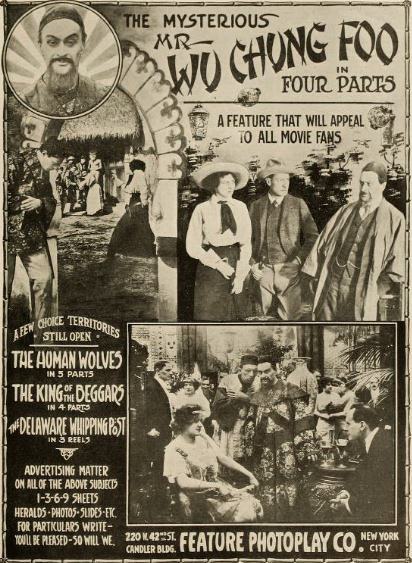
Hattie, Wu Chung Foo’s adopted daughter, represents a crucial arc within the narrative, evolving from an unwitting participant in her foster father’s dark world to a pivotal agent of its destruction. Initially, she is portrayed as a figure of innocence, quickly cultivating a "strong liking" for Charles Brand, a connection that sparks the villain’s ire. Her initial ignorance of her foster father’s nefarious activities highlights the depth of his deception. However, her character undergoes a profound transformation following the disappearance of Charles and, subsequently, Lord Lister. Faced with the stark reality of their abduction and Lister’s revelation of Wu Chung Foo’s depravity, Hattie sheds her naiveté. Her grief transmutes into a fierce determination to "master the situation." She becomes an active participant in the fight for justice, obtaining the key to the subterranean city and, armed with a gun, bravely venturing into the heart of the enemy’s lair. Her discovery of the enslaved white men galvanizes her further, leading her to summon the military—a decisive act of heroism. Hattie’s journey from a sheltered, unaware young woman to a courageous liberator provides a compelling emotional core to the story, demonstrating that even those closest to evil can rise to defy it. Charles Brand, while less developed, serves as the romantic interest and the primary victim whose plight drives much of the initial action. His disappearance underscores the danger of Wu Chung Foo’s operation and provides a personal stake for both Lister and Hattie, making his eventual rescue all the more satisfying. Their reunion, safe in each other's arms, provides the conventional romantic resolution expected of such tales.
'The Mysterious Mr. Wu Chung Foo' is a rich tapestry of thematic elements, some enduring, others reflecting the problematic cultural landscape of its time. At its core, the film explores the perennial struggle between good and evil, with Lord Lister embodying the forces of justice against the malevolent machinations of Wu Chung Foo. The narrative delves into themes of hidden societies and clandestine operations, revealing a world of exploitation lurking beneath a veneer of respectability. The stark depiction of white men held as slaves in a Chinese-run mine, though sensationalized, touches upon the universal theme of human bondage and the dehumanizing effects of forced labor. This aspect, while culturally charged, resonates with a broader human experience of oppression. However, it is impossible to ignore the film's engagement with what is now recognized as 'Orientalism'—a Western fascination with, and often stereotypical portrayal of, Eastern cultures. Wu Chung Foo, as the enigmatic and villainous 'Chinese merchant,' embodies many of the 'Yellow Peril' anxieties prevalent in early 20th-century Western society. His character, while serving a narrative purpose, is constructed through a lens that exoticizes and demonizes, reflecting a particular historical moment's biases. A critical viewing necessitates acknowledging these problematic representations, even as we appreciate the film's historical context and its contributions to the thriller genre.
For instance, the harrowing depiction of forced labor, while rudimentary in its silent-era portrayal, resonates with the thematic gravity found in cinematic explorations of systemic oppression. One cannot help but draw parallels to the enduring narrative of struggle and injustice depicted in a sprawling epic like Les misérables, where the human spirit is tested under the weight of societal tyranny. Similarly, the stark portrayal of subterranean entrapment and the relentless grind of servitude echo the grim realities seen in films such as The Pit or the more direct thematic cousin, The Miner's Curse, both of which delve into the perilous existence of those toiling beneath the earth. These comparisons highlight the universal nature of the film's core themes, even when presented through a specific, historically-situated cultural lens. The struggle for freedom and dignity against insurmountable odds is a narrative thread that weaves through countless stories, making 'The Mysterious Mr. Wu Chung Foo' a part of a larger cinematic conversation about human resilience and the fight against injustice.
In terms of cinematic execution, 'The Mysterious Mr. Wu Chung Foo' demonstrates a commendable understanding of suspense and visual narrative for its time. The pacing, while slower than modern thrillers, builds tension effectively through Lord Lister's methodical investigation and the escalating dangers faced by the protagonists. The use of intertitles is generally efficient, providing necessary exposition without bogging down the visual flow. The set designs, particularly the depiction of Wu Chung Foo’s opulent home and the sinister subterranean city, are evocative, creating distinct atmospheric contrasts that enhance the storytelling. The portrayal of the ape, a crude special effect by today's standards, nevertheless serves its purpose in conveying the immediate, physical threat to Lister. The performances, characterized by the broad gestures and expressive facial contortions typical of silent cinema, effectively communicate character emotions and intentions, even without dialogue. There are moments of genuine ingenuity in the visual storytelling, such as Lister's stealthy exploration of Wu Chung Foo's private room, relying on shadow and careful movement to convey espionage. While some plot conveniences and logical leaps are present, they are largely forgivable within the context of early genre filmmaking, where narrative momentum often took precedence over strict realism. The film's ability to maintain a coherent and engaging plot through purely visual means, punctuated by textual explanations, is a testament to the foundational principles of cinema that were being established during this period.
The film’s construction of suspense, particularly in Lister’s stealthy nocturnal exploration and Hattie’s daring infiltration, aligns with the classic detective tropes seen in works like Man of the Hour, where quick thinking and calculated risks drive the narrative forward. The revelation of a hidden, nefarious organization operating beneath an unsuspecting facade finds echoes in the intricate plots of films such as Sonka zolotaya ruchka, which often unveil clandestine operations and criminal masterminds. Furthermore, the ultimate triumph of good over evil, culminating in a dramatic rescue, shares a triumphant spirit with narratives like Saved in Mid-Air, celebrating decisive action and heroic intervention. These comparisons underscore 'The Mysterious Mr. Wu Chung Foo's' place within a broader tradition of adventure and suspense, demonstrating how even early silent films contributed to the evolving language of cinematic storytelling. The effective use of visual tension, the strategic deployment of clues, and the grand, satisfying resolution are hallmarks that connect it to a lineage of thrilling narratives, proving that the core elements of compelling storytelling transcend technological limitations.
In its totality, 'The Mysterious Mr. Wu Chung Foo' offers a compelling, if culturally complex, look at early cinematic narrative. It’s a film that demands to be viewed through the dual lenses of historical context and critical engagement. While its portrayal of the antagonist and certain cultural elements may strike modern viewers as problematic, it remains a significant example of silent-era thrillers, showcasing the nascent power of the medium to craft intricate plots and evoke strong emotions. Lord Lister, Hattie, and even the menacing Wu Chung Foo, despite their archetypal nature, contribute to a memorable cinematic experience. The film’s lasting legacy lies not just in its plot mechanics, but in its ability to transport us to a different time, revealing the fears, fascinations, and narrative conventions that shaped early 20th-century popular culture. It reminds us that even in the absence of spoken words, a powerful story, well-told through the language of images, can resonate across generations, offering both entertainment and a valuable historical perspective on the evolution of film as an art form and a cultural mirror. It’s a piece of cinematic history that, when approached with an open mind, still has much to say about the enduring human desire for justice, adventure, and the triumph of light over darkness.
IMDb —
1916
Community
Log in to comment.