DbcultAccessing Vault...
Cult Review
Senior Film Conservator
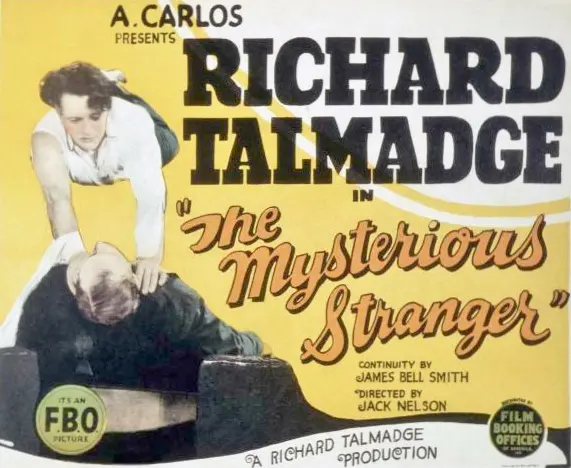
Ah, the silent era! A time when narratives unfolded through the grand gestures of actors, the evocative sweep of an orchestra, and the stark, yet powerful, poetry of intertitles. It was a period ripe for grand melodrama, intricate moral quandaries, and tales that, despite their age, continue to resonate with universal truths. And among these cinematic treasures, The Mysterious Stranger, a 1925 offering from the fertile mind of James Bell Smith, stands as a fascinating artifact, a testament to the era's storytelling prowess. It's a film that demands a closer look, not just for its plot, which is deliciously intricate, but for the profound human emotions it attempts to capture without a single spoken word.
Let’s dive into the heart of this compelling drama. At its core, we find Raoul Lesage, a character whose initial actions set the entire convoluted chain of events into motion. Raoul, portrayed with what one can only imagine as a potent blend of stoicism and simmering rage by Bert Bradley, is a man whose world crumbles under the weight of suspicion. The alleged infidelity of his wife, April, with the artist Herman Bennett, becomes an unendurable affront. It’s a classic setup, isn't it? The wronged husband, the suspected lover, the beautiful wife caught in the crosshairs. But what elevates Raoul's response beyond mere domestic drama is its sheer, unyielding extremity. He doesn't just separate; he forsakes. He doesn't just move on; he retreats, creating a hermitage, a fortress of solitude, isolating himself and, crucially, his young son, Paul, from the world for two decades. This isn't just a plot point; it's a monumental act of self-imposed exile, a decision that speaks volumes about the era's rigid moral codes and the dramatic potential they offered filmmakers. One might even draw parallels to the intense, almost theatrical isolation depicted in films like The Red Inn, where characters find themselves trapped, albeit by different circumstances, in environments that amplify their internal struggles.
The consequences of Raoul’s decision are, naturally, profound, particularly for Paul. Imagine a young man, reaching the cusp of adulthood at 21, having lived a life entirely devoid of feminine influence, untouched by the complexities and allure of the outside world. Paul, brought to life by the agile Richard Talmadge, is a veritable tabula rasa. His innocence is not merely charming; it's a dramatic device, a ticking time bomb of unfulfilled curiosity and burgeoning desire. This cloistered existence, while intended to protect him from the perceived corruptions of society, inadvertently makes him a force of nature when he finally breaks free. His sleepwalking, a wonderfully Freudian touch for a film of its time, serves as the unwitting catalyst for his grand awakening. It's a subconscious yearning for connection, for the unknown, that propels him beyond the high walls of his father's self-made prison. This narrative device, where an innocent is thrust into a chaotic world, brings to mind the fish-out-of-water scenarios that, in different contexts, drive the humor and heart of films like A Joy Ride, though here, the stakes are far more dramatic and emotionally charged.
And what a world Paul wanders into! His nocturnal peregrinations lead him directly into the orbit of his mother, April (played by the elegant Carmelita Geraghty), whom he, in his profound innocence, doesn't recognize. The dramatic irony here is palpable, almost excruciating. The mother, unknowingly reunited with the son she lost, and the son, unknowingly encountering the woman who bore him, all under the shadow of Herman Bennett (Sheldon Lewis), the very artist who ignited Raoul's jealousy. Bennett, the perceived antagonist, is a character whose motivations are perhaps more nuanced than Raoul's initial judgment allows. Was April truly unfaithful, or was it a misunderstanding, a youthful indiscretion, or simply the cruel twist of fate? The film, through its silent narrative, invites us to ponder these ambiguities, adding layers to what could otherwise be a straightforward tale of good versus evil. Bennett’s presence, the catalyst for two decades of familial estrangement, now becomes an unwitting instrument of their potential reunion, a delicious irony that writers like James Bell Smith excelled at crafting.
Then there is Helen, Bennett's beautiful ward, portrayed by Duane Thompson. It's an instant, almost fated connection between her and Paul. Their love story, unfolding against a backdrop of mystery and adventure, becomes the emotional anchor of the film. Helen represents the world Paul has been denied – beauty, warmth, companionship, and the promise of a future beyond his father’s melancholic hermitage. Her presence is a beacon, drawing Paul further into the thrilling, dangerous, yet ultimately redemptive journey that follows. The chemistry between Talmadge and Thompson, even in a silent film, must have been captivating, a visual ballet of longing and discovery. Their burgeoning romance is not merely a subplot; it is the driving force that propels Paul to confront Bennett, unravel the past, and ultimately, reunite his fractured family. The sheer exuberance of new love, even amidst peril, can be seen as a thematic cousin to the spirited quests for affection in films like Lady Godiva, where personal desires often intertwine with broader societal or familial conflicts.
The ensuing 'series of thrilling adventures' promised by the plot summary are where The Mysterious Stranger truly earns its stripes as a silent-era spectacle. One can envision dynamic chases, tense confrontations, and perhaps even a daring rescue or two, all executed with the physical prowess often associated with actors like Richard Talmadge, known for his athletic feats. Silent films, without dialogue to propel the action, relied heavily on visual dynamism, expressive performances, and meticulously choreographed sequences. The challenge for Talmadge would have been immense: to convey Paul's transition from an innocent, almost feral youth to a determined hero, capable of outwitting Bennett and navigating the complexities of the adult world, all through gesture, facial expression, and physical agility. The 'foiling' of Bennett would have been a masterclass in visual storytelling, perhaps involving clever traps, daring escapes, or a dramatic reveal that shifts the power dynamics entirely.
Thematically, The Mysterious Stranger explores several enduring human conditions. Jealousy, of course, is the initial spark, a destructive force that fragments a family and dictates lives for two decades. But beyond that, it delves into the nature of innocence lost and rediscovered, the profound impact of isolation, and the serendipitous, often unpredictable, hand of fate. Raoul's self-imposed prison is not just physical; it's emotional and spiritual, trapping him in a perpetual state of bitterness. Paul’s journey is one of liberation, not just from the walls, but from the ignorance that defined his existence. His rediscovery of his mother, and the subsequent reconciliation between his parents, speaks to the power of forgiveness and the possibility of healing even the deepest wounds. It’s a narrative that champions the resilience of the human spirit and the inherent drive towards connection, even after years of separation. This yearning for reunion and the overcoming of long-standing grievances echo the dramatic resolutions found in other emotionally charged narratives of the era, such as The Cricket on the Hearth, where familial bonds are tested and ultimately affirmed.
The casting choices for The Mysterious Stranger are also worth noting. Bert Bradley as Raoul and Richard Talmadge as Paul offer a compelling generational contrast. Talmadge, a prominent action star of the silent era, would have brought a vibrant physicality to Paul, making his transformation from naive recluse to resourceful hero believable and engaging. Duane Thompson, a leading lady of the period, would have imbued Helen with the necessary charm and strength to captivate both Paul and the audience. And the inclusion of Stepin Fetchit, even in a supporting role, adds a layer of historical context, reflecting the diverse, if often problematic, casting practices of the time. Josef Swickard and Robert Carlson, seasoned character actors, would have provided solid support, grounding the more fantastical elements of the plot in believable human reactions.
From a directorial perspective, one can imagine the challenges and opportunities presented by James Bell Smith’s screenplay. How does one visually represent Raoul’s two decades of solitude without it becoming stagnant? Through evocative set design, perhaps, or the gradual aging of the character via makeup. How is Paul’s innocence conveyed without making him seem foolish? Through wide-eyed wonder, perhaps, or a charming awkwardness in social situations. The 'thrilling adventures' would have required careful choreography and cinematography, utilizing techniques like parallel editing to build suspense and close-ups to emphasize emotional beats. The silent film director's craft was in translating internal states into external, visible actions, making every gesture, every tilt of the head, every flicker of an eye speak volumes. The ambition of the narrative, with its long timelines and dramatic shifts in character, suggests a director who was not afraid to tackle complex emotional landscapes.
The ending, with Paul and Helen hearing 'wedding bells' and the parents reunited, offers a satisfying, albeit conventional, resolution. It speaks to the era’s penchant for happy endings, where virtue is rewarded, and wrongs are righted. It’s a comforting closure, a reaffirmation of societal norms after a journey through moral ambiguity and personal strife. The reconciliation of Raoul and April is particularly poignant, suggesting that love, or at least familial duty, can transcend even decades of bitterness and misunderstanding. It's a powerful message of redemption, beautifully encapsulated by the final image of a new generation finding happiness while the old generation finds peace. The cyclical nature of conflict and resolution, of generations finding their own paths while healing the wounds of the past, is a timeless narrative, echoed in many human stories, including the epic family sagas that captivated audiences in films such as The House of Temperley.
In conclusion, The Mysterious Stranger is more than just a historical curiosity; it’s a vibrant example of silent-era storytelling at its most ambitious and emotionally resonant. It’s a film that asks us to consider the devastating consequences of unchecked jealousy, the profound impact of isolation, and the redemptive power of serendipity and love. Through its dramatic plot, its compelling characters, and the visual language of silent cinema, it weaves a tale that, even a century later, speaks to the enduring complexities of the human heart. It reminds us that sometimes, the most profound mysteries are not external enigmas, but the hidden depths within ourselves and the unexpected paths fate carves for us. It’s a journey worth taking, a silent symphony of human emotion that deserves to be rediscovered and appreciated for its timeless artistry and narrative depth. For those who appreciate the rich tapestry of early cinema, this 'mysterious stranger' offers a profound and rewarding encounter.
IMDb 6
1934
Community
Log in to comment.