DbcultAccessing Vault...
3/10
Senior Film Conservator
A definitive 3/10 rating for a film that redefined the boundaries of cult cinema. The Mystery of a Hansom Cab remains a cornerstone of transgressive art.
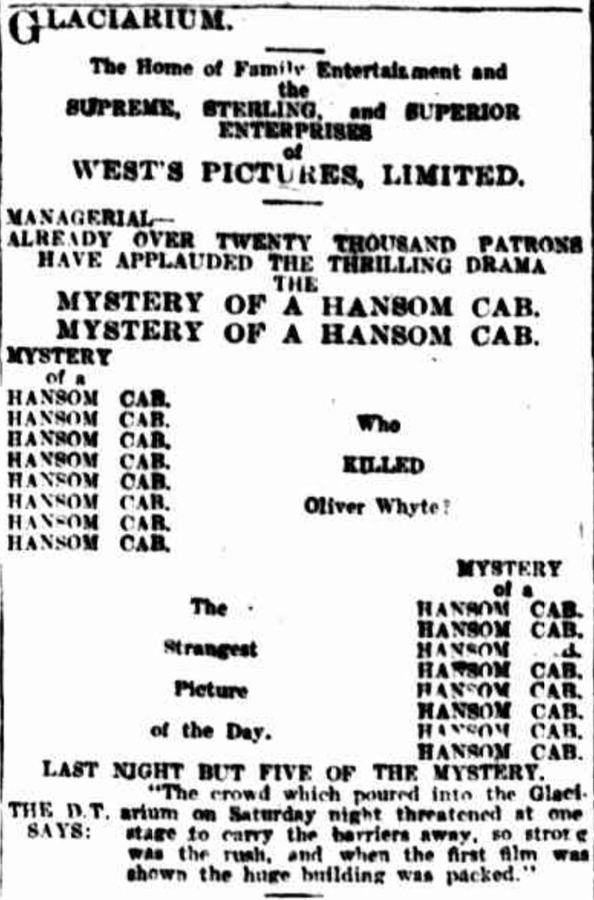
In the nascent years of cinema, when the medium was still grappling with its narrative voice, a film emerged from Australia that dared to tackle a complex, multi-layered mystery, diverging sharply from the prevalent actualités and rudimentary staged scenes. 'The Mystery of a Hansom Cab', an adaptation of Fergus Hume's wildly successful 1886 novel, stands as a fascinating artifact, a testament to early filmmakers' ambition to translate intricate literary plots onto the flickering screen. Released in 1911, it arrived at a pivotal moment, pushing the boundaries of what a motion picture could convey beyond simple spectacle or documentary-style vignettes. This was not merely a filmed play, but an attempt at cinematic storytelling, weaving together threads of suspicion, social commentary, and human frailty against the vibrant, yet often morally ambiguous, backdrop of Victorian Melbourne.
The film's premise is as compelling today as it was over a century ago: a dashing, if somewhat dissolute, playboy named Oliver White is found dead in a hansom cab, a seemingly innocuous vehicle that suddenly transforms into a mobile coffin. The immediate shock of this discovery reverberates through Melbourne's stratified society, a society characterized by its strict class distinctions and carefully maintained façades. White's murder is not an isolated incident but a catalyst, forcing the city to confront its hidden underbellies and the intricate web of relationships, rivalries, and clandestine affairs that underpin its polished exterior. The investigation, spearheaded by the determined detective, becomes a surgical probe into the city's collective conscience, peeling back layers of decorum to reveal the raw, often ugly, truths beneath. Each character introduced, from the highest echelons of wealth and power to the struggling denizens of the city's fringes, seems to harbor a secret, a motive, or a connection to the ill-fated Oliver White. This expansive scope, encompassing 'all aspects of Melbourne society,' was a bold undertaking for a film of its era, demanding a narrative sophistication that few contemporary productions could match. Unlike the straightforward action of The Corbett-Fitzsimmons Fight or the simple observation of Dressing Paper Dolls, 'Hansom Cab' plunged into the murky depths of human psychology and social critique.
Walter Dalgleish, in the role of a central figure (likely the detective or a key suspect, given the limited cast information), would have faced the unique challenges of acting for the silent screen. Early cinematic performance often oscillated between theatrical over-exaggeration and nascent attempts at naturalism. Dalgleish's portrayal, therefore, would have been crucial in grounding the complex narrative, conveying emotion and intent without the benefit of spoken dialogue. His physicality, facial expressions, and movements would have been the primary tools for communicating the gravity of the murder, the urgency of the investigation, or the duplicity of a suspect. This reliance on visual storytelling places a heavy burden on the actors, making their contributions indispensable to the film's success in engaging an audience accustomed to different forms of narrative consumption. The subtleties that modern audiences take for granted were painstakingly constructed through gesture and tableau, a demanding art form in itself. The ability of actors like Dalgleish to convey character and advance plot through these means speaks volumes about the early development of cinematic performance.
The enduring strength of 'The Mystery of a Hansom Cab' undoubtedly stems from Fergus Hume's original novel. Published in 1886, it was an immediate sensation, becoming one of the best-selling detective novels of the Victorian era, even outselling Arthur Conan Doyle's early Sherlock Holmes stories for a time. Hume's genius lay in crafting a labyrinthine plot filled with red herrings, unexpected twists, and a vivid depiction of societal hypocrisy. Adapting such a intricate narrative for a silent film in 1911 was an extraordinary feat. The 'writers' credited for the film adaptation would have faced immense challenges in condensing the novel's rich dialogue, numerous characters, and detailed exposition into a visually driven format, likely relying heavily on intertitles to bridge narrative gaps and convey crucial information. This early cinematic translation process was a delicate balancing act, requiring a keen understanding of both the source material and the nascent language of film. The success of the adaptation, even in its simplified form, speaks to the inherent dramatic power of Hume's story and its ability to captivate audiences across different media. It showcased how a compelling literary work could transcend its original format, finding new life and reaching broader audiences through the burgeoning art of cinema. The film's reliance on the novel's intricate plotting set it apart from many of its contemporaries, which often featured more straightforward or episodic narratives.
Beyond the immediate whodunit, the film excels in its subtle portrayal of Melbourne itself as a character in the drama. The city, then a booming metropolis enriched by the gold rush, is presented not just as a setting but as an entity with its own personality – a place of both dazzling prosperity and deep-seated moral rot. The investigation into Oliver White's death serves as a metaphorical journey through its various strata, from the opulent mansions of the wealthy elite, where reputations are fiercely guarded and secrets are buried deep beneath polished surfaces, to the grittier, more clandestine corners where shadows lengthen and desperation breeds crime. The hansom cab, a ubiquitous symbol of urban transport, becomes a poignant metaphor for the unseen journeys and hidden lives within the city, carrying its passengers to their fates, both mundane and tragic. This exploration of urban decay and societal pretense, even in the limited visual language of early cinema, lends the film a thematic depth that transcends mere genre conventions. It offers a glimpse into the anxieties and hypocrisies of a society grappling with rapid modernization and the moral compromises it often entails.
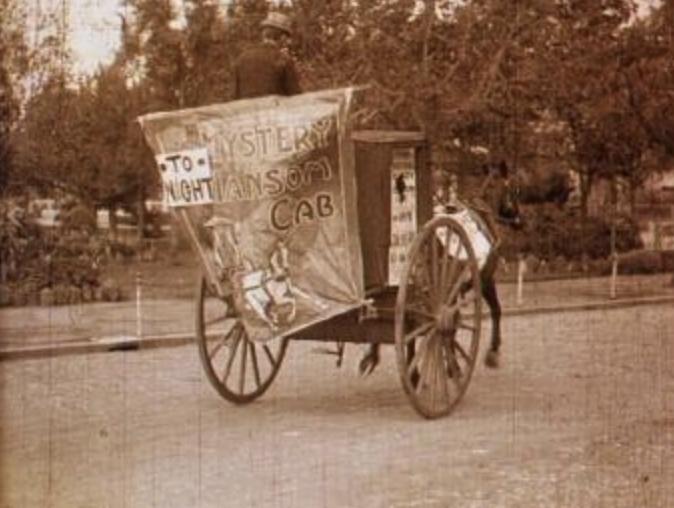
'The Mystery of a Hansom Cab' holds a significant place in the annals of Australian cinema. While films like The Story of the Kelly Gang (1906) are often cited as the world's first feature-length narrative film, 'Hansom Cab' contributed to the burgeoning tradition of complex storytelling on Australian screens. It demonstrated that local filmmakers were not content merely to document events or present simple comedies; they were actively engaged in adapting popular literature and crafting intricate dramatic narratives. This commitment to storytelling, in an era dominated by simpler forms, helped lay the groundwork for a more sophisticated national cinema. The film's ambition in tackling a renowned mystery novel underscored a growing confidence within the industry to produce works that could compete with international productions, particularly those from Britain and America. Its success, both critically and commercially, would have encouraged further investment in narrative filmmaking, fostering the development of local talent and infrastructure. This period was a crucible for cinematic innovation, and 'Hansom Cab' was undeniably part of that formative process, showcasing the potential for Australian stories to captivate audiences through the new medium.
To truly appreciate 'The Mystery of a Hansom Cab', one must view it through the lens of early cinematic technology and technique. The film would have been characterized by static camera shots, minimal editing, and a reliance on theatrical staging. Close-ups, dynamic camera movement, and intricate montage – techniques we now take for granted – were still in their infancy or yet to be widely adopted. Therefore, the narrative clarity and emotional impact had to be achieved through careful blocking of actors, expressive gestures, and the strategic placement of intertitles. The director, working within these constraints, had to find innovative ways to convey the unfolding mystery, the shifting loyalties, and the ultimate revelation of the killer. This often meant employing a visual language that was more akin to illustrated theatre than modern film, where each scene functioned almost as a living tableau. Yet, within these limitations, early filmmakers demonstrated remarkable ingenuity. They understood the power of the moving image to transport audiences, even if the methods were rudimentary by today's standards. The challenge was to maintain suspense and clarity without the full arsenal of cinematic tools available to later generations. The film's success in conveying its complex plot speaks volumes about the dedication and burgeoning artistry of those early pioneers, who were effectively inventing a new visual grammar as they went along.
At its core, 'The Mystery of a Hansom Cab' delves into universal themes that resonate across time and cultures. The pursuit of justice, often obstructed by societal influence and personal agendas, forms the central pillar of the narrative. The film, much like the novel, critiques the pervasive class distinctions of the era, where wealth and social standing often afforded a measure of impunity, or at least a powerful shield against scrutiny. The murder investigation becomes a vehicle for exposing the hypocrisy of those who preach morality while harboring their own dark secrets. Deception, in its myriad forms – from outright lies to subtle omissions and carefully constructed appearances – is a constant undercurrent, driving the plot forward and complicating the detective's quest for truth. This thematic richness elevates the film beyond a simple crime story, transforming it into a poignant commentary on human nature and the societal structures that shape it. It reminds us that appearances can be profoundly misleading, and that true justice often requires dismantling the very foundations of power and privilege. The complexities of these themes, handled in a silent film format, underscore the enduring power of Hume's original narrative and the early filmmakers' commitment to exploring profound human questions.
For contemporary viewers, 'The Mystery of a Hansom Cab' offers a captivating glimpse into a bygone era, both in terms of its historical setting and its cinematic style. It serves as a valuable document of early Australian urban life, depicting the fashions, conveyances, and social customs of late Victorian Melbourne. More broadly, it provides a window into the nascent stages of film as an art form, showcasing the pioneering efforts to forge a new visual language for storytelling. Comparing it to other early narrative features, such as Dante's Inferno (1911) or Hamlet (1911), one can discern a shared ambition to adapt established literary works, yet 'Hansom Cab' distinguishes itself through its distinctly local flavor and its embrace of the burgeoning detective genre. While early cinema was often characterized by its global reach, this film roots its universal themes in a specific, vibrant Australian context. It stands as a testament to the fact that even in its infancy, cinema was capable of both entertaining and providing profound social commentary, laying the groundwork for the rich and diverse cinematic landscape we know today. Its historical significance extends beyond mere novelty; it represents a crucial step in film's evolution from a technological marvel to a sophisticated narrative medium.
Despite the technological limitations of its time and the inevitable aging of its cinematic presentation, 'The Mystery of a Hansom Cab' retains a compelling allure. Its intricate plot, rich characterizations, and incisive social critique continue to captivate audiences interested in the origins of the crime genre and the development of early feature films. The film's legacy lies not just in its pioneering status but in its successful demonstration that cinema could handle narratives of considerable depth and complexity. It challenged viewers to engage with a story that demanded intellectual investment, offering more than fleeting amusement. It paved the way for future adaptations of literary works and solidified the crime mystery as a potent cinematic genre. For scholars and enthusiasts of film history, it remains an indispensable piece of the puzzle, illustrating how the foundational elements of narrative filmmaking were assembled, one ambitious project at a time. The enduring appeal of Fergus Hume's original story, combined with the groundbreaking efforts of the filmmakers, ensures that 'The Mystery of a Hansom Cab' will continue to be studied and appreciated as a significant milestone in the journey of cinema.
In conclusion, 'The Mystery of a Hansom Cab' is more than just an early film; it is a vital document of cinematic ambition and cultural adaptation. It captures a moment when the new medium was flexing its narrative muscles, proving its capacity to translate intricate literary worlds into compelling visual experiences. Its portrayal of Melbourne society, its exploration of justice and deceit, and its pioneering spirit within Australian cinema all contribute to its lasting importance. A true gem from the dawn of filmmaking, it beckons us to remember the audacious steps taken by those who first dared to dream in moving pictures.
IMDb 6.6
1922
Community
Log in to comment.