DbcultAccessing Vault...
6.6/10
Senior Film Conservator
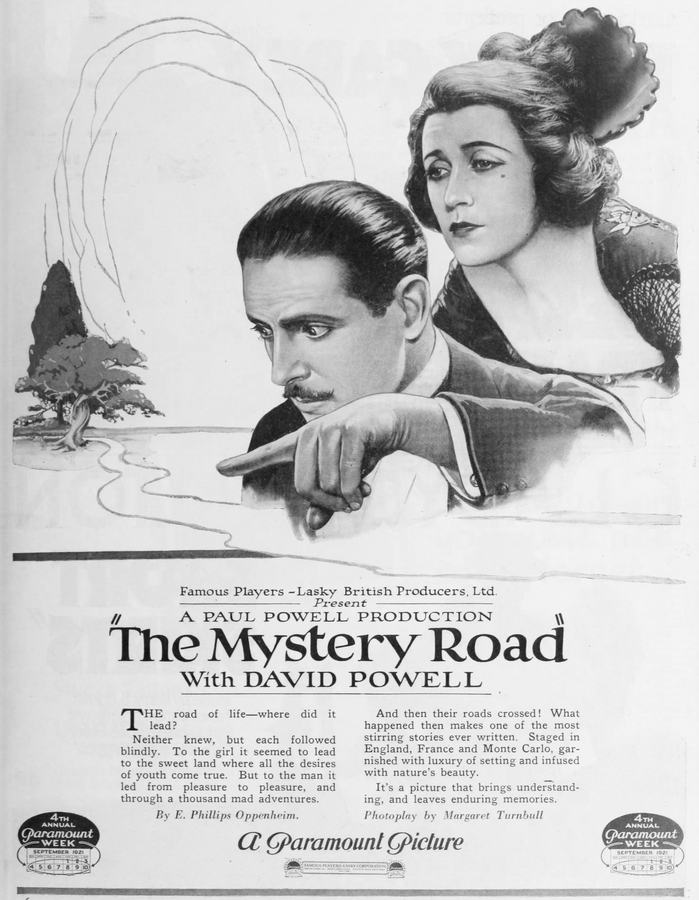
A definitive 6.6/10 rating for a film that redefined the boundaries of cult cinema. The Mystery Road remains a cornerstone of transgressive art.
The 1921 production of The Mystery Road, directed by Paul Powell, stands as a quintessential artifact of the post-Great War cinematic landscape. It is a film that refuses to offer the easy comforts of a traditional romance, choosing instead to inhabit the cold, cavernous halls of aristocratic indifference. Based on the prose of E. Phillips Oppenheim, the screenplay—penned by the formidable trio of Mary H. O'Connor, Margaret Turnbull, and Oppenheim himself—navigates the treacherous waters of class, desire, and the inevitable entropy that follows moral compromise. Unlike the more whimsical tone found in contemporary works like The Pretender, this film plunges into a visceral gloom that feels remarkably prescient for its time.
The visual language of the film is built upon a stark contrast between the rustic, almost pagan simplicity of the French countryside and the suffocating, upholstered rigidity of London high society. When David Powell’s Gerald wanders through France, the cinematography captures a sense of liberation that is ultimately deceptive. His encounter with the French peasant girl is framed not as a meeting of souls, but as a colonialist conquest of the heart. This sequence mirrors the thematic exploration of innocence lost found in Heart of Twenty, yet Powell’s direction imbues it with a much darker, more predatory undertone.
The transition back to England is jarring. The open skies of France are replaced by the heavy velvet curtains and shadow-drenched studies of the Bransome estate. Here, the film begins to dissect the 'Mystery Road' of the title—a metaphor for the unforeseen trajectories of our choices. While All Woman dealt with the strength of the feminine spirit in the face of adversity, The Mystery Road examines the corrosive nature of the masculine ego when it is left unchecked by social consequence.
David Powell delivers a performance of chilling restraint. He portrays Gerald not as a mustache-twirling villain, but as a man suffering from a profound spiritual vacuum. His infidelity is not born of malice, but of a terrifying boredom—a trait often explored in the silent era to critique the idle rich. In comparison to the more energetic protagonists of The Lightning Raider, Powell’s Gerald is a static figure, a black hole of charisma that consumes the lives of those around him.
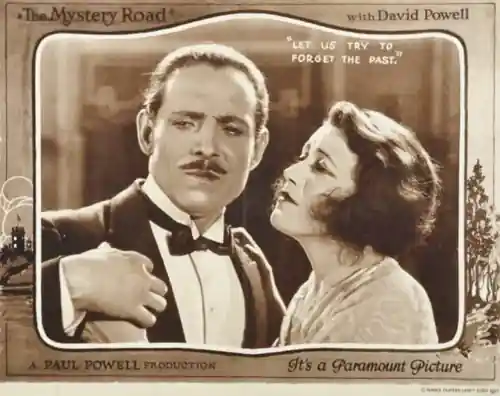
However, the emotional anchor of the film is undoubtedly Mary Glynne. Her portrayal of the English girl whose life is ultimately forfeit to Gerald’s whims is a masterclass in silent-era pathos. Her descent from hopeful affianced bride to a woman hollowed out by betrayal is captured in tight close-ups that emphasize the micro-expressions of grief. The tragedy of her suicide is handled with a sobriety that was rare for 1921, eschewing the melodramatic flourishes seen in Love Everlasting for a more grounded, devastating realism.
One cannot discuss The Mystery Road without acknowledging its place within the British film industry’s attempt to compete with the burgeoning Hollywood machine. Produced by Famous Players-Lasky British Producers, it possesses a certain gloss, yet it retains a distinctly European cynicism. The film suggests that the 'Mystery Road' is not just a personal journey but a societal one. The British class system, post-war, was a crumbling edifice, and Gerald represents the rot at the center. While Joan of Plattsburg offered a more patriotic or optimistic view of the era's social shifts, Powell’s film is an autopsy of a dying world.
The presence of actors like Ruby Miller and Percy Standing adds layers of complexity to the supporting cast. Miller, in particular, provides a sharp counterpoint to Glynne’s vulnerability, representing a more modern, perhaps more cynical, femininity that was starting to emerge in the 1920s. This dynamic is reminiscent of the character tensions in The Probation Wife, where the female lead must navigate a world designed by and for men.
Paul Powell’s direction is remarkably fluid for the period. He utilizes depth of field to create a sense of entrapment, often placing Gerald in the foreground while his victims linger in the soft-focus background, literalizing their status as afterthoughts in his life. The editing pacing is deliberate, allowing the emotional weight of each scene to settle before moving to the next. This is a far cry from the frenetic energy of international features like Maciste turista or the whimsical staginess of Passa il dramma a Lilliput.
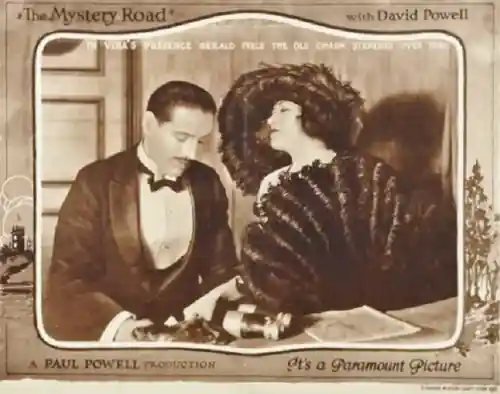
The use of light and shadow—pre-noir in its execution—heightens the sense of impending doom. The scenes leading up to the English girl's suicide are bathed in a low-key lighting that strips away the glamour of the aristocratic setting, revealing the cold, hard surfaces of the reality she can no longer inhabit. It is a visual triumph that aligns the film more closely with the psychological depth of La forza della coscienza than with the standard romantic fare of the time.
Ultimately, The Mystery Road is a film about the things we leave behind. Gerald’s trail of broken promises and shattered lives is a testament to a specific kind of high-society nihilism. The film doesn't offer a traditional redemption arc; instead, it leaves the viewer at a crossroads, much like the characters themselves. It shares a thematic kinship with För sin kärleks skull in its examination of sacrifice, though here the sacrifice is involuntary and tragic rather than noble.
As we look back at this 1921 gem, we see a bridge between the Victorian melodrama of the past and the psychological realism of the future. It is a sophisticated, albeit bleak, piece of cinema that demands attention for its uncompromising look at the darker side of human nature. Whether compared to the intrigue of Die Tophar-Mumie or the dramatic tension of La revanche, The Mystery Road carves out its own unique space as a haunting, beautifully shot, and deeply disturbing exploration of the human condition. It remains a vital watch for anyone interested in the evolution of narrative complexity in the silent era, proving that even a century ago, cinema was capable of probing the deepest, most uncomfortable recesses of the heart.
The legacy of such a work lies in its refusal to blink. In the final frames, the silence of the medium amplifies the scream of the narrative. The Mystery Road is not just a title; it is an invitation to witness the slow-motion car crash of an entire social class, documented with the precision of a surgeon and the soul of a poet. In the vast catalog of early 20th-century film, from the action-oriented Three X Gordon to the theatrical Footlights and Shadows, this film remains a singular, somber milestone.
IMDb —
1931
Community
Log in to comment.