DbcultAccessing Vault...
Cult Review
Senior Film Conservator
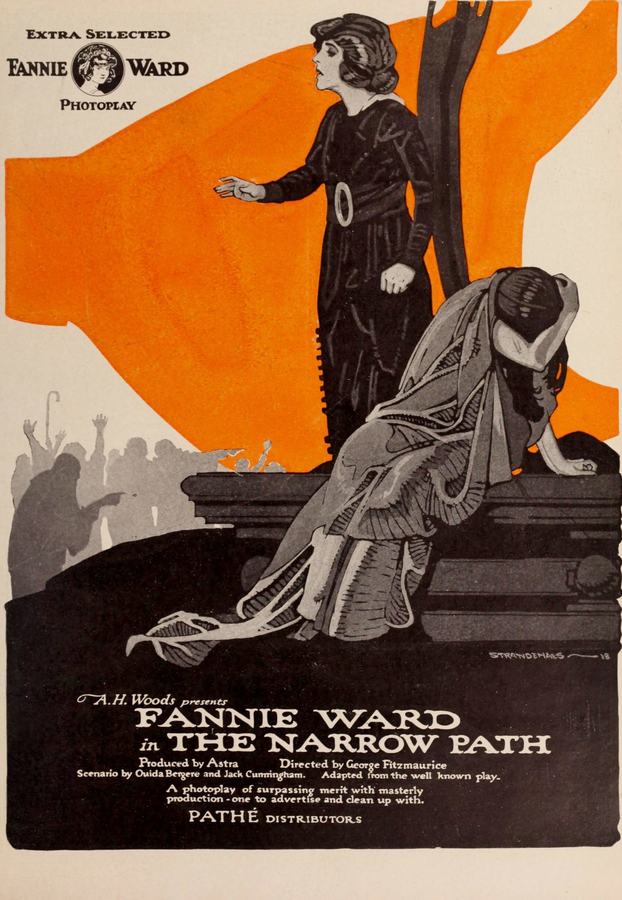
Marion Clark, portrayed with steely poise by Fannie Ward, presides over a modest nail salon that functions as a micro‑cosm of early‑twentieth‑century Manhattan. The clientele—well‑heeled yet morally lax gentlemen—drift in for superficial polish, their conversations a thin veneer over a deeper emptiness. Marion, however, is impervious to their charms, her gaze fixed on Dick Strong (W.E. Lawrence), a city editor whose integrity shines like a lighthouse amid the surrounding fog of decadence. Dick resides in the same boardinghouse as Marion, and their interactions are laced with a quiet, unspoken respect that hints at burgeoning affection.
Enter Gladys Strong (Irene Aldwyn), Dick’s younger sister, whose curiosity about the city’s wilder side propels her beyond the boardinghouse’s safe confines. She consents to accompany a fellow boarder to a flamboyant party, a decision that becomes the catalyst for the film’s central moral conflict. At the soirée, Gladys encounters Malcolm Dunn (Sam De Grasse), a suave yet dissolute businessman whose reputation for neglecting his wife, Margaret (Mary Alden), precedes him. The chemistry between Gladys and Malcolm ignites instantly, and their liaison, though fleeting, leaves an indelible mark on Gladys’s psyche.
When Gladys discovers she is pregnant, panic supplants the earlier thrill. She seeks refuge in Marion, whose maternal instincts surface despite her own personal reservations. Marion’s outrage at Malcolm’s callousness drives her to summon him to her apartment, unaware that Margaret has employed private detectives to monitor her husband’s indiscretions. The detectives, shadowing Malcolm, catch him in Marion’s modest quarters, a tableau that spirals into scandal.
Margaret, armed with evidence, files for divorce and names Marion as a co‑conspirator, thrusting Marion into a maelstrom of public censure. Yet, in a display of self‑sacrificial loyalty, Marion remains silent, protecting Gladys from societal ruin. The narrative tension crescendos as truth, like a relentless tide, eventually washes ashore, exonerating Marion and allowing her to claim the love she has long coveted—Dick’s.
The Narrow Path navigates a labyrinth of themes—class disparity, female agency, and the moral calculus of sacrifice. Marion’s salon, a liminal space where the affluent brush against the working class, underscores the film’s critique of superficial wealth. Her disdain for the men who frequent her shop is not merely personal preference; it is a repudiation of a society that values appearance over authenticity.
Gladys’s arc embodies the perilous allure of modernity. Her yearning for excitement mirrors the broader cultural shift of the 1910s, when women began to challenge prescribed domestic roles. The film does not romanticize her transgression; instead, it presents a nuanced portrait of a young woman caught between desire and duty.
Malcolm Dunn serves as the embodiment of unchecked capitalism—a man whose business acumen is eclipsed by personal irresponsibility. His neglect of Margaret and exploitation of Gladys illustrate the collateral damage of a patriarchal system that privileges profit over people.
Marion’s silence, a strategic act of protection, raises questions about the ethics of self‑effacement. Is her silence heroic or self‑destructive? The film leans toward heroism, rewarding her with Dick’s affection and societal vindication, yet it also invites contemplation about the cost of such martyrdom.
Fannie Ward infuses Marion with a blend of stoic resolve and underlying vulnerability. Her expressive eyes convey volumes in the absence of dialogue, a testament to the silent era’s reliance on physical nuance. Ward’s ability to oscillate between stern reproach and tender compassion anchors the film’s emotional core.
Irene Aldwyn’s portrayal of Gladys captures the restless spirit of a generation on the cusp of change. Aldwyn balances naiveté with a burgeoning assertiveness, making Gladys’s eventual downfall feel both inevitable and tragic.
Sam De Grasse delivers a compelling performance as Malcolm Dunn, his charismatic smile masking a predatory nature. De Grasse’s subtle gestures—an indulgent hand on a glass, a lingering glance—communicate his character’s duplicity without uttering a word.
Mary Alden, as Margaret, embodies dignified suffering. Her restrained anguish provides a counterpoint to Gladys’s impulsivity, highlighting the divergent paths women could be forced to tread.
The direction, guided by the collaborative pen of John Montague, Ouida Bergère, and Jack Cunningham, showcases an astute understanding of silent storytelling. The film employs chiaroscuro lighting to accentuate moral ambiguity; shadows linger around Malcolm’s scenes, while Marion is often bathed in soft, diffused light, symbolizing her moral clarity.
Set design meticulously recreates early‑20th‑century New York interiors, from the cramped elegance of Marion’s salon to the opulent decadence of the party venue. The contrast underscores the socioeconomic divide central to the narrative.
Intertitles are sparingly used, each crafted with a lyrical brevity that enhances rather than interrupts the visual flow. When they appear, they are rendered in a tasteful serif font, colored in golden yellow to draw the viewer’s eye without overwhelming the scene.
The film’s pacing is deliberate, allowing moments of tension to breathe. The climactic revelation—detectives confronting Malcolm in Marion’s apartment—is staged with a kinetic camera movement that heightens suspense, a technique reminiscent of later noir thrillers.
When positioned alongside contemporaneous works, The Narrow Path shares thematic DNA with Mohini Bhasmasur, which also interrogates the consequences of moral transgression within a mythic framework. Both films employ a central female protagonist whose agency challenges patriarchal expectations.
The moral quandaries echo those in Pençe, where personal sacrifice is weighed against societal judgment. However, The Narrow Path distinguishes itself through its urban setting and focus on class dynamics, whereas Pençe leans more toward rural allegory.
In terms of narrative structure, the film bears resemblance to The Last of the Carnabys, particularly in its use of a female protagonist as the moral compass amidst a sea of male decadence. Yet, The Narrow Path’s resolution—marriage as reward for virtue—aligns more closely with the conventional happy endings of early silent dramas, contrasting with the ambiguous conclusions of The Last of the Carnabys.
The film’s exploration of marital infidelity and its repercussions also parallels Blood Will Tell, though The Narrow Path opts for a more restrained, character‑driven approach rather than the sensationalist melodrama of its counterpart.
The Narrow Path arrives at a pivotal moment in cinematic history, when silent film was transitioning from mere spectacle to sophisticated narrative art. Its focus on female subjectivity anticipates later feminist film theory, positioning Marion as an early exemplar of the “strong female lead” archetype.
The film also reflects contemporary anxieties surrounding the rapid urbanization of America. The boardinghouse, a micro‑cosm of diverse social strata, serves as a narrative crucible where traditional values clash with modern temptations.
Moreover, the film’s treatment of divorce—a taboo subject in 1918—signals a daring willingness to confront social issues head‑on. Margaret’s legal action against Malcolm, and the subsequent naming of Marion, foregrounds the legal and moral complexities women faced when confronting marital betrayal.
Modern audiences, accustomed to rapid editing and dialogue‑driven exposition, may initially find the film’s measured tempo challenging. Yet, for connoisseurs of silent cinema, The Narrow Path offers a richly textured tableau of early twentieth‑century mores, rendered with visual elegance and narrative restraint.
Film scholars often cite The Narrow Path when discussing the evolution of female agency on screen. Its nuanced portrayal of Marion’s moral fortitude predates the more overt feminist narratives of the 1920s and 1930s, marking it as a seminal work in the lineage of women‑centered storytelling.
The film’s influence can be traced in later works that explore the intersection of class, gender, and morality, such as The Miner’s Curse and A Hungry Heart. While those titles diverge in setting and genre, they echo The Narrow Path’s core concern: the cost of personal integrity in a world that rewards vice.
The Narrow Path stands as a masterclass in silent‑era storytelling, marrying a compelling plot with layered character studies and a visual palette that accentuates its moral dichotomies. Fannie Ward’s commanding performance, coupled with deft direction and thoughtful production design, renders the film a timeless exploration of virtue, sacrifice, and the pursuit of authentic love.
For enthusiasts of classic cinema, the film offers a rewarding viewing experience that rewards patience and attentive observation. Its relevance endures, inviting contemporary viewers to reflect on the perennial tension between societal expectation and personal conscience.
IMDb 6.7
1919
Community
Log in to comment.