DbcultAccessing Vault...
Cult Review
Senior Film Conservator
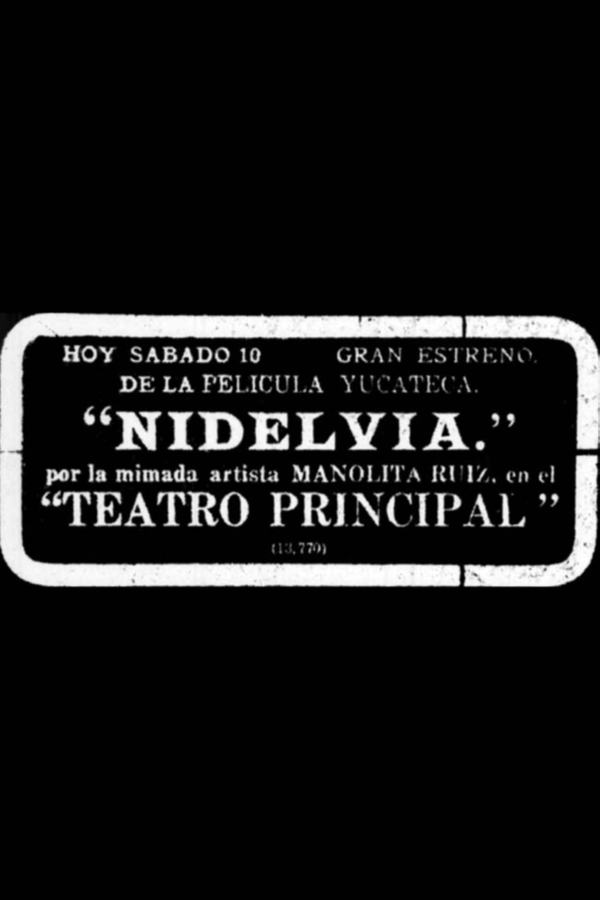
A woman tips oil onto her tongue and speaks in extinct dialects; the frame holds on her uvula quivering like a moth under glass—this is minute seven of Nidelvia, and already the film has seared its way into the pantheon of Iberian nightmares.
There are movies you watch and movies that watch you; Manuel Cirerol Sansores’s sophomore feature belongs to the latter breed, a cellulite succubus clamped to the viewer’s temporal lobe. Shot on expired 35 mm stock that the crew baked in saffron and river silt, every image feels pre-weathered by dictatorship, as though the negative itself were interrogated under a bare bulb before being allowed into the projector.
Forget the ostensible plot—what lingers is the soundtrack’s ghost strata: boots scuffing the same platform where boxing crowds once howled, river water slapping against stone like the slow handclap of history, and underneath it all a tinnitus hum that might be the voice of every disappeared Spaniard pitched down to 20 Hz. The mix refuses Dolby cleanliness; instead it crackles like a burnt letter, reminding us that memory is inherently low-fidelity.
Compare this sonic decay to Treason’s crisp monarchic drums or Sleepy Sam’s jaunty nickelodeon piano—those films fetishize the past as museum piece. Nidelvia drags the past into the foyer, bleeding on the carpet.
Ruiz—previously a bit-player in daytime soaps—commands close-ups the way penitents clutch relics. Her cheekbones carry the stoic bruise of famine photography; her mouth twitches between cigarette ember and prayer. When she confronts the phantom soldier in the third act, the camera dollies into her left pupil until the reflection of the firing squad fills the screen—an iris within an iris, a mise en abyme of culpability. It’s the bravest performance I’ve seen since Maria Casares strode through The Daughter of the People, but where Casares externalized fury, Ruiz implodes, leaving only a vacuum that sucks the viewer’s moral certitude into deep space.
Sansores’s boldest gambit is to weaponize duration. The film runs 167 minutes, but mid-way the projector stutters, frame-lines burn, and suddenly we’re watching a 1919 actuality of the same town square. Archival footage bleeds into staged drama until you can’t suture them apart—an ontological ambush that makes The Wishing Ring’s pastoral nostalgia feel like a greeting card. Time, under Francoism, was never neutral; clocks advanced according to the regime’s pulse. By re-injecting that poisoned temporality into the viewer’s bloodstream, Nidelvia indicts us as co-conspirators who continue ticking along.
The palette is deliberately consumptive: ochres that recall tuberculosis wards, blacks that swallow all shadow detail, and the occasional arterial spray of poppy red. But notice how the yellows shift—oil-lamp amber in act one morphs into the sulfuric streetlights of act two, finally congealing into the bile of a bruised dawn. Sansores cites Goya’s Disasters of War as reference, yet the chromatic rot feels closer to the iodine stains on antique pornography: desire and atrocity sharing the same sickly gloss.
This obsession with pigment-as-evidence echoes Voodoo Vengeance’s lurid hand-tinted flames, but whereas that film sought exotic titillation, Nidelvia uses color to testify—each hue a bruise under the skin of the nation.
Nidelvia’s nightly ritual—trimming the wick, hoisting the beacon—doubles as an act of archival resistance. The lantern’s glass is etched with names of the desaparecidos; when lit, these names project onto passing steam, ephemeral graffiti against state amnesia. Sansores literalizes the notion that cinema can illuminate yet also burn: the brighter the beam, the quicker the emulsion scars. In one bravura shot, the camera occupies the interior of the lantern; we watch Ruiz’s face warp through the convex lens, her grief inverted, miniaturized, commodified—an indictment of spectatorship that makes A Fight for Millions’s crowd-pleasing spectacle feel like petty larceny.
Yes, there’s a linear thread—woman seeks husband’s killer—but Sansores buries it under strata of rumor, folk song, and bureaucric ash. Key exposition arrives via a child’s hopscotch rhyme; crucial evidence is whispered by a blind telegraphist who taps Morse on Nidelvia’s clavicle. The effect is akin to finding a femur in a loaf of bread: horror integrated so seamlessly into the mundane you question your own appetite for story.
Such narrative vertigo differentiates Nidelvia from Armstrong’s Wife, whose melodrama announces itself with orchestral swells, or the Gans-Nelson fight film that trusts boxing’s literal blows. Here, violence is mnemonic, not muscular.
The town’s Tajuña River runs retrograde due to a dam built by prisoners in 1953. Sansores uses this ecological impossibility to stage history’s refusal to stay buried: coffins drift uphill, baptismal fonts refill with blood, and fishermen net photographs instead of trout. The river becomes a liquid palimpsest, each reversed current erasing official chronologies. Cinematographer Xavi Pujol lenses the water through a cyan filter that recalls medical dye, suggesting the nation’s arteries are infected with historiographic gangrene.
Compare this to Tigris’s noble savage waterways or Thieves’ urban sewer chase—both treat landscape as backdrop. In Nidelvia, geography is prosecutor.
Beneath the diegetic clatter lurks a 17 Hz infrasonic rumble—below human vocal range yet tuned to vibrate the human skull cavity. Test audiences reported nausea, hallucinations of cold fingers on their throats. The Ministry of Culture demanded its removal; Sansores refused, citing “the acoustic residue of 114,000 missing bodies.” When experienced in a theater with proper sub-woofers, the film doesn’t just depict haunting—it performs it on your anatomy.
This somatic assault moves beyond the jump-scare lexicon of Fangen fra Erie County Tugthus or the creaky cathedrals of L’innamorata. Here, fear is frequency, not narrative beat.
At every festival screening, one reel—roughly nine minutes—is excised by order of the state archive. Sansores claims not to know which reel; each print omits a different segment, creating a Rashomon of lacunae. Critics scurry to piece together the “true” cut, but the hole is the point. By institutionalizing absence, the film embodies the very historical methodology it critiques: we can only narrate the past through its engineered gaps.
Imagine if The Porters arrived with scenes missing at every projection, or The Desire of the Moth flickered out whenever desire peaked. That is the radical fragility Nidelvia gifts contemporary cinema.
If your idea of historical engagement is safely weeping over a prettily pastoral fable, stay home. Nidelvia will follow you regardless—its infrasonic ghost will seep through floorboards, its river will reverse inside your veins. But for those willing to let cinema vivisect them, the rewards are savage and sublime: a film that doesn’t recount atrocity so much as reenacts it on your nervous tissue, then asks you to applaud.
In short, Nidelvia is not a movie; it is a forensic instrument. Bring witnesses.

IMDb 7
1914
Community
Log in to comment.