DbcultAccessing Vault...
Cult Review
Senior Film Conservator
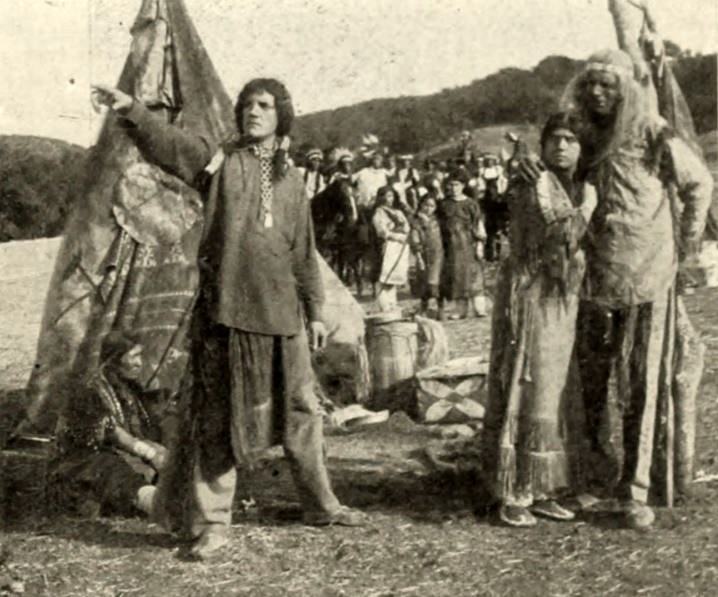
In the pantheon of early American cinema, few narratives capture the atavistic terror and subsequent existential drift of the frontier experience as poignantly as The Redemption of White Hawk. This is not merely a tale of abduction and rescue; it is a sophisticated exploration of the malleability of the human spirit when subjected to the crucible of survival. The opening sequence, a masterclass in silent-era tension, depicts the obliteration of a family unit with a starkness that rivals the later gritty realism of The Story of the Kelly Gang. Here, the wagon is not just a vehicle but a fragile vessel of Western domesticity, shattered against the immovable force of a displaced populace.
The brilliance of the film lies in its refusal to offer a simplistic moral binary. When the young boy is spirited away into the wilderness, the camera lingers on the receding horizon, signifying the death of his former self. His transformation into White Hawk is treated not as a corruption, but as a total psychological rebirth. Unlike the biblical overtones found in The Life of Moses, where destiny is preordained by divinity, White Hawk’s path is forged in the dirt and the blood of the plains. He becomes a leader not through birthright, but through the rigorous demands of tribal meritocracy.
Parallel to the boy’s ascension in the wild is the sister’s maturation within the confines of the military fort. If White Hawk represents the expansive, albeit dangerous, freedom of the untamed, his sister embodies the stifling constraints of Victorian expectation. Her life is a series of curated interactions, a domestic drama that echoes the gothic isolation of Jane Eyre. The soldiers who 'rescue' her are depicted as both protectors and jailers, molding her into a symbol of the very civilization that her brother now challenges.
The cinematic language used to contrast these two lives is startlingly advanced for its time. The director utilizes wide, sweeping shots for the Indigenous encampments—evoking a sense of communal belonging and environmental harmony—while the fort is captured in tighter, more claustrophobic frames. This visual dichotomy prepares the audience for the inevitable friction of their reunion. It is a collision of two distinct philosophies of being, one rooted in the land and the other in the law.
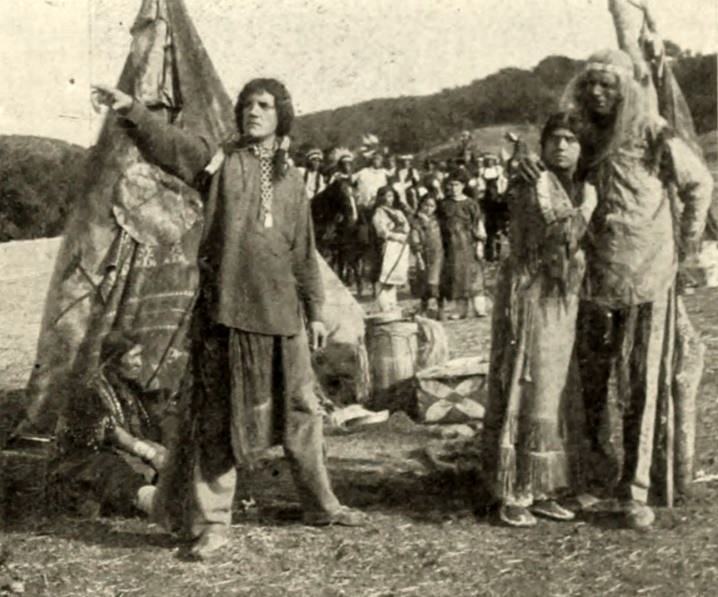
The centerpiece of the film—the capture of the sister by White Hawk’s raiding party—is a sequence of agonizing dramatic irony. The recognition is not instantaneous; it is a slow, painful dawning of truth that transcends language. As White Hawk stares into the eyes of his captive, we see the flicker of a suppressed history. This is not the joyous reunion of a melodrama but a tragic realization that they are now irreconcilable enemies. The lexical diversity of the performances, communicated through subtle shifts in posture and gaze, conveys more than any title card ever could.
One cannot help but compare this thematic weight to the epic struggles depicted in Defense of Sevastopol, yet 'The Redemption of White Hawk' feels more intimate, more personal. The war here is not for territory, but for the soul of the individual. When the sister is eventually 'returned' to her world, the film takes a daring turn. Rather than the brother being 'civilized' and brought back into the fold, he consciously chooses to remain White Hawk. This subversion of the 'prodigal son' trope, which we see played out more traditionally in The Prodigal Son, marks the film as a work of significant intellectual bravery.
Technically, the film is a marvel of its era. The use of natural light during the twilight sequences creates an ethereal, almost purgatorial atmosphere, suggesting that these characters exist in a liminal space between two worlds. The costume design is equally meticulous, serving as a visual shorthand for the characters' internal states. White Hawk’s regalia is not presented as a costume but as an extension of his authority, while the sister’s lace-heavy attire emphasizes her fragility and the performative nature of her 'civilized' identity.
The editing pace during the attack scenes is frenetic, mirroring the chaotic energy of a struggle for life, reminiscent of the raw physicality found in Jeffries-Johnson World's Championship Boxing Contest. However, the film knows when to breathe. The long takes during the brother and sister's silent confrontation allow the emotional gravity of the situation to settle, forcing the viewer to confront the uncomfortable truth that some bonds, once severed, can never be re-fused.
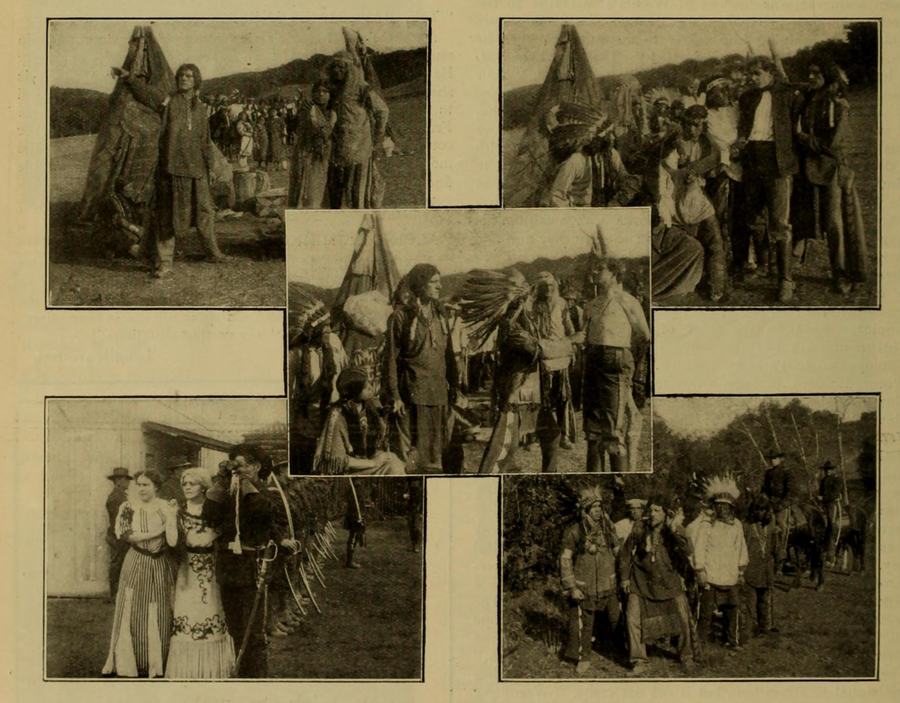
In the final act, the sister’s marriage to the lieutenant is presented with a somber air. It is a union of convenience and safety, a retreat into the predictable structures of her society. Meanwhile, White Hawk’s return to his tribe is depicted with a sense of grim dignity. He is 'redeemed' not by returning to his white origins, but by honoring the life he has built and the people who truly claim him. This nuanced take on 'redemption' is far removed from the religious fervor of From the Manger to the Cross; it is a secular, cultural redemption that prioritizes lived experience over biological heritage.
The film stands as a precursor to the revisionist Westerns that would emerge decades later. It challenges the viewer to look beyond the surface of the 'captive' narrative and see the complex human beings caught in the gears of history. Like the documentary-style realism of Westinghouse Works, it captures a specific moment in time—not just the historical setting, but the burgeoning maturity of cinema as an art form capable of handling profound psychological depth.
Ultimately, The Redemption of White Hawk is a haunting meditation on the permanence of change. It suggests that our identities are not fixed at birth but are fluid, shaped by the landscapes we inhabit and the communities that embrace us. The tragedy is not that the siblings are separated, but that they can no longer recognize the shared world they once inhabited. It is a masterpiece of silent cinema that resonates with a startlingly modern understanding of the fractured self.
IMDb 7.1
1929
Community
Log in to comment.