DbcultAccessing Vault...
5.4/10
Senior Film Conservator
A definitive 5.4/10 rating for a film that redefined the boundaries of cult cinema. The New Exploits of Elaine remains a cornerstone of transgressive art.
There’s an undeniable, almost magnetic allure to the early cinematic serials, a unique form of storytelling that captivated audiences with its weekly doses of peril and promise. Among these, 'The New Exploits of Elaine' stands as a towering example, a relentless rollercoaster of intrigue, scientific marvel, and sheer human grit. Released in the nascent days of feature-length storytelling, this ten-part saga plunges viewers into a world where vast fortunes hide in secret passages, where cunning villains orchestrate elaborate traps, and where the line between scientific ingenuity and sheer luck blurs under the relentless pressure of life-or-death stakes.
At its heart is Miss Elaine Dodge, portrayed with an electrifying blend of vulnerability and steely resolve by the incomparable Pearl White. Elaine is no damsel in distress; rather, she is a woman thrust into an incessant maelstrom, her very existence threatened by the shadowy legacy of her murdered father, Taylor Dodge, and the hidden millions of the late Perry Bennett. Bennett, a man of aliases including the notorious 'Clutching Hand,' had confided the location of his immense fortune to the enigmatic Long Sin, a Chinese adventurer whose sinister machinations set the initial tone of dread.
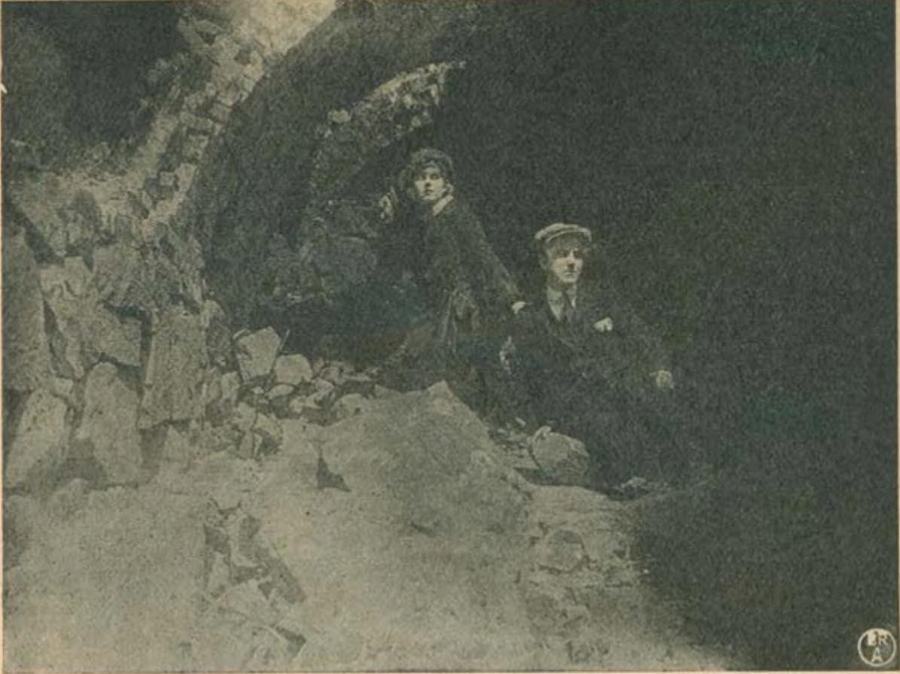
The narrative’s genesis is suitably gothic and mysterious. Strange noises haunt Aunt Tabby’s house, a property formerly owned by Bennett. While Aunt Tabby attributes these disturbances to spectral presences, Elaine, a veteran of countless close calls, instinctively recognizes a more terrestrial threat. Her immediate recourse is to Craig Kennedy, the scientific detective whose reputation, burnished by his apprehension of the 'Clutching Hand,' precedes him. Arnold Daly brings Kennedy to life with a cerebral intensity, presenting a hero who wields intellect and nascent forensic science as his primary weapons. Kennedy's sharp eye, poring over Bennett’s papers, quickly discerns a structural anomaly, a blueprint mirroring Aunt Tabby’s fireplace. This leads to the discovery of a secret passageway, a classic serial trope that never fails to thrill. Descending into its depths, Kennedy and his assistant, Jameson, are promptly overcome by gas, a close call orchestrated by Long Sin, who emerges from a cave in the adjoining woods. It is Elaine, ever vigilant, ever courageous, who descends into the noxious fumes, finding her protectors on the brink of death, a safe embedded in the rock already breached, and the malevolent Long Sin poised with a murderous knife. Her desperate struggle with the 'heathen' – a term reflecting the era’s unfortunately prevalent racial caricatures – saves them, though the earth seems to crumble beneath her, leaving the audience breathless, a masterclass in the art of the cliffhanger.
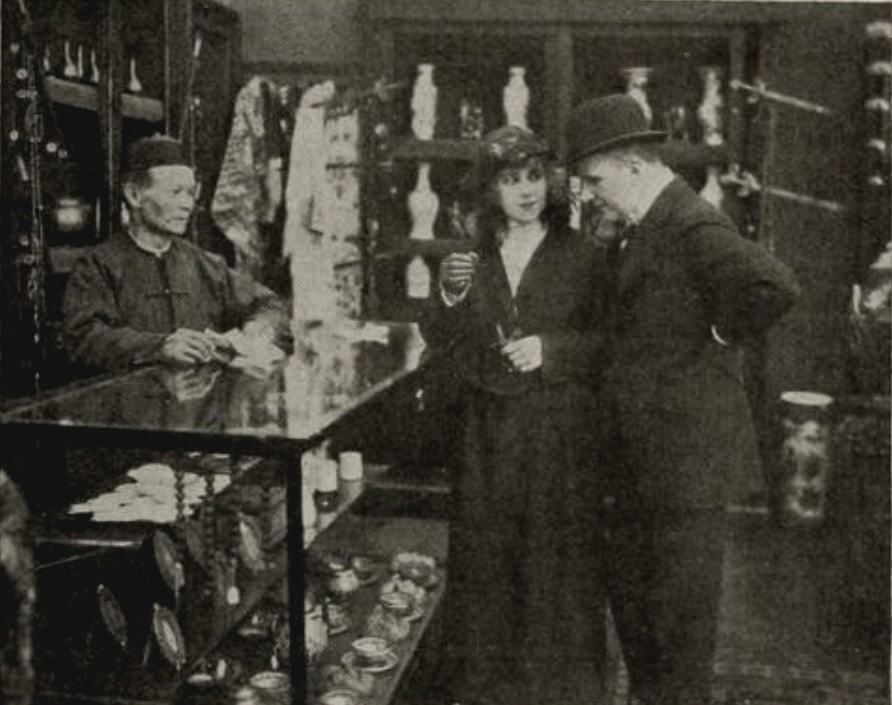
The intrigue deepens with the introduction of a cryptic ring, an ostensibly innocuous purchase by Elaine, but one that soon reveals itself as the pivotal key to Bennett's hidden fortune. This ring, stolen from Wu Fang, transforms Elaine into an unwitting target of this desperate criminal mastermind, portrayed with chilling intensity by M.W. Rale. Wu Fang's obsession with the ring is absolute, driving him to commit murder without compunction. His initial attempt to reclaim it involves luring Elaine to his rooms, an encounter from which she is only snatched by the timely, daredevil arrival of Kennedy. The subsequent escape, a breathtaking tightrope walk across a yawning chasm between skyscrapers, followed by Wu Fang severing the cable as Kennedy pursues, is a testament to the era's innovative stunt work and the sheer audacity of its cinematic vision. Kennedy's survival, a necessity for the unfolding drama, leaves Elaine holding the mysterious ring, its immense value still unknown to her, a ticking time bomb in her possession.
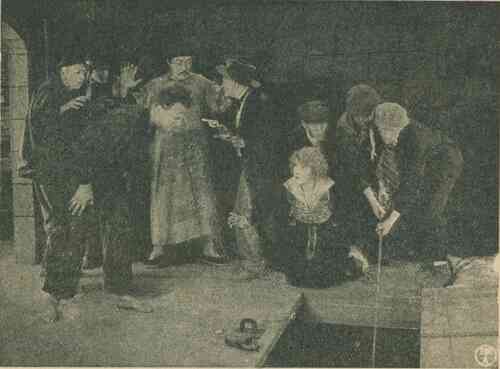
Wu Fang and Long Sin collectively present an opposition worthy of Kennedy's formidable intellect. When Elaine is kidnapped, a note from her, hidden within a massive vase sent to Aunt Josephine, instructs Kennedy to deliver the cryptic ring to a specific location. Kennedy, ever the strategist, attempts to outwit the 'crafty Chinamen' by forging a counterfeit ring. However, the 'watching eye' of Wu Fang, peering from the vase itself, proves his plans blighted. The subsequent attempt to barter the fake ring for Elaine's freedom sees Kennedy outmaneuvered and barely escaping with his life, though the genuine ring, in Wu Fang's hands, proves the 'Open Sesame' to Bennett's underground treasure vault. This is a bitter victory, however, overshadowed by Elaine's uncertain fate. This relentless back-and-forth, the constant one-upmanship between hero and villain, is a hallmark of the serial format, keeping audiences on the edge of their seats, much like other adventure serials of the era such as The Whirl of Life.
The villainy of Wu Fang escalates to truly fiendish levels. In an act of psychological torment, he releases Elaine, not with an injury, but with a promise of a slower, more agonizing punishment: the systematic death of her dearest friends, leaving her to live in perpetual dread. His method is as insidious as it is ingenious: an African Tick, whose bite promises a lingering, fatal fever, planted in Kennedy's phone receiver. Both Jameson and Kennedy are infected, succumbing to the malignant fever. A specialist, recognizing the symptoms, prepares the only known antidote. But Wu Fang, ever watchful, intercepts the message for a nurse, dispatching a woman of the underworld, 'Weepy Mary,' to poison the medical instruments. Elaine, arriving at Kennedy's apartment, immediately recognizes the criminal in disguise, denouncing her and foiling Wu Fang's diabolical plot once more. Her installation as nurse underscores her unwavering dedication and pivotal role, not merely as a victim, but as an active participant in her own, and her protectors', salvation.
The stakes are raised further with the introduction of aerial threats. A new ally of Wu Fang, an aviator, circles Kennedy's house in a plane, carrying a bomb of Trodite, a powerful new explosive. The target: a painted circle on Kennedy's roof. Kennedy, ever prescient, is aware of the stolen Trodite and the designated target. In a brilliant display of counter-espionage and scientific cunning, he and Jameson scrub off their own roof's circle and paint a duplicate on a neighboring building, where one of Wu Fang's henchmen spies on them. The ensuing detonation, a startling white flash, obliterates the wrong target, mixing the fragments of a house with the fragments of a Chinaman, leaving Kennedy shaken but unscathed. The subsequent aerial duel, a gun specially constructed to bring down the terror of the skies, culminating in the plane's fluttering, wounded descent, is a spectacle of early special effects and a testament to the serial's commitment to grand, awe-inspiring incidents. Such inventive action sequences would have been groundbreaking for audiences familiar with more theatrical productions like Ivanhoe or The Merchant of Venice, pushing the boundaries of what cinema could achieve.
Wu Fang's constant failures only fuel his persistence, his enormous wealth enabling ever more elaborate and fiendish schemes. His latest plot involves a corrupt young girl, orchestrated to stage a fake attack outside Elaine's window, eliciting sympathy from Elaine and her aunt, who take her into their service. This seemingly innocent act is a prelude to a deadly trap: a trick chair rigged with spontaneous combustion chemicals, designed to burn its occupant to death. The chair is delivered to the Dodge home, intended for Elaine as she selects dresses for charity. Meanwhile, Kennedy, disguised as a 'heathen,' infiltrates Wu Fang's hideout. The tension here is palpable, as Kennedy's cunning is pitted against Wu Fang's craftiness, a desperate race against time to rescue Elaine from a truly frightful end. The screen, as the original synopsis suggests, captures this struggle with a vividness that transcends mere words, showcasing the narrative prowess of writers Charles W. Goddard, Basil Dickey, and Arthur B. Reeve.
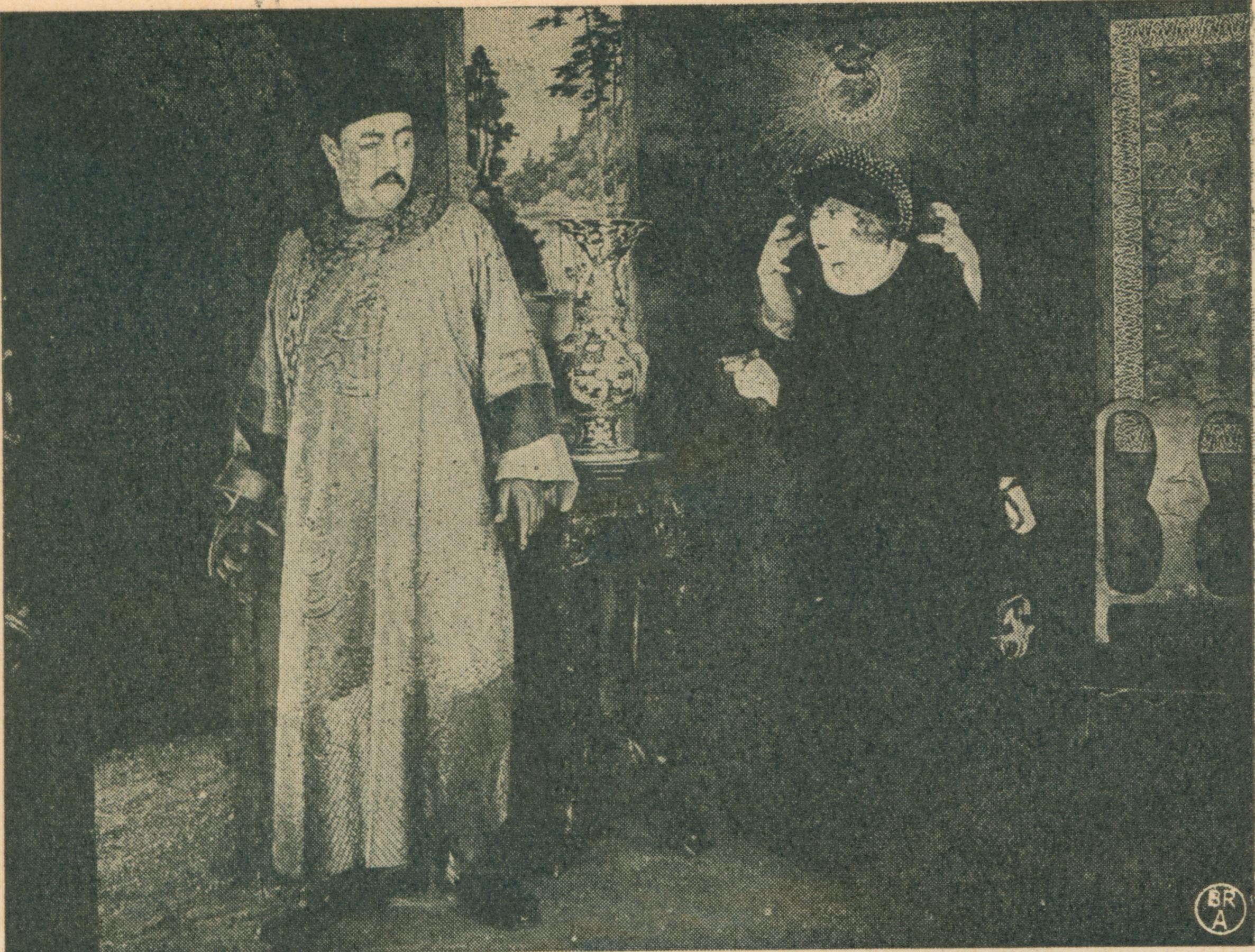
The cat-and-mouse game continues with 'The Ear in the Wall.' Wu Fang, recognizing Elaine's sharp wit, sends her a box of roses – half white, half red – with a chilling note demanding she choose who dies first: Kennedy or Aunt Josephine. Elaine's terror is palpable, but Kennedy, unbeknownst to her, flashes the red roses in the window, signaling his life as the first target. Wu Fang's deadly machinery is set in motion. Kennedy, anticipating an ingenious attack, sprays his hall-mat with a fluid that photographs footsteps. Wu Fang, using a detectaphone wired between Kennedy's room and his cellar lair, overhears police instructions for a raid on Long Sin and 'Innocent Inez.' He communicates with Long Sin, foiling the police. Kennedy, realizing his instructions were overheard, uses a galvaniscope to detect the wiring, knowing Wu Fang is listening nearby. The episode's true grip lies in Kennedy's ability to turn the tables, outwitting the wily Oriental at his own game, a testament to the power of scientific observation and deduction that places Kennedy firmly in the pantheon of early cinematic detectives alongside characters found in films like Skottet.
International intrigue takes center stage in 'The Opium Smugglers.' Wu Fang kidnaps Elaine's chauffeur, replacing him with a henchman. Kennedy, disguised, searches Chinatown for Wu Fang, encountering Captain Brainerd of the U.S. Secret Service, who is tracking opium smugglers. Kennedy's keen eye identifies an opium joint, leading them to a dingy apartment where they overpower three Chinamen receiving messages via carrier pigeons from a tramp sloop. They learn the sloop's location and set out in a revenue cutter. Meanwhile, Wu Fang, through his disguised chauffeur, kidnaps Elaine, intending to ship her to Shanghai for sale. The opium is unloaded, Elaine carried aboard. A sharp fight ensues as Kennedy, Brainerd, and Jameson capture the opium guards, load the contraband, and pursue the smuggler's ship. Elaine, resourceful even in captivity, uses a wireless telephone provided by Kennedy and flashes a lantern from the porthole. She flees her guard, climbing a rope ladder to the topmast, her pursuer, knife in teeth, close behind. A daring leap into the dark waters, a desperate race for life, with the Chinaman gaining at every stroke. Just as he is about to strike, a shot from the revenue cutter fells him. Elaine is rescued, the ship captured – a thrilling display of high-seas adventure and daring rescue.
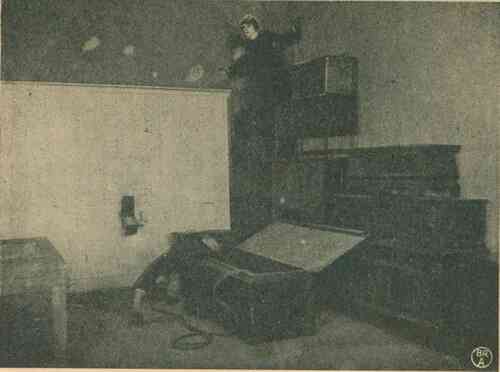
The psychological aspect of villainy is explored in 'The Tell-Tale Heart.' Jameson follows 'Innocent Inez,' one of Wu Fang's confederates, to her apartment. A hidden iron bar incapacitates him. Inez then sends a gypsy to Elaine to tell her fortune, binding her eyes with a handkerchief containing a vial of radium, intended to blind her within three minutes. Kennedy, forewarned of Jameson's destination, follows and is assaulted similarly but is saved by Jameson's fallen glove, which draws his attention away from the murderous bar. Inez is overpowered, Jameson found. A phone message from Wu Fang reveals Elaine's peril, prompting Kennedy and Jameson to rush to the Dodge home. They find relief in Elaine’s quick thinking: she substituted her own handkerchief for the poisoned one. Inez is then subjected to Kennedy's scientific method: a sphygmograph applied while Kennedy recites Chinatown house numbers. The theory: Wu Fang's address will cause a quicker pulse. Indeed, it does, but Wu Fang, ever cunning, stages a sensational rescue of Inez. Despite this, Kennedy now 'has his number,' setting the stage for the final, thrilling episodes.
The serial culminates in 'Shadows of War,' where Wu Fang's schemes take on international significance. Secret agents commission him to acquire Craig Kennedy's model torpedo, a vital government asset. Kennedy, aware of Wu Fang's hiding place, captures him through remarkable strategy. Wu Fang, wounded, substitutes another Oriental in his place at the hospital and escapes, meeting his henchman returning with the stolen torpedo model from Washington. The only other model is in Kennedy's possession, demonstrated in the Dodge Conservatory. A momentary distraction allows Wu Fang's lieutenant to steal it, but he is seen by the butler. In the ensuing chase, the lieutenant hides the model in a flower-pot before escaping wounded. Kennedy commandeers another car, giving chase. The enthralling game of wits reaches its crescendo, culminating in Wu Fang's death. However, the whereabouts of Kennedy become a matter of serious conjecture, leaving the audience with a tantalizing, unresolved question, a perfect denouement for a serial designed to keep audiences guessing until the very last frame.
The performances across the board are crucial to the serial's success. Pearl White, as Elaine, delivers a performance that cemented her status as a queen of the cliffhangers. Her athleticism and emotional range were vital in making Elaine a believable, inspiring figure for early cinema audiences. Arnold Daly's portrayal of Craig Kennedy established the archetype of the scientific detective, a character who relied on logic and emerging technologies rather than brute force. His calm demeanor contrasted effectively with the frenetic pace of the plots. M.W. Rale, as Wu Fang, created a memorable villain, whose cunning and relentless pursuit of his goals drove the entire narrative. The supporting cast, including Bessie Wharton, Edwin Arden, Ah Ling Foo, Howard Cody, Creighton Hale, and Gazelle Marche, contributed to the rich tapestry of characters that populated Elaine's perilous world.
The writing team of Charles W. Goddard, Basil Dickey, and Arthur B. Reeve crafted a narrative that, despite its episodic nature, maintained a remarkable degree of coherence and escalating tension. Their ability to introduce new threats, build on previous plot points, and consistently deliver thrilling cliffhangers was key to the serial's enduring appeal. 'The New Exploits of Elaine' is more than just a historical curiosity; it is a foundational text in the development of action-adventure cinema, demonstrating how compelling characters, imaginative plots, and a relentless pace could captivate audiences week after week. It's a testament to the ingenuity of early filmmakers and storytellers who, with limited technology, managed to create narratives that still resonate with thrill and excitement, a powerful reminder of cinema's earliest, most audacious experiments in serialized storytelling.
IMDb —
1917
Community
Log in to comment.