DbcultAccessing Vault...
Cult Review
Senior Film Conservator
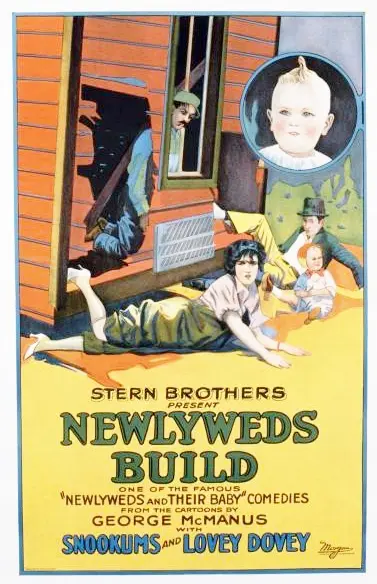
Is The Newlyweds Build worth watching today? Short answer: yes, absolutely, especially if you possess an appreciation for the foundational artistry of silent-era slapstick and the enduring humor of domestic disaster. This film is a delightful, if fleeting, glimpse into a comedic style that laid the groundwork for generations of laughter.
It’s a film tailor-made for silent comedy enthusiasts, film historians, and anyone seeking a dose of unadulterated, innocent mirth. Conversely, those who demand complex narratives, sophisticated dialogue, or modern production values will likely find its charms too simplistic, perhaps even quaint to a fault.
Let's cut to the chase. Understanding a film like The Newlyweds Build requires a specific lens, one that appreciates the era it sprang from. It works. But it’s flawed. It’s a product of its time, and its time was one of raw, unpolished comedic genius.
This film works because of its relentless commitment to visual gags and the undeniable chemistry between its leads, particularly Sunny Jim McKeen’s physical comedy.
This film fails because its narrative, while serving its comedic purpose, is inherently thin and offers little beyond the immediate laughs, which can feel repetitive to modern viewers.
You should watch it if you cherish silent films, appreciate the craft of physical comedy, and enjoy a story that prioritizes a good chuckle over deep meaning.
The premise of The Newlyweds Build is disarmingly simple, a perfect canvas for the broad strokes of silent comedy. We're introduced to our titular couple, brimming with the kind of wide-eyed optimism only found in cinematic newlyweds. Their decision to construct their own marital home isn't just a plot device; it's a symbolic declaration of their independence and burgeoning shared life.
Yet, this noble ambition quickly becomes their comedic undoing. The film smartly understands that the humor lies in the disconnect between their high hopes and their utter lack of practical skill. Every nail hammered awry, every plank sawn unevenly, is a small comedic tragedy. The house, rather than becoming a symbol of their unity, transforms into a chaotic battleground of their incompetence.
The introduction of a well-meaning but bumbling friend, likely Syd Saylor in such a role, serves to amplify the chaos. This isn't just about personal failure; it's about the inherent absurdity of collective human endeavor when faced with tasks beyond one's grasp. The plot, while straightforward, is perfectly paced to build from minor mishaps to full-blown structural pandemonium, culminating in a crescendo of comedic collapse.
The success of any silent comedy hinges almost entirely on the physical expressiveness and timing of its performers. The Newlyweds Build is no exception, relying heavily on the talents of Sunny Jim McKeen, Ethlyne Clair, and Syd Saylor to convey emotion and drive the humor without a single spoken word.
Sunny Jim McKeen, with his distinctive physicality and knack for exaggerated reactions, is the comedic anchor. He embodies the hapless husband with a contagious blend of enthusiasm and exasperation. His attempts to wield a hammer or saw a plank are masterclasses in controlled chaos, each movement telegraphing his character's growing frustration and eventual surrender to the inevitable. One particular sequence, where he attempts to balance on a rickety ladder while simultaneously holding a beam, showcases his remarkable ability to milk every ounce of humor from a precarious situation. It’s pure, unadulterated physical comedy at its finest.
Ethlyne Clair, as the newlywed wife, provides an essential counterpoint. Her reactions often ground the more outlandish gags, offering a relatable perspective of bewildered charm turning into exasperated amusement. She's not just a damsel in distress; she's an active participant in the chaos, often initiating her own minor mishaps or reacting to Sunny Jim's with a perfectly timed eye-roll or flailing gesture. Her attempts to mix cement, resulting in a comical splattering that covers her from head to toe, is a memorable moment that highlights her willingness to embrace the messy side of comedy.
Syd Saylor, likely cast as the well-meaning but ultimately destructive friend, adds another layer of comedic texture. Saylor's signature style, often characterized by a mischievous grin and a penchant for accidentally making things worse, would have been perfectly suited for this role. Imagine him 'helping' to hold a wall, only for his foot to slip, sending the entire structure toppling. His presence elevates the domestic comedy into a more ensemble-driven farce, proving that sometimes, the best intentions pave the road to comedic hell.
The direction in The Newlyweds Build, while uncredited beyond the writer George McManus, is clearly focused on maximizing the comedic potential of every frame. The camera serves as a silent observer, allowing the physical comedy to unfold naturally, yet with a precise understanding of comedic timing. There are no fancy camera movements or avant-garde techniques here; the strength lies in clear staging and effective framing.
One can almost visualize the director’s emphasis on wide shots to capture the full scope of the domestic destruction, allowing the audience to witness the entire comedic tableau. Close-ups would have been sparingly used, reserved perhaps for a particularly exaggerated facial expression from Sunny Jim or a look of utter despair from Ethlyne Clair. The visual gags are paramount, and the direction ensures they are delivered with punch and clarity.
The cinematography, typical of the era, is straightforward but effective. Lighting would have been functional, designed to illuminate the action without distraction. The black and white palette, far from being a limitation, enhances the stark simplicity of the gags, making the collapsing walls and flying tools even more impactful. It's a testament to the filmmakers' understanding that sometimes, less is more, especially when your primary goal is to make people laugh.
The pacing of The Newlyweds Build is precisely what one would expect from a silent comedy short: brisk, relentless, and building towards a crescendo of chaos. It doesn't waste time on exposition; it dives straight into the premise and then accelerates through a series of escalating mishaps. Each failed attempt at construction serves as a beat in a comedic rhythm, pushing the narrative forward with an almost musical quality.
The tone is consistently lighthearted and farcical. There's no underlying drama or dark subtext; it's pure, unadulterated escapism. Even when the characters are at their most frustrated, the film never loses its cheerful disposition. This unwavering commitment to a comedic tone ensures that the audience remains engaged and entertained, knowing that every setback is merely a setup for the next laugh. It’s a testament to the power of pure, unpretentious entertainment.
Compared to more dramatic silent features like Number 13 or even adventure serials like The Yankee Girl, The Newlyweds Build operates in a completely different register. It’s a sprint, not a marathon, designed to deliver maximum laughs in a compact timeframe. This focused approach is its strength, preventing the gags from overstaying their welcome and maintaining a high energy level throughout.
Absolutely, yes. The Newlyweds Build is worth watching if you approach it with the right expectations. It's a historical artifact of comedy, showcasing the raw talent and ingenuity of early filmmakers. It offers genuine laughs. The physical comedy is timeless. It serves as a reminder of how much humor can be conveyed without dialogue. For those interested in the evolution of cinematic comedy, it’s an essential watch. It provides a foundational understanding of slapstick that influenced everyone from Buster Keaton to modern animated shorts. It's short, sweet, and genuinely funny.
What strikes me as particularly fascinating about The Newlyweds Build is its subtle commentary on societal expectations. At a time when homeownership was a cornerstone of the American dream, this film playfully skewers the idealized image of domestic bliss. It suggests that even the most wholesome aspirations can lead to utter chaos, and that perhaps, some tasks are best left to professionals. It's an unconventional observation for a film that seems so straightforwardly comedic.
The film doesn't preach or moralize; it simply presents the absurd reality of two well-meaning individuals completely out of their depth. It’s a surprisingly relatable scenario, even a century later, as countless DIY projects still end in disaster. This underlying current of realism, however exaggerated, gives the film a quiet resonance beyond its immediate laughs. It’s not just about a collapsing house; it’s about the collapsing illusion of effortless domesticity.
The Newlyweds Build is more than just a relic; it’s a vibrant, entertaining piece of silent film history that delivers exactly what it promises: pure, unadulterated comedic chaos. It’s a testament to the enduring appeal of slapstick, proving that a well-timed pratfall or a collapsing wall can elicit laughter across generations. While it won't challenge your intellect or stir profound emotions, it will undoubtedly put a smile on your face. For those willing to embrace its vintage charm, it offers a thoroughly enjoyable, if structurally unsound, experience. Go watch it. Just don’t get any DIY ideas.

IMDb —
1924
Community
Log in to comment.