DbcultAccessing Vault...
Cult Review
Senior Film Conservator
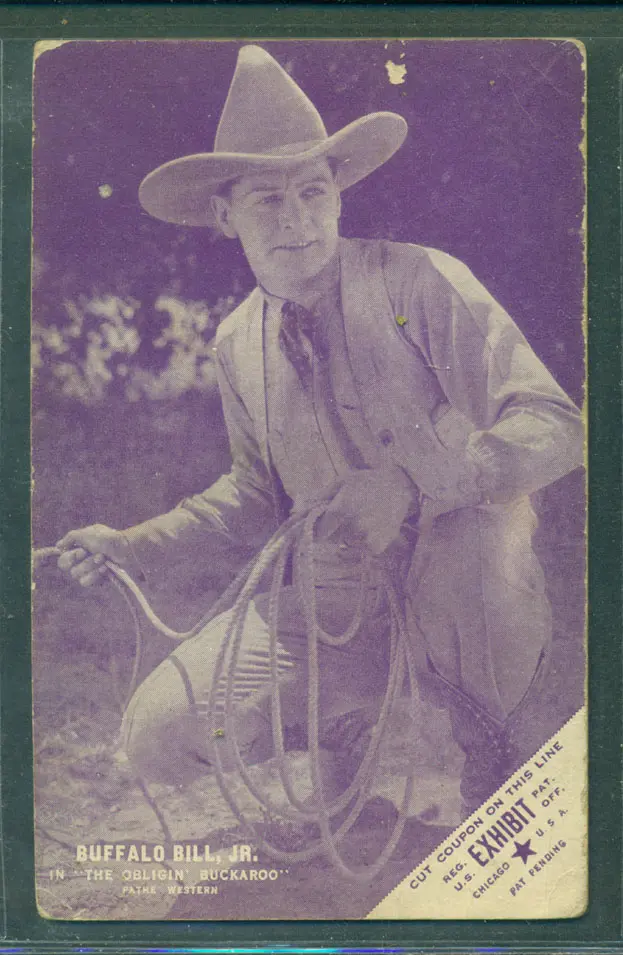
The Obligin' Buckaroo, a minor entry from the silent Western boom, is not a film for casual viewing. It’s an acquired taste, perhaps even a chore, unless you possess a genuine, almost academic, interest in the rudimentary mechanics of early genre filmmaking.
This picture caters squarely to archivists, dedicated silent film buffs, and those seeking to trace the very first iterations of Western tropes. For anyone else expecting narrative sophistication, engaging character arcs, or even consistent visual polish, it will likely prove a test of patience, offering little beyond its historical footnote status.
It delivers a straightforward conflict with brisk pacing characteristic of its era, moving from setup to resolution without much dawdling. The core premise of a helpful hero remains appealing.
Its dramatic stakes are paper-thin, characters are broadly sketched archetypes, and the technical execution rarely rises above functional, making emotional investment nearly impossible.
You’re a student of early American cinema, specifically the Western genre, and want to see how these stories were first assembled. Otherwise, direct your attention elsewhere.
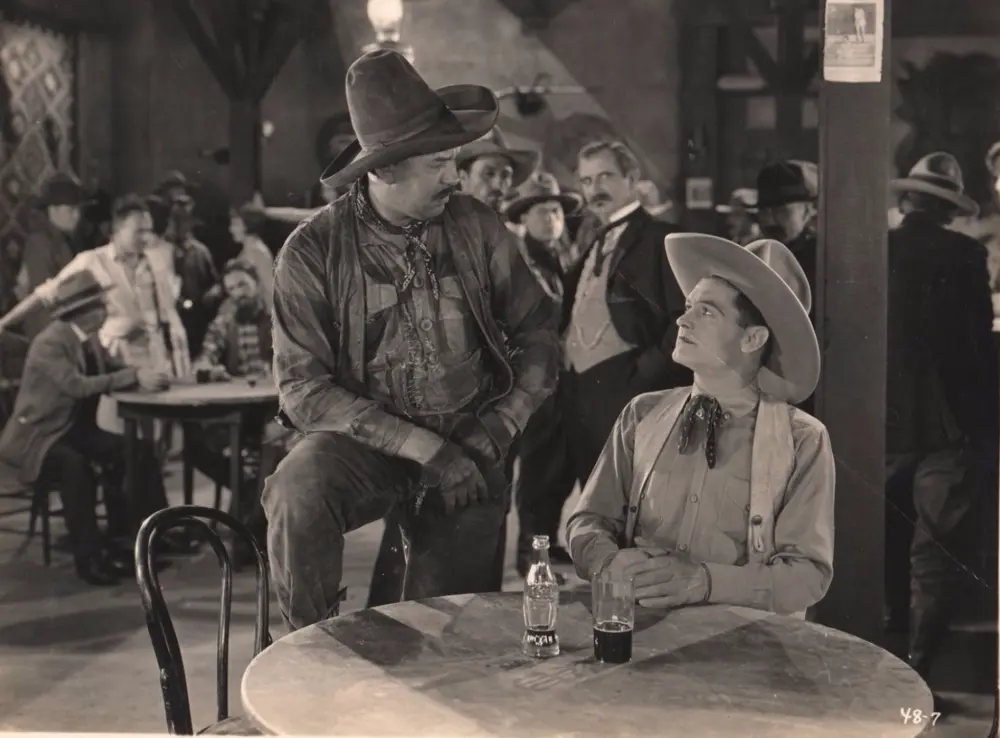
Slim Whitaker, as the titular 'Obligin' Buckaroo', embodies the stoic, helpful cowboy with predictable earnestness. His performance is less about internal struggle and more about physical presence. He rides a horse well. His gestures are broad, almost theatrical, a necessity for conveying emotion without spoken dialogue in a medium still finding its footing. There’s a certain charm in this directness, a lack of pretense that feels like a throwback even for silent film.
Raye Hampton, playing the damsel Mary, is given little to do beyond looking worried or relieved, often in quick succession. Her role is purely reactive, a narrative device more than a person. James Sheridan's Silas Thorne, the cattle baron, is a mustache-twirling villain of the highest order. He frowns a lot. These are not performances designed for subtlety, but rather for clear, immediate identification. The hero is good, the villain is bad. No room for ambiguity here.
Director Richard Thorpe moves the story along at a clip, a common trait of these B-Westerns, which were often churned out rapidly. He understands the need for action and conflict, even if those conflicts are resolved with an almost perfunctory ease. Thorpe's visual approach is largely functional. He frames shots to get the necessary information across, but rarely does the camera linger or offer anything resembling an artistic flourish. The photography is flat, mostly static, and serves only to document the action.
The film's 'obligin'' premise, while endearing in concept, actually deflates much of the potential dramatic tension. Our hero is so inherently helpful and seemingly invincible that genuine stakes rarely materialize. His triumphs feel less earned and more like an inevitability written into his very character name.
The film’s reliance on intertitles to explain every plot beat and character motivation feels particularly heavy-handed. While standard for the era, it highlights a struggle with visual storytelling that later Westerns, even silent ones like The Draw-Back or Dead Shot Baker, would begin to overcome. Here, the text often dictates the emotional response rather than allowing the visuals or performances to create it organically. This is not a film that trusts its audience to infer much.
The action sequences, primarily horse chases and rudimentary fistfights, are competent but lack any real sense of danger or innovation. They are placeholders for excitement, rather than genuinely thrilling moments. The editing cuts between these moments efficiently, but without building suspense or rhythm. It’s a series of events, linked, but not always flowing.
One could argue that the film's simplicity is its greatest strength, offering an unvarnished look at the genre's origins. But for those of us watching today, it's hard to shake the feeling that this simplicity often borders on dramatic weakness. The good guy wins, the bad guy loses, and there’s never any doubt. This predictability, while comforting for some, becomes tiresome quickly.
The narrative itself, concerning water rights and a greedy villain, is a foundational Western trope. It’s a sturdy skeleton, but Thorpe and writers Richard Thorpe and Bert B. Perkins don't bother to put much meat on it. The motivations are clear, but the emotional resonance is absent. The plight of the struggling ranchers feels like a plot device, not a genuine hardship.
While historically significant as an example of early genre work, its dramatic impact for a contemporary audience is negligible. It demonstrates that innovation in form or historical placement doesn't automatically translate to lasting engagement or artistic merit. Many old films simply don't hold up.
The film's most glaring limitation is its inability to create any lasting impression. Scenes blur into one another, and the characters, despite their clear roles, feel interchangeable with those from countless other silent Westerns of the period. There are no memorable lines, no striking visual compositions, no moments that resonate long after the credits roll.
The Obligin' Buckaroo offers exactly what its title suggests: a simple, helpful cowboy solving a simple problem. It’s a curious artifact for those who enjoy dissecting the building blocks of cinema, but it struggles to exist as anything more than that. If you approach it as a historical document of a nascent genre, you might find some value. If you come seeking entertainment, you’ll likely find it primitive, dramatically inert, and ultimately, rather dull. There are far more engaging silent Westerns to explore, even from the same period. This one is for the completists.
IMDb —
1928
Community
Log in to comment.