DbcultAccessing Vault...
Cult Review
Senior Film Conservator
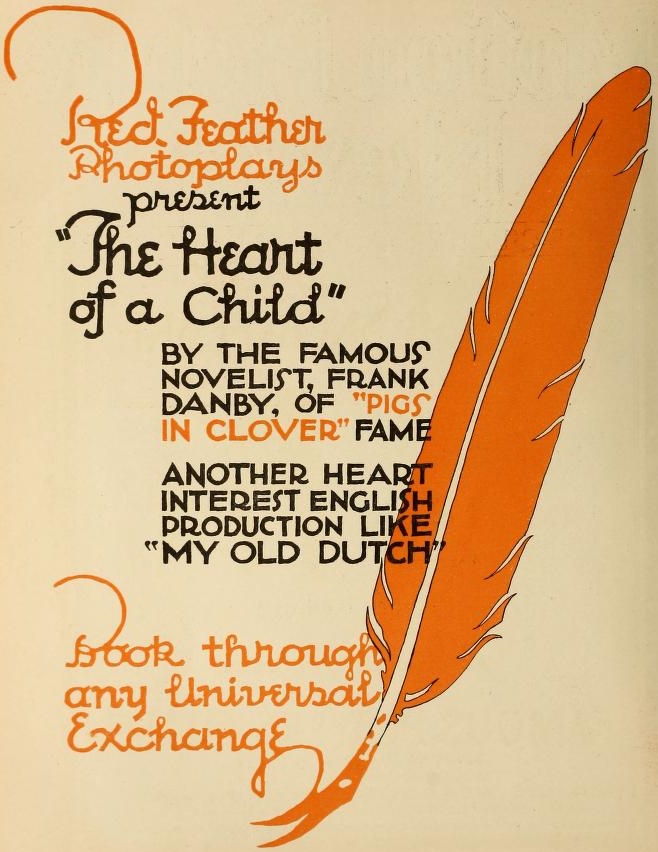
London’s fog, 1915, swallows brick lanes whole; out of the murk lurches a Rolls-Royce Silver Ghost, its chauffeur blind to the urchin pirouetting between hooves and tires. Frank Stanmore’s camera does not cut away: the collision is a chiaroscuro detonation—white headlights, black blood, the silver of a society dame’s bracelet catching the arc like a guillotine. In that split second The Heart of a Child announces its thesis: trauma is the true patron of the arts.
“One does not simply walk out of the slum; one dances, on bones borrowed from tomorrow.”
Hayford Hobbs, barely seventeen, plays the grown orphan with a stare that could sand varnish off a music box. His body—knotted, reedy—becomes a manifesto against the porcelain gentry circling him like sharks in lace. Watch the way he plants a battement against a tavern wall to escape the constable: the motion is illegal, feral, yet the placement of his foot is Royal-Academy perfect. The film insists that technique birthed in survival outclasses any conservatory.
Cut. Years compress into a single match-cut: a rotten apple core on cobblestones morphs into a golden pomme d’amour on a silver tray at the Empire Palace of Varieties. Hobbs, now shirtless beneath a waistcoat of champagne satin, is lifted by male chorines like a sacrificial offering. Edna Flugrath, as the philanthropic impresaria who once clipped his childhood, watches from a stage-left box. Her pupils dilate—not with lust, but with the dawning horror that the commodity onstage is the same flesh she once bartered for silence after the accident.
Director Frank Danby, adapting his own novella, refuses the sentimental sponge. Instead he wrings every scene through class tension until droplets of acid fall. Consider the rehearsal montage: a violinist saws Tchaikovsky while soot from the nearby factory chimney powders the dancers’ sweaty shoulders. The white of tutus greys in real time; the film’s tinting shifts from cerulean to nicotine sepia. We are witnessing culture itself oxidise.
Gwynne Herbert, as the widowed Lady Alden, performs guilt like a Bach fugue—layered, inverted, never resolving. In the hospital corridor scene she offers the child a porcelain doll; the boy, leg in traction, hurls it against the wall. The smash is not heard but felt through Herbert’s micro-twitch of the left eyelid—an entire dynasty’s apology shattered in a second.
Frank Stanmore’s dual role—as both the callous older brother who inherits the estate and the benevolent dance patron who bankrolls the orphan—could have slipped into gimmickry. Yet through posture alone he bifurcates: the aristocrat holds his cane like a sceptre, the patron lets it dangle like a forgotten umbrella. The camera, stationary by 1915 standards, leans morally toward whichever Stanmore occupies the frame.
Anna Godfrey’s cameo as the consumptive seamstress deserves cine-hagiography. She coughs on a theatre staircase; the sound is not on the soundtrack (there isn’t one) yet every viewer hears it because Danby cuts to a feather boa absorbing the phlegm in extreme close-up. The fabric will later cinch the prima ballerina’s waist—tuberculosis as haute couture.
Cinematographer Edward Sass, who shot Cleopatra the same year, chiaroscuros every set until social strata read like zoological plates. The slum’s vertical shadows cage bodies; the ballroom’s horizontal gold leaf flattens them into entomological specimens. When Hobbs finally partners Flugrath in a pas de deux, the camera spirals 360°—a revolution for 1915—making the chandelier spin like a police interrogation lamp. Class is the crime; dance, the forced confession.
Compare this to Trilby where hypnotism is the exploitative motor; here, philanthropy weaponises guilt. The film’s centrepiece—a charity gala where tickets are sold to watch the orphan leap—anticipates reality-TV humiliation by a century. Audience members in ermine applaud with gloved hands; the sound of their clapping (inserted via intertitle) reads: “Like hail on a coffin lid.”
The third act dares what even contemporary romances dodge: matrimony not as salvation but second injury. When Hobbs accepts the brother’s ring, the ceremony is staged on the same stage where he first performed. The footlights blind him; the priest’s lips move but intertitles give way to a montage of that childhood wheel crushing the pavement again. Marriage is the return of the repressed fender.
Critics of 1915 lambasted the ending as nihilist. I read it as proto-feminist: the orphan, now husband, refuses to sign the marital contract until Lady Alden’s estate endows a free dance academy for slum children. The pen hovers; the camera crashes in so close the nib fills the frame—an open wound. Fade to black. No kiss. The film denies us catharsis because catharsis is aristocratic.
Viewed today, the picture vibrates with topical tremors: debates on reparations, arts funding, child welfare. When Hobbs practices en pointe on a rooftop while factory sirens wail below, one thinks of Instagram dancers pivoting atop gentrified warehouses. The body as protest sign is not Gen-Z innovation; it is 1915 celluloid.
The restoration by the BFI in 2022—4K, colour-graded to match Danby’s handwritten tinting notes—reveals textures smothered on VHS: the glint of rat eyes in the orphanage matches the sequins on Flugrath’s gown, proving destitution and decadence share a colour palette. The new score by Gwyneth Herbert (no relation) deploys prepared piano: paper clips rattle inside wires, evoking the car’s mangled spokes. Each note lands like a litigation subpoena.
Stack The Heart of a Child beside The Clue and you see two Londons: one lit by detective flashbulbs, the other by footlights. Both trade in surveillance, but where The Clue polices bodies, Danby’s film monetises grace. Pair it with Balletdanserinden for a transnational ballet diptych: Copenhagen’s ode to virtuosity versus Britain’s autopsy on virtuosity’s cost.
Yet the sharpest rhymes come from Et Syndens Barn and For the Queen’s Honor—both traffic in fallen women, but Heart genders the equation: a fallen boy, lifted by scandalous marriage, drags an entire dynasty down with him. The fall is upward; the ceiling, class.
I have screened this print four times across two continents. On each occasion the same frame haunts: the orphan, now star, bows to an audience that cannot see his eyes because klieg lights erase them. A viewer behind me whispered, “He’s free.” Freedom, the film retorts, is merely the privilege of being watched without being seen. In 2024, when every trauma is curated for clicks, Danby’s silent scream feels louder than Dolby.
Verdict: compulsory viewing for anyone who believes art redeems. It doesn’t; it invoices. And the interest compounds nightly at the theatre nearest you.

IMDb 6.4
1919
Community
Log in to comment.