DbcultAccessing Vault...
Cult Review
Senior Film Conservator
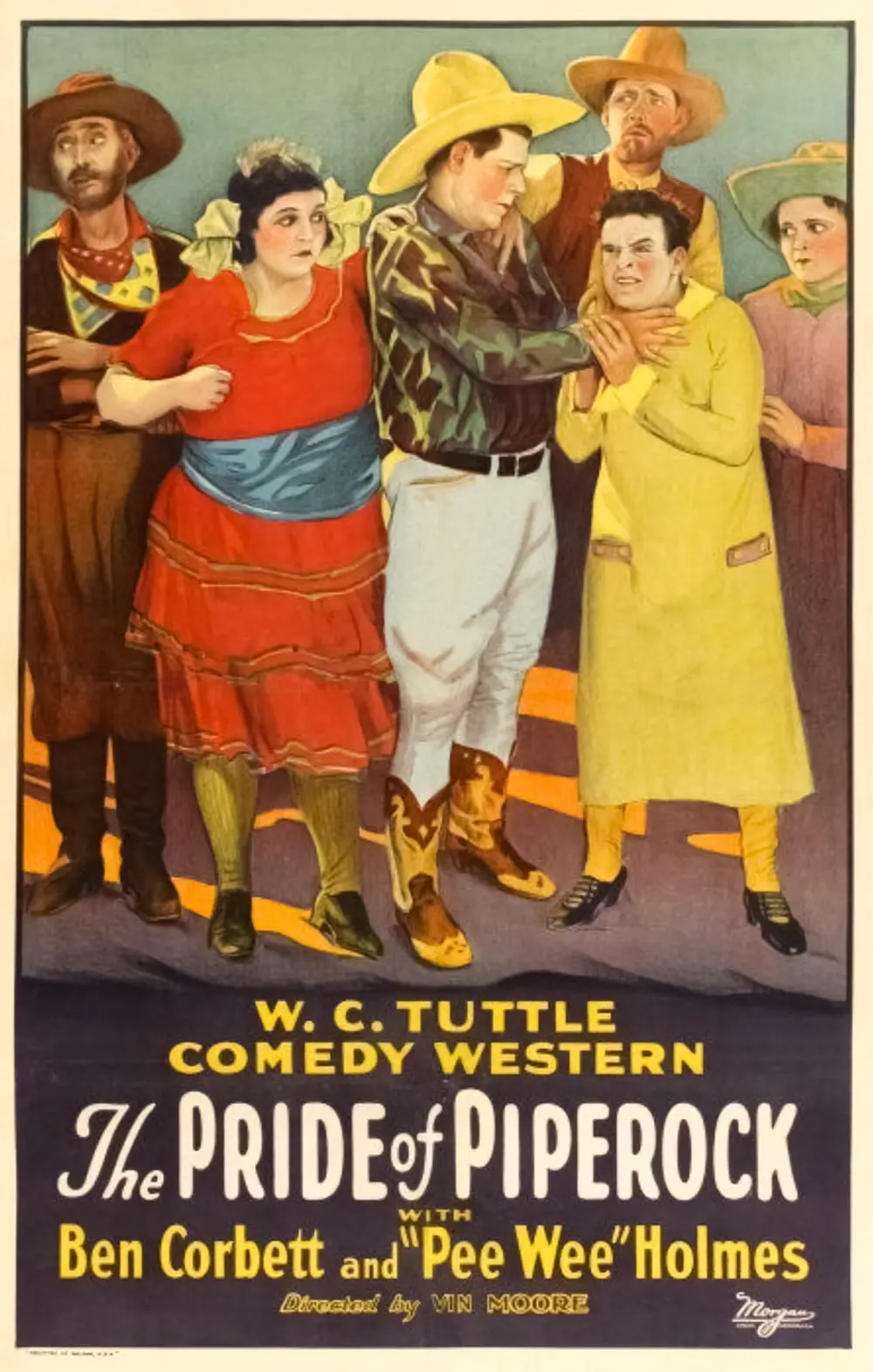
Is The Pride of Piperock worth your time nearly a century after its release? Short answer: Yes, but only if you trade your expectations for grit and gunfights for a steady diet of dust-covered slapstick. This film is a relic of a specific era where the Western wasn't a brooding meditation on the soul of America, but a playground for physical comedians who knew how to fall off a horse with grace. This is for the silent film completionist and the fan of the 'buddy comedy' archetype. It is absolutely not for anyone looking for the sweeping vistas of John Ford or the moral ambiguity of modern Revisionist Westerns.
Before we dive into the technical weeds, let's establish the ground rules for this 1927 Universal production. This film works because the chemistry between Ben Corbett and Gilbert 'Pee Wee' Holmes is genuinely unforced; they operate with a telepathic timing that makes even the simplest gag feel earned. This film fails because the narrative is essentially a clothesline—a thin string used only to hang a series of unrelated comedic sketches, leaving the viewer feeling a bit unmoored by the third act. You should watch it if you want to see the DNA of Laurel and Hardy transplanted into the high desert, or if you’re tracking the evolution of the Western genre from its infancy.
The Pride of Piperock remains a fascinating watch for those interested in the 'Magpie and Ike' series. It captures a moment in cinema history where the Western was the dominant form of escapism. While it lacks the high-budget polish of The Biggest Show on Earth, it compensates with a raw, kinetic energy. If you appreciate the art of the silent 'B-movie,' this is a essential entry. However, casual viewers may find the pacing erratic and the lack of a central villain frustrating.
The heart of this film isn't the plot, which is as thin as a mountain trail. It’s the interaction between Ben Corbett (Ike) and Gilbert Holmes (Magpie). By 1927, these two had refined their 'dim-witted but well-meaning' personas to a science. Corbett is the more grounded of the two, the straight man who is constantly being dragged into Magpie’s lunacy. Holmes, with his diminutive stature and expressive face, is the engine of the film’s comedy. Unlike the more dramatic turns seen in The Silent Master, the acting here is broad, loud (in a silent way), and physical.
Take, for instance, the scene involving the 'town meeting' early in the second act. The way Holmes navigates a room full of larger men, using his agility to avoid confrontation while simultaneously causing it, is a masterclass in blocking. It’s not just about the gag; it’s about the rhythm. The editing by Universal’s B-unit keeps the cuts tight, ensuring that the visual punchlines land before the audience has time to question the logic of the situation. It’s a stark contrast to the more deliberate, theatrical pacing of films like Mary Regan.
The screenplay, written by Robert McKenzie and based on the stories of W.C. Tuttle, understands its audience. Tuttle’s Piperock was a staple of pulp magazines, and the film captures that 'episodic' feel perfectly. This isn't a film that tries to be a grand statement on the frontier. Instead, it’s about the minutiae of small-town life. It’s about the pride of being the best (or worst) in a town that most people couldn’t find on a map. This focus on character over spectacle is what makes it stand out from contemporaneous films like The Third Alarm, which relied more heavily on high-stakes tension.
The inclusion of Nancy Drexel as the love interest provides the necessary friction for Magpie and Ike’s friendship. Drexel isn't given much to do other than look radiant and react to the mayhem, but her presence elevates the stakes. When she’s on screen, the boys aren't just being fools; they’re being fools for love. It’s a trope as old as time, but in the hands of this cast, it feels less like a cliché and more like a necessary catalyst for the third-act climax. The film doesn't have the emotional depth of Das törichte Herz, but it isn't trying to. It wants you to laugh at the absurdity of the male ego.
Visually, The Pride of Piperock is a product of its time—and that’s a compliment. The cinematography doesn't hide the harshness of the California locations used to stand in for the high plains. The lighting is high-contrast, often blowing out the skies to emphasize the heat and the dust. This gives the film a 'lived-in' feel that many higher-budget silents lacked. While it doesn't have the experimental flair of Feenhände, it possesses a functional beauty. The camera is often placed low to the ground during the chase sequences, heightening the sense of speed and danger.
The pacing is brisk, clocking in at a length that respects the audience's time. Unlike the bloated runtimes of some late-silent dramas like The Dwelling Place of Light, Piperock knows when to move on. If a gag isn't working, the film simply pivots to the next one. This 'shotgun approach' to comedy ensures that there’s never a dull moment, even if not every joke hits the mark. It’s an honest piece of filmmaking. It doesn't pretend to be more than it is.
Pros:
- Exceptional lead chemistry that rivals the great silent duos.
- Authentic, gritty location shooting that adds texture to the comedy.
- A refreshing lack of pretension; it’s pure, unadulterated entertainment.
- Nancy Drexel provides a solid, grounding presence in the midst of the madness.
Cons:
- The plot is paper-thin and occasionally feels repetitive.
- Some of the secondary characters are mere caricatures with no depth.
- The film relies heavily on the 'Magpie and Ike' formula, which might feel stale to those who have seen other entries in the series.
The Pride of Piperock is a loud, dusty, and ultimately charming example of the silent Western comedy. It doesn't have the narrative weight of Blind Justice or the high-society wit of Der lachende Ehemann, but it has something arguably more valuable: heart. It captures a specific brand of American humor—self-deprecating, resilient, and physically daring. It’s a film that reminds us that before the West was won, it was laughed at. It works. But it’s flawed. And in that flaw lies its humanity. If you can track down a decent print, it is well worth a look for the Corbett and Holmes dynamic alone. They are the pride of Piperock, and for sixty minutes, they might just be the pride of your watchlist too.
IMDb 6.1
1934
Community
Log in to comment.