DbcultAccessing Vault...
Cult Review
Senior Film Conservator
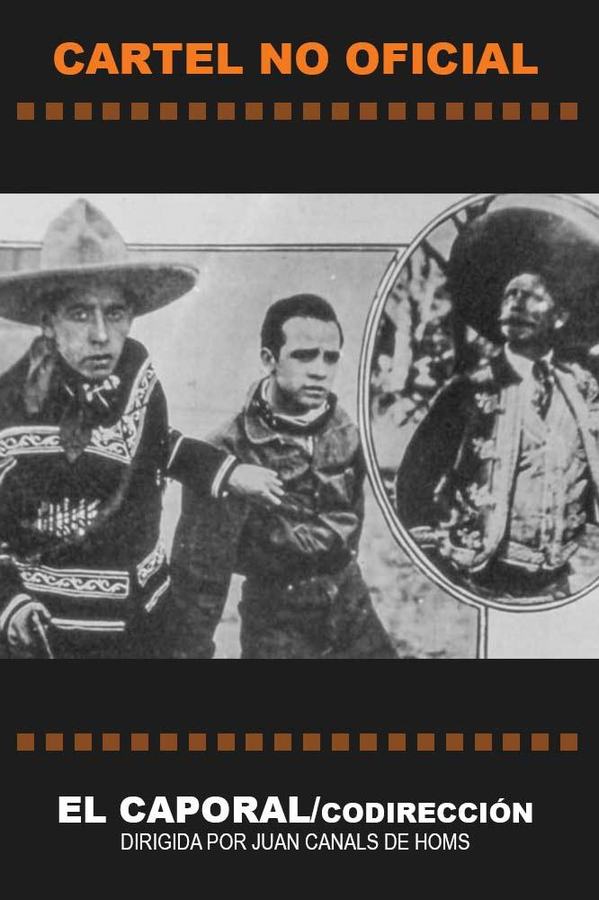
Mexican cinema prior to the Golden Age often languishes in archival neglect, yet El caporal detonates that indifference with the visceral force of a machete hacking through sugarcane. Shot on the cusp of synchronized sound, the film opts for a symphonic montage of visual ferocity rather than spoken exposition—an instinct that retroactively feels avant-garde. Palacios’ titular overseer arrives astride a chestnut stallion, the animal’s flanks flecked with white sweat that resembles starlight scattered across obsidian. One sniff of the frame and you can almost taste the mixture of horsehide, tequila, and impending gunpowder.
Director Miguel Contreras Torres—also essaying the decrepit landlord—marshals a camera that prowls rather than observes. Early interior scenes lock us inside vaulted rooms where candlefire licks at mahogany like tongues of indebted serfs. He juxtaposes these chiaroscuro tableaux with exterior vistas so overexposed they verge on solar flare, thereby weaponizing light itself as class commentary: the peon squints under a punitive sun while the patrón orchestrates destinies in cool, parasitic shade. The result is a dialectic of illumination that would make Eisenstein’s pulse race.
Violence here is not a narrative crescendo but a daily calisthenics. The caporal’s whip snakes across the screen in slow-motion loops, leather braids describing calligraphic sigils of subjugation. Each crack syncs with a percussive thud on the soundtrack—presumably a bass drum, though the primitive optical audio renders it a subterranean throb, as though the earth itself winces. Leyva’s peasant heroine endures these humiliations with eyes so wide they become reflecting pools for our own complicit gaze. When she finally spits in the foreman’s face, the glob of saliva catches the sunlight like a diamond bullet; the moment crystallizes rebellion more eloquently than pages of manifesto.
Because the production predates robust talkie technology, intertitles are sparse—almost haiku-brief. Instead, a live trio would have accompanied early screenings: violin, guitarrón, and a makeshift marimba cobbled from rosewood and gourd. Contemporary viewers relying on digital restorations must supply their own imagined score, yet the visuals throb with such muscular rhythm that a sonic ghost lingers. Notice the metronomic sway of agave leaves: their dagger-spines rustle in perfect 3/4 time, transforming the plantation into a danse macabre stage. The absence of synchronized dialogue paradoxically amplifies the film’s universal snarl; you do not need Spanish to decode a back lacerated by barbed wire.
Comparative context enriches appreciation. Where The Hater of Men externalizes misogyny through baroque theatricality and Prudence, the Pirate romanticizes brigandage as frothy escapade, El caporal weds sociopolitical rage with existential doom. Its DNA shares strands with Fear—both probe the marrow of authoritarian pathology—but the Mexican opus lacks the German work’s expressionist caricature, opting instead for neorealist grit almost a decade before that movement officially coalesced.
Roberto Y. Palacios strides through the narrative with a peacock’s arrogance, shoulders thrown back so far his clavicles resemble the yoke peasants haul at harvest. Yet micro-tremors flicker at the corner of his eyes—tiny fissures where dread seeps in. When he forces Leyva’s character into a moonlit waltz, his fingertips drum against her spine like a man testing the freshness of fruit. The camera isolates her hand as it slides toward the machete tucked beneath her sash; the ensuing cutaway to a scorpion skewered by a sewing pin imbues the scene with premonitory shiver.
Elizabeth Leyva, largely forgotten today, delivers a masterclass in minimalist resistance. Her cheekbones carry the stoic curvature of Mixtec statuary; when tears pool, she refuses to let them fall until the narrative’s tipping point, turning each droplet into a miniature dam of dignity. In a pivotal long take, the overseer commands her to kneel in furrowed soil littered with broken pottery. The camera tilts from her mud-caked calves up to her face, registering every twitch of sinew. She lifts her chin with the glacial pride of an Aztec princess confronting conquistadors, and for a heartbeat the colonial past collapses into the post-revolutionary present—a temporal vertigo that suffuses the entire film.
Alberto Garay’s monochrome palette oscillates between tallow-fleshed interiors and calcinated exteriors. He frequently backlights characters, haloing them while plunging faces into abyssal umbra—an optical metaphor for a society that venerates silhouettes over substance. Note the sequence where laborers drag harvested agave hearts toward stone ovens: steam billows across the lens, refracting sunlight into prismatic shards that momentarily blind the viewer. For those seconds, the image devolves into pure abstraction—white heat, black earth—a visual manifesto suggesting that exploitation ultimately erases the boundary between oppressor and oppressed, reducing both to ghostly afterimages.
Garay also experiments with focal depth. In one bravura shot, the foreman commands the frame in razor-sharp foreground while the hacienda’s owner blurs into a beige smear behind him. Power has literally shifted focus; the peasant insurgency that follows will restore clarity to the background, forcing the aristocracy into excruciating definition. Such visual stratagems prefigure the deep-focus politics of later Wellesian cinema, albeit wrought on a shoestring budget that transforms limitation into aesthetic insurgency.
The film’s sexual politics seethe beneath volcanic restraint. Female bodies are commodified yet curiously sacrosanct—every blouse torn reveals a crucifix glinting between collarbones, conflating sanctity with subjugation. Leyva’s character navigates this dichotomy by weaponizing her own objectification. When the caporal barges into her chamber, she greets him in a chemise stitched from flour sacks, the brand logo still visible—a sardonic reminder that even intimacy cannot escape the plantation’s supply chain. She unpicks a seam, letting the garment slide to her waist with deliberate lethargy. The overseer lunges, but the camera cuts to her hand clutching a reed of sugarcane now sharpened to a stake. Desire and death share a heartbeat; erotic tension collapses into visceral terror without a single spoken threat.
Religious iconography pervades the mise-en-scène like incense soaked in blood. During the fiesta sequence, a plaster saint is carried aloft, its painted eyes serenely skyward while dancers stomp dust clouds that obscure its face. The caporal mockingly drapes the Virgin’s mantle over Leyva’s shoulders, transforming piety into predatory theatre. Yet syncretic resilience surfaces: she whispers a subversive prayer to Tonantzin, the pre-Columbian mother goddess, thereby reclaiming indigenous matriarchy beneath the guise of Christian supplication. The film subtly argues that colonization may have imposed its pantheon, but the conquered smuggled older divinities within hollowed-out saints—smuggled, too, within the celluloid itself.
Contemporary restorations graft a percussive score reconstructed from archival cues, yet purists may prefer the uncanny hush. Silence amplifies ambient specifics: the chik-chik of cicadas syncs with laborers’ hoes striking calcified soil, forging an accidental industrial symphony. When the whip cracks, the absence of reverb renders it oddly intimate—no canyon-wide echo, just a leather kiss on flesh—forcing viewers to inhabit the blow’s nauseating immediacy. This phenomenological assault anticipates the corporeal cinema of later decades, from The Student of Prague’s psychological fragmentation to A Naked Soul’s raw confessionality.
The climax arrives not with courtroom justice but with agrarian apocalypse. Laborers ignite fields; agave syrup ferments into molotov stickiness that clings to the caporal’s boots, rooting him like an ant in amber. Flames adopt spectral hues—turquoise, magenta—achieved by tinting nitrate stock, a primitive yet hypnotic special effect. As he sinks to his knees, the smoke column twists into a helical staircase, evoking indigenous conceptions of ascent to the nine underworlds. Palacios’ final expression is neither regret nor terror but a bovine incomprehension: evil so habitual it cannot fathom its own extinction. The camera iris closes in, devouring his face until the screen combusts into crimson leader—an unambiguous visual death sentence.
Upon release, urban critics dismissed the film as provincial melodrama, pining for cosmopolitan flappers. Yet rural audiences recognized their own scarified backs in every lash mark, turning matinee screenings into cathartic rallies. Prints circulated via itinerant projectionists who strung sheets between jacarandas, transforming villages into open-air tribunals against latifundia brutality. Sadly, many reels succumbed to vinegar syndrome; only a 4K restoration spearheaded by the Cineteca Nacional in 2022 salvaged this incendiary testament. Now streaming on niche platforms, El caporal demands placement alongside The City of Tears and Crimson Shoals in any syllabus on insurgent cinema.
Viewers seeking escapism best detour toward An Amateur Devil or Father and the Boys. El caporal offers no such comfort; it is a molar-grinding descent into feudal sadism, yet electrified by aesthetic audacity. Every frame vibrates with the conviction that cinema can indict history while ravishing the eye. Palacias’ performance reverberates long after credits, a cautionary echo about the banality of rural strongmen who still prowl contemporary corridors of power. Leyva’s quiet defiance provides the ethical counter-current, reminding us that revolutions germinate in stolen glances as much as in gunpowder.
In the pantheon of early sound-era Latin American film, El caporal stands as a scorched landmark—part proletarian jeremiad, part baroque fever dream. Its restored print glows with the ember of a thousand torched plantations, inviting modern audiences to taste the smoke of histories we have yet to outgrow. Watch it, then listen for the phantom crack of a whip in the silence that follows; that is the sound of yesterday informing tomorrow, a mnemonic lash against amnesia’s tender skin.
Streaming availability: Limited to Filmoteca Vault and Cineteca Virtual with Spanish intertitles and English subtitles. 4K restoration runtime: 97 min. Viewer discretion advised for scenes of flogging and animal sacrifice.

IMDb 5
1912
Community
Log in to comment.