DbcultAccessing Vault...
Cult Review
Senior Film Conservator
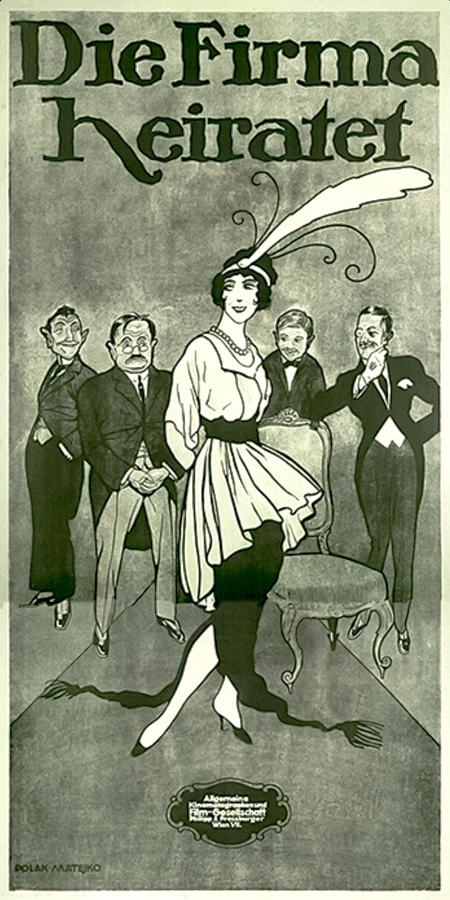
Berlin, 1924: inflation wheezes, cabarets smolder, and a single telegram can re-cuff a life. Ernst Lubitsch—still months away from Hollywood’s siren call—takes this brittle cityscape and threads it through the eye of a needle, embroidering a fable where haute couture becomes both corset and catapult for a country girl who refuses to stay sewn into place.
The Perfect Thirty-Six is, on its porcelain surface, a frothy Cinderella ledger book: village ingénue, wicked-aunt apprenticeship, prince-charming buyer, palace finale. Yet beneath the tulle lies a shrewd audit of commodity femininity—how a waist measurement mutates into market value, how male gatekeepers mint their own currency from the female silhouette. Lubitsch, ever the puckish banker of desire, keeps the tone buoyant, but every laugh is double-entry: credit the gag, debit the power structure.
Gertie’s prologue—sunlight slanting across cow-milking pails—feels like a pastoral postcard scorched at the edges. Anna Müller-Lincke plays her with a kinetic glow: elbows too quick for sleeves, curiosity too loud for hymns. When she boards the Leipzig-bound train, the intertitle doesn’t announce opportunity; it brandishes escape velocity. Amelia’s showroom is a cathedral of restraint where skirts hover like penitents and measuring tapes crack like whips. Lubitsch’s camera glides past rows of faceless mannequins before resting on Gertie’s reflection—a living dummy that blinks.
Sigmund Phillippsohn’s arrival is filmed like a military campaign: doors swing, clerks snap upright, cash registers chime in salute. Jacques Burg imbues the salesman with the languid confidence of someone who has already sold himself on himself. His moniker for Gertie—”perfect thirty-six”—is both tape-measure literal and mythical, a numerical halo that will follow her like a stock ticker.
Once the narrative railroads our heroine to Berlin, Lubitsch unleashes urban montage: electric arcs over tram rails, poster-plastered columns, window displays more seductive than confession. The city itself becomes a rival protagonist, its arteries pumping spectacle. Gertie steps off the carriage in a coat too rural by half, yet within a single reel she acquires the confident gait of someone who now expects pavement to rise and meet her.
Moritz Abramowsky—played by Albert Paulig with a vaudevillian blend of thrift and lechery—provides the film’s most acid social comedy. His idea of courtship is a beanery where coffee arrives like punishment and the menu is a chalkboard of abbreviations. Lubitsch milks the low-rent cacophony (waiters barking "draw one in the dark") until it becomes a percussion ensemble of penury. The contrast with the subsequent rescue by a house salesman who spirits Gertie to a chandeliered restaurant lands like a moral verdict: money buys atmosphere, and atmosphere buys permission.
The pivotal fitting scene—Princess arrives, models parade—could have played as crass product placement, but Lubitsch stages it like a duel of gazes. Each garment becomes rhetoric; each pivot of the hip, punctuation. When the royal finger alights on Gertie, destiny is less rewritten than underlined. Suddenly our heroine’s salary doubles, her name travels on whispers, and Mayer’s panic at her absence feels less like concern for talent than fear of losing a prized asset.
It’s here that the film winks most knowingly at its own era’s labor politics. In 1924 Germany, hyperinflation devours wages overnight; workers leap firms for pfennig increases. Gertie’s strike—refusing to report for duty—mirrors nationwide shop-floor militancy, yet Lubitsch nestles the protest inside a ball-gown soirée, allowing class struggle to masquerade as romantic pique.
Watch how he frames doorways: characters enter cramped, exit expansive, as though Germany itself exhales possibility. Mirrors proliferate, duplicating Gertie into infinity—girl as commodity multiplied for shelf space. Intertitles, penned by Hanns Kräly, sparkle with Weimar cynicism: “She knew the price of silk and the cost of silence.”
Lighting toggles between tungsten warmth for courtship and carbon-arc chill for commerce. The climactic palace scene bathes Ressel Orla’s princess in a halo of back-light so sheer it feels like privilege made visible, while Gertie, foregrounded, remains half in shadow—status pending.
Müller-Lincke never tips into flapper caricature; her exuberance carries a tremor of calculation, the sense she’s tallying every smile like a ledger. Victor Arnold’s Mayer is all clipped mustache and ledger-thin smile, a man who discovers affection only when profit is threatened. Paulig’s Moritz deserves special mention: he turns skinflint seduction into a Chaplinesque ballet—every coin-counting gesture a miniature mime.
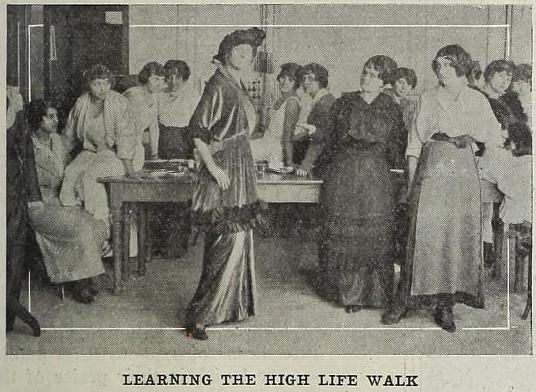
And then there’s the Lubitsch cameo—blink and you’ll miss him, a shadow in the showroom, as if the director refuses to let the seamstress forget who ultimately pulls the threads.
Though dialogue is absent, the film’s rhythm is a ragtime of visual rhymes: scissors snip in counterpoint to typewriter hammers; train wheels clatter like sewing-machine pedals. The score, historically played live, would have fused German waltz with American jazz, mirroring Gertie’s cultural straddle.
Restoration prints reveal texture: the glint of beads on a bodice, the fray of Moritz’s cuff, the cigarette haze in the back office. These granular truths remind us that glamour, even in 1924, was stitched, not bestowed.
Place The Perfect Thirty-Six beside Lubitsch’s later American confections like Checkers and you’ll notice the embryonic "Lubitsch touch": erotic implications left to ferment off-screen, social critique masquerading as champagne fizz. Compared to the apocalyptic solemnity of The Life and Passion of Jesus Christ, this Berlin tale feels featherweight, yet both share a preoccupation with transaction—salvation versus sale.
Where Old Brandis’ Eyes lingers on moral decay within bourgeois parlors, Thirty-Six locates morality inside measuring tape: how many centimeters separate selfhood from shelf life? And while The General’s Children marches militaristic pride across the screen, Lubitsch’s film weaponizes charm—equally lethal, far quieter.
Contemporary viewers might cheer Gertie as a proto-Lean-In heroine, yet Lubitsch slyly undercuts triumph. Her ascent hinges on male patronage—Sigmund’s telegram, Mayer’s proposal. The closing engagement feels less romantic coup than contractual acquisition: the store wins the asset, the girl wins security, love amortized over a lifetime.
Still, there’s subversion in her smile at fade-out: half victory, half awareness she’ll keep negotiating. In the #MeToo era, the film invites us to ask whether every mentorship is merely seduction deferred, whether every raise is betrothed to invisible strings.
Shot on Agfa 2002 stock with plentiful day-for-night tinting, the original negatives perished in the 1943 bombing of Ufa’s vaults. Surviving 35 mm elements derive from a 1926 Norwegian distribution print discovered in 1978 inside a barn outside Oslo. Contemporary DCP scans reveal perforation decay along reel three, accounting for the flicker during Gertie’s train journey. Runtime varies: 64 minutes at 22 fps, 72 at sound-projection speeds.
The intertitles, re-translated in 2014, swap Weimar slang for modern equivalencies ("doll" becomes "bombshell") while preserving Kräly’s puckish cadence.
Stream it if you crave a rom-com that knows every flirtation is a footnote to capitalism. Watch for the scene where Gertie measures her own waist, the tape forming a noose she soon slips—an image that anticipates a century of body politics. Savor the Berlin street montage, a time-capsule before the jackboots marched.
Above all, relish Lubitsch’s proof that silence can gossip more trenchantly than sound, that a seam can be both lifeline and leash, that the perfect thirty-six might measure not inches but the precise distance between dream and debt.
Final ledger: five stars stitched with a caveat—every sparkle casts a shadow, every gown hides a price tag.
IMDb 5.9
1930
Community
Log in to comment.