
DbcultAccessing Vault...
3.8/10
Senior Film Conservator
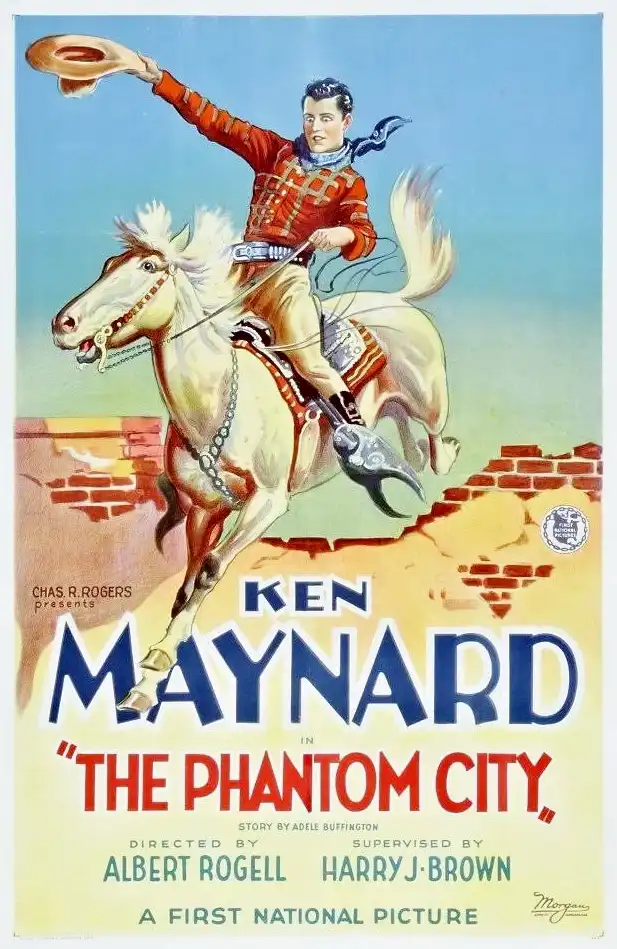
A definitive 3.8/10 rating for a film that redefined the boundaries of cult cinema. The Phantom City remains a cornerstone of transgressive art.
Alright, let’s get this out of the way upfront: The Phantom City is a 1928 silent Western. If that sentence alone doesn’t pique your interest, or if the idea of title cards instead of dialogue sounds like a chore, then this probably isn’t for you. You’ll be bored. But if you’ve got a soft spot for early cinema, for the simple, dusty charm of these old oaters, or just want to see Ken Maynard and his genuinely impressive horse Tarzan doing their thing, then pull up a chair. It’s a curious little artifact, and sometimes, that’s enough.
The plot, such as it is, involves a gold mine, a nefarious gang, and our hero Ken, who somehow gets tangled up with a mysterious figure known only as “The Phantom Horseman.” The movie tries its darndest to build a sense of intrigue around who this masked rider really is, but honestly, if you’ve seen more than three Westerns from this era, you’ll probably have it figured out within the first reel. It’s less a revelation and more a gentle confirmation.
Ken Maynard, as the lead cowboy, spends a lot of time on horseback. And I mean a lot. His horse, Tarzan, is undeniably the star here. That horse can gallop, can slide to a stop, can even seemingly react to dialogue on the title cards. Tarzan’s performance is consistently more convincing than some of the human reactions around him. There’s a shot early on where Ken dismounts, and Tarzan just stands there, perfectly still, looking almost bored, and it’s a perfect, unscripted moment.
Eugenia Gilbert plays the mysterious, often stoic female lead. She’s got a particular way of staring intensely, trying to convey deep thought or hidden emotion. Sometimes it works, adding to the silent film melodrama. Other times, it just feels like she’s waiting for the cue to move her head slightly. There’s a scene where she’s observing some bad guys from a distance, and her reaction shot lingers so long it almost becomes funny. You can almost feel the movie trying to convince you this moment matters, that her internal struggle is profound, but it just stretches thin.
The bad guys, a collection of scowling, mustache-twirling types led by Jim Mason, are exactly what you’d expect. They telegraph their evil intentions from a mile away. There’s no nuance, just pure, unadulterated villainy. Which, for a film of this vintage, is perfectly fine. You know who to root against instantly.
Pacing is a real thing to adjust to. There are long stretches of riding across some very picturesque, if sparsely populated, landscapes. Then, suddenly, a burst of action. A saloon brawl, for instance, has all the chaotic energy you could hope for. Men crashing through flimsy tables, dust flying, punches that clearly don’t connect but look good enough for the camera. The extras in these scenes are sometimes a bit lost, though. You’ll spot a few in the background just sort of shuffling awkwardly, like they're not quite sure if they're supposed to be running or just looking concerned. It gives the crowd scenes this oddly empty feeling, even when there are plenty of people.
The title cards are a mixed bag. Some are genuinely poetic, setting a mood or advancing the story with a flourish. Others just state the incredibly obvious. A shot of the gang whispering conspiratorially, followed by a title card reading, “The villains plot their evil scheme!” Yes, we got that. Thanks for the clarification.
There are a few moments that unexpectedly work, little flashes of genuine creativity. A particular shot of the Phantom Horseman silhouetted against a setting sun, for example. It’s simple, but effective, giving the character a real sense of myth. Then there are other moments that drag, like a protracted sequence of Ken trying to figure out a clue, where the internal monologue is implied through a series of thoughtful stares and head tilts that just go on too long. The silence starts to feel awkward rather than emotional.
Ultimately, The Phantom City is a relic. It’s not going to change your life, nor is it a forgotten masterpiece. But it’s a solid, if predictable, example of early Western filmmaking. It’s a chance to see how the genre was built, one horse chase and one dramatic stare at a time. For those willing to meet it on its own terms, there’s a quiet satisfaction in watching these old gears turn, even if they occasionally creak a bit.