DbcultAccessing Vault...
Cult Review
Senior Film Conservator
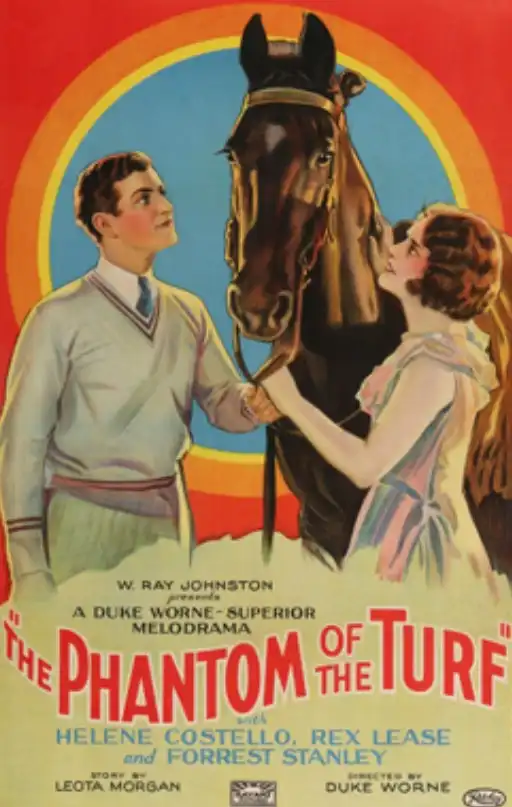
If you’re the kind of person who keeps a spreadsheet of every silent film you’ve ever seen, The Phantom of the Turf is a necessary, if slightly exhausting, box to tick. For anyone else? It’s a tough sell. It’s not a masterpiece, and it’s not a disaster. It’s just one of those movies that feels like it was made by people who were very tired but had a deadline and a horse available for the weekend.
The whole thing kicks off with a murder—the owner of a thoroughbred gets taken out—and suddenly we’re in this weird domestic drama where Rex Lease steps in as the guardian of the two kids. It’s a bit of a tonal whiplash. One minute we’re dealing with the grim reality of a dead father, and the next, there’s a lot of lingering shots of the horse looking soulful. If you’ve seen The Canyon of Light, you know how these late-20s genre pictures try to cram in as much sentimentality as possible, usually at the expense of the actual plot.
Rex Lease is... fine. He has this very specific way of standing, chest out, looking perpetually slightly confused by the children. He doesn’t have that magnetic screen presence of the big stars of the era, but he’s functional. The real star, honestly, is the kid, Danny Hoy. There’s a scene early on where he’s interacting with the horse, and it’s the only time the movie feels like it’s breathing. Most of the adult actors are doing that very frantic, late-silent era gesturing where every thought has to be signaled with a full-body spasm. Helene Costello is here, too, looking lovely but given almost nothing to do except look worried in some very nice hats.
There’s a strange bit of editing about twenty minutes in where a character exits a room, and the cut is so abrupt it feels like a few frames were lost to time or a very impatient editor. It happens again during the mystery-solving sequences. You’ll be following a lead, and then suddenly we’re at the stables. It makes the 'mystery' part of the movie feel more like a series of coincidences than an actual investigation. It reminds me of the pacing issues in Hot Heels, where the comedy and the racing never quite sync up.
The title is a total lie, by the way. Don’t go in expecting some gothic, masked figure haunting the grandstands. The 'Phantom' is basically just the horse, or the idea of the horse, or maybe the mystery itself? It’s never really clear. It feels like a title chosen by a marketing department that realized 'Man Looks After Dead Friend’s Kids and Goes to the Races' wasn't going to sell many tickets.
The villain, played by Forrest Stanley, is almost too obvious. He has this way of lurking in the background of shots that makes you wonder why the other characters don’t just turn around and point at him immediately. There’s a scene where he’s 'secretly' observing a conversation from behind a very thin curtain, and his shadow is practically covering the entire floor. It’s funny, but it kills any actual tension.
I did appreciate the costume work on the kids. They look like actual children of the era—slightly rumpled, oversized caps, socks that won't stay up. It’s a small detail, but in a movie that feels this staged, those little touches of reality help. Unlike Stage Struck, which feels like it’s constantly trying to impress you with its artifice, this movie just feels... dusty. In a good way. Like a real place.
The big race at the end is exactly what you expect. Lots of fast cutting, close-ups of hooves, and extras in the stands waving their programs with terrifying intensity. It’s effective, I guess, but we’ve seen it a hundred times before. The camera work is static for most of the film, then suddenly goes wild during the race, which is more jarring than exciting. It’s like the cinematographer woke up for the last ten minutes.
One thing that really stuck with me was a silent reaction shot of one of the stable hands. He’s just standing there while the main characters argue, and he has this look of pure, unadulterated boredom that I suspect was not acting. It’s those moments—the extras who clearly want to go home—that make these old B-movies human.
Is it worth your time? Only if you have a high tolerance for thin plots and you’ve already exhausted the better mysteries of the period like In the Spider's Grip. It’s a movie that exists in the middle ground. It’s not quite a thriller, not quite a sports movie, and not quite a tear-jerker. It just sort of trots along until it hits the finish line and then stops abruptly. I forgot most of the character names about ten minutes after the credits rolled, but I’ll probably remember that soulful horse for a week or two.
IMDb 2.9
1935
Community
Log in to comment.