DbcultAccessing Vault...
Cult Review
Senior Film Conservator
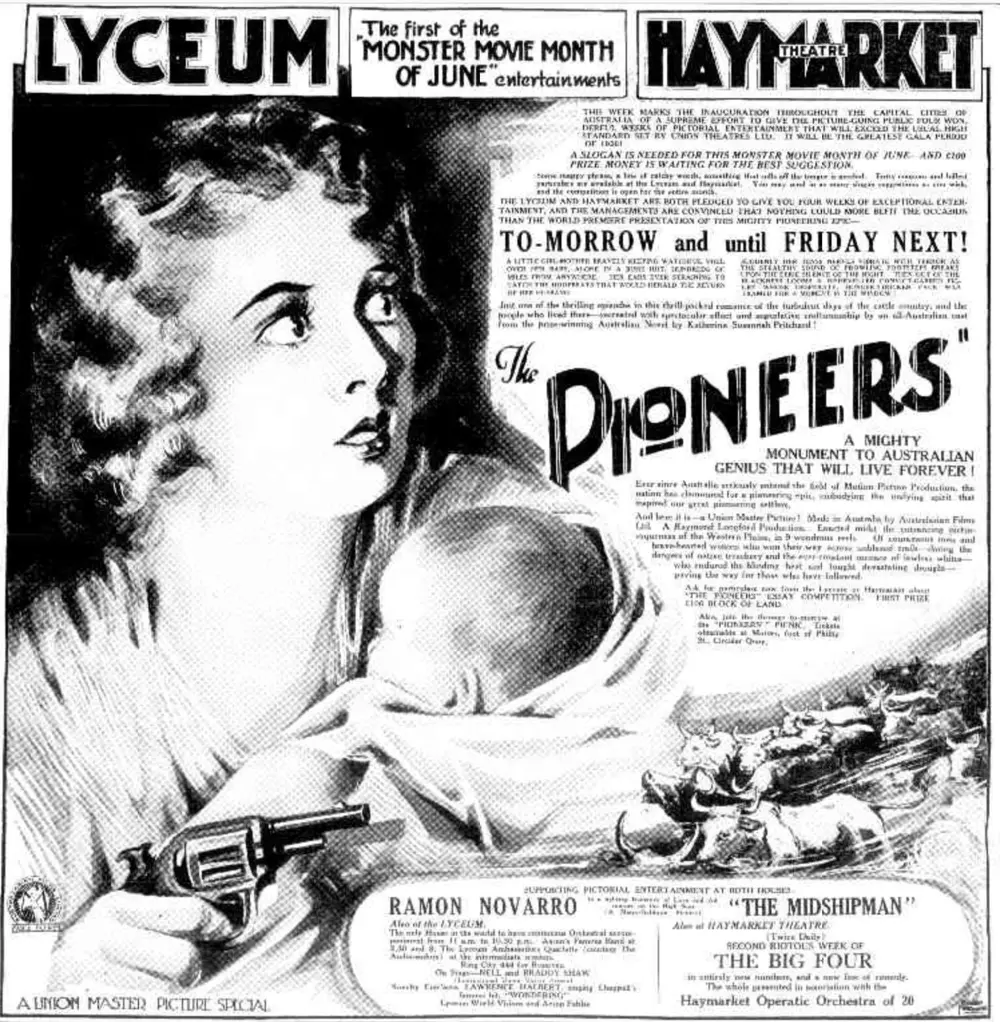
Should you invest your time in this 1926 silent relic? Short answer: yes, but only if you possess the patience to look past technical decay to see the soul of early Australian cinema. This film is for the dedicated film historian who craves authenticity; it is absolutely not for anyone looking for the polished, fast-paced escapism of modern period dramas.
The Pioneers is a film that feels less like a performance and more like a document of endurance. It captures a specific type of isolation that feels heavy and permanent. While many films of the era sought to mimic the glamour of Hollywood, this production leaned into the dirt, the sweat, and the crushing silence of the bush.
1) This film works because it rejects the romanticization of the frontier, opting instead for a tactile, almost documentary-like depiction of the physical labor involved in early settlement.
2) This film fails because its middle act suffers from a redundant narrative structure that prioritizes environmental atmosphere over character progression, leading to significant pacing lulls.
3) You should watch it if you want to understand the foundational DNA of the Australian 'bush realism' genre and see the final creative echoes of the legendary Lottie Lyell.
One cannot discuss The Pioneers without addressing the invisible hand of Lottie Lyell. Though she passed away before the film's completion, her script remains the backbone of the production. Her writing avoids the theatrical melodrama found in films like American Maid, choosing instead a grounded approach to human conflict.
Lyell had a knack for identifying the quiet tragedies of the common person. In the scene where the settlers first survey their allocated land, there is no triumphant music or sweeping gestures. Instead, there is a lingering shot on the faces of the actors—a mixture of exhaustion and quiet dread. It is a bold choice that prioritizes psychological realism over spectacle.
This focus on the internal life of the characters is what separates this film from other frontier stories of the time, such as In the Days of Daniel Boone. While the latter focuses on the adventure of expansion, The Pioneers focuses on the psychological toll of the same endeavor. It is a somber, more mature perspective.
The visual language of the film is defined by high-contrast lighting and wide, desolate frames. Director Raymond Longford uses the landscape not just as a backdrop, but as an active antagonist. The way the light hits the bark of the eucalyptus trees feels sharp, almost violent. It creates a sense of heat that is palpable even in a black-and-white medium.
Consider the sequence where the characters are clearing the scrub. The camera stays low, forcing the viewer to look up at the towering trees and the immense task ahead. This isn't the manicured wilderness of The Last Straw; this is a chaotic, tangled mess of nature. It is messy. It is real.
However, the film occasionally falls into the trap of static framing. There are moments where the camera remains fixed for far too long, making the action feel like a staged play. While this was common in the mid-20s, it stands in stark contrast to the experimental camera movements seen in contemporary European works like Kino-pravda no. 8.
Virginia Beresford provides a performance that is surprisingly restrained for the silent era. She avoids the wide-eyed pantomime that often dates films from this period. Her portrayal of a woman caught between her past and an uncertain future is nuanced. You can see the gears turning in her mind during the film's more tense social encounters.
William Thornton, playing the male lead, offers a rugged, if somewhat stoic, presence. His chemistry with Beresford is understated. They don't have the fiery dynamic seen in The Devil's Cargo, but their relationship feels earned. It is a partnership born of necessity rather than whim.
'Big' Bill Wilson provides the much-needed physical weight to the cast. His presence in the background of scenes adds a layer of unspoken threat. The film excels when it allows these actors to simply exist in the space, rather than forcing them into artificial plot beats.
The Pioneers is worth watching if you are interested in the evolution of national cinema and the gritty reality of colonial history. It provides a raw look at the hardships of the Australian bush that few other films of the 1920s dared to capture. If you appreciate slow-burn dramas that prioritize atmosphere over action, this film will resonate with you.
However, if you struggle with the technical limitations of silent film—such as degraded film stock or long, explanatory intertitles—you might find this a difficult experience. It requires a specific mindset to appreciate. It is a slow, methodical climb, much like the lives of the pioneers it depicts.
When compared to other dramas of the era like A Thousand to One, The Pioneers feels significantly more cynical. There is no easy resolution here. The film acknowledges that even when the characters 'win,' they have lost a part of themselves to the land. This is a recurring theme in Australian art, and seeing its early manifestation here is fascinating.
The film also lacks the whimsical charm of Such a Little Queen. It is a stern, humorless work. While some might find this oppressive, I find it refreshing. It doesn't try to sugarcoat the reality of the 1800s. It is brutal. It is honest.
Pros:
Cons:
The Pioneers (1926) is a difficult film to love, but an easy one to respect. It lacks the polish of its American cousins, but it possesses a rugged integrity that is entirely its own. It is a film about the crushing weight of the horizon. It is a film about the dirt under the fingernails of a nation.
It works. But it’s flawed. The direction by Longford is steady, if uninspired in the later reels. The writing by Lyell is the true star, providing a backbone of social commentary that was decades ahead of its time. It is a somber reminder of the cost of progress.
Ultimately, this is a foundational piece of cinema. It isn't 'entertainment' in the modern sense. It is an artifact. If you approach it as such, you will find a wealth of beauty in its shadows. If you expect a thrill ride, you will be left in the dust.
IMDb 6.6
1923
Community
Log in to comment.