DbcultAccessing Vault...
6.6/10
Senior Film Conservator
A definitive 6.6/10 rating for a film that redefined the boundaries of cult cinema. Well, I'll Be remains a cornerstone of transgressive art.
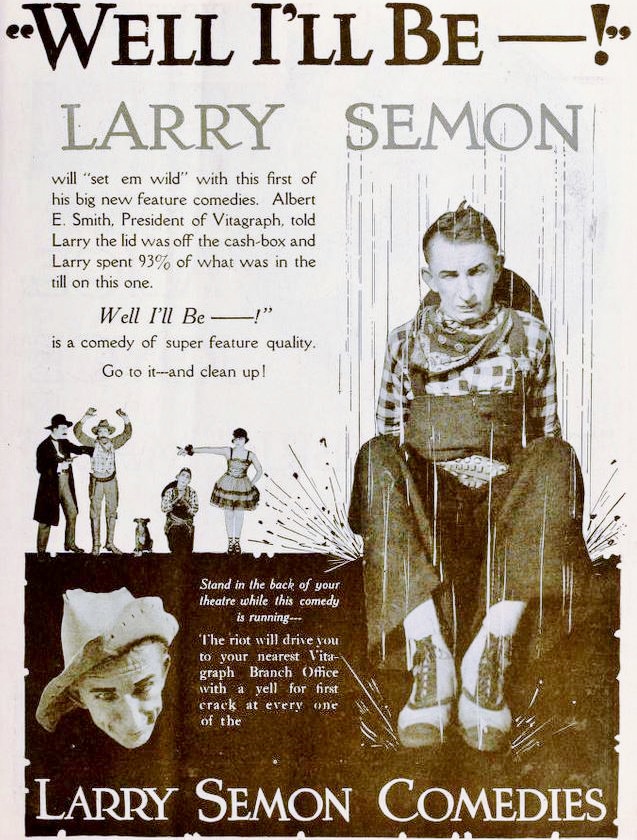
Step right up, fellow aficionados of cinematic history, and prepare to journey back to an era when laughter was silent yet thunderous, and the Wild West was as much a playground for pratfalls as it was for pistols. Today, we're unearthing a true, albeit often overlooked, gem from 1918: Larry Semon's uproarious Western comedy, Well, I'll Be. In a landscape dominated by the likes of Chaplin and Keaton, Semon carved out his own delightfully chaotic niche, a realm where logic was merely a suggestion and physical comedy reigned supreme. This particular short, directed by and starring the inimitable Semon, offers a kaleidoscopic glimpse into his unique brand of slapstick, set against the quintessential backdrop of an untamed frontier town. It's a film that encapsulates the spirit of early cinematic comedy – ambitious, energetic, and utterly committed to eliciting guffaws through sheer, unadulterated pandemonium.
The premise, as with many silent comedies, is deceptively simple, yet it serves as the perfect launchpad for a series of escalating absurdities. We are introduced to Beer Bottle Bend, a settlement whose name alone paints a vivid picture of its boisterous character. This is a town where the line between law and lawlessness is not merely blurred but utterly obliterated, existing in a perpetual state of good-natured (or perhaps not-so-good-natured) anarchy. Presiding over this delightful disarray is Sheriff Larry, portrayed with masterful ineptitude by Semon himself. Larry is not merely incompetent; he is a force of nature in his own right, a walking, talking embodiment of boobyish charm whose witlessness rivals, and perhaps even surpasses, the very lawlessness he is ostensibly meant to contain. His uniform is more of a suggestion than an authority, and his badge, one suspects, is held on by sheer optimism rather than any genuine respect from the townsfolk.
The catalyst for the film's unfolding pandemonium arrives on the dusty stagecoach, a harbinger of both refinement and financial intrigue. Enter a demure young woman from the East, a figure of striking contrast to the rough-and-tumble denizens of Beer Bottle Bend. Played with understated elegance by Lucille Carlisle, her presence alone suggests a disruption of the established order. But she isn't merely a decorative addition; she arrives bearing a substantial burden – a consignment of $100,000, explicitly destined for the utterly unprepared Sheriff Larry. The sheer magnitude of this sum, coupled with the unexpected arrival of a lady, sends Beer Bottle Bend into a celebratory frenzy. One can almost hear the raucous piano music and feel the celebratory dust motes dancing in the silent air. It's a testament to Semon's comedic vision that the mere arrival of money and a woman can trigger such an immediate, widespread explosion of revelry.
What follows is a delightful exploration of influence and unexpected agency. The demure Easterner, far from being a passive observer, quickly demonstrates a surprising capacity for positive change. In one of the film's more charming sequences, she takes it upon herself to reform the community's champion 'elbow-bender' – a euphemism, we can safely assume, for the most dedicated patron of the saloon. This act of quiet, persistent persuasion is a fascinating counterpoint to the boisterous physical comedy that defines much of Semon's work. It highlights a subtle undercurrent of social commentary, suggesting that even in the most unruly of settings, a touch of gentle guidance can yield remarkable results. This particular dynamic, where a seemingly delicate figure instigates significant change, echoes thematic elements found in other films of the era where societal norms were challenged, albeit perhaps with less comedic intent. For instance, while The Cabaret Girl might explore a different facet of female agency in a more urban setting, the underlying power of a woman to reshape her environment is a recurring motif.
Inspired by her success, and perhaps thoroughly embarrassed by the town's continued lawlessness, the demure woman then sets her sights on Sheriff Larry himself. With a blend of encouragement and perhaps a subtle hint of exasperation, she manages to galvanize the witless sheriff into taking actual action against the entrenched criminal element. This is a pivotal moment, as it shifts Larry from a mere comedic prop to a reluctant, yet active, participant in the plot's progression. Semon masterfully portrays Larry's transformation, or rather, his stumbling attempt at transformation, with a series of exaggerated gestures and befuddled expressions that are pure comedic gold. His attempts at heroism are less about genuine courage and more about a desperate, clumsy effort to live up to the expectations placed upon him, particularly by this intriguing Eastern interloper. The dynamic between their characters is a classic 'odd couple' pairing, where one's competence inadvertently highlights the other's hilarious lack thereof.
The heart of the film's comedic engine, however, lies in the frantic odyssey of the $100,000. This substantial sum of cash becomes the ultimate MacGuffin, a constantly shifting prize that fuels a rapid-fire succession of chases, deceptions, and hilarious mishaps. The money changes hands with bewildering speed, moving from the sheriff's inept grasp to the clutches of various rogues and back again, each exchange punctuated by a fresh wave of slapstick brilliance. Semon's genius for orchestrating complex, multi-layered gags shines brightest here. The visual storytelling is paramount, with every frantic dash, every bewildered expression, and every near miss contributing to the escalating chaos. It's a symphony of physical comedy, where the audience is invited to revel in the sheer kinetic energy of the pursuit. This kind of escalating chaos, driven by a central object of desire, is a hallmark of silent comedy, often seen in the works of other masters. While not a direct comparison in genre, the intricate plotting around a valuable item can be seen, albeit with a dramatic twist, in films like The Co-respondent, though Semon's approach is entirely for comedic effect.
The supporting cast, featuring Charles Amador, William Hauber, and Frank Alexander, provides excellent foils for Semon's antics. Their reactions, their exaggerated villainy, and their own contributions to the physical comedy are crucial in building the world of Beer Bottle Bend. They are not merely background players but essential components of the comedic mechanism, each character adding another layer to the town's charmingly lawless tapestry. Without their energetic participation, Semon's performance, however brilliant, would lack the necessary counterpoints to truly shine. The ensemble work is a testament to the collaborative spirit of early filmmaking, where every performer contributed to the overall comedic rhythm.
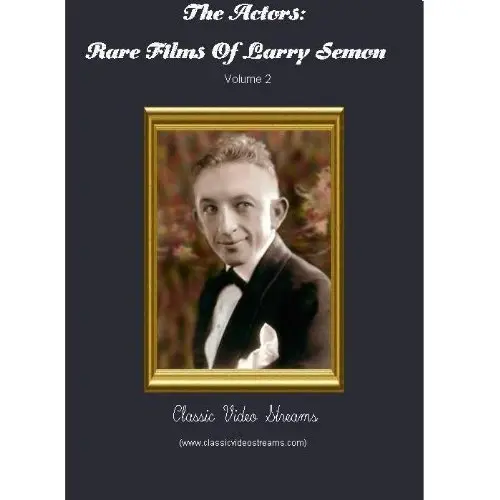
The film's ultimate revelation is both humorous and satisfying. After all the frenetic exchanges and near-misses, the $100,000 finally comes into the possession of its original, and heretofore unacknowledged, owner: the demure Eastern woman. It is at this point that her true motivations are unveiled – she had, in fact, been tracking the cash all the way from the bustling streets of New York. This twist transforms her from a mere catalyst into a master strategist, a cunning operator who orchestrated much of the chaos to achieve her own ends. It's a delightful subversion of expectations, elevating her character beyond the typical damsel in distress and making her the true intellectual victor of the narrative. This clever turn of events adds a layer of depth to the seemingly straightforward slapstick, giving the audience a satisfying 'aha!' moment. Her calculated pursuit, hidden beneath a veneer of innocence, offers a playful commentary on perceptions and the power of subtle manipulation, a theme that, in a much darker vein, could be explored in a film like Her Mistake, though obviously without the comedic lens.
The final moments of Well, I'll Be deliver a classic Semon punchline. With the dust settled, the money secured, and order (of a sort) restored, Sheriff Larry, ever the booby, offers a few cursory remarks on the subject of women. These observations, undoubtedly delivered with a mixture of bewilderment and misplaced confidence, are deliciously ironic. He remains utterly oblivious to the fact that he has been outmaneuvered, outsmarted, and ultimately, saved by the very 'demure thing' he now attempts to philosophize about. It's a perfect encapsulation of his character: perpetually behind the curve, yet utterly endearing in his cluelessness. This final scene provides a humorous, if slightly dated, commentary on gender dynamics of the era, where male characters often underestimated the intelligence and capabilities of their female counterparts, a trope that, when played for laughs, can still resonate today.
Larry Semon, as both director and star, showcases his signature style throughout Well, I'll Be. His films are characterized by elaborate stunts, often involving complex contraptions and a dizzying array of props, all designed to maximize comedic impact. While perhaps not as celebrated for his character depth as Chaplin or Keaton, Semon's strength lay in his boundless energy and his commitment to spectacle. He was a master of the chase sequence, the exaggerated reaction, and the meticulously choreographed physical gag. His work often felt like a live-action cartoon, pushing the boundaries of what was physically possible and comically plausible. The Western setting, with its wide-open spaces and opportunities for horseback pursuits and saloon brawls, was a perfect canvas for his particular brand of mayhem. One could argue that the lawlessness of Beer Bottle Bend is not just a plot device, but an extension of Semon's own unbridled comedic spirit, mirroring the chaotic energy he brought to every frame.
The film's pacing is relentless, a hallmark of silent comedies designed to keep audiences engaged without the benefit of dialogue. Every scene is packed with visual information, every character's movement is deliberate and comedic. The use of intertitles, while sparse, is effective in conveying essential plot points and occasional witty remarks. The cinematography, though rudimentary by modern standards, is adept at capturing the frantic action, ensuring that the audience never misses a single pratfall or a crucial exchange of the elusive cash. The film serves as a fantastic example of how early filmmakers used every available tool to tell a story and elicit emotion, primarily laughter, without the crutch of spoken words. It's a pure form of cinematic expression, relying entirely on visual cues and the universal language of physical comedy.
In comparing Well, I'll Be to other films of its era, it's fascinating to observe the diverse approaches to storytelling. While films like The Broken Commandments or Damaged Goods delved into heavier moral and social issues, Semon's work remained firmly rooted in escapist entertainment. His goal was pure, unadulterated fun, a much-needed antidote to the more serious fare of the day. The comedic portrayal of lawlessness in Beer Bottle Bend stands in stark contrast to the more somber explorations of societal decay or injustice found in dramas. Semon invited audiences to laugh at chaos, rather than despair over it. This distinction is crucial in understanding the breadth of silent cinema, which catered to a wide range of tastes and emotional experiences. Even within the Western genre, there was immense variety; compare Semon's comedic sheriff to the more stoic or heroic figures often portrayed in other Westerns of the period.
Larry Semon's creative output, both as a writer and performer, demonstrates a consistent vision for his comedic universe. His characters, often bumbling authority figures or hapless everymen, navigate worlds designed to test their physical and mental limits. In Well, I'll Be, he plays directly to his strengths, crafting a narrative that allows for maximum comedic opportunity. The screenplay, attributed solely to Semon, is a testament to his understanding of comedic timing and visual gag construction. He knew precisely how to build tension only to release it with a perfectly executed pratfall or an unexpected twist. This singular authorship lends the film a cohesive, idiosyncratic feel that is distinctly Semon's. His creative fingerprints are all over this production, from the initial concept to the final, exasperated remarks on women. It's a reminder that even in the early days of cinema, a strong auteurial voice could shine through, shaping the entire comedic landscape of a film.
For modern viewers, Well, I'll Be offers a delightful window into the origins of screen comedy. It's a raw, energetic, and unapologetically silly film that reminds us of the power of visual humor. While some of the gags might feel familiar to those accustomed to a century of cinematic evolution, their execution by Semon and his team remains remarkably fresh. The sheer physical commitment of the performers, the ingenious staging of the chaotic sequences, and the unexpected narrative turns ensure that the film holds its own even today. It's a vital piece of silent film history, deserving of its place alongside the more frequently lauded works of the era. It's a testament to the enduring appeal of a good laugh, especially one delivered with such boundless enthusiasm and inventive spirit. So, if you're ever in the mood for a rollicking good time, a journey back to a simpler, funnier era, saddle up and ride into Beer Bottle Bend with Sheriff Larry. You'll be glad you did, and who knows, you might even learn a thing or two about the surprising power of a 'demure little thing' and the true nature of a well-earned fortune. It's a cinematic experience that truly makes you say, "Well, I'll Be!"
IMDb 5
1933
Community
Log in to comment.