DbcultAccessing Vault...
5/10
Senior Film Conservator
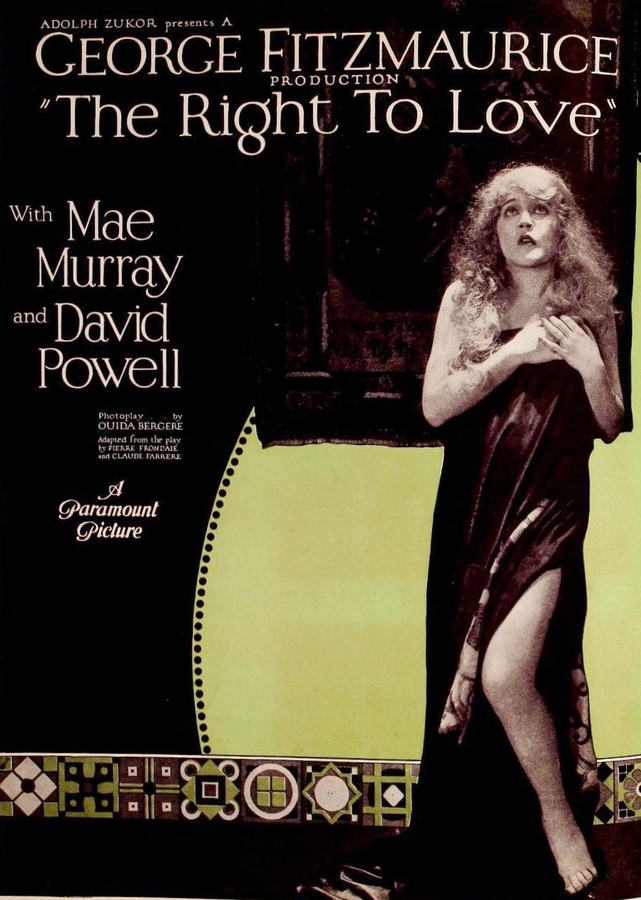
A definitive 5/10 rating for a film that redefined the boundaries of cult cinema. The Right to Love remains a cornerstone of transgressive art.
Picture Constantinople circa 1919: electric streetcars rattle past minarets still draped in Ottoman blackouts, champagne smuggled from Marseilles arrives in violin cases, and every embassy soirée is a chessboard where queens are traded for bishops. Into this fever dream steps The Right to Love, a picture that—despite its deceptively polite title—unfurls like damp silk to expose the raw flesh of marital capitalism. Forgotten for decades, the film survives only in a 35 mm nitrate print at Gosfilmofond, tinted amber and turquoise like bruised skin. Yet one viewing is enough to sense its radioactive pulse.
Director Paul Scardon, a Viennese refugee who once shot operettas for Sascha-Film, treats wedlock like a hostile takeover. Sir Archibald—rendered with reptilian finesse by Holmes Herbert—doesn’t simply cheat; he monetises adultery. Divorce in post-war Britain still demands proof of feminine dereliction, so he reverse-engineers that proof, turning his wife’s body into Exhibit A. The transactional chill anticipates Two Men and a Woman by at least five fiscal quarters, yet Scardon’s camera lingers on Constance’s face longer than any ledger line, forcing the audience to audit her humiliation in real time.
Alma Tell, a Broadway veteran whose career would be truncated by talkie politics, plays Constance with the brittle poise of a porcelain figurine dropped once and never quite reassembled. Watch the micro-tremor in her lower eyelid when Falkland fastens a diamond necklace around Lady Edith’s throat—an accessory he once clasped on her own clavicle. Silent cinema lives or dies in pupils, and Tell’s dilate like ink in water, registering every incremental theft of identity. The performance sits comfortably beside Mae Murray’s glittering vamp in Scars of Love, yet Tell’s restraint feels eerily modern, closer to a 21st-century anti-heroine than to the flapper fireworks of the era.
Mae Murray’s Lady Edith refuses the thankless slot of home-wrecking siren. Instead, she weaponises her own notoriety, arriving at the palazzo in a motorcar the colour of arterial blood, veils fluttering like surrender flags that forgot to apologise. Murray, a Talmadge protégé who understood that glamour is simply labour wearing perfume, gives Edith a transactional glee. She collects lovers the way boys collect stamps, yet when she senses Falkland’s cruelty toward Constance, her pupils harden into flint. The moment she pivots from predator to reluctant ally is wordless: a single gloved finger tapping a cigarette into a jade ashtray, the ash falling like verdict. It’s the kind of moral hairpin turn that Trilby attempted but muffled under Victorian gauze.
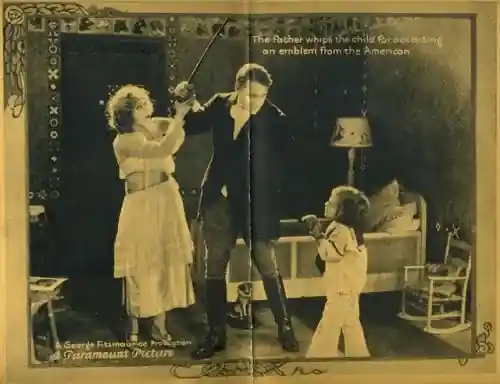
David Powell’s Colonel Loring materialises from the shadows of a moonlit quay like a ghost drafted from a lost republic of honour. His uniform, battle-frayed at the cuffs, is less military regalia than moral vintage—something out of a pre-1914 novella. Note how Scardon frames him against the Bosphorus: ripples of water projected onto his face so that ethical certitude seems to waver yet never dissolve. Loring’s function is not to rescue but to testify; he carries the past like a loaded sidearm, reminding everyone that stories can be rewritten only if someone remembers the first draft. The chemistry between Tell and Powell is conducted via half-light: a gloved hand brushing a velvet sleeve, a hesitation that lasts exactly three film frames longer than propriety allows—more erotic than any clinch.
The city itself is credited as cast member. Cinematographer William F. Wagner, who shot newsreels at Gallipoli, lenses Constantinople like a patient remembering surgery: domes bruised by shell-light, alleyways running with stray dogs and stray truths. In one tableau, Constance flees across the Galata Bridge pursued by gossips; the bridge’s steel lattice imprisons her in a visual gridlock that prefigures social media dog-piling by a century. Compare this to the expressionist alleyways of Parsifal or the studio-built Paris of Only a Factory Girl, and you’ll appreciate how location authenticity here doubles as moral commentary: nowhere to hide when East and West grind together like tectonic plates.
The script credits read like a diplomatic summit: French novelist Claude Farrère supplies lubricious cynicism; Pierre Frondaie adds Gallic existential sighs; American scenarist Ouida Bergère stitches the seams for Stateside censors. The resulting hybrid is both cosmopolitan and merciless. Dialogue titles flicker with aphoristic venom: "A ring on the finger is simply a handcuff with gemstones." Yet the film’s most devastating line is visual—Constance’s reflection in a cracked mirror superimposed over Falkland’s gloating face, the fracture travelling across her throat like an unspoken sentence. Bergère, who polished sharp little aphorisms for The Five Faults of Flo, outdoes herself here, proving that intertitles can draw blood when sharpened properly.
Underneath the corsets and cutaways lies a scalding thesis: women’s bodies are the futures market of patriarchy. Falkland’s scheme literalises this—he must obtain a position (photographic evidence) before he can sell (divorce) his asset (wife). The film’s obsession with windows, doorframes, and keyholes isn’t voyeuristic decoration; it’s the architecture of speculation. Every glance traded across drawing rooms is a bid, every whispered rumour a margin call. When Edith finally slips a revolver into Constance’s beaded reticule, she’s not arming her rival—she’s granting her a hostile takeover of her own narrative. The moment feels as radical as anything in Civilization, yet filtered through the acrid espresso of post-war disillusion.
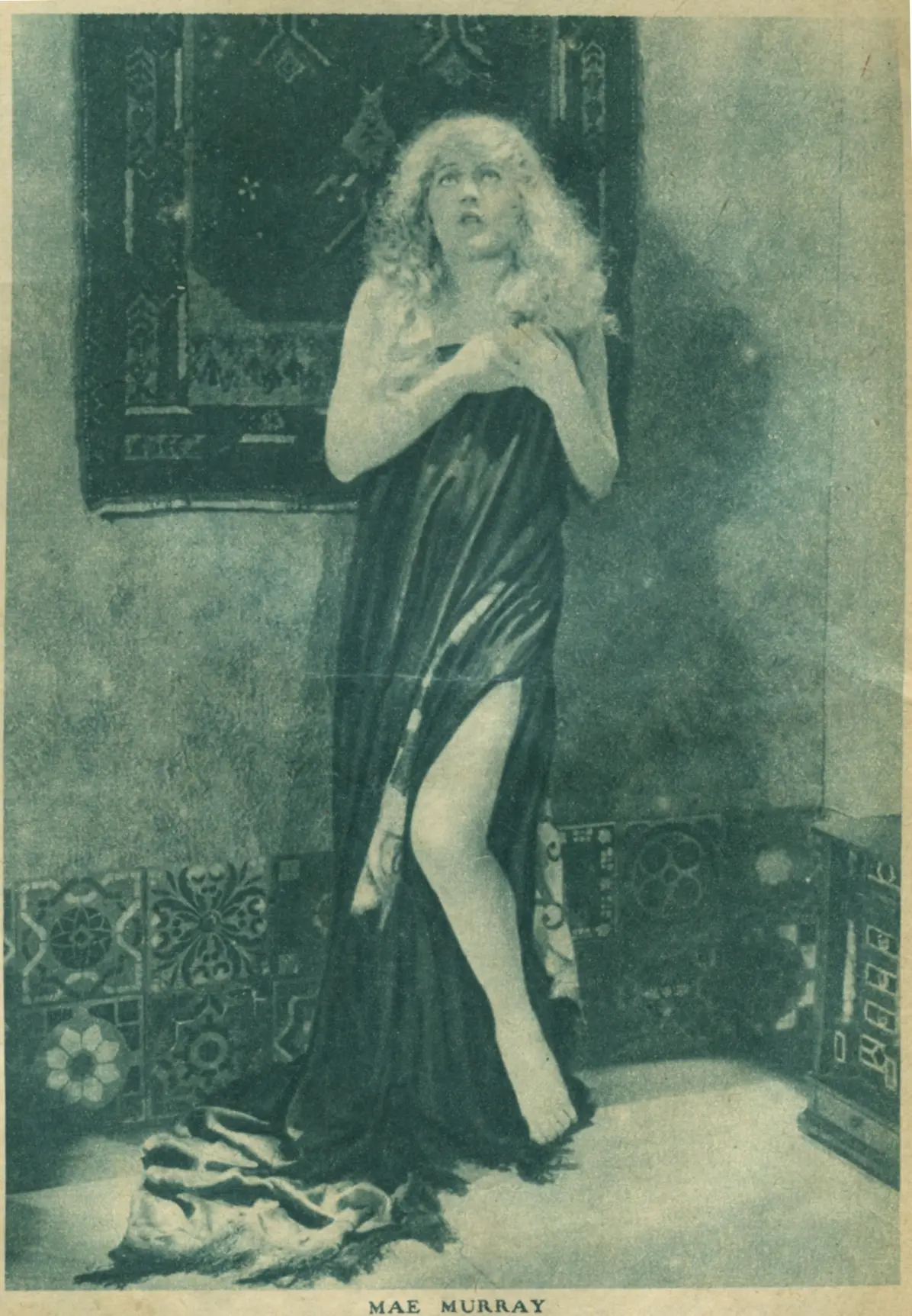
The lone surviving print, struck in 1921 for Soviet distribution, was found mislabelled as "Turkish Melodrama #7" in a Moscow vault. Under the custodianship of Gosfilmofond, it has been scanned at 4K; however, the amber tint has oxidised into liverish bruise, and the final reel is missing its Bulgarian-translated intertitles. Criterion reportedly eyed it for inclusion but balked at the cost of reconstructing English cards. That leaves cinephiles trading bootleg .mp4s whose compression smears Murray’s beaded gowns into digital porridge—tragic, given that her costumes alone could finance a dissertation on "Sequins as Liquid Modernity." A crowdfunding campaign titled #LoveHasRights aims to finance a 2025 restoration, pairing the film with a new score by Serbian composer Ana Đurić, whose previous work on Nattens Datter III proved she can wring heartbeats from silence.
At its 1920 premiere in Manhattan’s Rialto, the house orchestra played a potpourri of Tchaikovsky and oriental foxtrots. Contemporary festivals often accompany it with generic chamber strings, betraying the film’s geopolitical throb. A more honest approach would sample field recordings of the Bosphorus, the creak of Ottoman balconies, the muezzin’s call sliced with tram bells—an auditory palimpsest mirroring the city’s fractured identity. Try watching it with nothing but city traffic outside your window at 2 a.m.; the syncopation of random horns syncs eerily with Wagner’s visual rhythms, proving that modern noise is simply ancient grief commuting.
Trade papers of the era hailed it "a thinking man’s Scarlet Letter" yet condemned its "Continental laxity." The Chicago board of censors trimmed 436 feet, primarily Prince Cerniwicz’s leering close-ups and a dissolve implying conjugal rape. Even gutted, the picture grossed $462,000 domestically—respectable against its $137,000 negative cost. Critics compared it to Tempest and Sunshine for its tempestuous mores, though its DNA feels closer to von Stroheim’s later "Foolish Wives," minus the grotesque slapstick. Sadly, the scandal did not convert into awards; 1920 preferred its heroines dead or domesticated, not divorced and defiant.
Viewed today, the film plays like an ur-text for workplace harassment. Falkland gaslights, isolates, and financialises his spouse—the same playbook exposed in contemporary exposés. Yet Scardon refuses to grant Constance eternal victimhood. Her final glance into camera, a defiant iris shot that dilates until the screen blacks out, is less plea than indictment. It’s the 1920 equivalent of posting receipts. Feminist scholars at UC Berkeley’s "Silent Revisions" symposium recently paired it with Jalousiens Magt to trace cinematic lineage of the "male tears" meme; the mash-up GIFs practically create themselves.
Yes, the third act is hobbled by a missing reel, and the Soviet intertitles read like a Bulgarian fortune cookie. Yet what remains is a film that anticipates not only the melodramatic swerves of The Princess' Necklace but also the institutional critique of He Couldn't Fool His Wife. It is a time capsule filled with nitrate, perfume, and unfiltered rage. Watch it for Alma Tell’s eyelids, for Mae Murray’s vehicular entrance, for the way Constantinople becomes a chessboard where every pawn has a dagger. Most of all, watch it to remember that the right to love, in patriarchy’s ledger, is always written in disappearing ink—unless someone insists on reading by the light of a burning bridge.
If the restoration campaign reaches its goal, we might finally hear the Bosporus score that history denied us. Until then, seek the scratchy .mp4, turn off your phone, and let the right to love—and the right to rage—flicker in the dark.
IMDb 6.2
1928
Community
Log in to comment.