DbcultAccessing Vault...
6.4/10
Senior Film Conservator
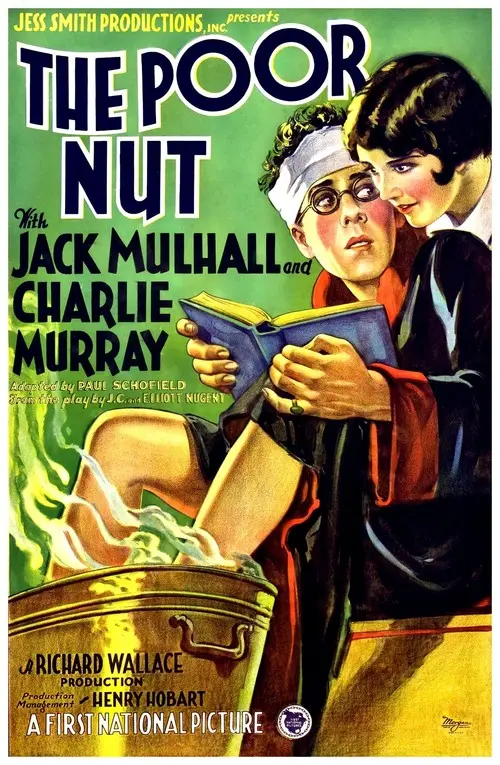
A definitive 6.4/10 rating for a film that redefined the boundaries of cult cinema. The Poor Nut remains a cornerstone of transgressive art.
Is 'The Poor Nut' worth watching today? Short answer: yes, but with significant caveats. This 1927 silent campus comedy offers a fascinating glimpse into the nascent forms of romantic humor, yet its pacing and specific brand of slapstick will not resonate with every modern viewer. It's a film best suited for cinephiles interested in early American cinema, the evolution of comedic storytelling, and the foundational work of actors like Jean Arthur. Conversely, those seeking fast-paced, contemporary humor or a plot devoid of silent-era theatricality will likely find its charms elusive.
This film works because of its central, relatable premise of social awkwardness and mistaken identity, brought to life by earnest performances. This film fails because its comedic timing often feels protracted by today's standards, and some gags rely on outdated tropes. You should watch it if you appreciate historical cinema, the subtle craft of silent acting, and the foundational elements that would later define the romantic comedy genre.
At its core, “The Poor Nut” is a story about the universal struggle to be seen and understood, especially in the intoxicating, often terrifying, arena of young love. We meet Donald Ogden, played with endearing earnestness by William Courtright, a brilliant botany student whose intellect far outstrips his social dexterity. His world is one of scientific precision, a stark contrast to the chaotic, emotionally charged realm of collegiate romance. His object of affection, Margie Blake (a luminous, if underutilized, Jean Arthur), represents everything he yearns for but feels utterly incapable of attaining through his authentic, quiet self.
The central conflict ignites when Donald, in a desperate, ill-advised attempt to impress Margie, fabricates a more outgoing, athletic persona. This isn't just a white lie; it's a full-blown performance, an elaborate charade that sees him stumble through sports he knows nothing about and engage in boisterous activities that are fundamentally alien to his nature. The humor, and indeed the pathos, of the film stems from this widening chasm between who Donald truly is and the exaggerated, almost cartoonish figure he pretends to be.
What makes this particular narrative interesting, beyond its comedic potential, is its subtle commentary on societal expectations of masculinity. In an era where physical prowess and outward confidence were often conflated with worth, Donald’s struggle to reconcile his introverted intelligence with these external pressures feels remarkably prescient. The film, perhaps unintentionally, becomes a critique of the performative aspects of attraction, suggesting that true connection can only flourish when honesty prevails, no matter how awkward the truth may be.
William Courtright, as Donald Ogden, carries the bulk of the film's comedic and dramatic weight. His portrayal of the titular 'poor nut' is a masterclass in silent-era physical comedy and expressive acting. Courtright doesn't just play a shy character; he embodies the very essence of social discomfort. Watch his posture, the way his eyes dart nervously, the hesitant gestures that betray his inner turmoil. When he attempts to mimic athleticism, his movements are comically exaggerated, a testament to his character's utter lack of grace in that domain.
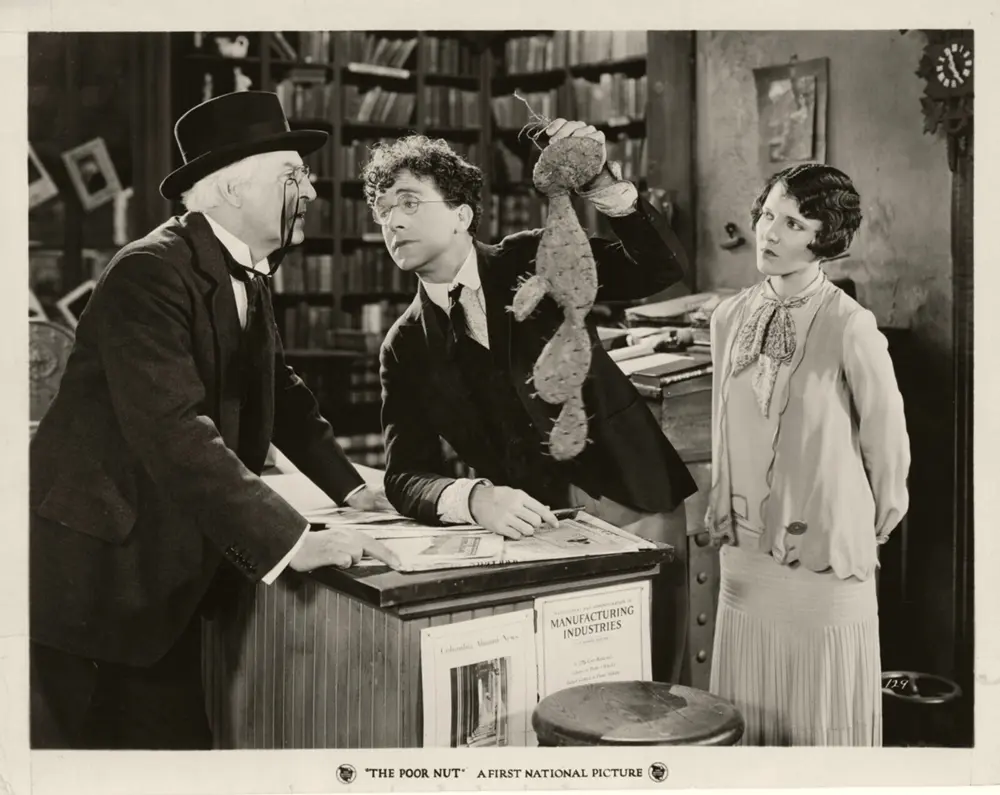
One particularly memorable sequence involves Donald's disastrous attempts at a track and field event. Courtright’s flailing limbs and bewildered facial expressions, even without spoken dialogue, convey a profound sense of humiliation and comedic ineptitude. It’s a performance that elicits both laughter and a genuine pang of sympathy for the character’s predicament. He makes Donald’s desperation to be accepted palpable, even when his actions are absurd.
Jean Arthur, in one of her earlier roles, brings a quiet luminosity to Margie Blake. Even at this nascent stage of her career, her screen presence is undeniable. There’s an intelligence in her gaze and a natural grace that hints at the iconic roles she would later inhabit. However, it must be said that 'The Poor Nut' doesn't fully utilize her burgeoning talent. Margie is largely reactive, a charming object of affection rather than a fully developed character with her own agency. She observes Donald’s antics with a mixture of amusement and confusion, but the script doesn't afford her the depth that Arthur was clearly capable of delivering.
Her reactions to Donald’s increasingly outlandish behavior are often subtle, a slight furrow of the brow or a gentle smile, suggesting a discerning mind behind the pretty face. It's a shame the film doesn't delve deeper into Margie's perspective, especially given the inherent drama of falling for someone who isn't being entirely truthful. One can only imagine what a more fleshed-out role could have revealed about Arthur's early comedic timing and dramatic potential.
The supporting cast, including Charles Murray and Henry Vibart, provides solid comedic relief and grounding for the narrative. Charles Murray, in particular, offers a robust, often boisterous foil to Courtright’s shyness, embodying the kind of overtly masculine energy that Donald so awkwardly attempts to emulate. These performances, while broad by modern standards, are essential in establishing the comedic environment and driving the misunderstandings forward. They represent the archetypes of collegiate life that would become staples in subsequent generations of campus comedies.
Directed by Elliott Nugent and J.C. Nugent, 'The Poor Nut' exemplifies the transitional period of American cinema, straddling the end of the silent era and the impending arrival of synchronized sound. The direction is competent, if not groundbreaking, with a clear focus on staging physical comedy and visual gags. The Nugents demonstrate a solid understanding of how to build comedic tension through escalating misunderstandings, a hallmark of farcical storytelling.
The tone is overwhelmingly lighthearted, leaning heavily into slapstick and situational humor. There’s a gentle, almost innocent quality to the comedy, reflecting the sensibilities of the era. The film never delves into particularly dark or cynical territory, preferring to maintain a buoyant, optimistic outlook even amidst Donald’s most embarrassing predicaments. This unwavering cheerfulness, while charming, can sometimes feel simplistic to a contemporary audience accustomed to more nuanced comedic structures.
One particular directorial choice that stands out is the use of intertitles. While standard for silent films, the intertitles in 'The Poor Nut' are often used not just for dialogue, but for humorous asides or to comment on Donald’s internal state, adding an additional layer of comedic narration. This technique, when used effectively, helps to bridge the gap between unspoken action and character motivation, though occasionally it can feel a little heavy-handed, spelling out jokes that the visuals have already conveyed.
The cinematography in 'The Poor Nut' is functional, adhering to the visual language of late silent cinema. The camera is largely static, favoring medium shots and wide frames to capture the ensemble and the physical comedy unfolding. There are no grand, sweeping tracking shots or experimental angles to speak of, but the compositions are clear and effective in conveying the narrative. The lighting, while basic, serves its purpose, illuminating the actors and settings without drawing undue attention to itself.
The pacing, however, is where modern viewers might find themselves adjusting their expectations. Silent films often operated on a different rhythmic cadence than contemporary cinema. Gags are allowed to play out for longer, reactions are held, and the narrative progression can feel more deliberate, even slow, at times. While this extended pacing allows for certain comedic moments to fully blossom – such as Donald’s protracted struggles with a simple athletic task – it can also lead to stretches where the momentum lags. It's a curious artifact, a window into a different era of storytelling where brevity was not always the primary concern.
For instance, a scene involving a misunderstanding over a telegram takes an extended period to resolve, with multiple characters misinterpreting the message in sequence. While each individual misinterpretation is mildly amusing, the cumulative effect can test the patience of a viewer accustomed to quicker narrative resolutions. This isn't a flaw in the film itself, but rather a characteristic of its period, demanding a different kind of engagement from its audience.
Absolutely, but with a specific mindset. 'The Poor Nut' is not a film that will universally captivate a modern audience with its humor or rapid-fire plot. Its pacing is leisurely, its comedic sensibilities firmly rooted in the 1920s, and its narrative structure is straightforward. However, for those who appreciate the historical context of cinema, it offers a rich viewing experience.
It's invaluable as a document of early romantic comedy tropes, showcasing the nascent forms of character archetypes that would evolve over decades. Watching William Courtright’s performance is a lesson in silent acting, demonstrating how much emotion and humor could be conveyed without a single spoken word. Furthermore, it offers a chance to see a young Jean Arthur, even in a supporting capacity, before she became a household name. It works. But it’s flawed.
The film serves as a fascinating precursor to later, more sophisticated screwball comedies, demonstrating the groundwork being laid for complex comedic misunderstandings and character-driven humor. It’s a quiet, unassuming piece of cinematic history that, while not a lost masterpiece, certainly deserves a spot in the curriculum of anyone studying the evolution of film genres.
'The Poor Nut' is a quaint, if not entirely compelling, relic from the silent era. It’s a film that, while undeniably dated in its execution and pacing, offers a valuable window into the comedic sensibilities and societal anxieties of its time. William Courtright’s performance is genuinely charming, anchoring the film with a relatable portrayal of an underdog trying to navigate the treacherous waters of young love and self-presentation. Jean Arthur’s early appearance is a treat, hinting at the star she would become, even if the script doesn’t give her enough to do. Ultimately, it’s a film that demands patience and an appreciation for cinematic history rather than a purely entertainment-driven viewing. It’s not a film that will convert skeptics of silent cinema, but it will certainly reward those already invested in understanding the foundational elements of American film. A solid 6/10 for its historical significance and Courtright's performance, but with a clear understanding of its limitations for a contemporary audience.
IMDb —
1924
Community
Log in to comment.