DbcultAccessing Vault...
Cult Review
Senior Film Conservator
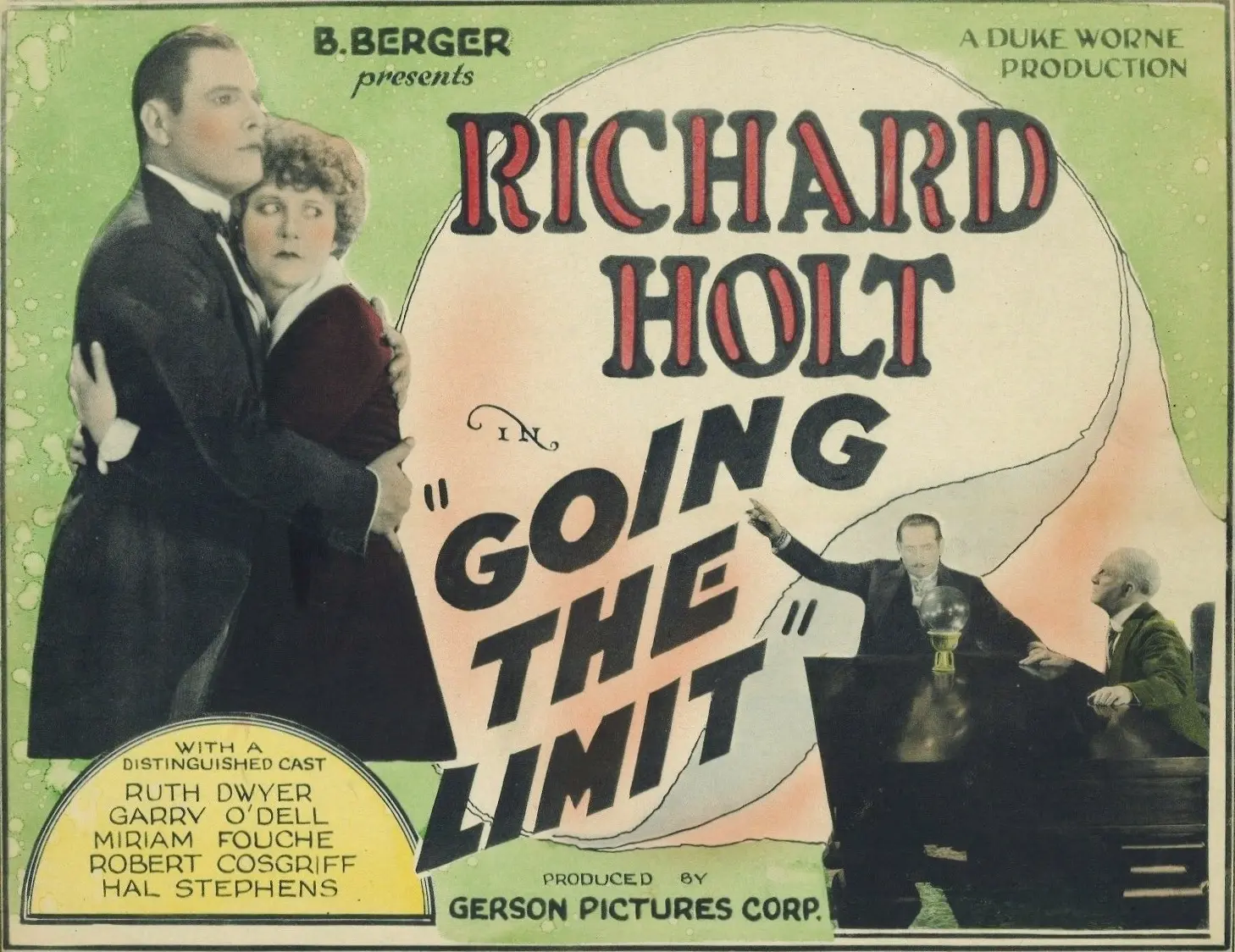
Short answer: Yes, but only if you appreciate the raw, unpolished energy of early independent cinema. This film is for San Francisco history buffs and silent action enthusiasts; it is not for those who require narrative subtlety or complex character arcs.
Going the Limit is a fascinating artifact of mid-1920s filmmaking that manages to bridge the gap between the era's obsession with the occult and its burgeoning love affair with high-speed automotive stunts. While many films of this period, such as The Better Wife, focused on the domestic tribulations of the wealthy, this Grover Jones-penned script takes a more cynical, street-level approach to the vulnerabilities of the upper class.
For the modern viewer, the value of Going the Limit lies in its location shooting. Unlike the static drawing-room dramas found in Pettigrew's Girl, this film breathes the salty air of San Francisco. If you find joy in seeing the pre-war topography of the Bay Area—specifically the way the early automobiles lurch and strain against those iconic inclines—then this is an essential viewing experience. However, if you are looking for a deep exploration of the human condition, you might find more substance in something like Pampered Youth.
This film works because it weaponizes the verticality of San Francisco to create a sense of genuine peril during its climax. This film fails because its depiction of Lorenzo Hayward borders on the farcical, making it difficult to sympathize with his self-inflicted financial ruin. You should watch it if you have an appetite for 1920s location shooting and the specific brand of 'stunt-man' heroism popularized by the era.
The first half of the film is a masterclass in the 'long con' tropes of the silent era. The villains are not mere thugs; they are psychological manipulators. The way they utilize Lorenzo Hayward’s superstitions is reminiscent of the darker undercurrents found in Fate's Frame-Up. There is a specific scene where the 'clairvoyants' use mirrors and dim lighting to convince Hayward of a spectral presence. The camera lingers on Hayward’s face—played with a trembling, wide-eyed anxiety by the supporting cast—capturing a very real 1920s fear of the unknown.
I would argue that the film is actually a biting satire of the idle rich. Hayward has so much money and so little practical sense that he is essentially begging to be robbed. This isn't just a plot point; it’s a commentary on the decadence of the era. While films like The Price of Pleasure look at the costs of indulgence, Going the Limit looks at the costs of intellectual laziness.
Miriam Fouche and Ruth Dwyer provide the emotional anchors for the film, though their roles are somewhat dictated by the genre conventions of 1925. Dwyer, as Helen, is the classic damsel, but she possesses a certain sharpness in her expressions during the kidnapping sequence that suggests a character who is more than just a plot device. She doesn't just wait to be rescued; she actively looks for opportunities to hinder her captors, a trait that makes her slightly more progressive than the heroines in Freckles.
The pacing of the film is uneven but intentionally so. The slow, methodical buildup of the scam in the first two acts serves to heighten the contrast with the final reel. When Dick finally begins the chase, the editing style shifts dramatically. The cuts become shorter, and the camera angles become more aggressive. It lacks the aerial grace of Sky-Eye, but it replaces that grace with a grounded, percussive intensity.
The highlight of Going the Limit is undoubtedly the 'wild chase up and down the hills.' For a film made in 1925, the stunt work is surprisingly visceral. There is a moment where the pursuit vehicle nearly clips a pedestrian—a shot that feels dangerously unchoreographed. Unlike the jungle-based stunts in Adventures of Tarzan, which rely on the athleticism of the lead, the stunts here rely on the heavy machinery of the industrial age.
The cinematography during this sequence captures the unique geometry of San Francisco. The way the cars disappear over the crest of a hill, only to reappear seconds later at a lower elevation, creates a rhythmic tension that many modern directors fail to replicate. It is a reminder that before CGI, the only way to 'go the limit' was to actually drive a car at breakneck speeds through a living city.
One could argue that the film’s real villain isn't the gang of clairvoyants, but the city itself. San Francisco, with its fog and its verticality, facilitates the deception and provides the obstacles for the rescue. In many ways, Going the Limit is an early example of 'City Noir'—where the environment dictates the morality of the characters. This is a far cry from the more pastoral settings of Hitchin' Posts.
Furthermore, the kidnapping of Helen feels oddly secondary to the theft of the power of attorney. The film seems more concerned with the loss of Hayward's agency and wealth than with the safety of his daughter until the final act. This suggests a very specific, perhaps unintentional, commentary on the priorities of the 1920s upper class.
Going the Limit is a film of two halves: a deliberate, almost theatrical exploration of fraud and a chaotic, cinematic explosion of movement. While it may not have the poetic resonance of L'innamorata or the exoticism of Tao, it possesses a gritty, American energy that is impossible to ignore. It is a film that understands the thrill of the chase and the danger of the dark. If you can look past the dated tropes of the 'superstitious millionaire,' you will find a remarkably modern action sensibility hidden beneath the silence.
"A kinetic collision of 1920s spiritualism and urban chaos, 'Going the Limit' proves that San Francisco's hills were made for cinema long before the sound era arrived."
IMDb —
1933
Community
Log in to comment.