DbcultAccessing Vault...
Cult Review
Senior Film Conservator
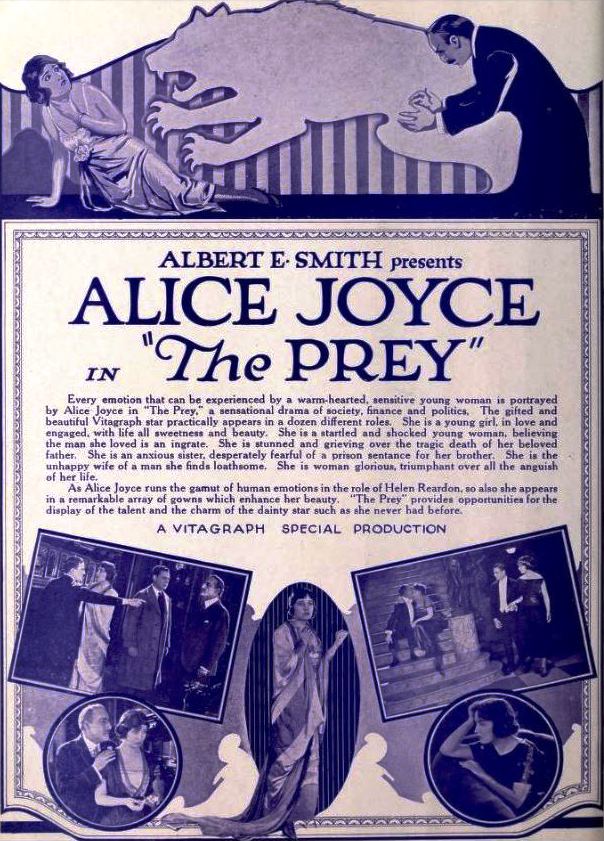
In the flickering penumbra between Dice of Destiny and The Hindu Nemesis, The Prey arrives like a blood-stained affidavit from 1915, its celluloid pores still sweating arsenic and moral vertigo. Thanhouser’s publicity department once billed it as “a story of high finance and higher feelings,” but the film’s true currency is disgrace, minted in close-ups that feel like affidavits sworn under oath.
Director Joseph Le Brandt and scenarist Calder Johnstone stage the fiscal transgression inside cavernous sets where Corinthian columns loom like ledger books frozen in marble. Note how cinematographer Blair Smith racks focus from Reardon’s trembling fountain pen to the iron safe in the background—an Eisensteinian collision of micro-gesture and macro-structure that predates Soviet montage by a full decade. The check itself, a scrap of perforated promise, is photographed with the reverence accorded to papal bulls; its trajectory—from Jack’s reckless signature to Lowe’s pocket to the judge’s bench—constitutes the film’s true protagonist.
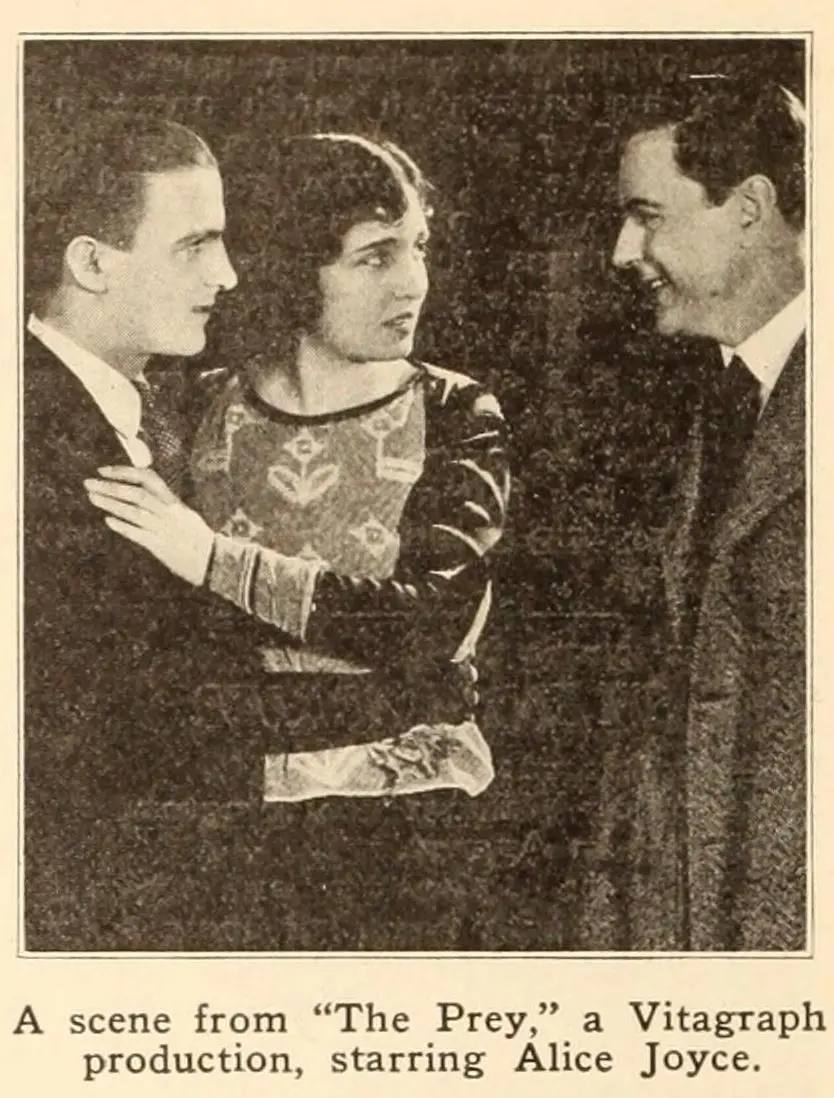
When Reardon’s suicide note flutters to the parquet, the camera tilts downward in a rare early example of a diagonal composition, as though ethics themselves had succumbed to gravitational pull. Compare this to the horizontal austerity of Belgium, the Broken Kingdom; here the world is off-balance, a pinball machine of guilt.
Harry Benham’s Lowe exudes the oleaginous charisma of a man who moisturizes with other people’s dreams. Watch the way he fingers the forged check—index finger tracing the ink as if Braille-reading the apocalypse. Opposite him, Alice Joyce negotiates Helen’s arc from porcelain fiancée to galvanized avenger without ever tipping into the hysterics that doom so many silent-era damsels. Her eyes—two candle stubs burning at both ends—register each fresh betrayal as a barely perceptible hardening of the iris.
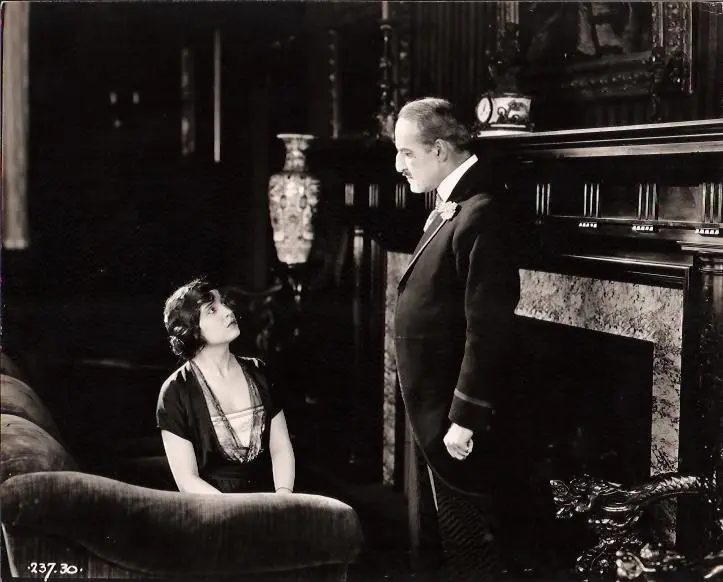
Meanwhile, H.H. Pattee plays Calvin not as crusader but as bureaucratic Icarus, the morning coat of rectitude gradually singed by the klieg lights of scandal. In the pivotal framing scene, Pattee’s micro-shrug when the shutter clicks conveys a man who realizes the photograph will outlive his soul.
Forget the floral verbosity plaguing A Roman Scandal; Johnstone’s intertitles arrive like telegrams from Nemesis. Sample: “A signature, a soul, a woman—each may be forged.” The brevity slices deeper than any sword. Another card, flashed at the exact frame when Lowe’s grip tightens on Helen’s wrist, reads simply: “Wedlock, cellblock—both have iron.”
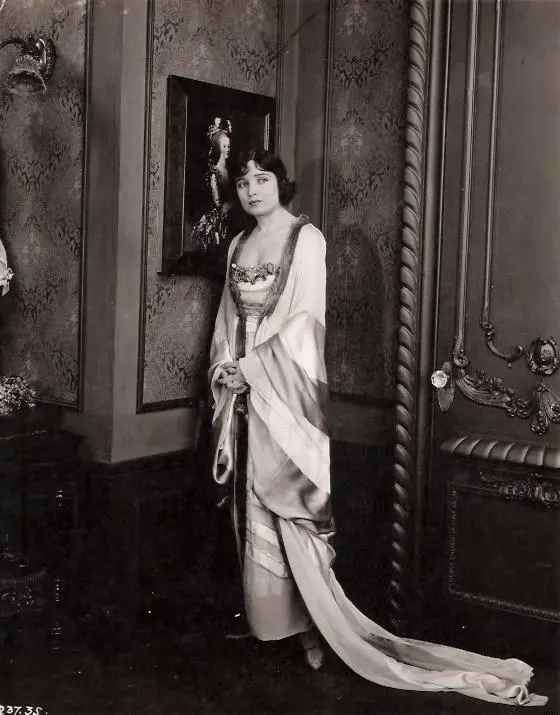
Though originally accompanied by house pianists thumping out Hearts and Flowers, the 2018 Edition Filmmuseum restoration commissioned a score built around Charles Ives’s The Unanswered Question. The dissonant trumpet motif hovers over Reardon’s suicide like a coroner’s query, while string clusters slide chromatically as Lowe stalks Helen through their marital manor. Viewers who stream the 4K scan on Criterion Channel can toggle between this modern track and a historically informed medley of parlor laments—each choice refracts the film’s moral spectrum differently.
Scholars often strand early melodramas like Naughty Nurses in the ghetto of victim porn, yet Helen’s final gambit complicates the ledger. By seeding the household cash with marked bills lifted from her father’s old business ledgers, she weaponizes the very instrument of patriarchal exchange. The moment she slides the money into Lowe’s cigar box, her gloved hand pauses—frame enlargements reveal a ghost of a smile, the birth of a proto-femme fatale who would feel at home in Zelyonyy pysk.
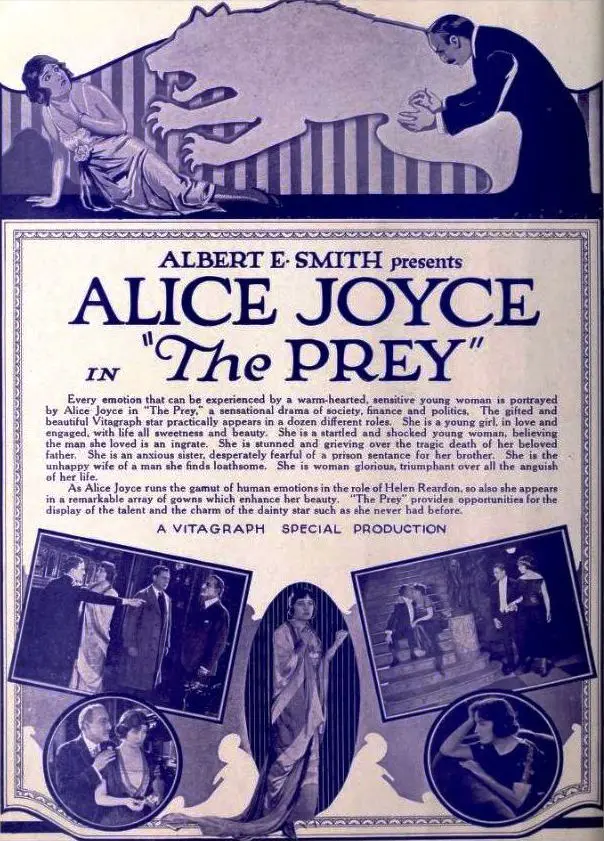
The 2022 4K photochemical restoration unearthed twenty-two feet of missing footage previously thought lost to 1917 censorship boards. The excised sequence—Lowe visiting a Chinatown opium den—explains the character’s glassy-eyed brutality in later reels. Grain alchemy was performed using wet-gate printing to dissolve scratches; consequently, the candlelit close-ups now reveal individual pores, turning every bead of sweat into a miniature crystal ball forecasting doom.
Where All Wrong treats fraud as farce and Get-Rich-Quick Edgar burlesques the appetite for easy money, The Prey metabolizes embezzlement into existential poison. Observe the color palette: whereas Saved in Mid-Air bathes its aviators in pastoral blues, cinematographer Smith restricts his tinting to bile greens for interiors and sulfur yellows for exteriors—an aesthetic verdict that the air itself is septic.
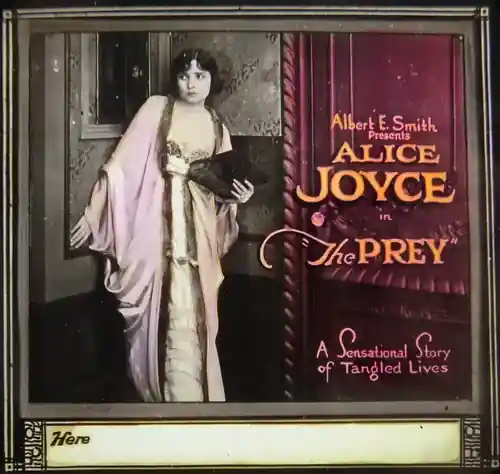
Premiering at the Lyric Theatre on 14 March 1915, the film grossed $127,000 domestically—paltry beside Griffith’s epics yet astronomical for Thanhouser. Contemporary Variety griped that its “morbid preoccupation with ledger sheets would bore the nickelodeon crowd,” yet the New York Dramatic Mirror praised its “unflinching anatomy of fiduciary hypocrisy.” The split foreshadows today’s algorithmic chasm between arthouse and multiplex.
The film’s DNA coils through von Stroheim’s Greed, where another scrap of paper metastasizes into tragedy, and whispers into the marital terror of Gaslight. Even the Coen Brothers cited the check-as-MacGuffin structure when storyboarding Blood Simple. Cinephiles tracking the motif of suicide as social erasure will find echoes in Die Faust des Schicksals, though none match the merciless concision of The Prey.
In an age of NFT grifts and crypto-collapse, the film’s central dilemma—value divorced from virtue—feels ripped from yesterday’s Twitter feed. When Helen brandishes the incriminating banknotes now glowing under ultraviolet light, one perceives a proto-image of today’s blockchain receipts: spectral, traceable, ultimately damning.
Does the closing embrace between Calvin and Helen offer catharsis? The camera retreats to a godlike crane shot, revealing the couple as two inkblots seeping toward merger yet forever defined by the negative space of the men who extinguished themselves. The film ends not with redemption but with survivor’s guilt bathed in sunrise the color of diluted iodine—a hue that stains the retina long after the projector’s hum dies.
Viewers hungering for silent cinema that bites rather than soothes should hunt this prey across streaming platforms, Blu-ray, or—if fortune smiles—a rare 16 mm print in an archive basement. Just remember: every frame carries the acrid perfume of ink, sweat, and self-immolation. You will not emerge unscathed.
IMDb —
1921
Community
Log in to comment.