DbcultAccessing Vault...
5.4/10
Senior Film Conservator
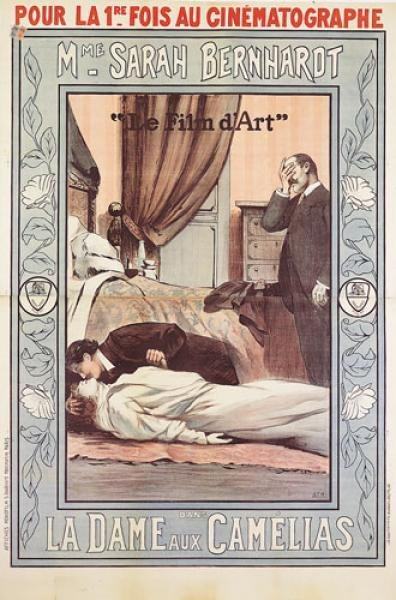
A definitive 5.4/10 rating for a film that redefined the boundaries of cult cinema. La dame aux camélias remains a cornerstone of transgressive art.
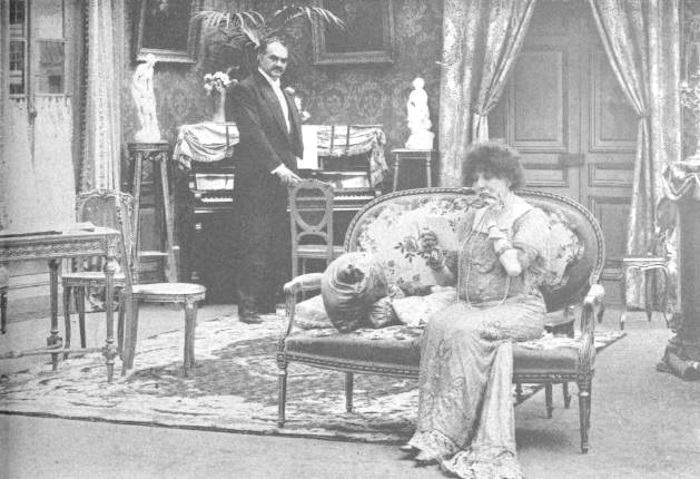
Stepping into the spectral embrace of La Dame aux Camélias, the 1911 silent film adaptation of Alexandre Dumas fils' immortal novel, is less an act of viewing and more an archaeological excavation into the very bedrock of cinematic storytelling. This is not merely a film; it is a precious relic, a testament to the transformative power of early cinema and, more profoundly, to the unparalleled magnetism of its star, Sarah Bernhardt. At a time when the moving picture was still finding its voice, Bernhardt, already a titan of the stage, lent her formidable presence to the nascent medium, imbuing it with a gravitas and emotional depth that few contemporaries could rival. Her portrayal of Marguerite Gautier is a masterclass in silent performance, a ballet of gestures, expressions, and the sheer force of a personality capable of transcending the limitations of the frame.
The narrative itself, a perennial favorite across theatrical and literary landscapes, unfolds with a familiar, yet no less heartbreaking, inevitability. Marguerite, a courtesan whose renown is as much for her beauty as for her tragic air and her signature camellias, navigates the treacherous currents of Parisian high society. Her life, a glittering, precarious dance between luxury and loneliness, is irrevocably altered by the arrival of Armand Duval. Their romance, born of genuine affection rather than transactional convenience, is a defiant spark against the pragmatic cynicism of their world. It's a love story that, even in its earliest cinematic incarnation, pulses with a raw, almost unbearable sincerity, forcing us to confront the harsh realities of social stratification and the devastating sacrifices demanded by reputation.
To speak of La Dame aux Camélias without placing Sarah Bernhardt at its incandescent core would be a disservice of the highest order. At 67 years old when this film was made, the 'Divine Sarah' defied conventional notions of screen presence. She wasn't merely acting; she was embodying, channeling the very essence of Marguerite's tragic grandeur. Her physical performance, honed over decades on the world's most prestigious stages, translates surprisingly well to the silent screen. Every movement of her hands, every tilt of her head, every nuanced shift in her facial muscles communicates volumes that dialogue would only dilute. The iconic scene where Armand's father confronts her, begging her to relinquish his son for the sake of his future, is a tour de force of silent anguish. Bernhardt's portrayal of Marguerite's internal conflict—the profound love for Armand warring with her understanding of societal dictates—is palpable, a silent scream that reverberates through the decades. It's a performance that truly demonstrates why she was considered one of the greatest actors of all time, her power undiminished by the lack of spoken word or the primitive technology of the era.
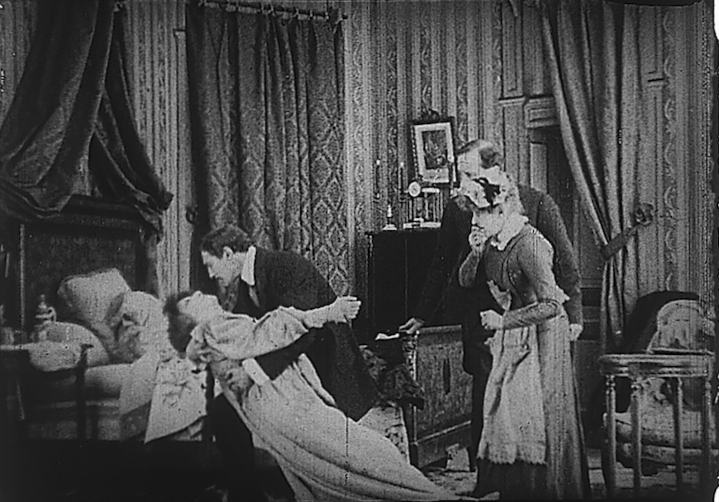
Comparing this to her other cinematic ventures, such as Les amours de la reine Élisabeth (also from 1912, though often cited as 1912), one sees a consistent thread of theatricality adapted for the camera. While critics often debate the extent to which these early films truly captured her stage brilliance, there's no denying the sheer force of her personality. She brought a legitimacy and an artistic weight to cinema at a crucial juncture, proving that the medium was capable of conveying profound human drama, not just fleeting spectacles like The Corbett-Fitzsimmons Fight or travelogues like Glacier National Park. She wasn't just performing; she was lending her immense prestige to a new art form, validating its potential.
Henri Pouctal, one of the film's directors, along with Bernhardt herself, navigated the nascent grammar of cinema with a clear understanding of its theatrical origins. The staging often resembles a proscenium arch, with actors entering and exiting the frame as if on a stage. However, there are nascent attempts at cinematic language that hint at the future. Close-ups, though rare by modern standards, are employed for dramatic effect, allowing the audience to truly witness the raw emotion etched onto Bernhardt's face. The use of intertitles, while sometimes lengthy, serves to bridge the narrative gaps and convey crucial dialogue, guiding the audience through the emotional labyrinth of the plot. These early techniques, while primitive, are fascinating to observe, providing a window into the experimental phase of filmmaking.
The aesthetic of the film, with its stark black and white imagery, inadvertently enhances the melodrama. Shadows deepen the sense of impending tragedy, and the elaborate period costumes, even without color, convey the social distinctions central to the story. One can imagine the live musical accompaniment that would have heightened the emotional stakes, guiding the audience through Marguerite's moments of joyous love, agonizing sacrifice, and ultimately, her poignant demise. It's a reminder that silent films were never truly 'silent' but rather multi-sensory experiences, relying on more than just visual cues.
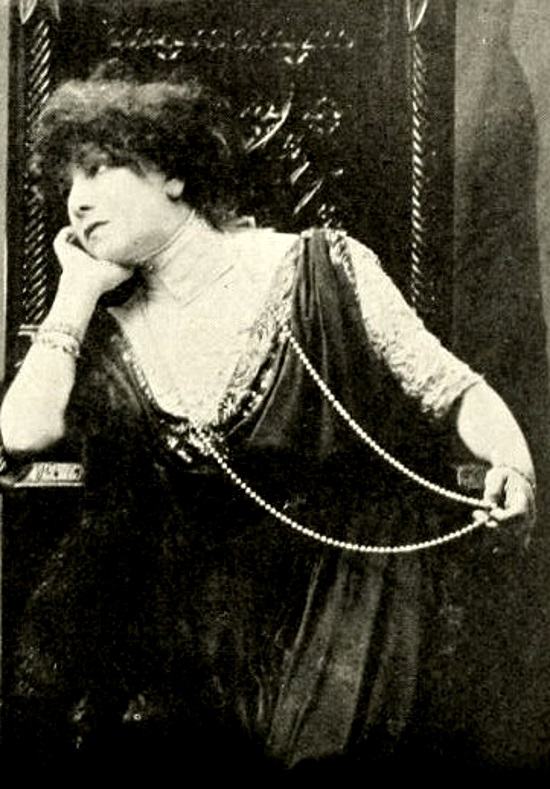
At its heart, La Dame aux Camélias is a searing indictment of societal hypocrisy and the destructive power of convention. Marguerite, despite her profession, possesses a moral compass often superior to those who condemn her. Her love for Armand is pure, unblemished by the transactional nature of her life, yet society refuses to grant her redemption. Her sacrifice, driven by a profound love that seeks to protect Armand's future, is both noble and utterly devastating. It forces us to question the arbitrary rules that dictate human worth and happiness, a theme that resonates just as powerfully today as it did over a century ago. The film, like Dumas's novel, challenges the audience to look beyond superficial judgments and recognize the inherent dignity and capacity for love within even the most marginalized individuals.
The motif of illness, specifically consumption, is not merely a plot device but a potent metaphor for Marguerite's fading life and the corrosive effects of her environment. The physical decay mirrors the social decay, highlighting the tragic irony that her genuine love, meant to bring her life, instead hastens its end. It’s a stark reminder of the era's medical limitations and the almost poetic injustice often dealt to characters of her station in literature and drama. This aspect of the narrative connects it to a long tradition of tragic heroines, from the operatic stage to other cinematic adaptations of dramatic works like Anna Karenina or even earlier, more religiously themed narratives such as Life of Christ, where suffering is often central to the character's arc, albeit for different thematic purposes.
While much of early cinema is lost to time, the surviving fragments of La Dame aux Camélias offer invaluable insights into the period. It stands as a pivotal work, not just for its star power, but for its role in shaping the dramatic potential of the silent film. It demonstrated that complex emotional narratives, previously confined to the stage or literature, could find a compelling home on the screen. The film's influence, though perhaps indirect due to its age and the eventual evolution of cinema, contributed to the understanding that film could be more than a novelty; it could be art.
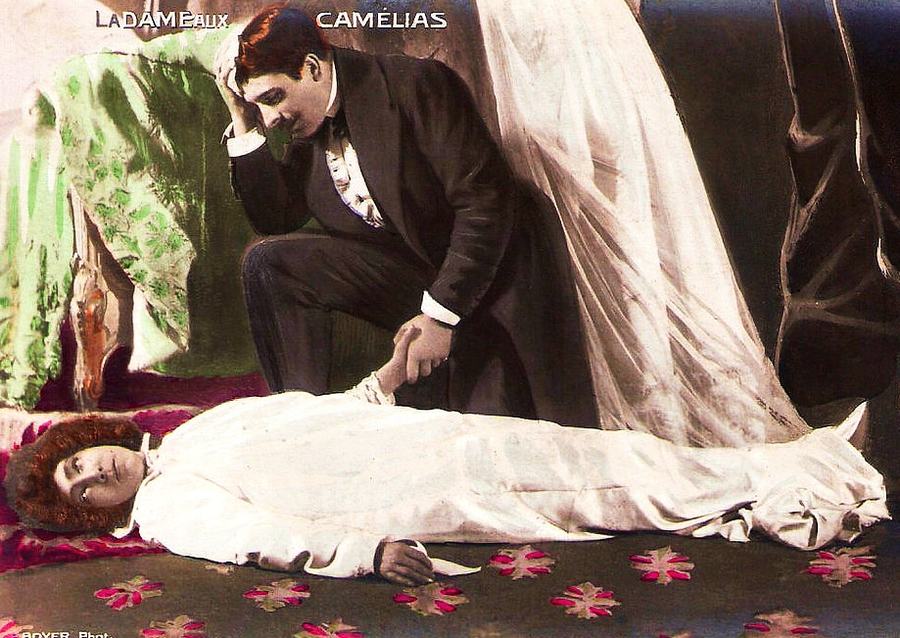
For contemporary audiences, approaching La Dame aux Camélias requires a recalibration of expectations. This is not a film of rapid cuts, dynamic camera movements, or intricate special effects. It is a film of tableau vivants, of sustained gazes, and of an almost theatrical intensity. Yet, within these constraints, lies a profound beauty. The film's power resides in its ability to evoke deep emotion through minimalist means, relying heavily on the expressive capacity of its performers and the inherent tragedy of its story. It's a stark contrast to the more action-oriented spectacles of the era, such as The Story of the Kelly Gang, which focused on historical events and grand gestures rather than intimate psychological drama.
The enduring appeal of Dumas's story ensures that La Dame aux Camélias will continue to be revisited and reinterpreted across various media. This 1911 film, however, holds a unique place. It is a snapshot of a legendary performer at a unique point in her career, venturing into an uncharted artistic territory. It captures the essence of a bygone era, both in its narrative content and its cinematic form. It reminds us of the fragility of early film, the immense challenges faced by its pioneers, and the sheer artistry required to communicate complex human emotions without the aid of spoken dialogue or sophisticated visual effects.
In its final moments, as Marguerite succumbs to her illness, finding a bittersweet reunion with Armand, the film delivers its emotional crescendo. The tragedy is complete, yet the lingering image is not one of despair, but of a love that, against all odds, proved to be resilient. It’s a powerful testament to the human spirit's capacity for both immense suffering and enduring affection. Even in its faded, flickering form, La Dame aux Camélias offers a profoundly moving experience, a silent elegy to a love lost and found, and a crucial piece of cinema history that continues to whisper its poignant tale across the decades.
The film serves as a fascinating counterpoint to other literary adaptations of the period, like Oliver Twist (1912), which also grappled with themes of social injustice and class disparity, but often through a more episodic and picaresque lens. While Oliver Twist sought to expose the broader societal ills, La Dame aux Camélias delves into the intensely personal, charting the devastation wrought by these ills on an individual soul. Both films, in their distinct ways, represent the early cinema's ambition to tackle weighty literary material and translate it for a mass audience, proving the medium's intellectual and emotional capacities were far from limited to mere novelty.
Furthermore, the sheer audacity of bringing such a well-known and beloved stage play to the screen, with Bernhardt herself, speaks volumes about the burgeoning confidence in cinema as a legitimate art form. It was a declaration that the magic of the theater could, in some measure, be captured and disseminated to a wider global audience, democratizing access to high culture. This effort to translate grand theatrical productions into film was a significant trend, seen also in works like Hamlet, Prince of Denmark (1910) or The Life and Death of King Richard III (1912), each attempting to distill the essence of complex narratives into the visual language of the screen. La Dame aux Camélias stands tall among these early pioneers, a beacon of dramatic intent and artistic ambition.
The film's exploration of love transcending social barriers and the profound agony of self-sacrifice resonates across cultures and generations. It taps into universal human experiences, making its story timeless. The contrast between the vibrant, almost decadent Parisian setting and Marguerite's inner turmoil is expertly conveyed, even with the limited visual palette of the time. The film is a testament to the power of a compelling narrative and a commanding performance, proving that even in the infancy of cinema, profound artistic statements were being made. It challenges modern viewers to look beyond technological sophistication and appreciate the raw, unvarnished emotion that defined early cinematic triumphs.
Ultimately, La Dame aux Camélias is more than just a historical curiosity; it is a profound cinematic experience that, despite its age and the technical limitations of its production, continues to stir the soul. It's a poignant reminder of the enduring power of a tragic love story, brought to life by one of history's most compelling performers, and a foundational piece in the grand tapestry of film history. To watch it is to connect with the very origins of narrative cinema, to witness the birth of an art form that would go on to shape the way we see and understand the world. It’s an essential viewing for anyone who cherishes the heritage of the moving image and the indelible mark left by its earliest stars.
IMDb 7.4
1936
Community
Log in to comment.