DbcultAccessing Vault...
Cult Review
Senior Film Conservator
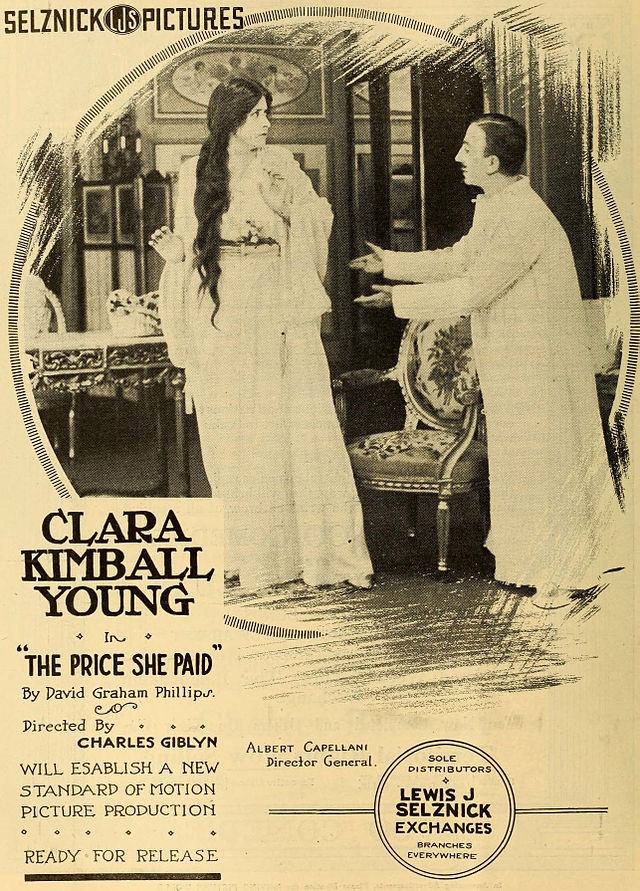
Charles Giblyn’s 1920 melodrama arrives like a lacquered music-box whose painted ballerina suddenly draws blood. The film, restored last year by Eye Filmmuseum, reminds modern viewers that the so-called “woman’s picture” was never a 1940s invention—it was forged in the crucible of post-Victorian penury, when corsets loosened but shackles of exchange still clinked.
From the first iris-in on rain-slicked cobblestones, cinematographer Max Schneider bathes the Gower townhouse in funereal chiaroscuro. The camera glides past black-clad mourners until it lands on Mildred’s veil, the lace so fine it resembles a spider devouring its own web. That single shot telegraphs the film’s obsession: women as ornamental currency whose appraisal fluctuates with male solvency. When the will is read, the camera dollies back, shrinking the two widowed women inside a cavernous negative space—an architectural sigh that whispers, “You are now surplus.”
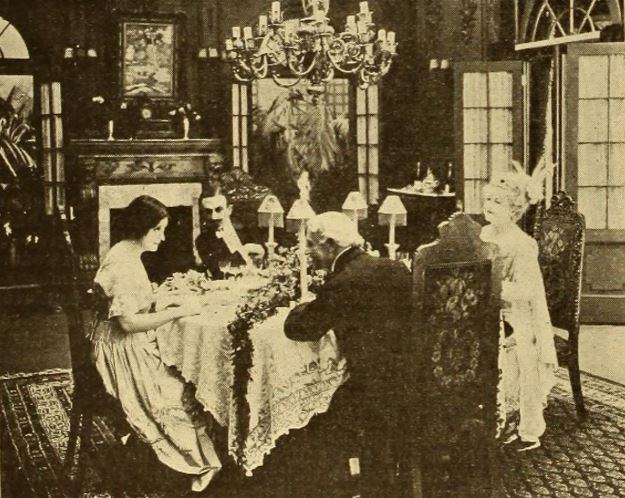
What follows plays like a merciless economic treatise wrapped in silk. Mother Gower—played by Louise Beaudet with the brittle hauteur of a dowager whose smile calcified decades ago—doesn’t just suggest; she dictates. The dialogue intertitles, lettered in spidery white on black, read: “A woman without a purse must become a purse herself.” The line, lifted verbatim from David Graham Phillips’s source serial, lands like a slap. The film’s genius lies in refusing to frame this transaction as anomaly; extras flit through ballroom scenes gossiping about dowries, making the marriage market as mundane as buying war bonds.
Enter Alan Hale’s Presbury, a fox in human skin who wheezes entitlement with every breath. Hale, decades away from grinning as Errol Flynn’s sidekick, here embodies the leering bourgeois who equates age with proprietary rights. Watch the way he fingers the Gower family Bible before proposing—his thumb rubbing over the surname as if already erasing it. After the wedding, the marital home becomes a theater of micro-aggressions: he times Mildred’s descent of the staircase like a maestro cueing a recital, critiquing her gait for failing to project “affluence.” The dinner table is a tribunal; when she requests pin-money to tip servants, he pushes a single gold coin across the mahogany, the scraping sound amplified until it resembles a guillotine.
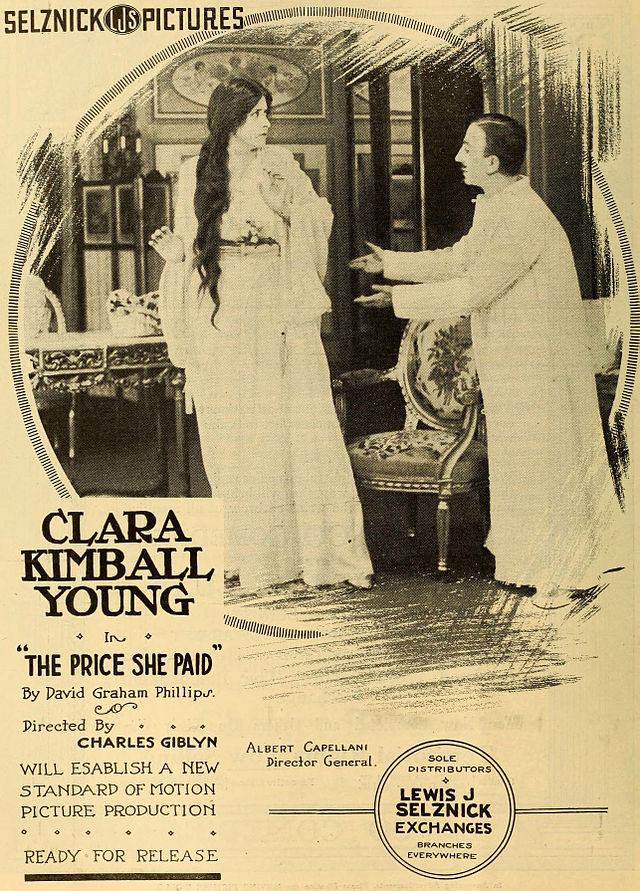
General Siddall, essayed by David Powell with ramrod posture and eyes that never blink, believes acquisition equals legacy. His introductory intertitle labels him “victor of every campaign but love.” The film stages their union as a military campaign: he surveys Mildred’s silhouette through a lorgnette, the lens superimposing gridlines over her body, literally mapping terrain. Once married, she is installed in a bedroom whose walls are painted with frescoes of conquered citadels—subtle, the film is not. Yet the horror is intimate: every bracelet he clasps on her wrist comes with a receipt he files in a safe, as if cataloguing plunder. When Mildred asks for cash to aid a consumptive laundress, Siddall laughs, “Generosity is a blemish on marble.”
Donald Keith’s attorney functions as both love-interest and Marxian circuit-breaker. Introduced leafing through dusty tomes in a tenement office lit by a sputtering gas-jet, he embodies the new professional class. His courtroom revelation—that Siddall’s first wife vegetates in an asylum—arrives via a dissolve from the General’s gloating face to a gaunt woman clawing at asylum bars. The edit indicts patriarchal jurisprudence: women’s bodies become contracts men can void at will, while their minds remain imprisoned. Keith’s subsequent declaration, “You were never a wife, only a legal hallucination,” ricochets like a bullet through the narrative, shredding any residual romanticism.
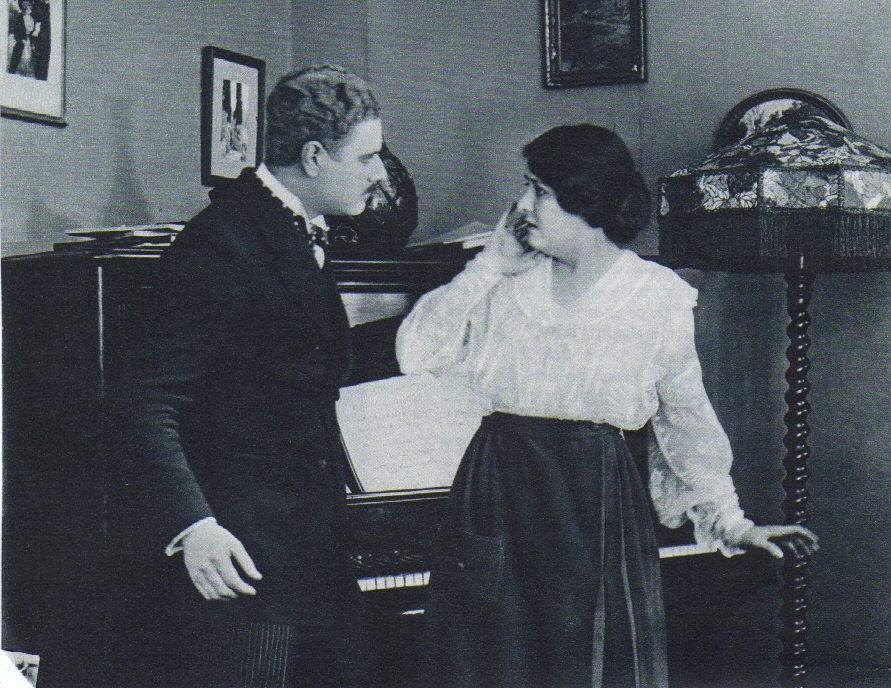
But the film’s redemptive engine is song. Mildred’s vocal training is shot like a training montage avant la lettre: superimposed metronomes, smoke from countless cigarettes forming staves in the air, her throat muscles contracting in extreme close-up. The camera fetishizes labor—the cracked skin of her knuckles from cold water, the blood-flecked handkerchief after over-practice. When at last she hits high C, Giblyn cuts to a chandelier quivering, its crystals refracting prismatic sprays across her face—an orgasmic rupture of patriarchal silence. The opera-house debut becomes a battlefield: backstage, male patrons wager on her failure; she enters draped in a crimson gown the same shade as earlier blood, now transmuted into banner.
Art director Charles Bowser coded wealth through chromatic saturation. Presbury’s parlor is a maw of burgundy and hunter-green; Siddall’s mansion bleaches into alabaster and ash-grey, draining life. Mildred’s gowns evolve from mourning mauve to Presbury’s imposed powder-blue, finally exploding into the sun-yellow finale—a hue that had been absent for reels, making her appear like a self-ignited flare. Notice how extras in street scenes wear patched neutrals, a silent chorus underscoring that Mildred’s struggle is classed, not merely gendered.
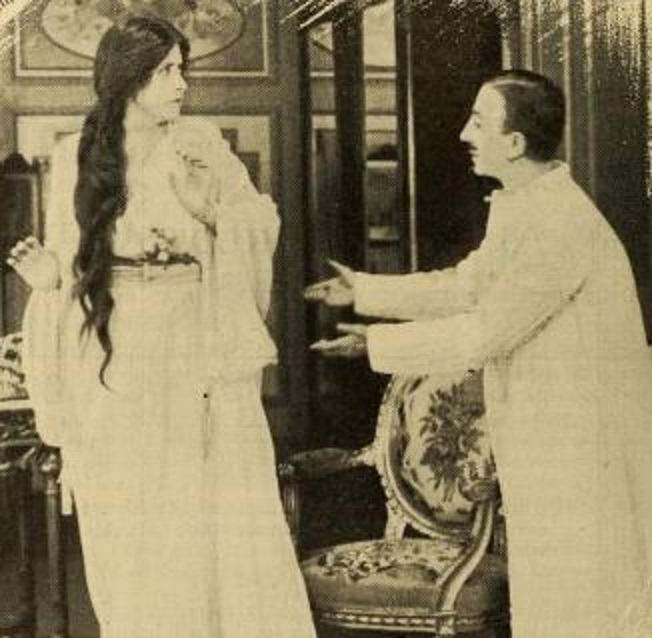
Clara Kimball Young, once dubbed “the most beautiful woman in the world,” here weaponizes that beauty, letting it calcify into a mask of calculation. Her micro-expressions—an eyelid flutter when offered a diamond, the way her jaw slackens upon hearing Siddall’s first wife still lives—convey a mind perpetually tabulating costs. Alan Hale’s transition from jocular suitor to venomous stepfather is a master-class in patriarchal rot; watch how his voice (described in intertitles) modulates from honeyed compliments to sibilant s’s that hiss across the frame. Cecil Fletcher as Baird provides the film’s only moral ballast, his puppy-eyed devotion never tipping into maudlin thanks to the actor’s grounded physicality—hands jammed into pockets as if physically restraining desire.
Giblyn, a Broadway refugee, edits scenes like musical movements. The transition from Siddall’s drawing-room to Mildred’s garret uses a match-cut on a champagne glass shattering against a bare bulb—opulence imploding into austerity. Later, a rhythmic sequence cross-cuts between Mildred’s scales and Keith poring over legal documents, the metronome counting both towards liberation. The climactic aria is preceded by a 12-shot montage of creditors pounding doors, landladies brandishing eviction notices, and sheet music fluttering like wounded birds—capitalist cacophony silenced by one perfect note.
Cinephiles will detect DNA strands shared with Lady Audley’s Secret: both pivot on bigamous aristocrats and women weaponizing rumor. Yet whereas Lady Audley luxuriates in Gothic retribution, The Price She Paid opts for bourgeois self-fashioning. Its closest spiritual cousin among extant silents may be Das Modell, where another protagonist trades corporeal display for artistic ascendancy, though that tale remains trapped in masculine authorship. Conversely, The Spitfire offers a proto-feminist firebrand yet lacks this film’s granular attention to fiscal violence.
Viewed post-#MeToo, the narrative feels uncannily prescient. Siddall’s insistence that Mildred appear grateful for each gift mirrors contemporary NDAs that muzzle survivors. The asylum subplot anticipates Britney Spears’s conservatorship horrors, reminding that “madness” has long been a patriarchal cudgel. Yet the film refuses victimhood porn; its final shot—Mildred signing her own contract, the quill’s stroke synchronized with a triumphant orchestral chord—asserts authorship over autobiography.
As of 2024, the 4K restoration streams on Classix and periodically screens at MoMA’s silent Tuesdays. A Blu-ray from Kino Lorber boasts a commentary by Shelley Stamp and a 20-page booklet detailing Phillips’s muckraking journalism. Avoid the Alpha Video PD print; its tinting reeks of magenta fever and omits the asylum reveal intertitle.
The Price She Paid is not a quaint artifact; it is a gauntlet hurled across a century. It argues that economic emancipation precedes romantic fulfillment, that art is forged in refusal, that a woman’s voice—literal and figurative—can shackle itself to debt or scale octaves of autonomy. In an era when studios still peddle “choice feminism” via shopping montages, this 1920 cri de coeur reminds that the price of liberty is often the luxury of someone else’s comfort. Watch it, then listen for the reverberations in every glass ceiling yet to fracture.
IMDb 5.8
1932
Community
Log in to comment.