DbcultAccessing Vault...
5.8/10
Senior Film Conservator
A definitive 5.8/10 rating for a film that redefined the boundaries of cult cinema. Mekhanika golovnogo mozga remains a cornerstone of transgressive art.
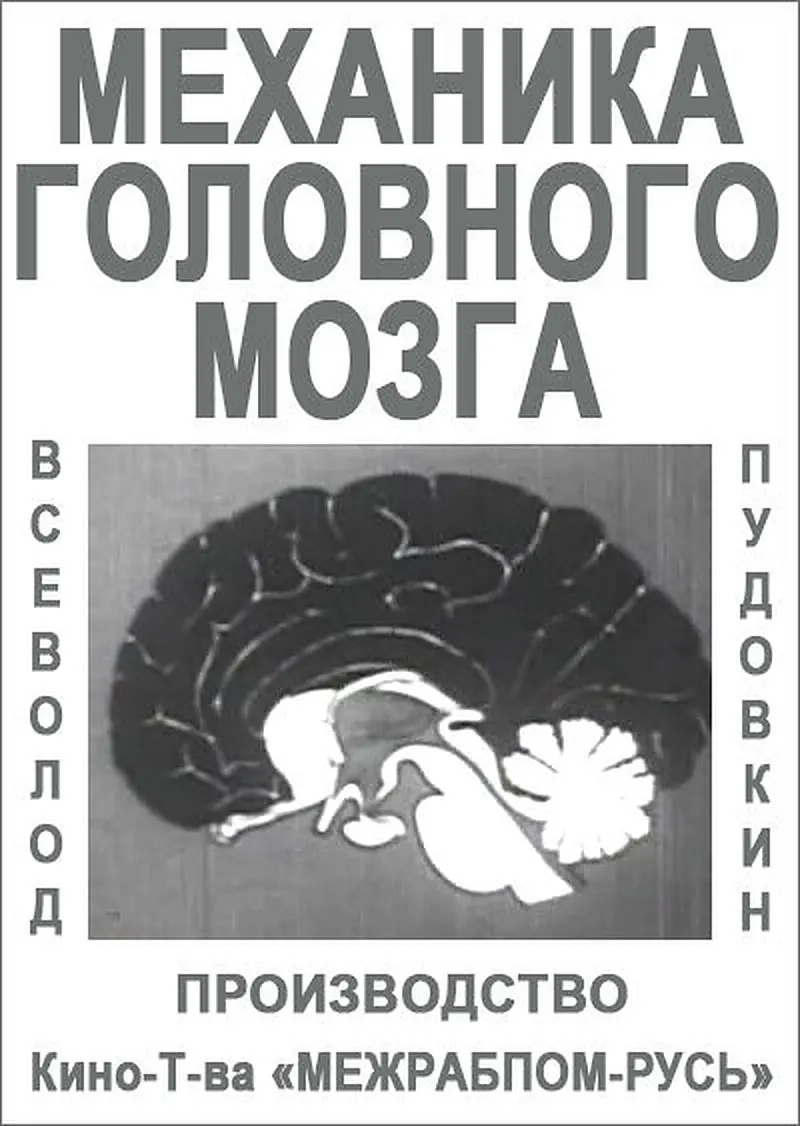
Should you subject yourself to V.I. Pudovkin’s 1926 clinical exercise, Mekhanika golovnogo mozga? Short answer: Only if your stomach is as strong as your interest in the origins of behavioral science. This is not a film for the faint of heart, nor is it for those seeking the rhythmic beauty usually associated with silent Soviet cinema.
This film is specifically for historians of science, scholars of Soviet propaganda, and those interested in the evolution of the documentary form. It is decidedly NOT for animal lovers, casual viewers looking for entertainment, or anyone sensitive to the sight of vivisection and medical experimentation. It is a cold, hard look at the biological machine.
1) This film works because it captures a raw, unvarnished moment in scientific history that feels both authentic and terrifyingly objective.
2) This film fails because it prioritizes data over empathy, creating a disconnect that borders on the sociopathic by modern ethical standards.
3) You should watch it if you want to understand how early cinema was used to dismantle religious concepts of the 'soul' in favor of biological determinism.
Yes, Mekhanika golovnogo mozga is worth watching if you want to see the birth of scientific propaganda. It is a unique artifact that shows how the Soviet state sought to re-educate the public on the nature of humanity. By reducing complex behaviors to simple reflexes, the film serves as a foundation for social engineering. It is a difficult, often repulsive watch, but historically significant.
In the mid-1920s, Vsevolod Pudovkin was already a titan of the Soviet montage school. However, in Mekhanika golovnogo mozga, he suppresses his instinct for rhythmic editing in favor of a dry, pedagogical style. Unlike the high-stakes drama of The Lost Express, which uses speed to generate excitement, Pudovkin here uses the camera as a microscope. The pacing is deliberate and slow, mirroring the repetitive nature of laboratory work.
The film is structured as a lecture. It begins with the simplest biological responses and scales up to the complexity of human thought. The use of charts and graphs is pervasive. For a modern viewer, this might feel like a high school biology presentation, but in 1926, this was revolutionary. It was a visual manifesto for the 'New Man.' The camera doesn't blink during the most harrowing sequences. It stays fixed on the subject, demanding that the viewer accept the physical reality of the brain as a meat-based computer.
We have to talk about the dogs. The laboratory dogs used in Pavlov’s research are the central figures of the film, and their treatment is distressing. There is a specific sequence involving a vivisection that is particularly rough. We see the internal workings of the animal while it is still alive, all to demonstrate the flow of saliva or the reaction of a nerve. It is a moment of pure, clinical horror. There is no music to soften the blow, no narrative to justify the pain—just the cold eye of the lens.
This lack of empathy is a deliberate stylistic choice. Pudovkin isn't interested in the suffering of the individual dog; he is interested in the universal law of the reflex. This contrasts sharply with the sentimentalism found in Western films of the era like Little Lord Fauntleroy. Where the latter seeks to pull at the heartstrings through innocence, Mekhanika golovnogo mozga seeks to sever them through evidence. It is a brutal transition from the Victorian era to the Modernist one.

The most unsettling transition in the film occurs when Pavlov’s theories are applied to human subjects. We see infants being tested for their innate reflexes. The film treats these children with the same detached curiosity it afforded the dogs. One scene shows a child reacting to a loud noise or a sudden movement, recorded with the same precision as the salivation levels of a canine. It suggests a terrifying equality between species: we are all just bundles of nerves waiting for a stimulus.
This ideology is what makes the film more than just a medical documentary. It is a piece of philosophy. By showing that even a child's 'will' is just a series of conditioned responses, Pudovkin provides the justification for the state's role in shaping the environment. If you change the stimulus, you change the man. This is the subtext that lingers long after the credits roll. It makes the film feel more like a precursor to a dystopian future than a relic of the past.
Visually, the film is stark. The lighting is flat and high-key, as one would expect in a laboratory. There are no shadows to hide in. The cinematography is functional, yet there is a strange beauty in its clarity. The close-ups of the brain tissue or the intricate glass tubing used in the experiments are framed with a geometric precision. It feels modern, even a century later. It lacks the 'town terror' energy of Town Terrors, opting instead for a static, oppressive stillness.
Pudovkin’s editing is most apparent in the way he cuts between the biological action and the explanatory diagrams. It is a seamless integration of data and image. He doesn't need the frantic energy of Three Jumps Ahead to keep the audience's attention; the sheer audacity of the footage does that work for him. However, the lack of a traditional score or any narrative tension makes it a grueling experience. It is a film that demands your intellectual attention while repulsing your emotional instincts.
Pros:
- A vital historical document of Pavlovian science.
- Demonstrates the versatility of Pudovkin as a director beyond narrative film.
- Offers a pure, unadulterated look at 1920s Soviet ideology.
- The technical clarity of the scientific demonstrations is impressive for its time.
Cons:
- Extremely difficult to watch due to animal experimentation.
- The dry, academic tone can be tedious for those not interested in the subject matter.
- Lacks the visual poetry found in Pudovkin’s other 1926 works.
- Can feel repetitive in its insistence on proving the same point through multiple subjects.
Mekhanika golovnogo mozga is a chilling artifact. It is a film that refuses to be liked, but demands to be studied. It represents a moment in time when science and cinema were used as tools to deconstruct the human experience into its most basic, mechanical parts. It is a hard watch. But it’s flawed by its own coldness. While it succeeds as a scientific record, it fails as a human experience. If you compare it to the narrative drive of The Last of the Duanes or the spectacle of Cleopatra, it feels like it belongs to a different medium entirely. It is a must-see for the serious cinephile, but once is more than enough for a lifetime.
"Pudovkin doesn't just show us the brain; he attempts to show us that the soul is an illusion of biology."
Ultimately, the film stands as a monument to the 20th century's obsession with control. Whether it is controlling the reflex of a dog or the behavior of a citizen, the message is the same. The brain is a machine, and machines can be programmed. It is a terrifying thought, presented with the calm assurance of a man who believes he has found the truth. This is cinema at its most clinical and its most dangerous.

IMDb 7.4
1931
Community
Log in to comment.